Why Are Experts Recommending Liposomal Berberine Powder?
2026-06-15 16:36:40
Liposomal Berberine Powder is recommended by experts because it fixes the main problem with berberine intake. There is less than 1% absorption in traditional berberine tablets, which means that most of the active ingredient never gets into the bloodstream. The liposomal encapsulation technology wraps berberine molecules in phospholipid layers that look like cell membranes. This lets the chemical get through digestive hurdles and be absorbed 5–10 times more quickly. This discovery solves a long-standing problem in the industry: providing therapeutic effects without needing huge amounts that make people sick. For formulators and procurement experts, this is a big step forward in making metabolic health goods that work well and are easy for people to use.
Understanding Liposomal Berberine Powder: What Sets It Apart?
The Science Behind Enhanced Delivery Systems
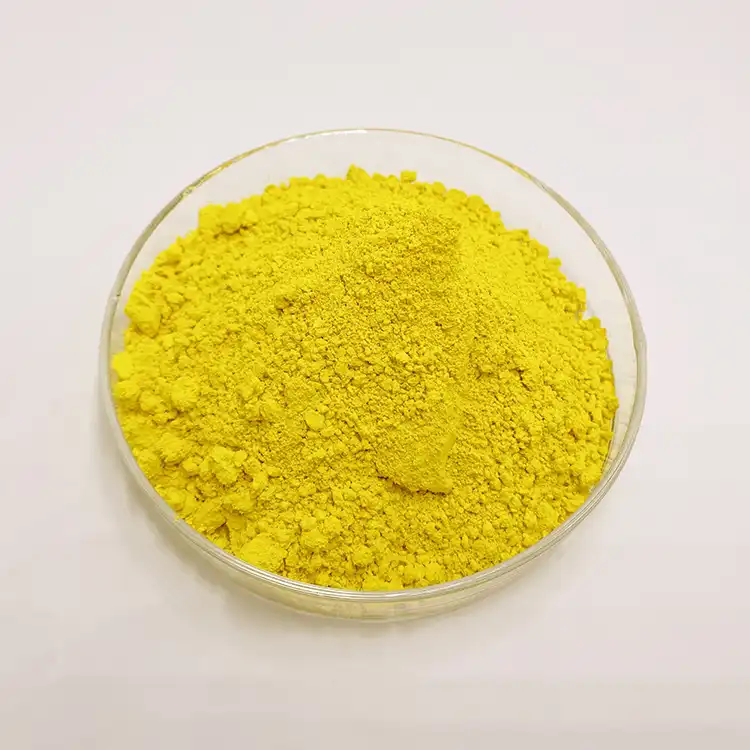
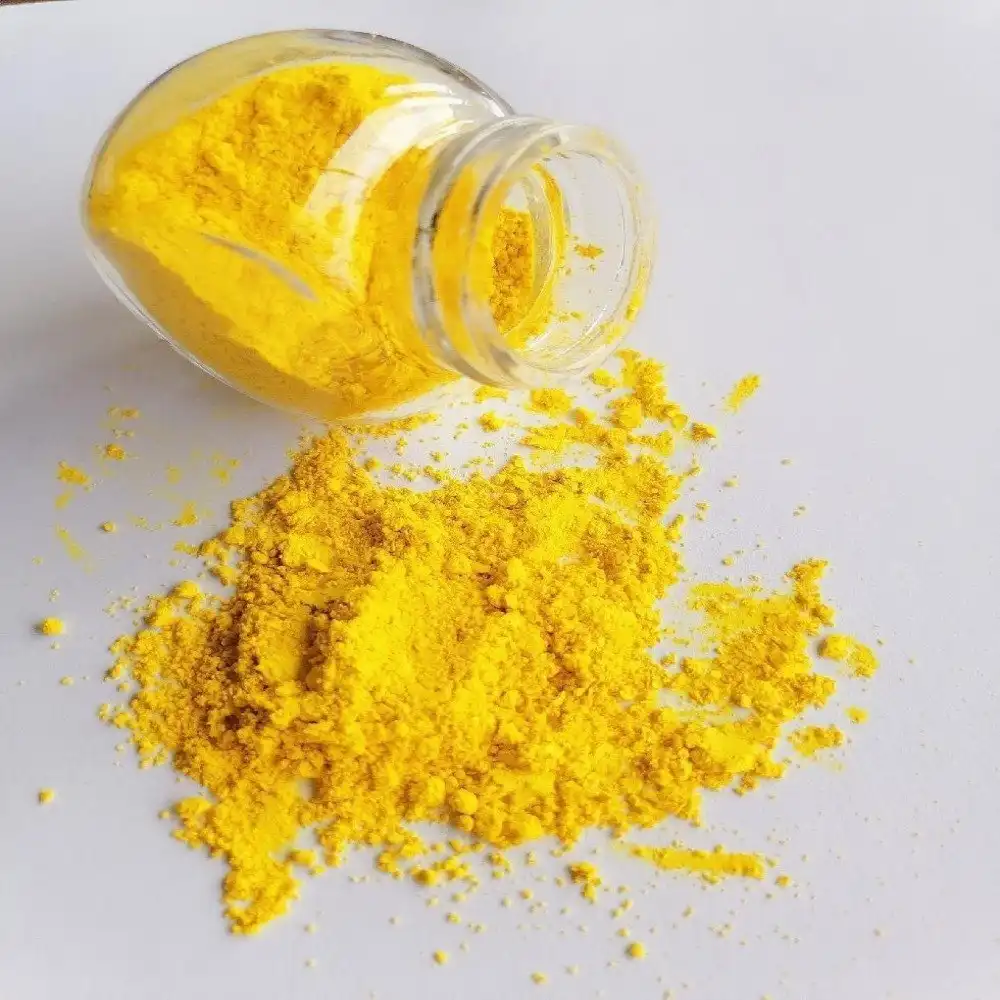
Berberine is a yellow alkaloid that is found in plants like Berberis aristata and has been used in traditional medicine for hundreds of years. The raw combination, on the other hand, faces big health problems. When taken by mouth, regular berberine is broken down quickly by liver enzymes and then flushed out of the body by P-glycoprotein efflux pumps in the walls of the intestines. These systems evolved to keep the body safe from outside invaders, but they also stop good chemicals from getting into the bloodstream.
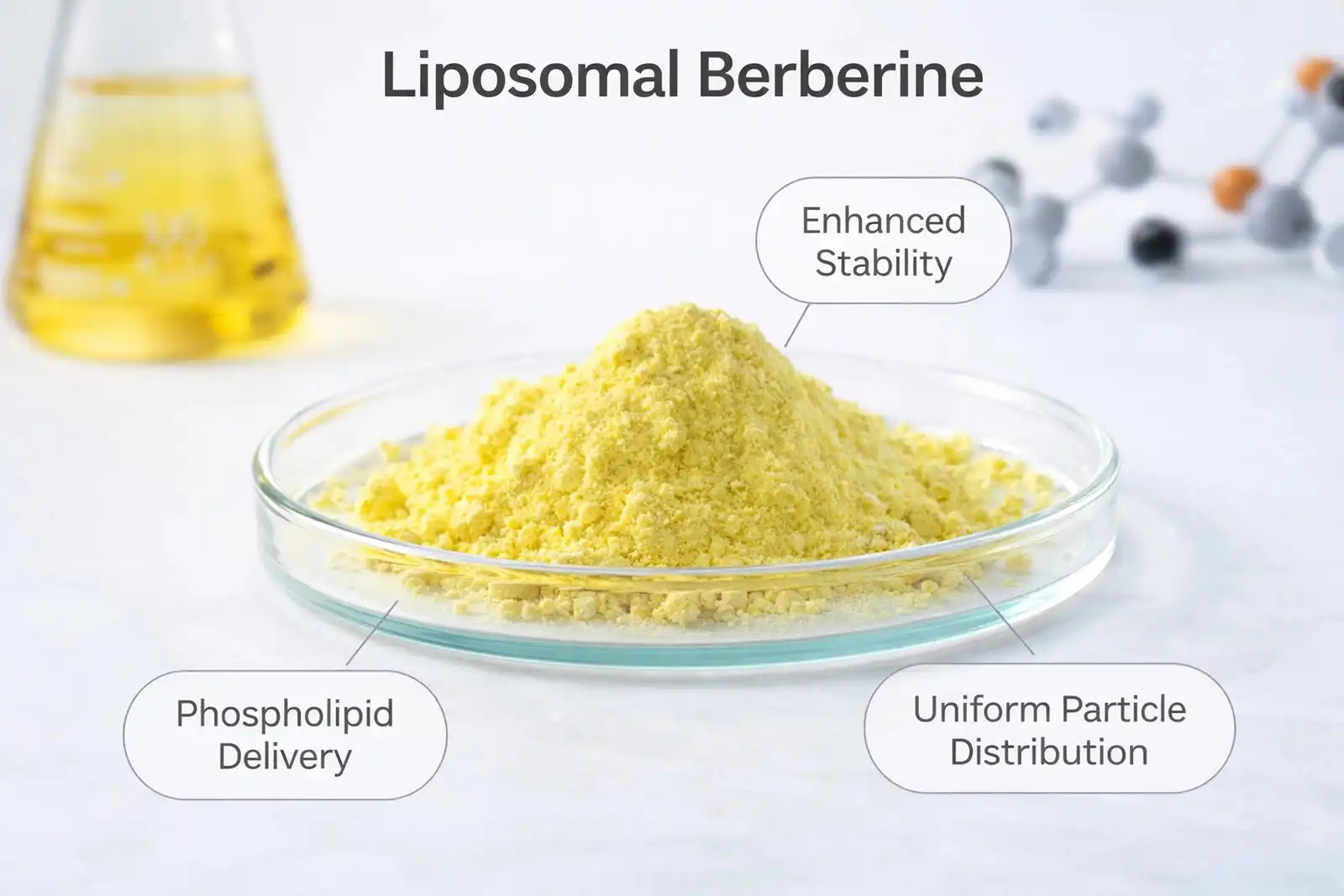
Liposomal technology completely changes this situation. In the encapsulating process, phospholipid bilayers from non-GMO sources, such as sunflower lecithin, are used to surround berberine molecules. These very small balls, which are usually 100 to 400 nanometers across, protect berberine and help it get through the digestive system without getting broken down. When liposomes come in contact with cells in the gut, their lipid structure either bonds with the cell membranes or starts endocytosis. This lets berberine go straight into the bloodstream and tissues.
Measurable Performance Differences
Pharmacokinetic profiles have gotten a lot better in clinical tests. Standard berberine hits its highest level in plasma in one to two hours, but most of it never gets to the systemic circulation. Encapsulated forms keep therapeutic amounts for longer periods of time, and readings of the area under the curve show that the total exposure is much higher. This means that the metabolism is supported consistently without having to be dosed as often as with standard formulations.
The encapsulation efficiency measure shows how different providers' quality is. Premium Liposomal Berberine Powders are more than 85% effective at Packaging, which was confirmed by HPLC research. This measure tells you what percentage of berberine is in protective liposomes and what percentage is just powder. Better absorption and less bitter taste are linked to higher efficiency. These are two important factors for end-user compliance.
Chemical Stability and Formulation Advantages
The phospholipid structure does more than just help with digestion. Because berberine is sensitive to light, air, and water, storing it can make it less effective. Liposomal encapsulation protects against these environmental stresses, which can increase the shelf life to 24 months if kept correctly. The product's healing qualities stay the same over time, and the yellow powder stays the same color.
Zeta potential tests check how stable a mixture is in liquids. Values greater than ±30mV show strong electrostatic attraction between particles, which stops them from sticking together and settling. This quality is very important for people who make ready-to-drink metabolic support drinks, where uniformity and look are very important.
Comparing Liposomal Berberine Powder to Other Berberine Forms
Traditional Berberine Hydrochloride Limitations
The most common form of berberine hydrochloride in food products is in standard capsules. These products usually have between 500 and 900 mg in each serving, trying to make up for bad absorption by having a lot of it. But this method leads to problems. Berberine that is not taken up by the body can irritate intestinal cells, which can lead to cramps, diarrhea, and constipation in large amounts. Consumer reviews always talk about these safety problems, which cause people to stop using it even though it might have benefits.
The raw berberine has a bitter and acidic taste, which is another problem. It's hard for formulators to hide this trait in healthy drinks and foods. Adding coatings and flavorings makes things more complicated and expensive without fixing the absorption problem at its core. These formulas fight on price instead of effectiveness, which makes consumer markets like a race to the bottom.
Sublingual and Alternative Delivery Methods
Some makers are looking into making berberine pills that can be put under the tongue. They think that mucous membrane absorption can get around first-pass metabolism. In theory, this route has benefits, but in practice, it presents problems. Tablets must be held under the tongue for a few minutes so that saliva can build up, and the bitter taste stays strong. Compared to simple eating methods, compliance drops by a large amount.
Berberine phytosome complexes are an example of another attempt at innovation. They bind the alkaloid to phosphatidylcholine chemically instead of physically enclosing it. These mixtures slightly improve absorption, but they usually don't get as good of results as liposomal forms that are made correctly. The difference is in the accuracy of the particle engineering and the amounts of phospholipids to active ingredients.
Quality Standards That Matter for B2B Sourcing
Aside from price, procurement workers should look at a number of technical factors when comparing providers. The way particles are sized affects how they absorb light. A Dynamic Light Scattering test should show narrow bands centered between 100nm and 300nm. If the polydispersity index is less than 0.3, it means that the particle populations are all the same, which is a good indicator of reliable batch performance.
Certifications for manufacturing show that the process can be controlled. Facilities that follow cGMP standards, which have been confirmed by third-party audits like SGS, show that they are dedicated to keeping things clean and consistent in quality. Certifications like HALAL, KOSHER, ORGANIC, ISO22000, and FSSC 22000 make it easier to sell goods in other countries and show that they meet world safety standards.
Practical Guidance: How to Use Liposomal Berberine Powder for Optimal ResultsDosage Considerations for Different Applications
Liposomal transport changes the way dosing formulas are done in a big way. Traditional berberine supplements say to take 900 to 1500 mg three times a day. However, 300 to 600 mg every day can have therapeutic benefits because it is more bioavailable. This decrease is very important for the fill weight of capsules, the compression ratios of tablets, and the cost-per-serving economics of final goods.
Metabolic health products that help control blood sugar usually have 200 to 300 mg per dose, which should be taken with food to match when glucose is absorbed. Lipid profile support apps might use similar values, but they focus on steady daily diet instead of meal times. When weight loss goods use Liposomal Berberine Powder along with other ingredients that work well together, like alpha-lipoic acid or chromium, the total capsule amount needs to be carefully thought out.
Timing and Absorption Optimization
One more benefit of liposomes is that they can be given at different times. Berberine traditionally needs to be taken with food to keep stomach problems to a minimum, but this time also makes the compound more likely to cause problems with digestion. Encapsulated forms can be taken when you are hungry or when you are not, but absorption rates are highest when taken with fats from food, which help liposomes cross intestinal walls.
Giving it in the morning helps the metabolism all day without messing up sleep habits. Since the substance isn't a stimulant, evening doses are fine when they're made to help with blood sugar or heart health during fasting times at night. Split dosing is still a choice, not a requirement, which makes things easier for users.
Safety Profile and Long-Term Usage
Berberine is safe to use when it is prescribed, according to decades of clinical study. Animal tests and human tests show that the chemical is not very harmful. Liposomal versions lower the number of stomach problems that people report, which are the main side effects of regular berberine. In the first week, your digestive system may need some minor adjustments as the bacteria in your gut get used to the antimicrobial properties of the substance.
No matter the transport method, drug combination concerns are still important. Berberine stops CYP3A4 and CYP2D6 enzymes from working, which could change how medicines that use these routes are broken down. Healthcare formulators should put the right information on the labels of prescription drugs to tell people who take them to talk to a doctor first. Since liposomal forms are better at being taken than standard forms, these interactions may be stronger.
Procurement Insights: Sourcing Liposomal Berberine Powder for B2B Clients
Evaluating Manufacturing Capabilities
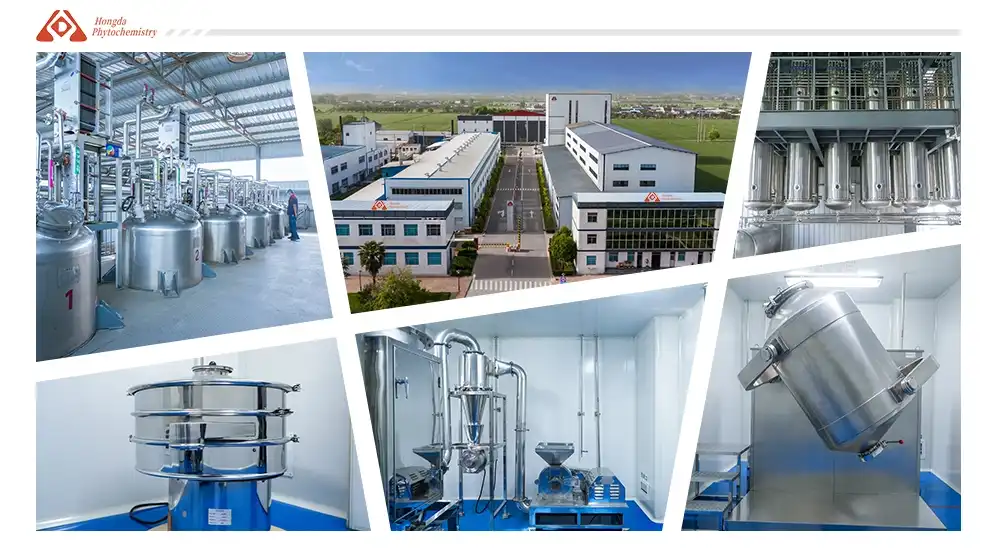
To be successful at bulk buying, you must first understand how complicated production is. Liposomal encapsulation needs more than just basic extraction and drying skills. It also needs specific tools and knowledge. Facilities should have high-pressure homogenizers or microfluidizers that can make nanoparticles that are all the same size. Spray-drying or freeze-drying methods can turn liquid liposome suspensions into stable powders without changing the structure of the encapsulation.
The scale of production affects the dependability of supplies. Facilities that cover 20,000 square meters and have multiple production lines show that they can handle big orders while keeping quality standards high. As part of our business, we have 100,000-level cleaning workshops that keep airborne particles under control and keep powder processing from getting contaminated. In-process testing and final product checking are done by SGS-certified labs to make sure that every batch meets the requirements before it is released.
Certification Requirements and Regulatory Compliance
Different rules apply to international markets, which affects the choice of provider. FDA registration shows that a company follows U.S. production practice standards, and BRC approval shows that its food safety management systems meet the needs of global retailers. When you put these assets together, they show that the business is more mature than most startups that don't have the right regulatory machinery.
Brands that want to attract people who like natural products can benefit from getting organic approval, but their supply lines must be checked from the botanical source to the finished ingredient. With HALAL and KOSHER certifications, more products can be sold in places where religious food rules control what people can eat. These licenses need to be audited and documented on a regular basis, which shows long-term dedication rather than one-time accomplishments.

Pricing Dynamics and Order Optimization
The higher price of Liposomal Berberine manufacturer shows how valuable the packaging technique is. When it comes to price, raw berberine hydrochloride is a commodity, but the liposomal version is a special product because it works better. Cost-per-dose estimates, on the other hand, usually prefer the enhanced version because it has the same benefits with smaller doses, which means the final product has higher profit margins.
For sampling and formulating, the minimum order quantity is usually 1 kg. This lets the research and development (R&D) teams check that performance claims are true before committing to large production numbers. As relationships get stronger, procurement teams can discuss different price levels based on yearly volume promises. This helps keep budgets stable and plans for inventory. However, container-load amounts have the best prices, but they need store space and the ability to predict demand.
Private Label and Custom Formulation Opportunities
Strategic makers not only supply large ingredients, but they also offer private label services that help new companies get into the market faster. These agreements cover custom berberine concentrations from 10 to 90% based on formulation needs, blend development using additional ingredients, and packing options ranging from bulk bags to bottles that are ready for consumers. These kinds of agreements let brands focus on marketing while taking advantage of manufacturing know-how that already exists.
OEMs work together to make changes to private transport systems. Formulators who are trying to come up with a new way to market a product might need to change the particle sizes for certain uses, find different sources of phospholipids to address allergen concerns, or use combination capsule technologies to include more than one active ingredient. Manufacturers with specific research and development teams, like our 20-professor technical group, help with the creativity that is needed to stand out from the competition.
Why Liposomal Berberine Powder Is the Preferred Choice in Today's Market
Addressing Consumer Demands and Market Trends
The world of dietary supplements is moving more and more toward goods that are based on scientific proof and work. Instead of just believing what marketers say, more and more people are researching chemicals and comparing bioavailability data and clinical results. This smart buying behavior rewards new ideas like liposomal delivery that show measured performance gains over older versions.
Another strong trend is the merging of wellness. Millions of people around the world have metabolic health problems, such as pre-diabetes, weight control problems, and cardiovascular risk factors. Berberine works on many pathways to deal with these linked problems by activating AMPK, changing the way glucose transporters work, and controlling lipid metabolism. Better delivery makes sure that these processes work at doses that are useful, giving visible benefits that keep customers coming back for more.
Scientific Innovation and Research Pipeline
Berberine is being studied to find new uses for it besides just helping the metabolism. New studies look into how to change the gut bacteria, how to protect neurons, and how to reduce inflammation in ways that are important for preventing chronic diseases. Liposomal delivery is important for these uses because it gets to tissue amounts high enough to start healing pathways that don't get activated with other forms.
When good clinical trial results are made public, professional suggestion patterns speed up. More and more, doctors, nutritionists, and fitness coaches are recommending specific pill forms instead of broad ingredient names. Products with better absorption patterns and patient compliance rates get more attention, which builds market progress without spending money on standard advertising.
Global Business Opportunities and Market Expansion
As metabolic health problems get worse around the world, international economies offer a lot of room for growth. The rates of obesity and diabetes are going up in the Asia-Pacific region, where the economies are growing quickly. This means that people need health options that can help them stay healthy. European markets put a lot of weight on natural goods that are backed up by proof and have strict quality documentation. North American customers want cutting-edge formulas that give them the most value and ease of use.
For global growth to work, suppliers must be able to deal with different regulatory settings while keeping product quality uniform. Manufacturers with various foreign certifications make it easier to do business across borders, which speeds up the time it takes for brands to reach new markets. Technical help, such as formulation advice, stability data, and regulatory dossiers, is just as important as the raw material itself.
Conclusion
Liposomal Berberine Powder is a big step forward in the science of nutraceutical ingredients. It solves the absorption problems that kept regular berberine from being used as a medicine. The capsule method improves absorption by 5–10 times, lowers side effects in the digestive tract, and allows for lower effective amounts that make the product cheaper and better for the customer. For people who buy things for other businesses in the nutraceutical, pharmaceutical, and functional food industries, getting high-quality liposomal berberine from approved producers is the only way to make sure that their products work well and stay competitive in the market. Because the technology fits with what people want—effective, science-based health solutions—it will be a key factor in metabolic health goods for the next ten years.
FAQ1. What makes liposomal berberine more effective than regular berberine supplements?
The phospholipid coating keeps berberine from breaking down in the digestive system and gets around the P-glycoprotein efflux pumps that usually get rid of the chemical from intestinal cells. This makes plasma concentrations and tissue transport much higher, so benefits can be seen at doses 3–5 times lower than usual.
2. What is the recommended daily dosage for liposomal berberine powder?
Doses of 300 to 600 mg per day are usually enough to work, which is a lot less than the 900 to 1500 mg that is usually needed for regular berberine. The exact dose relies on the formulation goals, such as supporting metabolism, heart health, or weight management. When figuring out portion amounts, the increased bioavailability factor should be taken into account.
3. Are there safety concerns with long-term liposomal berberine use?
According to research, berberine has great safety ratings over long periods of time. The liposomal form lowers the stomach problems that come with taking regular high doses of berberine. People who take prescription drugs should talk to their doctors because some CYP enzymes may interact with other drugs, and these interactions may be stronger with versions that make the drug easier to absorb.
4. How should liposomal berberine powder be stored to maintain quality?
Keep it away from direct light and moisture and keep it in a cool, dry place. Phospholipids need to be kept in sealed cases with desiccant bags because they absorb water. The product has a 24-month shelf life and a packaging efficiency of above 85% as long as it is stored properly.
Partner With Hongda for Premium Liposomal Berberine Solutions
In our 20,000-square-meter cGMP-certified facility, Shaanxi Hongda Phytochemistry makes Liposomal Berberine Powder to the best worldwide standards. We offer this powder. Our advanced capsule technology works more than 85% of the time with particle sizes that are just right, between 100nm and 400nm. This has been proven by thorough HPLC and Dynamic Light Scattering analysis. We are a liposomal berberine manufacturer with more than 20 years of experience in botanical extracts. We can help your formulation succeed by offering customizable specifications ranging from 10 to 90% berberine concentration, a flexible MOQ starting at 1 kg, and full certifications such as SGS, FDA, ISO22000, HALAL, KOSHER, and ORGANIC approvals. Our expert team of more than 20 professors helps you with formulation, stability data, and legal issues as you work to make a new product. Get samples today by emailing duke@hongdaherb.com and find out how our better bioavailability solutions can help your metabolic health product line stand out in global markets that are already very competitive.
References
1. Chen, W., Miao, Y.Q., Fan, D.J., et al. (2011). "Bioavailability Study of Berberine and the Enhancing Effects of TPGS on Intestinal Absorption in Rats." AAPS PharmSciTech, 12(2), 705-711.
2. Kumar, A., Ekavali, Chopra, K., Mukherjee, M., Pottabathini, R., & Dhull, D.K. (2015). "Current Knowledge and Pharmacological Profile of Berberine: An Update." European Journal of Pharmacology, 761, 288-297.
3. Feng, R., Shou, J.W., Zhao, Z.X., He, C.Y., Ma, C., Huang, M., Fu, J., Tan, X.S., Li, X.Y., Wen, B.Y., Chen, X., Yang, X.Y., Ren, G., Lin, Y., Chen, Y., You, X.F., Wang, Y., & Jiang, J.D. (2015). "Transforming Berberine into Its Intestine-Absorbable Form by the Gut Microbiota." Scientific Reports, 5, 12155.
4. Och, A., Podgórski, R., & Nowak, R. (2020). "Biological Activity of Berberine—A Summary Update." Toxins, 12(11), 713.
5. Spinozzi, S., Colliva, C., Camborata, C., Roberti, M., Ianni, C., Neri, F., Calvarese, C., Lexically, A., Mazzella, G., & Roda, A. (2014). "Berberine and Its Metabolites: Relationship between Physicochemical Properties and Plasma Levels after Administration to Human Subjects." Journal of Natural Products, 77(4), 766-772.
6. Yue, S.J., Liu, J., Wang, A.T., Meng, X.T., Yang, Z.R., Peng, C., Guan, H.S., Wang, C.Y., & Yan, D. (2019). "Berberine Alleviates Insulin Resistance by Reducing Peripheral Branched-Chain Amino Acids." American Journal of Physiology-Endocrinology and Metabolism, 316(1), E73-E85.





YOU MAY LIKE