What Should You Look for in Liposomal Curcumin Powder?
2026-09-29 14:25:57
Curcumin has long been a mainstay in the kitchen and a darling of researchers for decades, but anybody who has ever dealt with it understands the aggravation. The golden pigment is difficult to dissolve, sensitive to light and heat, and often lost during storage. Hence, liposomal curcumin powder has become the most talked-about substance. By hiding curcumin within small phospholipid spheres and drying the result into a handy powder, producers are hoping to provide a friendlier, more stable substance for capsules, sachets and functional beverages. However, the word “liposomal” is not a guarantee of quality, and two products with the same name might act quite differently. In this article, we’ll teach you precisely what to look for, from the spec sheet to the supplier, so you can feel secure about your next purchase.
Why Liposomal Curcumin Powder Is Winning Attention
The Challenge Curcumin Has Always Faced
Only three to six percent of the turmeric’s bulk is curcumin, and once it is separated, it is like an awkward visitor. It is water-resistant but decomposes in intense light and under alkaline circumstances. Published work has noted degradation of the structure above about 70°C. It is these weaknesses that cause ordinary curcumin powder to lose brightness and consistency on the shelf. Liposomal curcumin powder was created to address this precise issue. This phospholipid layer is just a protective shell that protects the molecule from the environment. It also makes it simpler to distribute in blends. With this background, you may ask more pointed questions, since a successful product should show signs that these prior faults have really been remedied.
The Convenience of a Powder Format
Liquid liposomes are great; however, they have cold chain concerns, limited shelf life, and hefty delivery. A dry format takes care of most of it. Liposomal curcumin powder may be handled without additional refrigeration during weighing, blending, capsule filling, or addition to stick packs. For brand owners, this offers simpler logistics and faster scale-up, while contract manufacturers welcome the consistent flow and dosage. Powder also offers unique formulation options, such as blending with other botanicals, vitamins, or minerals. The tradeoff is that drying has to be done correctly, since a sloppy procedure might destroy the vesicles. That is why the production details detailed subsequently demand as much attention as the chemical itself.
Where It Fits in Today's Product Trends
Consumers are looking for ingredients that combine history with current delivery technology, and turmeric fits the bill wonderfully. Retailers indicate continued demand for joint, active-lifestyle, and general health formulations with a focus on curcumin, including on-busy-shelves improved-delivery variants. Formulators may get in on the trend using liposomal curcumin powder, without having to turn to liquids or softgels. Ideal for vegan capsule lines, powder stick packs, and even for bars or drinks where color and stability are important. Interest continues to rise, and firms that chose a well-documented ingredient now are establishing a quality reputation that lasts long beyond any fleeting craze.
Reading the Spec Sheet Like a Professional
Curcuminoid Content and Purity
The first thing to look at is how much curcumin is really in the powder. Since the phospholipid carrier takes up a big part of the substance, the amount of curcumin per gram will be less than in a raw extract, and that is just natural. The key is that the figure be clearly expressed, HPLC-validated, and consistent from batch to batch. Determine whether the figure is for total curcuminoids or just curcumin. They are not the same. A reliable source of liposomal curcumin powder will also provide residual solvents, heavy metals, and microbiological limitations to give a complete picture of purity. If there are voids in a datasheet, see it as a cue to ask further questions.
Particle Size, Entrapment, and Surface Charge
Three numbers show how successfully the liposomes are made. The particle size tells you whether the vesicles are tiny and consistent. In the literature of drug delivery, the optimal window is generally between 50 and 200 nanometers. Entrapment efficiency is an indication of the actual amount of curcumin contained in the vesicle and not outside of the vesicle. Zeta potential is a measure of repulsion between particles. The published investigations reveal 68 nm with 57 percent entrapment in one nanoliposome design and about 154 nm with around 78 percent entrapment in another optimized recipe. When reviewing liposomal curcumin powder, looking at a supplier’s numbers versus those ranges is a real-world truth check.
Phospholipid and Excipient Transparency
Liposomes are manufactured mostly from phospholipids, and the source and quality of that lipid determine performance and labeling. Sunflower and soy lecithin are prevalent, and each has various allergy and non-GMO concerns; Flow, taste, and stability are also affected by carriers like maltodextrin, and compounds such as cholesterol or antioxidants. A transparent liposomal curcumin powder provider will disclose every ingredient, why it is there, and that it complies with the standards of your target market. This is important if you are planning to offer vegan, allergy-free, or organic positioned items. Full transparency at the start obviates unwanted surprises in the labeling and audit phases.
The table below turns these checkpoints into a quick review sheet, with reference values taken from published curcumin liposome studies.
|
No.
|
TEST ITEM
|
SPECIFICATION
|
RESULT
|
|||
|
1
|
Description
|
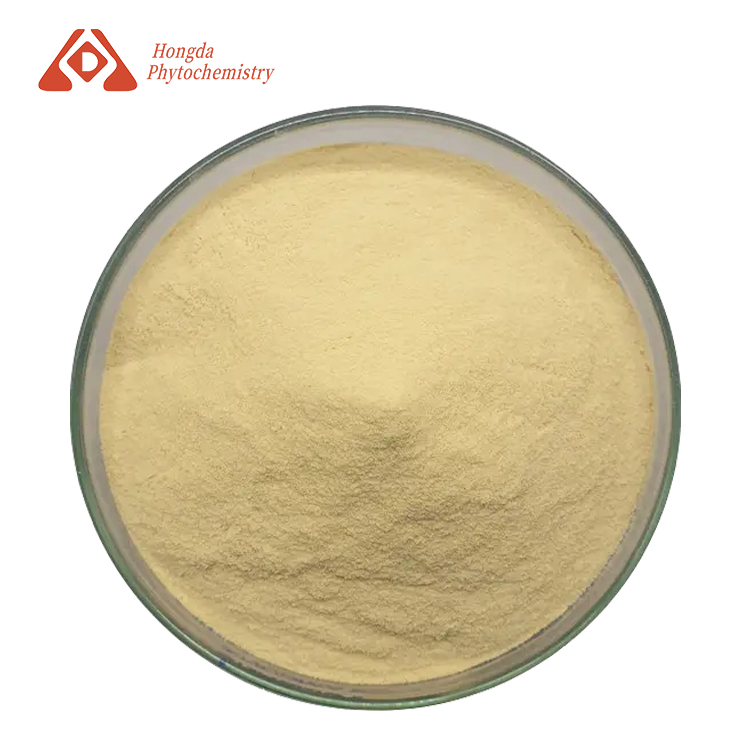
Yellow Powder
|
Conform
|
|||
|
2
|
Particle size (20 mesh)
|
≥90%
|
Conform
|
|||
|
3
|
Loss on drying
|
≤5.0%
|
2.33%
|
|||
|
4
|
Bulk Density
|
Measured value
|
368g/L
|
|||
|
5
|
Tapped Bulk Density
|
Measured value
|
721g/L
|
|||
|
6
|
Heavy Metals
|
Arsenic (As)
|
≤2.0ppm
|
Conform
|
||
|
Lead (Pb)
|
≤0.5ppm
|
Conform
|
||||
|
Mercury (Hg)
|
≤0.3ppm
|
Conform
|
||||
|
Cadmium (Cd)
|
≤0.3ppm
|
Conform
|
||||
|
7
|
Microbiological
|
Total plate count
|
≤10000cfu/g
|
10cu/g
|
||
|
Total molds and yeasts
|
≤1000cfu/g
|
10cfu/g
|
||||
|
Coliforms
|
≤10MPN/g
|
≤0.3MPN/g
|
||||
|
E.Coli
|
Negative/25g
|
Negative
|
||||
|
Salmonella
|
Negative/25g
|
Negative
|
||||
|
Staphylococcvs
|
Negative/25g
|
Negative
|
||||
|
8
|
Assay
|
Curcumin
|
70.0%±5%
|
71.6%
|
||
|
Phospholipids (NON-GMO)
|
15.0%±5%
|
12.9%
|
||||
|
Fatty Acids
|
15.0%±5%
|
13.8%
|
||||
|
Conclusion
|
Meet the in house standard.
|
|||||
Manufacturing, Testing, and Certification SignalsProcess Method and Batch Consistency
Liposomes may be produced using thin-film hydration, ethanol injection, high-pressure techniques, or the newer pH-driven method that eliminates the use of organic solvents and has demonstrated excellent storage stability in laboratory studies. There is no one way that wins all the time, but consistency does. You want to observe that your liposomal curcumin powder is manufactured with temperature, mixing energy, and time control, with documentation for each batch. Ask how the supplier mitigates drift from pilot to full-scale manufacturing. Factories that have developed quality processes are often able to explain this in simple terms and back it up with records, which is far more comforting than a beautiful brochure.
Testing That Goes Beyond the Basics
The minimum is standard identification and purity checks. If the product is liposomal, check further at particle size after rehydration, entrapment efficiency, moisture content, and resilience to heat and light. Since curcumin is known to lose its activity very rapidly when exposed to light, findings on photostability are particularly significant. Real-time and accelerated shelf life experiments reveal how the powder performs over months, not just on day one. If you buy liposomal curcumin powder from suppliers that have invested in their own or third-party labs, they are often happy to provide you with Certifications of analysis on request. A few of these, before purchasing, tell you a lot about how closely managed the procedure is.
Certifications and Documentation
Certificates are the common currency of confidence between buyers and providers. Depending on your market, you may require cGMP, ISO9001, ISO22000, HALAL, KOSHER, BRC, or FDA facility certification, including allergy declarations, origin documentation, and safety data sheets. A professional liposomal curcumin powder provider would maintain these up to date and share them without any difficulty. Each certificate must specify the precise place of manufacture of your goods. Observe expiration dates. Organized documentation also helps with store approvals and marketplace listings, saving you weeks on your way to launch.
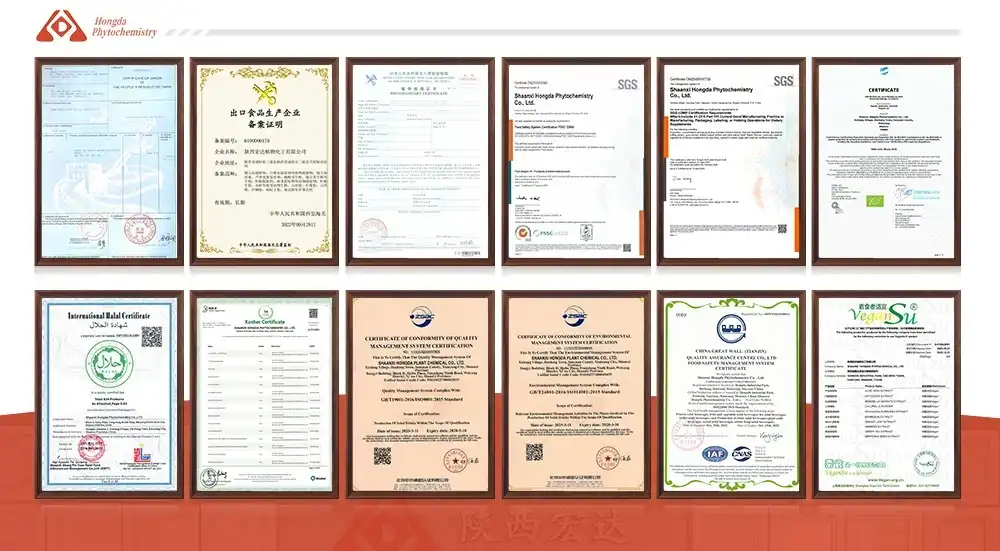
Not sure what documentation your market requires? Email duke@hongdaherb.com and the Hongda staff will assist you in sorting out the proper documentation and specifications for your project.
Building a Smooth Partnership with Your SupplierStarting Small with Samples and Trial Batches
Nothing beats hands-on testing. Order a sample of liposomal curcumin powder to test its color, flow, taste, solubility, and performance in your own formulation. Run a small trial batch through your typical filling or blending procedure. Keep part of it under your actual warehouse conditions. This cheap step will show you issues that a datasheet cannot, such as clumping in humid conditions or color changes when combined with other powders. Take notes and pictures and pass on comments to your supplier so corrections can be made before the big order. Exciting is not a feeling most careful pilots have, but they do avoid costly shocks at scale.
What a Capable Manufacturer Offers
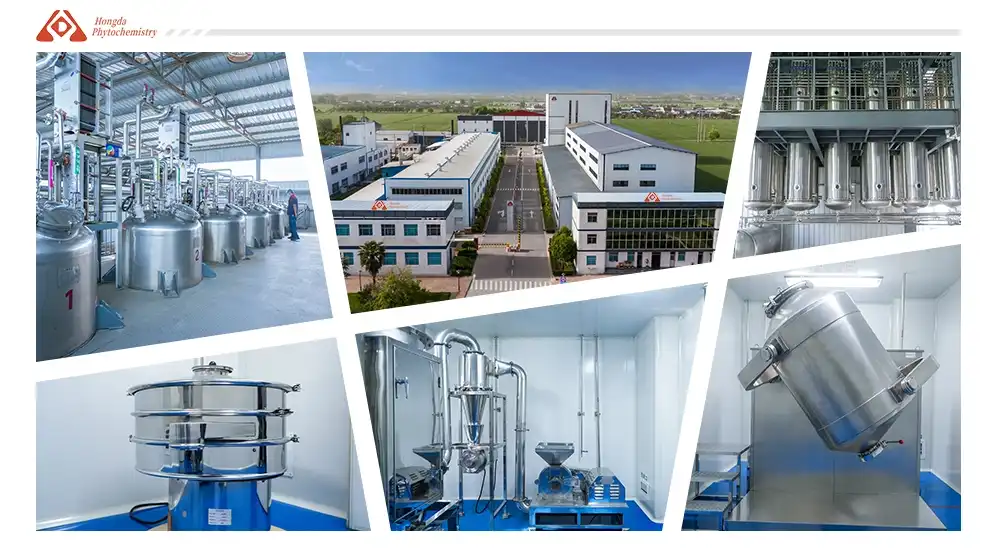
Behind a steady powder is a factory that understands its art. Founded in 2001, Shaanxi Hongda Phytochemistry Co., Ltd. is a natural plant extract supplier. It was recognized as a national high-tech firm in 2010. The company has a 20,000-square-meter factory with modern extraction equipment, an SGS laboratory, and a cGMP plant. It has a research team of more than twenty academics and more than one hundred highly trained operators. Buyers who are looking at their alternatives for liposomal curcumin powder will find convenience and peace of mind all under one roof with this depth of knowledge and a catalog of over 400 goods. The profile is shown in the table below.
|
Company Profile Item
|
Detail
|
|---|---|
|
Established
|
January 2001
|
|
Recognition
|
National high-tech enterprise (2010)
|
|
Factory area
|
20,000 square meters
|
|
Facilities
|
SGS-certified laboratory, cGMP factory
|
|
Team
|
20+ university professors, 100+ skilled operators
|
|
Production lines
|
10 natural plant extract lines
|
|
Certifications
|
SGS, cGMP, HALAL, KOSHER, BRC, FDA, ISO9001, ISO22000, ORGANIC, FSSC
|
Customization, Storage, and Reorder Planning
Every brand has its own needs, and Hongda accepts customization, so specifications and Packaging for liposomal curcumin powder can be discussed around your target product. Once stock arrives, protect it: keep it sealed, away from light, and stored in a cool, dry place, since curcumin is sensitive to both heat and illumination. Track usage monthly, and reorder before you run low, because production and shipping take time. Sharing your sales forecast with your supplier lets them plan capacity and avoid delays. A relationship built on open communication tends to deliver better pricing, faster service, and fewer last-minute emergencies.
Conclusion
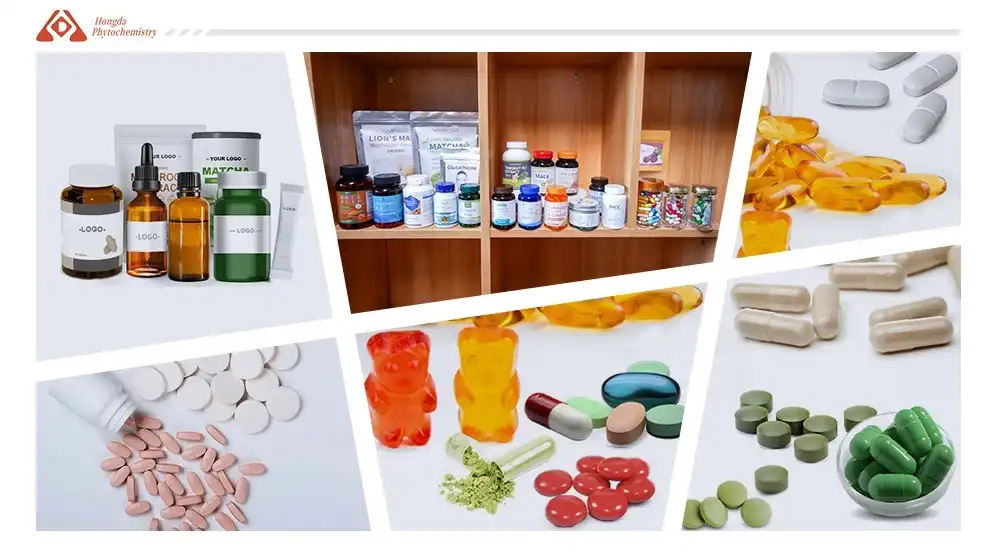
Choosing the right liposomal curcumin powder comes down to a few smart checks: clear curcuminoid content, well-documented particle size and entrapment, transparent ingredients, a controlled manufacturing process, and current certifications. Add small pilot tests and sensible storage, and you dramatically reduce risk. A partner with real factory strength makes each of these steps easier. Hongda combines more than twenty years of extract experience, laboratory support, and customization to help brands build with confidence. Reach out, request a sample, and put these guidelines to work on your next project.
FAQ1. What makes liposomal curcumin powder different from regular curcumin?
Curcumin is enclosed in phospholipid vesicles and dried, which improves handling stability and dispersion.
2. Which specifications should I check first?
Curcuminoid content by HPLC, particle size, entrapment efficiency, and zeta potential.
3. Is a powder better than a liquid liposome?
Powder is easier to ship, store, and blend, provided the drying process protects the vesicles.
4. How should I store it?
Keep it sealed, away from light, in a cool, dry place.
5. Can Hongda customize a product?
Yes. Hongda accepts customization and can discuss specifications, packaging, and samples.
Work with Hongda to Bring Your Curcumin Project to Life
Ready to move from research to real products? Shaanxi Hongda Phytochemistry has spent more than two decades perfecting natural plant extracts, and our cGMP factory, SGS-certified laboratory, and experienced scientists are here to support your next launch. Whether you need liposomal curcumin powder, a custom blend, or complementary ingredients such as quercetin, rutin, or green tea extract, our team can help you choose the right specifications and packaging. Customer service is available around the clock for questions about products, documents, and logistics. We offer over 400 products, and if you cannot find what you need on our website, we will help you source it. Email duke@hongdaherb.com today to request samples, technical data, or a tailored quotation, and let Hongda help you build a product your customers will trust.
References
1. Chen, X., Zou, L. Q., Niu, J., Liu, W., Peng, S. F., and Liu, C. M. "The Stability, Sustained Release and Cellular Antioxidant Activity of Curcumin Nanoliposomes." Molecules, 2015.
2. Anand, P., Kunnumakkara, A. B., Newman, R. A., and Aggarwal, B. B. "Bioavailability of Curcumin: Problems and Promises." Molecular Pharmaceutics, 2007.
3. Nelson, K. M., Dahlin, J. L., Bisson, J., Graham, J., Pauli, G. F., and Walters, M. A. "The Essential Medicinal Chemistry of Curcumin." Journal of Medicinal Chemistry, 2017.
4. Hewlings, S. J., and Kalman, D. S. "Curcumin: A Review of Its Effects on Human Health." Foods, 2017.
5. Cheng, C., Peng, S., Li, Z., Zou, L., Liu, W., and Liu, C. "Improved Bioavailability of Curcumin in Liposomes Prepared Using a pH-Driven, Organic Solvent-Free, Easily Scalable Process." RSC Advances, 2017.
6. Akbarzadeh, A., Rezaei-Sadabady, R., Davaran, S., et al. "Liposome: Classification, Preparation, and Applications." Nanoscale Research Letters, 2013.
Related Products





YOU MAY LIKE