What Determines Liposomal Silymarin Powder Stability?
2026-09-29 14:11:49
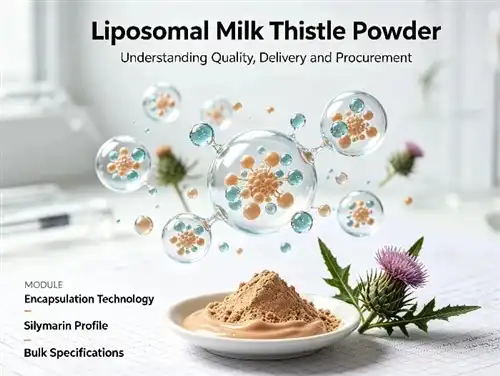
Ask any formulator why a promising ingredient bombs on the market, and you’ll get the same response most of the time: it didn’t remain stable. A prime example is liposomal silymarin powder. Milk thistle seed flavonolignan complex, silymarin, is well-known for its liver health reputation, but it is susceptible to heat, light, and oxidation, and is poorly soluble in water. Encapsulation in phospholipid vesicles and drying to a free-flowing powder is a clever response, but the protection only lasts if the vesicles, the procedure, and the storage conditions are all correct. In this post, we explore what actually determines the stability of liposomal silymarin powder, from lipid selection to freeze-drying to warehouse humidity, so that you may safely acquire, mix, and store it.
Why Stability Matters for Liposomal Silymarin Powder
The Natural Weak Points of Silymarin
Silymarin is a mixture of chemicals including silybin, isosilybin, silydianin, and silychristin, with silybin often making up the bulk of the mixture. Published research defines these polyphenols as being very temperature-, light-, and oxidation-sensitive and having limited solubility in water. That combination is why ordinary silymarin might lose its efficacy during storage, or be absorbed unevenly if eaten. The initial purpose, therefore, is to protect those fragile molecules from the outside world when the producer transforms it into liposomal silymarin powder. This knowledge of the beginning point allows you to appraise any product on the market, since the quality of that shield decides whether a batch will still function months after it leaves the factory.
How Liposomes Create a Protective Shield
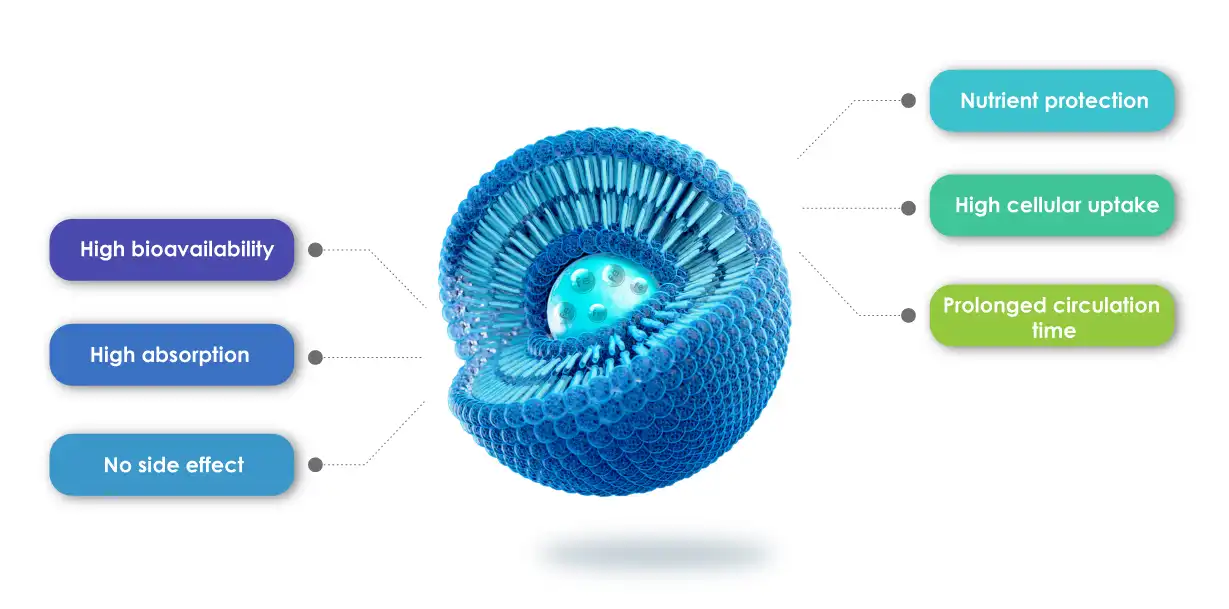
A liposome is a small sphere of phospholipids, the same family of chemicals that make up cell membranes. In the fat layer, silymarin is partially protected from the air, moisture, and stomach conditions. Liposomal silymarin has been shown to dissolve better, and one formulation with bile salts has been shown to reach far greater concentrations in the blood than plain silymarin powder. The lesson to a buyer is that liposomal silymarin powder has two advantages on the table, i.e., improved handling stability in storage, and a delivery strategy that aids absorption. But neither advantage comes by default. The shield only functions if the vesicles remain intact. This is why the remainder of this tutorial is about what keeps them intact.
What Stable Powder Means for Your Brand
Stability is not some kind of abstract laboratory problem. It tells us whether your capsules, sachets, or functional drinks taste, look, and perform the same in month twelve as they did in month one. A stable liposomal silymarin powder guarantees consistent dosage, fewer customer complaints, and a longer usable shelf life, protecting your profits. It also facilitates paperwork, since retailers and distributors are increasingly requesting stability data before listing a new supplement. Brands that make stability a selling factor rather than an afterthought tend to get repeat purchases. And thinking about it early also saves money, since reformulating post-launch is a significantly more expensive process than picking the proper ingredient in the first place.
Formulation Choices That Shape StabilityPhospholipid Type and Ratio
The phospholipid is the wall of every vesicle, and hence its quality determines the ceiling for stability. The more unsaturated lipids, the more susceptible to oxidation. The more saturated lipids, the sturdier, less leaky membranes. The ratio of silymarin to phospholipid is also important: too little lipid leaves active material exposed, too much dilutes the load per gram. In published work, a common laboratory formula employed something like ten parts phospholipid to one part silymarin. If you’re obtaining liposomal silymarin powder, it’s worth asking what phospholipid was used, how it was purified, and how the ratio was selected. Those responses tell if stability was engineered in, or left to chance.
Particle Size and Surface Charge
Smaller vesicles that are more homogeneous tend to remain afloat and avoid clumping better. The surface charge, measured as zeta potential, offers extra protection since highly charged particles resist each other and do not fuse. One investigation using optimized silymarin liposomes showed a particle size of over 160 nanometers and a zeta potential of around minus 62 millivolts, with an entrapment efficacy of more than 90 percent. The liposomes were claimed to be the most stable of the techniques compared. When you analyze liposomal silymarin powder, two of the most telling statistics on a technical data sheet are size distribution and zeta potential. A provider that tests these often typically does a good job managing the complete process.
Antioxidants, Carriers, and Protective Additives
Even a well-formed liposome may require backup. Formulators often include antioxidants, such as tocopherol, to decrease lipid oxidation, and cholesterol or plant sterols to thicken the membrane. Carriers such as maltodextrin or sugars may cushion the vesicles and allow them to survive the transition to powder when the liquid liposomes are dried. Each ingredient affects flow, taste, solubility, and label statements; thus, the choice should be appropriate for the end product form. An excellent liposomal silymarin powder has the right mix of these ingredients, without overwhelming the composition. Ask your supplier what protective substances are in their product and why. If they are candid in their replies, it typically means they really know their formulation.
The table below summarizes the main formulation levers and what to review for each.
|
Stability Factor
|
What It Influences
|
What to Ask a Supplier
|
|---|---|---|
|
Phospholipid type
|
Membrane strength, oxidation resistance
|
Source, purity, saturation level
|
|
Silymarin-to-lipid ratio
|
Protection and active load
|
Chosen ratio and rationale
|
|
Particle size and PDI
|
Uniformity, resistance to aggregation
|
Average size and distribution data
|
|
Zeta potential
|
Repulsion between vesicles
|
Measured value and method
|
|
Protective additives
|
Oxidation control, drying survival
|
Antioxidants and carriers used
|
Processing, Drying, and Storage ConditionsPreparation Method and Its Lasting Impact
The method of liposome preparation leaves a mark on their stability. According to researchers, the supercritical fluid approach offered greater entrapment, smaller particles, and better stability in silymarin liposomes as compared to thin-film dispersion and reversed-phase evaporation. Industrial manufacturers may employ various strategies, such as high-pressure homogenization or proliposome approaches, but the concept remains the same: homogeneous vesicles arise under regulated circumstances. Temperature, solvent residue, mixing energy, and batch size are all important. A good liposomal silymarin powder producer will record these characteristics and repeat them dependably, since slight deviations from batch to batch may subtly shorten shelf life even if the product seems similar.
Freeze-Drying and the Fragile Moment of Water Removal
The most risky stage is moving from liquid liposomes to powder. Lyophilization (or freeze-drying) removes water very softly and may assist to avoid the hydrolytic and oxidative destruction that might occur in a damp environment. It may also modify the vesicles themselves. For example, one study using lyophilized silymarin liposomes reported a significant increase in vesicle size and polydispersity following drying. That’s why cryoprotectants and regulated freezing rates are so critical. With liposomal silymarin powder, the issue is not just if the product was freeze-dried, but whether the vesicles were tested after rehydration and found intact. Good vendors check this, rather than assume it.
Packaging, Temperature, Humidity, and Light
Once the powder is done, the environment takes over. Moisture is the worst adversary, since even a little moisture may bring chemical processes back to life and produce clumping. Heat accelerates oxidation, and silymarin may be immediately degraded by light. Sensible storage for liposomal silymarin powder involves moisture-resistant Packaging, sealed opaque containers, a cold and dry warehouse, and desiccant when needed. Do not open repeatedly in a humid area. Reseal the bag after each use. Brands that encapsulate the powder should also regulate the humidity of the filling area. These are inexpensive habits, but they frequently determine whether the final pill in a bottle is as excellent as the first.
For assistance choosing the best storage and packaging for your product format, please contact duke@hongdaherb.com, and the Hongda staff would be happy to provide you with realistic ideas for your project.
Verifying Quality and Choosing the Right SupplierTests That Prove Stability
Claims are cheap, but data is convincing. Useful checks for liposomal silymarin powder include particle size and polydispersity after rehydration, zeta potential, entrapment efficiency, silybin content by HPLC, moisture content, and microbial limits. Accelerated stability testing at elevated temperature and humidity gives an early indication of shelf life, while real-time testing confirms it. The table below lists common checks, with reference values drawn from a published optimized formulation to show what good characterization looks like. Your own specifications will depend on the supplier's method and your intended use.
|
Quality Check
|
Why It Matters
|
Example Reference from Published Research
|
|---|---|---|
|
Particle size
|
Uniformity and physical stability
|
About 160 nm in an optimized silymarin liposome
|
|
Zeta potential
|
Resistance to aggregation
|
About minus 62 mV in the same study
|
|
Entrapment efficiency
|
Share of silymarin protected inside vesicles
|
Above 90 percent reported
|
|
Silybin content (HPLC)
|
Potency and batch consistency
|
Confirmed per batch by a qualified lab
|
|
Moisture content
|
Shelf life and flow
|
Set within the supplier's specification
|
What a Capable Supplier Looks Like
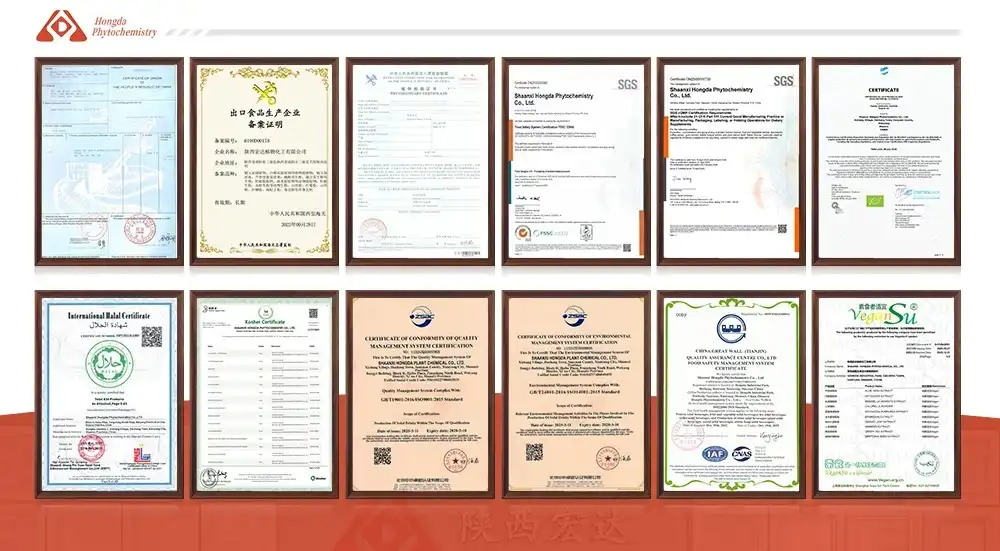
Every stable batch has a factory behind it controlling its procedure. Shaanxi Hongda Phytochemistry Co., Ltd. was established in 2001, became a national high-tech firm in 2010, and has a 20,000-square-meter site with modern extraction equipment and an SGS-certified laboratory and cGMP plant. There are more than twenty experts from famous colleges to assist research and more than a hundred qualified operators to keep manufacturing operating. Certification: SGS, cGMP, HALAL, KOSHER, BRC, FDA, ISO9001, ISO22000, ORGANIC, FSSC. This mix of expertise, testing capability, and established processes is just what you want to see when you are shortlisting partners for liposomal silymarin powder.
Customization, Samples, and Long-Term Support
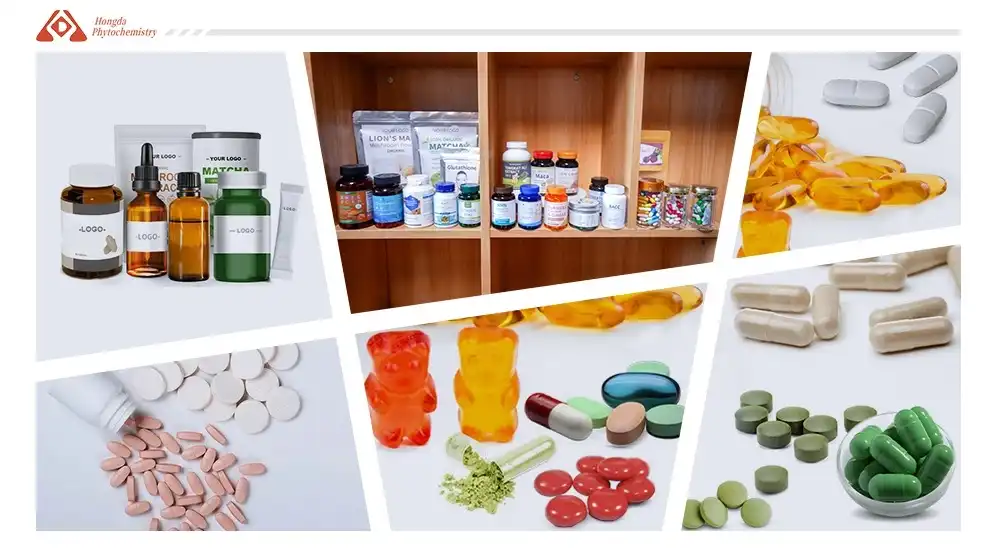
A good partner is flexible since no two goods are similar. Hongda is able to accept modifications, so that the specifications, packaging, and documentation for liposomal silymarin powder may be negotiated around your intended use, whether it be capsules, pills, powdered beverages, or mixed formulae. Ask for a sample and a certificate of analysis and do your own stability tests, using your actual storage circumstances. Customer support is available 24/7 to answer packaging or logistical problems, and the firm includes more than 400 goods, so it’s simple to acquire complementary substances such as quercetin, rutin, or green tea extract under one roof. A partner that sticks around after the first shipment is worth more than a slightly lower price.
Conclusion
So, good phospholipids, homogeneous vesicles with a high surface charge, protective additives, a well-regulated drying stage, and sealed, cold, and dry storage all contribute to providing liposomal silymarin powder stability. Every connection is important since silymarin is susceptible to heat, light, and oxidation naturally. The best way is to deal with a manufacturer that monitors these factors and is transparent with the data.” Hongda provides you with the expertise, the laboratory assistance, and the Certifications to achieve just that. Ask for a sample, test it under your own circumstances, and create your product with an ingredient you can trust.
FAQ1. What is the biggest threat to liposomal silymarin powder stability?
Moisture, heat, light, and oxygen together, because silymarin is sensitive to all four.
2. Why is zeta potential important?
It shows how strongly vesicles repel each other, which helps prevent clumping and merging.
3. Does freeze-drying affect the liposomes?
It can change vesicle size, so protective carriers and post-drying testing are important.
4. How should I store liposomal silymarin powder?
Keep it sealed in opaque, moisture-resistant packaging in a cool, dry place.
5. Can I request custom specifications?
Yes. Hongda accepts customization and can discuss samples and documents for your project.
Partner with Hongda for Stable, Reliable Silymarin Solutions
Liposomal silymarin powder manufacturer/Liposomal silymarin supplier/Liposomal silymarin powder supplier
Choosing the right ingredient partner can save you months of trial and error. Shaanxi Hongda Phytochemistry has spent more than twenty years refining natural plant extracts, and our cGMP factory, SGS laboratory, and experienced research team stand ready to support your next project with liposomal silymarin powder. We offer customization, professional after-sales service, and customer support around the clock, so your questions about products, packaging, and logistics get quick answers. With more than 400 products available, we can also help you find related ingredients that do not appear on our website. Email us at duke@hongdaherb.com to request samples, technical data, or a tailored quotation, and let Hongda help you turn a promising formula into a dependable product.
References
1. Yang, G., Zhao, Y., Zhang, Y., Dang, B., Liu, Y., and Feng, N. "Enhanced Oral Bioavailability of Silymarin Using Liposomes Containing a Bile Salt: Preparation by Supercritical Fluid Technology and Evaluation In Vitro and In Vivo." International Journal of Nanomedicine, 2015.
2. Elmowafy, M., Viitala, T., Ibrahim, H. M., et al. "Silymarin Loaded Liposomes for Hepatic Targeting: In Vitro Evaluation and HepG2 Drug Uptake." European Journal of Pharmaceutical Sciences, 2013.
3. Kidd, P., and Head, K. "A Review of the Bioavailability and Clinical Efficacy of Milk Thistle Phytosome: A Silybin-Phosphatidylcholine Complex (Siliphos)." Alternative Medicine Review, 2005.
4.. Abenavoli, L., Capasso, R., Milic, N., and Capasso, F. "Milk Thistle in Liver Diseases: Past, Present, Future." Phytotherapy Research, 2010.
5. Chu, C., Tong, S. S., Xu, Y., et al. "Proliposomes for Oral Delivery of Dehydrosilymarin: Preparation and Evaluation In Vitro and In Vivo." Acta Pharmacologica Sinica, 2011.
6. Chen, C., Zhang, Y., et al. "Liposomes as Carriers for Oral Delivery: Stability and Lyophilization Considerations." Journal of Pharmaceutical Sciences, 2012.