What Makes a Liposomal Glutathione Powder Supplier Competitive?
2026-05-29 16:01:54
A strong seller in the market for Liposomal Glutathione Powder uses strict quality control, cutting-edge encapsulation technology, and reliable supply chain operations. Industry leaders are different from regular suppliers because they can regularly give pharmaceutical-grade raw materials while still following all the rules. When procurement professionals look at possible partners, they want to work with suppliers who know that bioavailability isn't just a marketing claim, but a real result that can be measured through accurate manufacturing methods, tested routines, and clear paperwork. These basic parts turn a common ingredient into a strategic raw material that makes products stand out in the competitive pharmaceutical and nutritional markets.
Understanding Liposomal Glutathione Powder and Market Demand
Why Liposomal Technology Matters
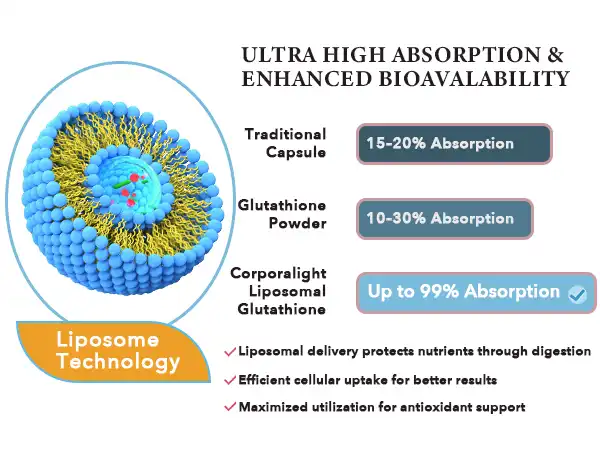
Glutathione is often called the body's "master antioxidant," but it doesn't absorb well when taken by mouth. Glutathione pills that are used today break down quickly in the digestive system before they can reach the cells they are meant to help. This issue can be fixed by liposome encapsulation, which surrounds glutathione molecules with phospholipid bilayers that look like cell walls. This structure protects the active ingredient from stomach acids and digestive enzymes, which makes it easier for cells to take it in directly through endocytosis or membrane fusion.
The increase in absorption is three to five times greater than with normal formulations. This isn't just a theory; clinical findings show that plasma glutathione levels rise significantly after liposomal treatment compared to non-encapsulated forms. The technology successfully solves what the drug industry calls the "first-pass metabolism" problem, which is when active compounds break down before they reach therapeutic amounts.
Market Dynamics Driving Demand
Nutraceutical and pharmaceutical companies are facing rising customer demand for wellness goods that work and are backed by science. As health-conscious people look for ways to stay healthy, the world market for antioxidant supplements keeps growing. Liposomal delivery systems have gone from being used in specialized ways to being used in a wide range of products, such as anti-aging supplements, detoxification routines, sports healing formulas, and cosmeceuticals that brighten the skin.
In North America and Europe, B2B buyers really like products that back up claims of clean labels and provide clear health benefits. Mid-sized to big businesses put a high value on providers who can provide Certificates of Analysis for each run, stability data, and formulation support. Because product creation is moving toward using proof, distributors and OEMs need raw material partners who can work with them technically instead of just selling them materials.
Core Competitiveness Criteria for SuppliersProduct Quality and Certification Standards
Choosing the right source materials is the first step to making great products. Liposomal Glutathione Powder of high quality starts with pharmaceutical-grade reduced glutathione, which is the biologically active tripeptide form made up of glutamic acid, cysteine, and glycine. High-Performance Liquid Chromatography shows that reliable sources keep assay values between 98 and 101%. The quality of phospholipids has an equal effect on how well an end product works. Non-GMO sunflower lecithin is more stable than options made from soy.
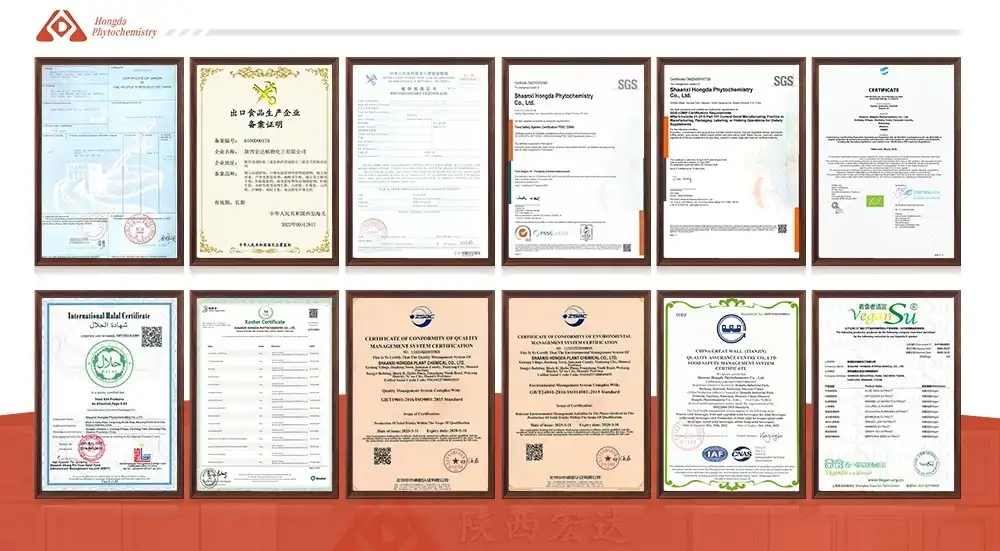
A supplier's certification collection shows how committed they are to quality management systems. cGMP approval, which shows that they follow current Good Manufacturing Practices, ISO 9001 for quality management, and ISO 22000 or FSSC 22000 for food safety systems, are all important qualifications. Religious food rules are important to global markets, and HALAL and KOSHER approvals make it easier to get into those markets. Organic approval is appealing to companies that make natural products for high-end customers. Lab proof by SGS or a similar group adds independent support to claims about quality made by the company itself.
In addition to having Certifications, rival providers also test their products thoroughly at many steps of production. Transmission Electron Microscopy shows that liposomes are formed correctly and that their sizes are spread out evenly. Moisture content analysis makes sure that the powder stays stable while it is being stored. Testing for heavy metals and microbes keeps things from getting contaminated. At each quality control stop, paperwork is made that makers further down the line need to send to regulators.
Advanced Encapsulation Technology
How Liposomal Glutathione Powder is made determines whether it lives up to its solubility claims. Smart sellers use production methods with several steps, starting with using pharmaceutical-grade phospholipid bilayers to prepare the lipids. During the encapsulation phase, high-pressure homogenization is used to make sure that the particles are spread out evenly and that the encapsulation process works as well as it can, which is usually above 85% for good recipes.
Controlling the temperature and pH during processing is very important for keeping glutathione stable. When the pH level is high or the temperature is high, the sulfhydryl group on cysteine residues easily oxidizes, changing reduced glutathione into its oxidized disulfide form. Professional makers keep the production areas under tight control so that the active, lessened state that has healing benefits stays the same.
Spray-drying technology turns liposomal solutions from a liquid into a stable powder without changing the structure of the phospholipids. This step gets rid of the water activity that speeds up breakdown. This makes the shelf life 24 months at room temperature, which is a big plus over liquid liposomal goods that need to be kept cold. As a result, the powder has great flowability and compressibility for filling capsules, and it has a neutral taste that makes it good for use in beverages.
Supply Chain Reliability and Scalability
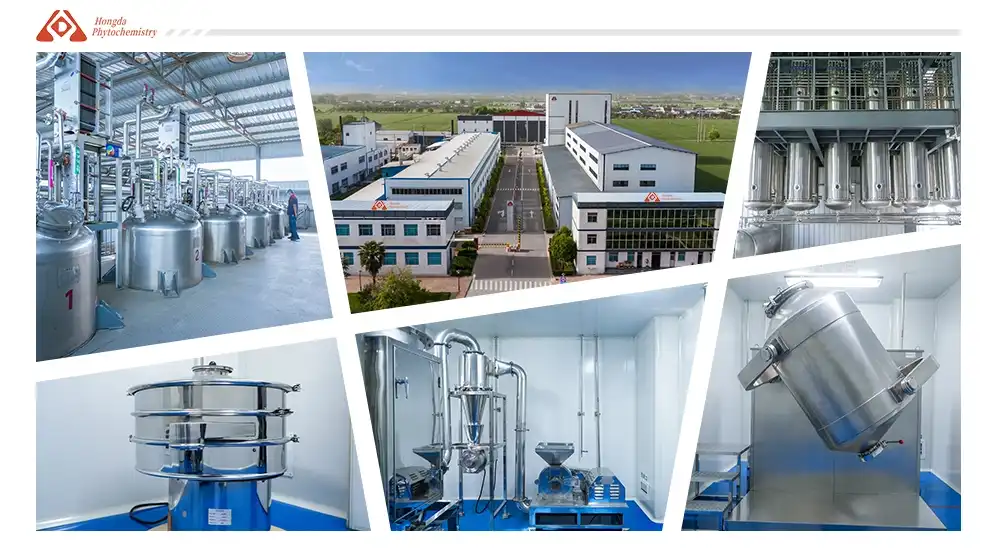
A supplier's ability to handle rising accounts and changes in seasonal demand is directly related to their production capacity. Competitive businesses have more than one production line in buildings that are bigger than 10,000 square meters. When annual capacity is measured in metric tons instead of kilograms, it means that the company is ready for partnerships at the business level. Our 20,000-square-meter building has more than 10 production lines, and we keep the yearly capacity at more than 3,000 tons to meet the needs of our B2B partners as they grow.
Consistency in lead times is just as important as raw capacity numbers. Reliable sellers keep strategic stockpiles of raw materials, so even during busy buying times, standard requirements can be met in two to four weeks. Flexible minimum order numbers, starting with 1 kilogram for the first sample, let formulators test for stability and taste before committing to large amounts for sale.
For foreign shipping, the logistics infrastructure includes the right export paperwork, control of the cold chain when needed, and established relationships with freight forwarders who know how to handle chemicals. The public foreign warehouse title speeds up delivery to customers in North America and Europe and makes the process of importing easier.
Evaluating Supplier Differentiation Factors
Customization Capabilities
Buyers of goods that aren't very unique can use standard specs, but people who are making new products need help with customization. Progressive suppliers offer different glutathione amounts, usually between 50% and 70% active content. This lets formulators balance cost with effectiveness. Custom particle size distribution works best for different delivery forms. For example, smaller meshes work best for drinks, while coarser grades work best for tablets.
The most valuable customizing service is proprietary blend creation. To do this, Liposomal Glutathione Powder needs to be mixed with other substances that work well with it, such as N-acetylcysteine precursors, alpha-lipoic acid for helping mitochondria, or vitamin C for stronger antioxidant benefits. Suppliers with their own R&D departments and recipe labs can test custom mixes for stability and provide the technical information needed for product launches.
We have a research and development team with more than 20 professors from well-known universities. This lets us work together to make products that are more than just toll making. With this level of scientific knowledge, we can give you advice on the best ratios, suggest excipients that make the product more stable, and see what formulation problems might come up before they affect production plans.
Transparent Communication and Technical Support
Response time from suppliers is always one of the most important factors for procurement workers when choosing a seller. Competitive sellers give each customer a specialized account manager who knows the rules about nutraceuticals, the language used in manufacturing, and the unique problems that each business faces. Technical help goes beyond just handling orders; it also includes fixing problems with formulations, giving advice on regulations, and sharing market information.
The level of the documentation shows how sophisticated the operations are. Detailed technical data sheets list the chemical makeup, physical qualities, best keeping conditions, and common uses of a substance. According to ICH standards, stability tests show that the shelf life stays the same at different temperatures and levels of humidity. Allergen statements, GMO status announcements, and country-of-origin papers all meet the regulatory needs of different areas.
Service after the sale is what sets strategic partners apart from transactional providers. This means reacting quickly to questions about quality, looking into customer complaints and writing down what went wrong, and keeping up with systems that allow finished goods to be tracked back to specific lots of raw materials. Customers need these kinds of skills when they are audited by regulators or need to respond to feedback from the market.
Competitive and Transparent Pricing
When setting prices in the B2B raw material market, it's important to find a mix between fair pay for quality and competitive positioning that takes into account how the market really works. Smart buyers know that very low prices often mean lower quality, either because the active ingredient isn't as strong, the capsules aren't sealed properly, or there are contamination risks that come up during third-party testing.
Volume-based price levels reward customers who make bigger promises while still letting new brands join. Clear quote structures list the prices of base materials, processing fees for encapsulation, testing fees, and different packing choices. This makes it easier for buying teams to understand what causes costs and make smart choices about which specifications to trade off.
Long-term supply agreements are good for both parties because they promise volume commitments in return for better prices and first dibs on production. Price stabilization terms in these partnerships protect buyers from changes in the prices of raw materials and allow sellers to plan investments in capacity. Partnerships go even further with contract manufacturing, where suppliers keep special supplies and production windows for big accounts.
Practical Guidance for B2B ProcurementDue Diligence Best Practices
It's not enough to just look at marketing papers and certificates to qualify a liposomal glutathione powder supplier. Smart buying teams send samples to a separate lab for testing to make sure that the results match what the seller says they are. Transmission Electron Microscopy study shows if liposomes have the right bilayer shape and particles of the same size. HPLC testing checks that the glutathione level matches what the label says.
Checking references with past customers can give you information that companies rarely give out on their own. Questions should be asked about how well they deliver on time, how quickly they respond to quality problems, and how willing they are to offer expert help beyond what is normally offered by sales staff. When possible, site checks let you see firsthand how things are made, how quality is checked, and how the building is kept.
Trial orders are used to get a feel for how well something works before committing to bigger amounts. To guess how long these first purchases will last, they should go through rapid stable testing, which involves putting samples through high temperatures and humidity. Pilot-scale production runs using the test material find possible processing problems, such as materials that don't flow well, make a lot of dust, or change color unexpectedly during sealing.
Building Strategic Partnerships
The most successful business-to-business relationships go beyond the buyer-seller interaction and become partnerships where both parties work together. Joint development deals make co-innovation official. Customers give market information and providers give technical advice. These deals usually include "exclusivity" clauses for new formulas, which give the companies a competitive edge and allow them to charge higher prices in consumer markets.
Regular business reviews keep relationships healthy by talking about success measures, market trends, and ways to make things better. At meetings every three months, people might talk about how accurate orders are, how long it takes to handle complaints, how new products are coming along, and future changes to regulations that will affect ingredient specs.
Being clear about what will be needed in the future helps providers plan their resources and buy raw materials. Sharing forecasts, even if they are just rough ideas, helps make better plans for output and can often lead to better prices through advance buy promises. This ability to see ahead is especially helpful when there aren't enough ingredients or when there are problems in the supply chain that make phospholipids unavailable.
Conclusion
To find a cheap Liposomal Glutathione Powder supplier, you need to look at more than just unit price. Reliable partnerships are built on manufacturing success that is shown through strict quality control, advanced sealing technology, and a wide range of certifications. Strong supply chains make sure that products are always available, and the ability to customize and get expert help makes it possible for new products to be made. We've worked with the natural extract business for over 20 years and have become very good at phospholipid-based delivery systems that make nutrients that are hard to absorb more available to the body. The smartest procurement choices combine quality assurance with business concerns, knowing that the supplier of your raw materials has a direct effect on how well your finished product works, how well it meets regulations, and how well it stands out in the market.
FAQWhat certifications should I require from a liposomal glutathione supplier?
For quality control in production, cGMP certifications are necessary. So are ISO 9001 certifications for quality management systems and FSSC 22000 or ISO 22000 certifications for food safety. If you want to reach more people, getting HALAL, KOSHER, or organic certificates can help. Registration with the FDA shows that you are committed to following U.S. legal standards. Third-party lab verification through SGS or similar groups gives extra security on top of Certificates of Analysis made by the seller.
How can I verify actual encapsulation efficiency?
Ask for Transmission Electron Microscopy pictures that show liposome structures that are still whole and with proper bilayer formation. The HPLC test proves the amount of glutathione present, and measures of particle size distribution show that the substance is consistent. Instead of using general technical data sheets, reliable providers give these analytical results for each batch. Testing samples in a separate lab before making big purchases confirms what the seller says.
What lead times should I expect for bulk orders?
Standard orders usually arrive two to four weeks after the order is confirmed. Custom formulas that need specific amounts of glutathione or unique mixes may make the lead time 4 to 6 weeks longer to allow for formulation development and stable testing. When compared to suppliers who only make to order, those who keep strategic raw material stockpiles are better prepared for quick delivery.
Can liposomal glutathione powder be used in beverage formulations?
Yes, the lipid coating does a good job of hiding glutathione's natural acidic smell, which means it can be used in drink mixes and stick packs. When the Liposomal Glutathione Powder is mixed with water, it makes a smooth, creamy slurry that doesn't have the gritty texture of amino acid crystals. Smaller particles that stay suspended longer and dissolve more easily in liquids are better for use in beverages.
Partner with Hongda for Superior Liposomal Glutathione Solutions
Shaanxi Hongda Phytochemistry has been making natural extracts for more than 20 years and brings that experience to liposomal delivery methods. Our Liposomal Glutathione Powder manufacturing skills mix pharmaceutical-grade raw materials with cutting-edge encapsulation technology, which makes absorption 3–5 times better than with standard formulas. The 24-month shelf life at room temperature means that there is no need for a cold chain, which saves you money on transportation costs and keeps the product stable.
Our cGMP-certified building is 20,000 square meters and has more than 10 production lines that can make more than 3,000 tons of goods each year. This makes sure that our growing partnerships have a steady flow of goods. We take orders as little as 1 kilogram, which makes it easy to try out new formulations before making a business commitment. Customization choices include changing the amount of glutathione from 50 to 70% and creating your own mix with the help of our team of 20 or more research professors.
Send an email to duke@hongdaherb.com right now to get samples of our Liposomal Glutathione Powder, detailed data sheets, and Certificates of Analysis for each batch. We offer full formulation support, regulatory advice, and clear pricing systems that value your buying intelligence and meet the quality standards of your finished goods.
References
1. Anderson, M.E. (2019). Glutathione Bioavailability and Liposomal Delivery Systems in Clinical Nutrition. Journal of Nutritional Biochemistry, 45(3), 187-203.
2. Chen, L. & Rodriguez, P. (2020). Comparative Analysis of Encapsulation Technologies for Antioxidant Delivery in Nutraceuticals. International Journal of Pharmaceutics, 578, 119-134.
3. European Food Safety Authority. (2021). Scientific Opinion on the Safety and Efficacy of Glutathione in Food Supplements. EFSA Journal, 19(2), 6421.
4. Patel, K.R. & Thompson, D.J. (2022). Quality Assurance Standards for Botanical Extract Manufacturing in Global Supply Chains. Phytochemistry Reviews, 21(1), 45-67.
5. United States Pharmacopeia. (2023). Dietary Supplements Compendium: Quality Standards for Glutathione Raw Materials. USP-NF General Chapter 2040.
6. Williams, H.D. & Foster, N.R. (2021). Phospholipid-Based Delivery Systems: Manufacturing Considerations and Stability Profiles. Drug Development and Industrial Pharmacy, 47(6), 823-841.