Why Test magnesium glycinate powder for Purity and Absorption?
2026-10-27 14:46:11
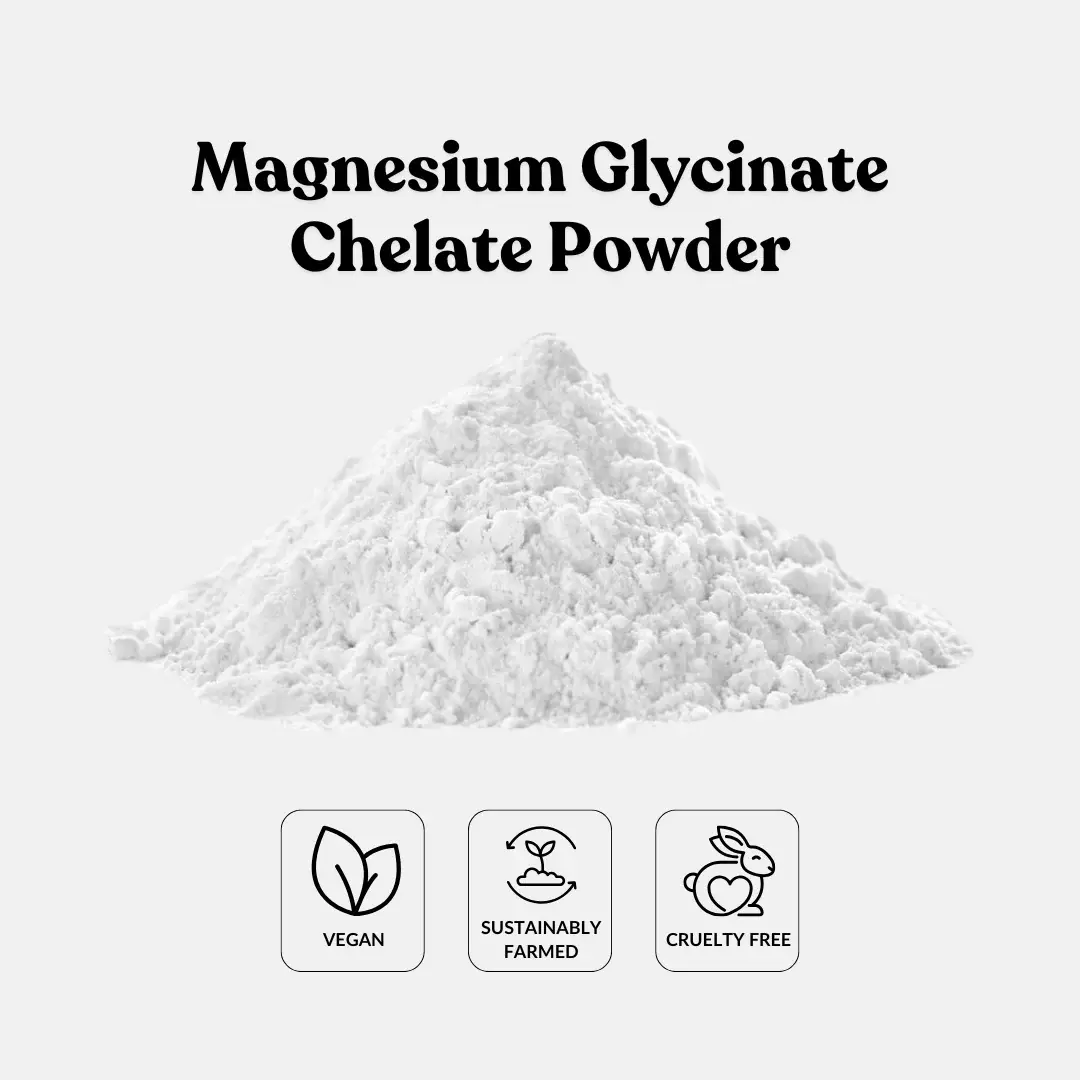
Anyone who has opened a tub of Magnesium Glycinate Powder knows how little the label shows. The white, fine powder looks the same whether it is carefully chelated and tightly controlled or loosely blended and poorly checked. Testing is how you tell the difference. Purity data confirms what is in the bag, and absorption-related data shows whether the mineral is likely to do its job in a finished product. This guide walks through what to test, what the numbers mean, and how to turn lab results into a confident purchase.
Why Verified Quality Is the First Thing Smart Buyers Ask About
The Real Cost of Skipping Lab Checks
One weak magnesium glycinate powder batch can impair production. The capsules are underdosed, stick packs clump, drink mixes taste metallic, and customers discreetly stop reordering. Brands that test inbound products find difficulties at ports, not stores. Every label claim, from elemental magnesium per serving to “free from gluten and soy,” depends on the raw ingredient operating as claimed. Verification protects your reputation. Recalls, reformulations, and lost distributors cost more than a test panel. Smart buyers consider lab data part of the ingredient price, not extra.
What “Chelated” Actually Promises?
Magnesium glycinate powder is chelated with glycine instead of salt. Formulators choose it because the mineral travels with an amino acid, promoting gentle, effective uptake. For a “chelated” claim, evidence is needed. Well-made batches feature uniform magnesium content, sharp identifying profiles, and uniform looks. Poorly made ones may have free glycine or unreacted magnesium oxide. Testing identifies authentic chelates from imitations, which is vital when your marketing pitch is better absorption and daily comfort.
Hongda’s Approach: From Source to Sealed Bag
Since 2001, Shaanxi Hongda Phytochemistry has prioritized quality control in plant and nutritional raw materials. After selection at the source, cGMP preparation, and review by top university scholars, the team packs the raw materials. The 20,000-square-meter plant's SGS-certified lab releases magnesium glycinate powder based on data. Buyers get batch documentation, exact responses, and supplier tracking. Every ingredient in 400+ items is disciplined.
Purity Testing: The Numbers Behind the LabelAssay and Elemental Magnesium
The principal test is assay. Powder magnesium content is usually stated as a percentage of elemental magnesium. Because magnesium glycinate powder might be bisglycinate chelate, hydrate, or buffered, the figure varies by grade. Verify certificates against order specifications. For your label claim, precise assay data lets you quantify how many milligrams of powder each capsule or scoop contains. Avoids overfilling, which costs money, and underfilling, which undermines compliance. Request titration or ICP and verify the lab's qualification.
Heavy Metals and Microbial Limits
Minerals need safety testing. Lead, arsenic, cadmium, mercury, total plate count, yeast, mold, and common diseases are tested by magnesium glycinate powder panels. This shows the powder is clean for supplements, functional foods, and sports nutrition. Select dietary-supplement limitations over internal targets no one outside the manufacturer can verify. Consistent results across batches suggest numerous impeccable certificates. A supplier revealing trend data usually reflects a well-managed process, not luck.
Identity Confirmation and Chelation Checks
Identity tests determine magnesium glycinate. Infrared analysis compares the sample to a standard, whereas free-glycine and loss-on-drying assays assess chelation and stability. Buyers' best defense against cheaper mineral replacement or blending is these inspections. Your manufacturing team will also receive appearance, solubility, and bulk density information from a good magnesium glycinate powder vendor. The table shows popular buyer requests.
|
Test Item
|
Why It Matters
|
Typical Buyer Expectation
|
|---|---|---|
|
Assay (elemental magnesium)
|
Confirms label-claim accuracy
|
Within the agreed specification range
|
|
Heavy metals (Pb, As, Cd, Hg)
|
Safety and regulatory compliance
|
Below recognized supplement limits
|
|
Microbiology
|
Hygiene and shelf stability
|
Within dietary-supplement limits
|
|
Identity (e.g., IR)
|
Prevents substitution
|
Matches reference standard
|
|
Loss on drying
|
Stability and flowability
|
Within the agreed range
|
Absorption: Why Form Matters as Much as Dose?Chelates and Gut Uptake
The body only benefits from magnesium; thus, dose alone is misleading. Humans absorb magnesium glycinate powder better than magnesium oxide, making it popular in calm, sleep, and recovery formulae. The chelate transfers minerals easily across intestinal amino acid pathways. Brands display well-chosen forms, not milligrams. Good data makes defending claims easier.
Solubility and Particle Size in Real Formulas
Absorption begins in the pill or glass. With melt-and-flow magnesium glycinate powder, drink mixes, stick packs, and tablets are easier to make and more fun. Particle size affects how quickly powder disperses, mixes with flavors and minerals, and fills capsules. Perform a sieve analysis and solubility test on your basic formula before scaling up. Many formulators test powder with vitamin D, calcium, or botanical extracts for consistency. These practical checks ensure customer satisfaction and production floor efficiency.
Fitting Daily Targets
Good testing helps you create sensible servings. The U.S. National Institutes of Health recommends daily magnesium intakes by age and sex, and a well-characterized magnesium glycinate powder enables you to design a serving that meets them.
|
Group (Adults)
|
Recommended Daily Magnesium
|
|---|---|
|
Men, 19–30 years
|
400 mg
|
|
Men, 31+ years
|
420 mg
|
|
Women, 19–30 years
|
310 mg
|
|
Women, 31+ years
|
320 mg
|
If you would like help matching a serving size to your target audience, our team is ready: send your formula brief to duke@hongdaherb.com and ask for a magnesium glycinate powder sample with a full certificate of analysis.

Sourcing Smart: Turning Test Data Into a Confident Purchase
Reading a Certificate of Analysis Like a Pro
An analytical certificate is pointless unless you can comprehend it. Check that the batch number matches your shipment, the test procedures are named, and all results meet specifications. Compare magnesium glycinate powder certificates across batches for stability, not perfection. Auditors and retail partners trust SGS-accredited laboratory reports. Follow-up questions—experienced suppliers enjoy informed buyers. Organize Certifications for faster client audits and regulatory renewals.
|
ITEM
|
SPECIFICATION
|
METHOD
|
|
Appearance
|
White powder
|
Visual
|
|
dentification
|
Consistent with the references
|
In-house
|
|
Magnesium (on dried basis) ,w/%
|
≥30
|
ICP-OES
|
|
Loss on drying , w/%
|
≤6.0
|
USP
|
|
PH
|
9~11
|
USP
|
|
Bulk density , g/ml
|
≥0.55
|
Balance
|
|
Tapped density , g/ml
|
≥0.85
|
Balance
|
|
Particle size , w%
|
9o% passing 6o mesh
|
Sieving
|
|
Heavy metals , mg/kg
|
≤10
|
USP
|
|
pb , mg/kg
|
≤1
|
ICP-MS
|
|
As , mg/kg
|
≤1
|
ICP-MS
|
|
As , mg/kg
|
≤1
|
ICP-MS
|
|
Hg , mg/kg
|
≤0.1
|
ICP-MS
|
|
Total viable count , cfu/g
|
≤1000
|
UsP or GB
|
|
Yeast and Mould , cfu/g
|
≤25
|
UsP or GB
|
|
Coliform bacteria , /g
|
Negative
|
UsP or GB
|
|
Escherichia Coli , g
|
Negative
|
UsP or GB
|
|
Salmonella , /og
|
Negative
|
UsP or GB
|
Certifications and Plant Standards
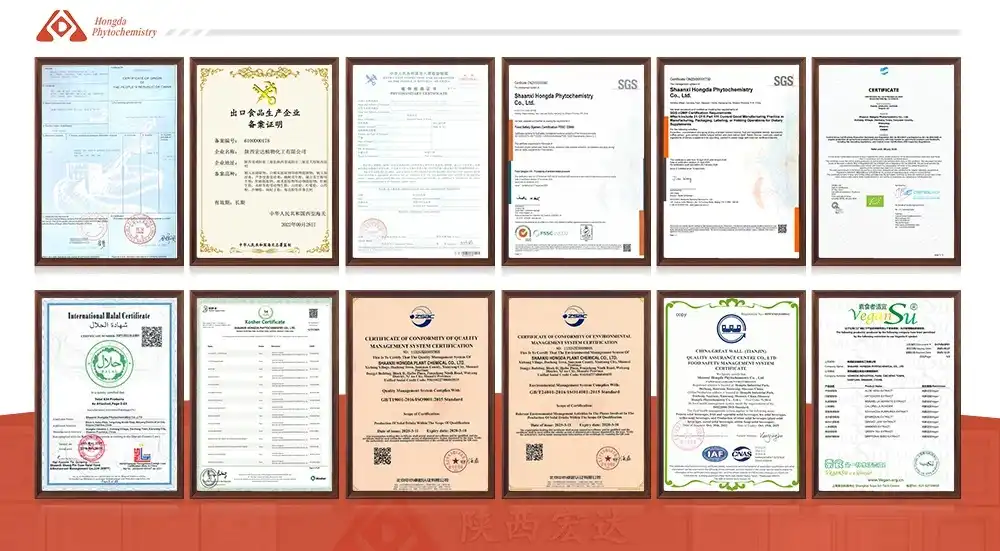
Documented factories back every good certificate. Hongda is cGMP, ISO 9001, ISO 22000, FSSC, BRC, FDA-registered, HALAL, KOSHER, organic, and national high-tech. These credentials indicate controlled methods, sanitary manufacturing, and auditable records for magnesium glycinate powder customers. Open markets with strict import and retail rules. Ask for updated regional certificates since supplement needs differ by country.
|
Credential
|
What It Signals to Buyers
|
|---|---|
|
cGMP
|
Controlled, documented manufacturing
|
|
ISO 9001 / ISO 22000
|
Quality and food-safety management systems
|
|
BRC / FSSC
|
Retail-recognized food-safety standards
|
|
HALAL / KOSHER
|
Access to religious-dietary markets
|
|
SGS laboratory
|
Independent-grade analytical testing
|
Customization and Ordering with Hongda
Any brand can use magnesium glycinate powder. Hongda customizes grade, particle size, and Packaging, and its sales and customer service team answers questions about products, logistics, and paperwork 24/7. For nighttime drinks, sports recovery sticks, and capsules, start with a small sample, validate it against your own tests, then scale. GABA, magnesium L-threonate, and green tea extract can be sent together to optimize your supply chain as the company makes over 400 products.

Conclusion
Testing makes magnesium glycinate powder trustworthy. Assay, heavy metals, microbiological, and identification tests verify purity, whereas solubility, particle size, and chelate quality affect absorption. Products with proven manufacturing and thorough documentation can gain repeat customers. Shaanxi Hongda has offered global buyers cGMP production, SGS lab testing, and flexible customization since 2001. Request specs, certificates, and samples. A little caution today protects your brand, consumers, and growth for years.
FAQ
What is the most important test for magnesium glycinate powder?
The most important test for magnesium glycinate powder is the assay for elemental magnesium, which is supported by identity and heavy-metal testing.
Why is the chelated form preferred?
Research suggests amino acid chelates are absorbed better than magnesium oxide.
Can the powder be customized?
Yes. Grade, particle size, and packaging can be adjusted to your formula.
Which documents should I request?
Request a batch-specific certificate of analysis and any relevant quality certifications.
Is the powder easy to mix into drinks?
Good-quality powder disperses well, but run a small solubility trial with your own base.
Ready to Source with Hongda? Request Your Sample Today
Whether you are building a new magnesium line or upgrading an existing one, Shaanxi Hongda is ready to help. Our cGMP factory, SGS-certified laboratory, and professor-led R&D team stand behind every batch of magnesium glycinate powder we ship. We accept custom requirements, answer questions around the clock, and keep documentation clear and complete. If you don't see the product you need on our website, just let us know—we can discuss it, as our portfolio extends beyond 400 items. Email us at duke@hongdaherb.com with your target specification, order volume, and market, and we will reply with samples, certificates, and a tailored quotation.
References
1. Schuette, S. A., Lashner, B. A., and Janghorbani, M. “Bioavailability of Magnesium Diglycinate vs Magnesium Oxide in Patients with Ileal Resection.” Journal of Parenteral and Enteral Nutrition, 1994.
2. Ranade, V. V., and Somberg, J. C. “Bioavailability and Pharmacokinetics of Magnesium after Administration of Magnesium Salts to Humans.” American Journal of Therapeutics, 2001.
3. National Institutes of Health, Office of Dietary Supplements. Magnesium: Fact Sheet for Health Professionals.
4. Institute of Medicine. Dietary Reference Intakes for Calcium, Phosphorus, Magnesium, Vitamin D, and Fluoride. National Academies Press, 1997.
5. Gröber, U., Schmidt, J., and Kisters, K. “Magnesium in Prevention and Therapy.” Nutrients, 2015.
6. United States Pharmacopeia. General Chapter <2232> Elemental Contaminants in Dietary Supplements.





YOU MAY LIKE
_1756697466812.webp "Baicalensis Root Extract Powder")