How Does Zinc Bisglycinate Powder Support Daily Wellness?
2026-10-27 15:17:51
Zinc is one of those minerals people don’t think about until they need it in a recipe, yet it quietly helps immune function, skin regeneration, protein synthesis, and how the body manages regular stress. The problem is always delivering it to you. Many old zinc salts taste like metal, feel heavy in the stomach, or are unevenly absorbed. So zinc bisglycinate powder has become the darling of the supplement companies. This chelate is formed by the binding of zinc to two molecules of the amino acid glycine and is a gentler, cleaner, and more formulation-friendly way to introduce zinc into daily activities. In this piece, we examine how it works, its job, quality criteria, and how to source it reliably.
Why Zinc Bisglycinate Powder Is Different From Ordinary Zinc
A Mineral Wrapped in an Amino Acid
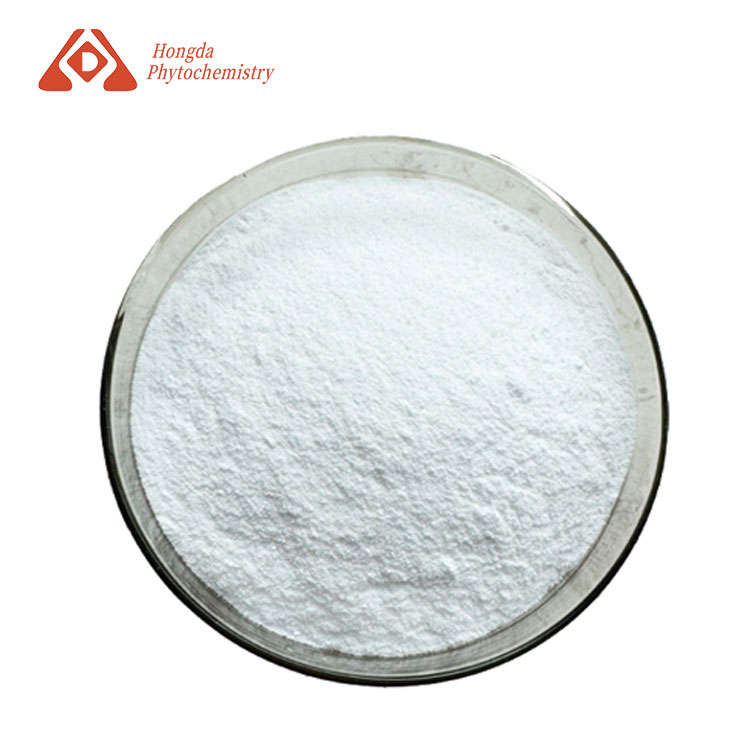
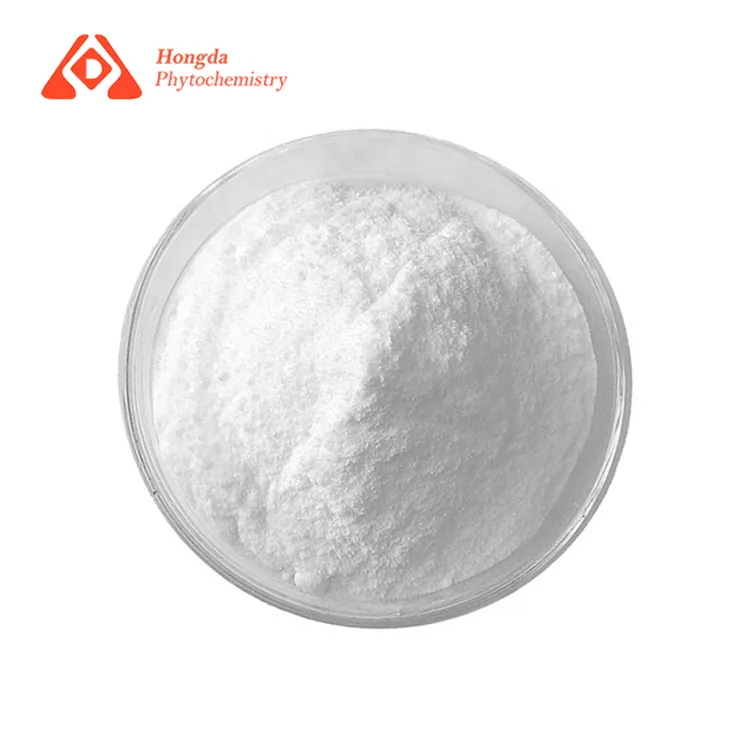
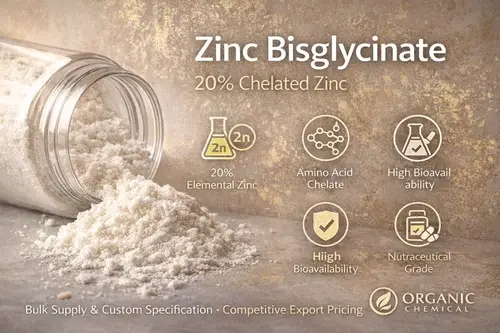
I love the idea of zinc bisglycinate powder. The chelate is two molecules of glycine holding a zinc ion in a stable ring-like structure. Glycine is a recognised and small amino acid, and the complex is acknowledged and handled differently than simple inorganic salts like zinc oxide or sulphate. The Hongda version, also known as glycine zinc, is a white crystalline powder with a minimum zinc concentration of 30 percent on a dry basis and a bisglycinate assay of at least 98 percent. That combination provides formulators with a concentrated supply of zinc that is simple to weigh, mix, and label. It speaks about a mineral that is believed to be cosy for customers.
Comfort, Taste and a Cleaner Label
Anyone who has ever eaten a badly made zinc tablet on an empty stomach knows the value of tenderness. The main reason why zinc bisglycinate powder is popular with companies is that the chelated form is associated with better tolerability and a more neutral taste than many other zinc salts. This makes it easier for customers to take their supplement on a regular basis, which is the most important element of any daily health practice. The Hongda product is also advertised as vegetarian-friendly, non-GMO, and devoid of common allergens, as well as the clean-label trend of today’s market. As customers scan the ingredient panel seeking a source they identify and a story they can accept, a glycine-bound mineral provides both without elaborate explanation.
Built for Capsules, Tablets, Powders and Drinks
A good component must function on the production line and in the body. Zinc bisglycinate is a free-flowing powder that combines well with other dry substances and accurately fills capsules. It is effective in pill, sachet, premix, and liquid form. It has a pH of 7.5 to 9.0 and moisture of slightly more than 1%. It is a good custodian and resistant to caking. The chelate is also soluble hence, it is ideal for functional beverages. For crystal-clear beverages, Hongda may also look at a micronised grade to keep the finished product looking good. Flexibility means one component may provide the power behind a range of products from morning immune pills to flavoured stick packs, without the need to support several zinc sources.
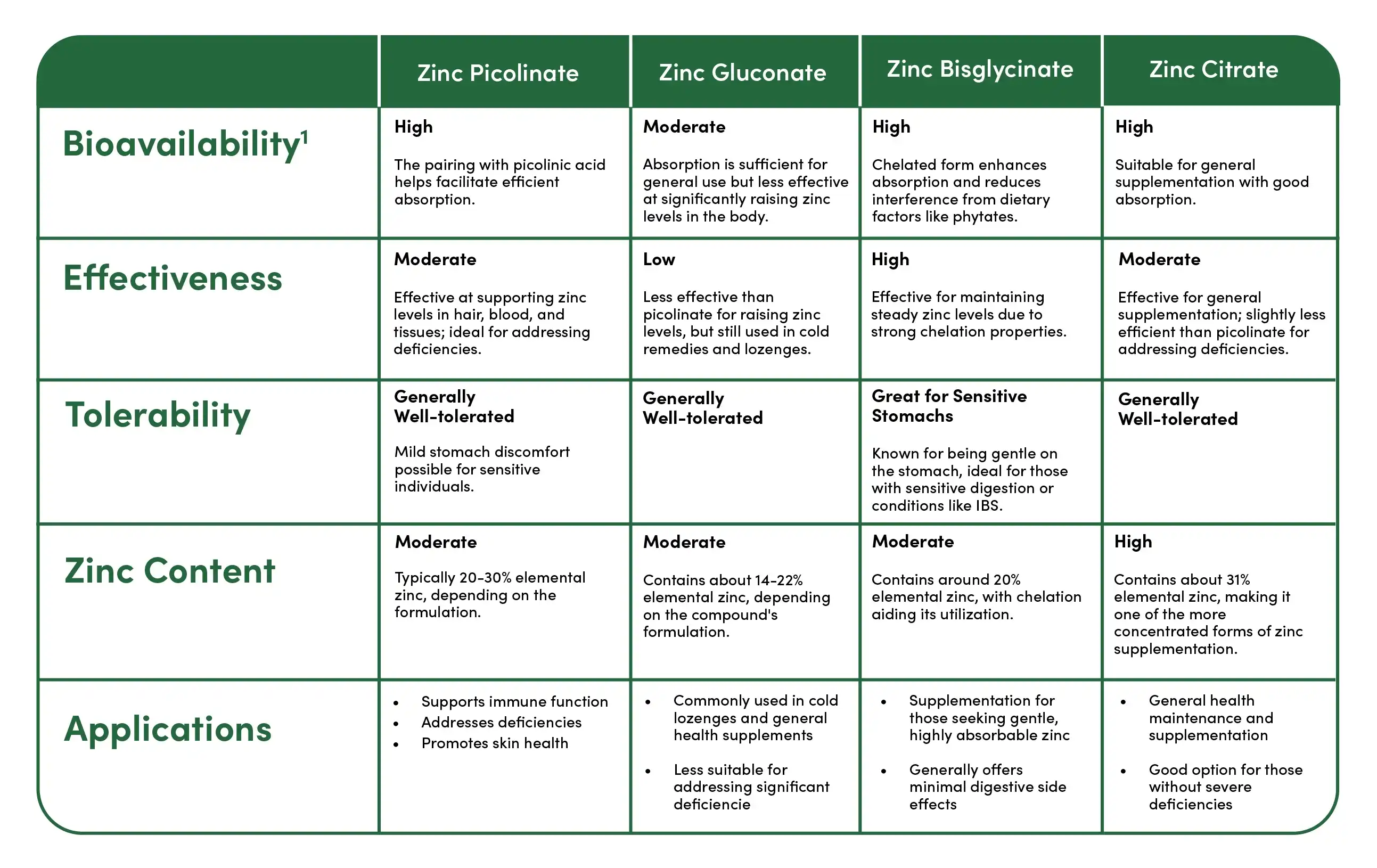
Daily Wellness Benefits: Where Zinc Bisglycinate Powder Fits
Everyday Immune Support
"Most individuals go straight for zinc when they're looking for immune assistance. The mineral is critical for the development and function of immune cells and regulators. EFSA says that zinc helps the healthy functioning of the immune system. That's why zinc bisglycinate powder is included in many daily immune capsules, seasonal blends and family multivitamins. When combined with vitamin C, vitamin D, or elderberry, clients may see the narrative in a flash. The powder is soft, neutral in character and may live alongside numerous actives without dominating the taste or capsule size. This makes immune formulas one of the cleanest, most commercial sure-fire locations for brand owners to begin working with a chelated zinc.
Skin, Hair and Beauty-From-Within
It also contributes to maintaining good skin, hair, and nails, and this has helped zinc move into the fast-growing beauty-from-within market. Zinc bisglycinate powder is a composition that may be compatible with collagen peptides, biotin, and vitamin C in capsule, powder, or gummy form. Another proposed purpose for Hongda's product is skin health, and the ingredient's mild profile makes it suited for formulations that are meant to be taken every day for months, not weeks. This audience loves consistency and clean substances, and a mineral bonded with glycine sings that tune. When you’re formulating a beauty supplement, consider how zinc will interact with the rest of your mix. One ingredient alone just doesn’t tell the same compelling narrative as a well-balanced mix.
Active Lifestyles, Prenatal Care and Beyond
Active people lose minerals in their sweat, and many are on diets that don’t always supply enough zinc, which is why you’ll commonly see it included in sports recovery formulas. Zinc bisglycinate powder is also used in prenatal and maternal formulas where sensitive tolerance is of major importance; zinc helps normal cell division and protein synthesis. Hongda states the chemical is good for immunological, maternal, sports, skin, and beverage applications and does not compete with calcium or magnesium in multi-mineral mixtures. This latter point is important to formulators since combination products are the norm in current supplements. Always check with your regulatory adviser to be sure of claims that may be made in each market. Let the well-established duties of the ingredient steer your posture rather than overreaching claims.

Reading the Specification: What a Quality Powder Looks Like
Assay, Zinc Content and Physical Properties
The specification document is where a supplier shows what it offers to provide. The specifications for Hongda zinc bisglycinate powder include the appearance of the powder as a white crystalline material, zinc bisglycinate not less than 98.0 percent, typical result 98.7 percent, zinc, dried basis, not less than 30.0 percent, typical result 30.1 percent, loss on drying, not more than 1.0 percent, typical result 0.49 percent, pH 7.5 to 9.0. Particle size is 90% by weight through a 60 mesh screen. Every measure counts. Assay tells you the purity; zinc content tells you how much mineral you receive per gram and moisture predicts storage stability. Always examine the paperwork and the certificate of analysis for your precise lot.
|
Item
|
Specification
|
Typical Result
|
|---|---|---|
|
Appearance
|
White crystalline powder
|
Conforms
|
|
Zinc bisglycinate
|
≥98.0%
|
98.7%
|
|
Zinc (dried basis)
|
≥30.0%
|
30.1%
|
|
Loss on drying
|
≤1.0%
|
0.49%
|
|
pH
|
7.5–9.0
|
8.1
|
|
Particle size
|
90% pass 60 mesh
|
Conforms
|
Source: Shaanxi Hongda Phytochemistry product specification for Zinc Bisglycinate Powder.
Safety Limits and Microbiological Control
Impurities demand special attention in minerals. A real provider openly shares their constraints. This zinc bisglycinate powder is standardised to 3 ppm lead, 1 ppm arsenic, 1 ppm cadmium, and 0.1 ppm mercury by atomic absorption. Microbiological limits: Yeast and mould Total plate count: Not more than 1 000 cfu/g. Not more than 100 cfu/g. E. coli and Salmonella: negative (by USP procedures). Hongda also works with independent laboratories such as SGS and Eurofins, and uses FTIR to confirm the formation of the chelate. These inspections provide your quality team documented proof of verification for every shipment, and make store audits far less unpleasant. "Get the certificate for each lot and put it away.
How the Chelate Is Made and Where to Start
The production route proves the constancy of quality. The chelate is made by reacting zinc oxide with L-glycine, provided by vendors with certificates of analysis, in jacketed reactors at 60-80 degrees Celsius with regulated pH for many hours. The solution is subjected to a series of treatments and dried into a powder before it undergoes testing for chelation, bacteria, and heavy metals before being sent. Zinc bisglycinate powder from the same manufacturer tends to behave in the same manner from batch to batch, freeing your team from repeatedly modifying recipes since every step is regulated. If you would like a specification sheet, a sample, or a recommendation for your formula, write to duke@hongdaherb.com, and the Hongda team will respond with documents and practical suggestions for your project.
|
Production Stage
|
What Happens
|
|---|---|
|
Raw material checks
|
Zinc oxide and L-glycine verified for identity and purity
|
|
Chelation
|
Controlled temperature and pH in jacketed reactors
|
|
Purification
|
Multi-stage filtration
|
|
Drying
|
Spray-drying into a free-flowing powder
|
|
Quality control
|
FTIR, microbial and heavy metal testing before packing
|
Source: Shaanxi Hongda Phytochemistry production process for Zinc Bisglycinate Powder.
Sourcing Zinc Bisglycinate Powder: From Sample to ShipmentTrial Orders, Samples and Pricing
A strong sourcing strategy begins small. Hongda has a minimum requirement for new clients to take a sample of the ingredient of 25 kg. Commercial quantities of 500kg and above are eligible for advantageous pricing. This way, you can check the ingredient before you buy in bulk. Qualified formulators may also request a free sample of 100 to 500 g with a certificate of analysis, generally given within a few days. Test your formula for taste, flow, dissolving, and stability. Lab work is at best as good as a pilot batch. Zinc bisglycinate powder is wonderful in various formulas, but every composition has its quirks, and they come out cheap in early testing. Magnify, increase the grade, and pass to the tech team. Write down your findings.
|
Purchasing Item
|
Details
|
|---|---|
|
CAS number
|
7214-08-6
|
|
Appearance
|
White crystalline powder
|
|
Packing
|
25 kg/drum, 27 drums/tray
|
|
Delivery
|
3–7 working days
|
|
Shelf life
|
24 months
|
|
Main markets
|
Europe, America, Southeast Asia, Russia
|
|
Certifications
|
cGMP, FSSC, KOSHER, HALAL, BRC, ORGANIC, ISO 9001, ISO 22000
|
Source: Shaanxi Hongda Phytochemistry product information page for Zinc Bisglycinate Powder.
OEM, ODM and Private Label Support
A lot of firms don't want a raw material; they want something polished, ready to go to market. Hongda provides OEM and ODM projects for zinc bisglycinate powder, quick-release or sustained-release tablets, vegan capsules, effervescent powders, sachets and liquid concentrates, including private-label Packaging, printing and labelling. The formulation is backed by a team of over twenty scientists. Quality includes certificates of analysis, allergy declarations and country-specific papers for registration. The company has its own storage and capacity of around three thousand tonnes per annum and is able to handle modest launches as well as huge endeavours. If you tell them your target market, dosage form and placement up front, the advice you receive will be on your product and not a generic template.
Packaging, Delivery and Certifications
Logistics and compliance keep a launch on pace. Hongda packs in 25-kilogram fibre drums with double-layer PE inner bags, 27 drums per tray, and estimates delivery within three to seven working days. Shelf life: 24 months in sealed containers, protected from light and moisture. The company has cGMP, FSSC, KOSHER, HALAL, BRC, ORGANIC, ISO 9001 and ISO 22000 credentials, and their primary markets are Europe, America, Southeast Asia and Russia; thus, the staff is conversant with the documents necessary for those places. Purchase the certificates that are crucial to your customers and make sure the generating facility is covered. Get current copies before you purchase. This simple technique gets around most customs delays and audit surprises.

Conclusion
Zinc bisglycinate powder supports daily wellness because it combines an essential mineral with the gentle, familiar carrier, glycine, providing formulators with a pleasant, clean-label ingredient for immunological, cosmetic, sports, and pregnancy goods. By reading the standard, verifying the safety limits, and picking a manufacturer with established systems, you will be successful. Since 2001, Shaanxi Hongda has been offering clients cGMP manufacturing, SGS laboratory and international Certifications, customisation and 24/7 support for more than 400 goods. If the ingredient you need is not listed on our website, simply write to duke@hongdaherb.com, and our team will help you find the right solution quickly and reliably.
FAQWhat is zinc bisglycinate powder?
It is a chelate in which zinc is bound to two glycine molecules, also called glycine zinc.
How much zinc does it contain?
The specification requires at least 30.0% zinc on a dried basis.
What is the minimum order, and are samples available?
Trial orders start at 25 kg, and qualified formulators can request samples of about 100 to 500 g.
Can it be used in beverages and tablets?
Yes. It suits tablets, capsules, powders, and drinks, and a micronized grade can be discussed for clear drinks.
How is it packed and how long does it last?
It comes in 25 kg drums with a 24-month shelf life when stored properly.
Ready to Work with Hongda? Request Your Zinc Bisglycinate Powder Quote
Your next supplement needs a mineral source that is mild, reliable, and properly tested. Hongda manufactures zinc bisglycinate powder in a cGMP plant, with SGS-standard testing, a comprehensive set of certifications, and a responsive workforce ready 24/7. Whether you want a 25-kilogram trial, a private-label capsule or a bespoke mix for a new market, we are ready to assist with samples, specs, packaging and transportation. Don’t leave your recipe to luck. Send your target grade, expected volume, and timeline to duke@hongdaherb.com today, and we will reply promptly with a clear quotation and practical recommendations. Let Hongda help you turn a trusted ingredient into a product your customers will love and reorder.
References
1. Maret W, Sandstead HH. Zinc requirements and the risks and benefits of zinc supplementation. Journal of Trace Elements in Medicine and Biology. 2006;20(1):3-18.
2. Gandia P, Bour D, Maurette JM, et al. A bioavailability study comparing two oral formulations containing zinc (Zn bis-glycinate vs. Zn gluconate) after a single administration to twelve healthy female volunteers. International Journal for Vitamin and Nutrition Research. 2007;77(4):243-248.
3. Prasad AS. Zinc: role in immunity, oxidative stress and chronic inflammation. Current Opinion in Clinical Nutrition and Metabolic Care. 2009;12(6):646-652.
4. Wessells KR, Brown KH. Estimating the global prevalence of zinc deficiency: results based on zinc availability in national food supplies and the prevalence of stunting. PLoS ONE. 2012;7(11):e50568.
5. Institute of Medicine. Dietary Reference Intakes for Vitamin A, Vitamin K, Arsenic, Boron, Chromium, Copper, Iodine, Iron, Manganese, Molybdenum, Nickel, Silicon, Vanadium, and Zinc. Washington, DC: National Academies Press; 2001.
6. Ashmead HD. Amino Acid Chelation in Human and Animal Nutrition. Boca Raton, FL: CRC Press; 2012.





YOU MAY LIKE