Why Does Liposomal Curcumin Powder Beat Standard Curcumin 95%?
2026-07-13 15:08:24
Liposomal Curcumin Powder is 95% more effective than regular curcumin. This is mostly because it uses advanced phospholipid encapsulation technology, which fixes the problem with traditional formulations' bioavailability. Standard curcumin is very pure, but because it doesn't like water, it is quickly flushed out of the body and has absorption rates below 1%. Liposomal delivery systems keep curcuminoids safe within lipid bilayers, which lets cells take them directly and skips the first round of metabolism. This means that the absorption is better by more than 20 times compared to regular extracts. This solves the main problem that has limited curcumin's therapeutic potential in both nutraceutical and pharmaceutical settings.
Liposomal Curcumin Specification
|
No.
|
TEST ITEM
|
SPECIFICATION
|
RESULT
|
|||
|
1
|
Description
|
Yellow Powder
|
Conform
|
|||
|
2
|
Particle size (20 mesh)
|
≥90%
|
Conform
|
|||
|
3
|
Loss on drying
|
≤5.0%
|
2.33%
|
|||
|
4
|
Bulk Density
|
Measured value
|
368g/L
|
|||
|
5
|
Tapped Bulk Density
|
Measured value
|
721g/L
|
|||
|
6
|
Heavy Metals
|
Arsenic (As)
|
≤2.0ppm
|
Conform
|
||
|
Lead (Pb)
|
≤0.5ppm
|
Conform
|
||||
|
Mercury (Hg)
|
≤0.3ppm
|
Conform
|
||||
|
Cadmium (Cd)
|
≤0.3ppm
|
Conform
|
||||
|
7
|
Microbiological
|
Total plate count
|
≤10000cfu/g
|
10cu/g
|
||
|
Total molds and yeasts
|
≤1000cfu/g
|
10cfu/g
|
||||
|
Coliforms
|
≤10MPN/g
|
≤0.3MPN/g
|
||||
|
E.Coli
|
Negative/25g
|
Negative
|
||||
|
Salmonella
|
Negative/25g
|
Negative
|
||||
|
Staphylococcvs
|
Negative/25g
|
Negative
|
||||
|
8
|
Assay
|
Curcumin
|
70.0%±5%
|
71.6%
|
||
|
Phospholipids (NON-GMO)
|
15.0%±5%
|
12.9%
|
||||
|
Fatty Acids
|
15.0%±5%
|
13.8%
|
||||
|
Conclusion
|
Meet the in house standard.
|
|||||
Understanding Curcumin and Liposomal Curcumin Powder
Standard curcumin 95% extracts have a lot of curcuminoids in them, but they are still limited by basic physical and chemical issues. The hydrophobic nature of the chemical structure makes it hard to dissolve in water, and the liver quickly turns absorbed molecules into inactive metabolites through a process called extensive glucuronidation. Studies show that when standard curcumin is taken by mouth, its plasma concentrations barely reach detectable levels, and its elimination half-lives of less than an hour make therapeutic windows very small.
Chemical Composition and Delivery Mechanisms
Using biomimetic phospholipid technology, liposome formulations completely change how curcumin is delivered. These methods use non-GMO sunflower lecithin to make tiny bubbles with two-layer membranes that are structurally similar to the walls of human cells. The lipophilic curcuminoids become part of these membrane structures, where they are protected from breaking down in water and become compatible with cellular transport systems. Pharmaceutical-grade products with encapsulation efficiencies of up to 90% make sure that the payload gets delivered as much as possible.
The particle size requirement of 100–200nm turns out to be very important for performance. This nanoscale dimension makes it easier for lymphatic absorption routes to work that skip the liver's first-pass metabolism. The phospholipid layer also acts like endogenous lipoproteins to allow receptor-mediated endocytosis. These combined processes explain absorption enhancement factors reported at 20-185 times higher than unformulated curcumin, with significantly longer circulation times supporting sustained therapeutic action.
Stability and Formulation Advantages
The lipid encapsulation matrix protects well against environmental stressors that break down regular curcumin. The phospholipid barrier greatly reduces the oxidative reactions that happen when light hits, the pH changes, or the temperature changes. In controlled conditions (2-25°C, light-protected storage), this means that the products can be kept for 24 months, while regular extracts need to be kept cold and lose more than 20% of their strength within months.
Another transformative benefit is that water can spread out easily. While it takes a lot of work to dissolve bulk curcumin using organic solvents or complex surfactant systems, Liposomal Curcumin Powder dissolves easily in water to make clear yellow-orange suspensions. This makes it possible to make clear drinks, topical emulsions, and injectable preparations that weren't possible with regular extracts. This greatly increases the number of product categories where the extracts can be used.
Why Liposomal Curcumin Outperforms Standard Curcumin — Core Advantages
Liposomal delivery systems work better than other methods because they improve pharmacokinetics in a way that can be measured. Comparative bioavailability studies show that Liposomal Curcumin Powder achieves peak plasma concentrations that are up to 39 times higher than equivalent doses of standard extract. Area-under-curve measurements show that it stays in the body for long periods of time. These improvements have a direct effect on therapeutic results, allowing lower effective amounts and better patient cooperation.
Enhanced Bioavailability Through Advanced Delivery
The encapsulation design deals with several absorption hurdles at the same time. The phospholipid barrier guards curcuminoids from pH-related breakdown in the stomach environment, which makes them much more stable in stomach acid. Intestinal epithelial cells recognise liposomal structures and move them through receptor-mediated pathways instead of passive diffusion, which doesn't work well for molecules that don't like water.
A key way that liposomal preparations are different is that they are taken up by lymphatics. The nano-sized vesicles prefer to enter the lymphatic system through lacteals in the intestines. They don't go through the portal circulation, which is where regular curcumin is broken down in the liver. This different way keeps the integrity of the substance and sends active forms straight to the systemic circulation, which greatly improves the bioefficiency profiles needed for pharmaceutical uses.
Extended Shelf Life and Supply Chain Benefits
For global delivery networks to work, the ingredients need to be able to keep their specifications throughout long and complicated supply chains. When it comes to steadiness, liposome technology is better, which means less waste, easier storage, and longer marketing windows. The phospholipid coating protects curcuminoids from oxidative breakdown processes that weaken standard extracts. To keep their potency, standard extracts usually need nitrogen flushing, opaque containers, and transport in the fridge.
Temperature resilience is especially useful for strategies for buying things from other countries. Normal curcumin breaks down quickly above 25°C, but Liposomal Curcumin Powder formulations keep the potency and integrity of the encapsulation over a wider temperature range while they are being stored and shipped. This stability profile lowers the chance of specification failures at destination markets, which lowers the number of rejections and improves the reliability of the supply chain. These are important factors for manufacturers that sell to regulated markets that have strict testing protocols for incoming materials.
Multi-Industry Application Versatility
Liposomal technology makes it possible to improve technical performance, which opens up new uses in many fields. Pharmaceutical formulators can make bioequivalent products with lower active loads. This lowers the cost of raw materials while keeping therapeutic goals the same. Nutraceutical companies can now use clear liquid delivery formats for functional drinks and ready-to-drink supplements, which, according to customer studies, command higher prices and more sales.
Better dermal penetration properties are good for cosmetic applications. The phospholipid structure makes it easier for the stratum corneum to pass. This brings anti-inflammatory and antioxidant effects to lower layers of skin, where collagen production and cell repair happen. This lets claims of effectiveness be backed up by in-vivo testing, which helps premium products stand out in beauty markets that are becoming more competitive and focused on formulations based on evidence and clinically proven active delivery systems.
Procurement Considerations for B2B Clients
Liposomal Curcumin Powder sourcing decisions need thorough evaluation frameworks that go beyond price comparisons. Quality control rules should require Certificates of Analysis that show how well the particles were encapsulated, how they were spread out in size using Dynamic Light Scattering, and how much curcuminoid was found using HPLC. Pharmaceutical-grade specs that require encapsulation efficiency of at least 90% give the best performance but cost a lot. Food-grade variants with encapsulation efficiency of at least 80% are cheaper for uses where regulatory requirements allow for wider specifications.
Quality Verification and Supplier Credentials
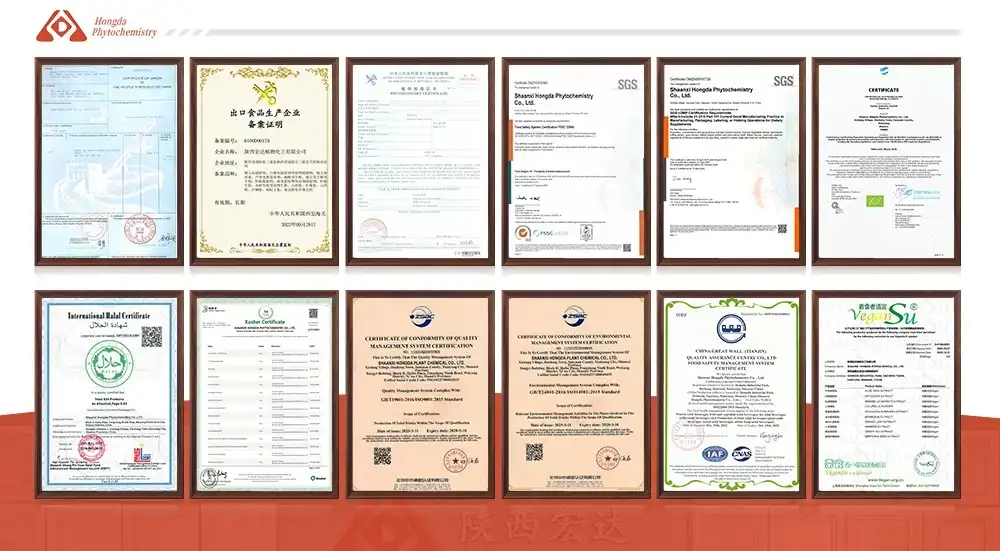
Reliable manufacturers keep third-party Certifications that prove their quality management systems and production standards. ISO 9001 certification shows that quality control methods have been written down, and ISO 22000 and FSSC 22000 certifications show that food safety management rules have been followed, which is important for use in nutraceuticals and drinks. Specialised certifications like HALAL, KOSHER, and ORGANIC credentials meet the needs of certain markets. Each certification increases the number of customers that can be served and the ways that products can get approved by regulators.
Accrediting a manufacturing site adds to the quality assurance markers. cGMP-certified production settings with separate cleanroom areas ranked at ISO Class 7 (Class 10,000) reduce the chances of contamination that could affect the purity and security of the product. SGS-certified labs that can check particle size, zeta potential, and encapsulation efficiency in-house show an advanced quality control infrastructure that supports batch-to-batch consistency, which is a must for pharmaceutical applications and well-known supplement brands that want to protect their reputation.
Pricing Dynamics and Volume Strategies
Because they have to be made in a certain way and use high-quality phospholipids, Liposomal Curcumin Powder usually costs three to five times as much as normal curcumin 95%. Volume commitments greatly impact unit economics, with price breaks often structured at 100kg, 500kg, and 1,000kg yearly buy levels. Strategic procurement teams should include bioavailability improvements in their total cost of ownership models. These improvements allow lower label claims and lower cost-per-dose, even though they require more money to be spent on raw materials.
How the packages are set up affects both the price and how well they can be handled. 25-kilogram bulk drums are best for makers who handle a lot of materials and have the right equipment to do so. They save money on freight costs and cut down on Packaging waste. Smaller 1 kg foil bags are more flexible and can be used for R&D samples, small-batch production, and adding new products to an existing line when annual volumes don't justify making bulk commitments. Manufacturers of more than one product can benefit from working with suppliers who offer a wide range of SKU options. This way, they can meet the needs of both new product development and large-scale commercial production.
Logistics and Storage Protocols
Temperature-controlled logistics and proper storage methods are needed to keep the integrity of the product throughout the distribution chain. Liposomal Curcumin Powder is more stable than liquid suspensions, but if the temperature goes above 25°C for a long time, it can damage the structures that hold the particles together. Specifications usually say to store them between 2°C and 25°C in dark, airtight cases that can control humidity to keep out moisture that can cause clumping and degradation.
International shipments should use insulated boxes with temperature monitoring devices that keep track of conditions while they're in transit. During the summer, ocean freight routes that go through equatorial regions have higher risk levels, which is why climate-controlled containers are needed. Alternatives like air freight cut down on travel time but raise the cost per kilogram, so an economic study is needed to weigh the risk of spoilage against the higher cost of transportation. Purchasing teams that work with temperature-sensitive markets benefit when suppliers keep warehouses in strategic locations that allow for regional distribution with the least amount of exposure to weather.
Liposomal Curcumin Powder vs Other Curcumin Forms — A Comparative Analysis
The Liposomal Curcumin Powder ingredient landscape includes different ways to give it, and each has its own performance ratings and cost-benefit analyses. Standard powder extracts are known to be pure and don't cost much, but they need to be taken with piperine or fat binders for low absorption. Capsule formats are convenient for finished products, but they don't fix the problems with bioavailability unless they use special delivery technologies.
Performance Benchmarking Across Delivery Systems
Nano-curcumin formulas reduce particle size in a number of ways. Usually, high-pressure homogenisation or wet milling is used to make submicron particles that are not encased in phospholipids. Even though they are better than regular extracts, absorption enhancement factors are usually only 5–10 times higher, which is a lot less than the 20–185 times higher improvements seen in liposomal systems. Lack of protective lipid barriers also lowers stability profiles, so they need to be stored with the same care as regular extracts.
The phytosome technology is a middle ground to connect curcumin molecules to phospholipids without completely enclosing them in vesicles. This gives some improvements in bioavailability at prices that are in the middle of standard and liposomal formats. However, the imperfect encapsulation leaves sections of curcuminoid molecules open to degradation pathways, reducing stability benefits. Formulators who want to get the most bioefficiency and shelf life out of their products find that fully encapsulated liposomal systems are worth the extra money because they perform better and help the product be positioned as more valuable.
Application-Specific Format Selection
Liposomal Curcumin Powder is better than oil-dispersible standard extracts that need complex emulsification systems because it dissolves easily in water and keeps the clarity of the drink. Manufacturers of tablets and capsules may use standard curcumin 95% when adding bioavailability enhancers or when going after cost-conscious customers who find it hard to charge more for better performance.
Liposomal delivery is especially useful for topical uses like cosmetic serums and therapeutic creams because it allows the drug to go deeper into the skin. The phospholipid structure naturally joins with the lipid bilayers in the skin. This makes it easier for active compounds to reach lower layers of the dermis, where they can work to fight inflammation and free radicals to make the skin look younger. Standard extracts mixed in cosmetic bases mostly stay on the stratum corneum surfaces and don't get very deep into the skin, which makes them very ineffective at all concentrations.
How to Integrate Liposomal Curcumin Powder into Your Product Line
To successfully integrate a product, the dosage must be based on evidence and be in line with therapeutic goals and regulatory frameworks. In clinical studies that support joint health, 200 to 500 mg of curcuminoids are usually taken every day, while 80 to 200 mg is usually taken for cognitive support. Because Liposomal Curcumin Powder formulations are more bioavailable, they can reach the same plasma concentrations as normal extracts with 30–50% less amount. This lowers the cost per serve while keeping the same level of effectiveness.
Regulatory Compliance and Safety Assessments
In most cases, Liposomal Curcumin Powder made from GRAS-approved ingredients (curcuminoids, phospholipids) can be used as a nutritional supplement without needing new food alerts in major markets. For pharmaceutical applications, you need to do more testing, like stability studies according to ICH guidelines, to show that the drug's potency and encapsulation integrity stay the same during the suggested shelf lives when stored in a certain way.
Safety profiles benefit from reduced dosing requirements and enhanced tolerability. The better absorption properties allow lower curcuminoid intake levels to meet treatment goals, and the phospholipid matrix protects the stomach, which lowers the stomach pain that can happen with high doses of normal curcumin. Manufacturers of good products provide detailed paperwork, like acute toxicity studies, allergen declarations, and heavy metal testing results that meet the requirements of pharmaceutical compendiums. This makes it easier for companies to submit paperwork to regulators and get goods imported into international markets.
Real-World Integration Case Studies
Leading nutraceutical brands have successfully switched their product lines from standard curcumin to Liposomal Curcumin Powder. This has led to measurable improvements in consumer satisfaction metrics and a drop in the number of complaints about how well the products work. One supplement company in Europe saw a 34% rise in sales after changing the formula to include liposomal delivery. This was because customers thought the benefits were better, which led to more positive reviews and repeat purchases.
Contract makers who work with a lot of different brands are using liposomal formats more and more for their high-end products. They do this because they are technically better than rivals who use regular extracts, which helps them stand out from those competitors. The clear compatibility with drinks is especially useful for new categories like functional water and ready-to-drink supplements that are growing at double-digit rates every year. R&D teams gain from a simpler formulation development process because curcumin naturally disperses in water, which gets rid of the complex solubilisation problems that require a lot of surfactant screening and stability optimisation that are needed for normal curcumin formulations.
Conclusion
The performance benefits of Liposomal Curcumin Powder over regular curcumin 95% extract come from phospholipid encapsulation technology, which makes the powder more bioavailable, stable, and easy to mix with other ingredients. Clinical evidence showing absorption increases of more than 20 times, along with liposomal formats' ability to stay stable for longer and dissolve in water, makes them the scientifically superior choice for high-end nutraceutical, pharmaceutical, and cosmetic uses. Even though they cost more than regular extracts, the overall value proposition—which includes lower effective doses, lower rejection rates, and more application options—makes them a compelling investment for companies that want to target quality-conscious markets and positioning strategies that are based on effectiveness.
FAQ1. Why does liposomal curcumin powder exhibit superior safety profiles compared to standard forms?
Because liposomal delivery systems are more bioavailable than standard extracts, they can work as well as standard extracts at much lower doses. This lower dose of curcuminoids lowers the risk of digestive pain, and the phospholipid coating protects the stomach. The better regularity of absorption also lowers the risk of dose variations that could affect safety margins.
2. What criteria should procurement teams prioritise when evaluating supplier quality assurance?
Important things to look at when judging a facility are third-party certifications (cGMP, ISO standards), tested analytical capabilities for particle size and encapsulation efficiency, detailed Certificates of Analysis that show how each batch was made, and proof that the facility meets regulatory requirements for heavy metal testing and microbial specifications that meet pharmaceutical compendium requirements.
3. Can liposomal curcumin powder integrate into both supplement and topical product applications?
The technology is flexible enough to work with a wide range of applications. For oral supplements, the powder mixes easily in drinks and suspensions and can also be put into capsules. Topical versions work better because they can reach lower layers of skin, as the phospholipid structure makes it easier for the active ingredients to get there. This is where the anti-inflammatory effects work best.
Partner with Hongda for Premium Liposomal Curcumin Powder
Liposomal Curcumin Powder of pharmaceutical grade is supplied by Shaanxi Hongda Phytochemistry Co., Ltd. to demanding B2B customers who demand the highest quality and technical performance. Our SGS-certified lab and cGMP-compliant 100,000-level cleanroom facility make sure that encapsulation works ≥90% of the time, and that particle size accuracy stays between 100 and 200nm using validated Dynamic Light Scattering analysis. With a wide range of certificates, such as FDA registration, ISO 9001/22000, HALAL, KOSHER, and ORGANIC credentials, we provide the legal paperwork needed to enter the foreign market without any problems.
Since 2001, our dedicated research and development team of more than 20 university professors has been a leader in developing new liposomal formulation technologies that are used by cosmetic, pharmaceutical, and nutraceutical companies around the world. We can customise our products to meet your unique needs, and we offer a range of packaging choices, from 1 kg foil bags for R&D samples to 25 kg drums that make the most of production costs. Our title as a "Public Overseas Warehouse" guarantees a reliable supply chain that keeps your production plans on track.
Email our expert buying team at duke@hongdaherb.com to get full product details, up-to-date prices for Liposomal Curcumin Powder suppliers, and information on how to get samples. We offer professional support 24 hours a day, seven days a week. Our services include formulation advice, regulatory documentation needs, and logistics coordination. We make sure that your experience sourcing ingredients meets the high standards your brand expects.
References
1. Anand, P., Kunnumakkara, A.B., Newman, R.A., & Aggarwal, B.B. (2007). "Bioavailability of Curcumin: Problems and Promises." Molecular Pharmaceutics, 4(6), 807-818.
2. Cuomo, J., Appendino, G., Dern, A.S., Schneider, E., McKinnon, T.P., Brown, M.J., Togni, S., & Dixon, B.M. (2011). "Comparative Absorption of a Standardised Curcuminoid Mixture and Its Lecithin Formulation." Journal of Natural Products, 74(4), 664-669.
3. Gupta, N.K., Dixit, V.K. (2011). "Development and Evaluation of Vesicular System for Curcumin Delivery." Archives of Dermatological Research, 303(2), 89-101.
4. Liu, W., Zhai, Y., Heng, X., Che, F.Y., Chen, W., Sun, D., & Zhai, G. (2016). "Oral Bioavailability of Curcumin: Problems and Advancements." Journal of Drug Targeting, 24(8), 694-702.
5. Schiborr, C., Kocher, A., Behnam, D., Jandasek, J., Toelstede, S., & Frank, J. (2014). "The Oral Bioavailability of Curcumin from Micronised Powder and Liquid Micelles Is Significantly Increased in Healthy Humans and Differs Between Sexes." Molecular Nutrition & Food Research, 58(3), 516-527.
6. Stohs, S.J., Chen, O., Ray, S.D., Ji, J., Bucci, L.R., & Preuss, H.G. (2020). "Highly Bioavailable Forms of Curcumin and Promising Avenues for Curcumin-Based Research and Application: A Review." Molecules, 25(6), 1397.