What Are the Key Advantages of Liposomal Coenzyme Q10 Powder?
2026-06-09 14:59:17
When compared to regular solid forms, Liposomal Coenzyme Q10 Powder has huge benefits for nutraceutical and pharmaceutical products. It is much more bioavailable, mixes better with water, and keeps for longer. Nano-lipid Packaging technology works like cell membranes, so it can be absorbed directly in the gut and reach plasma levels 3–10 times higher than regular CoQ10. This advanced delivery system gets rid of the need for cold-chain logistics while maintaining pharmaceutical-grade consistency. This lets manufacturers lower formulation costs, lower dosage requirements, and make new supplement, functional beverage, and cosmetic products that have been shown to work in clinical trials.
Understanding Liposomal Coenzyme Q10 Powder
The supplement business has a problem with standard Coenzyme Q10 that won't go away: it's not bioavailable to the body. Even though CoQ10 is known to help the heart and cells store energy, solid forms have low uptake rates because they are lipophilic and have a high molecular weight. Because of this problem, new delivery methods have been created that completely change how this important nutrient gets to its target areas.
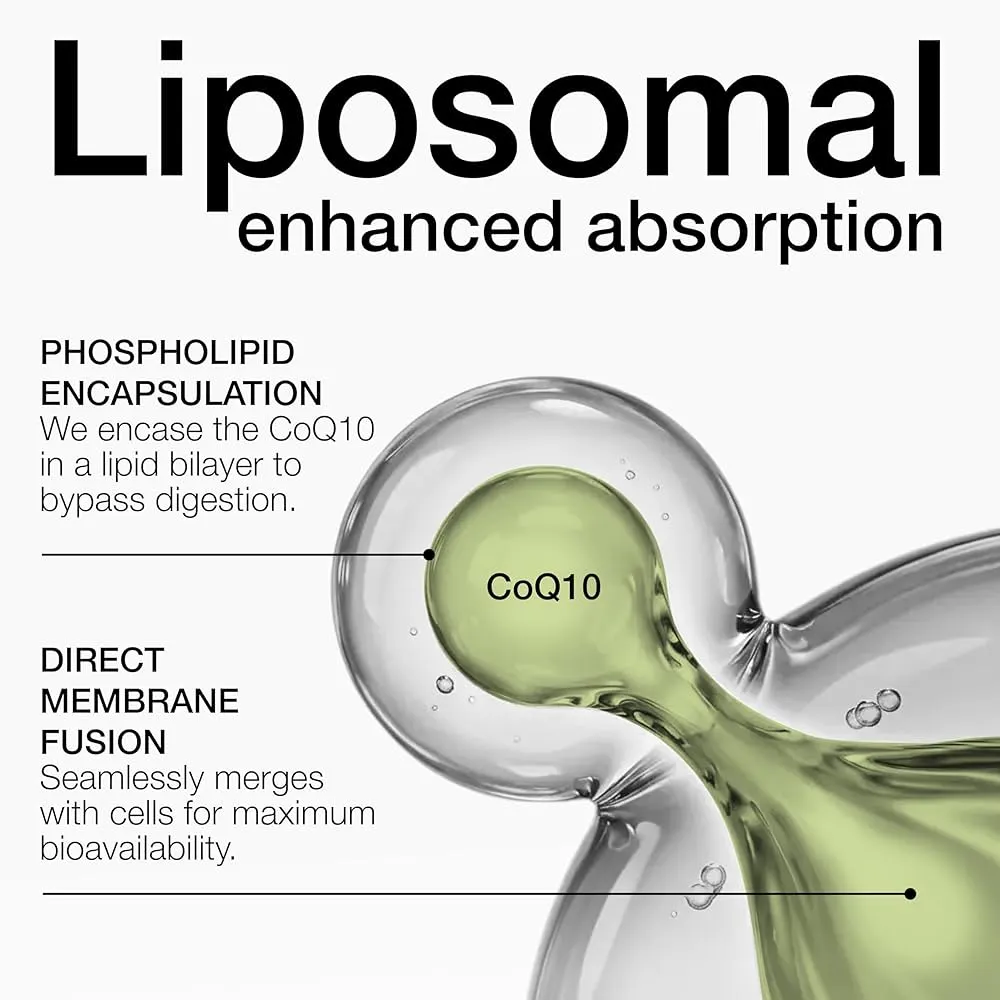
Liposomal packaging is a revolutionary way to solve the problem of low absorption. At Hongda, we use pharmaceutical-grade sunflower phospholipids in our recipe to make stable lipid bilayers that hold Coenzyme Q10 molecules inside nano-sized bubbles. This structure looks a lot like the membranes of human cells, which makes it easy for it to cross digestive obstacles and enter the lymphatic system. The capsule process keeps the active ingredient from breaking down during digestion and makes sure that it goes straight to the mitochondria of cells, where it does its important jobs as an antioxidant and as a producer of ATP.
Superior Absorption Through Biomimetic Design
With particle sizes tightly controlled between 100nm and 400nm, our liposomal powder encapsulates more than 90% of the drugs we test. This standard is very important for sourcing teams that are looking at raw materials because uniform particle size is directly linked to consistent product performance across production runs. As soon as the liposomes are mixed with water, they keep their shape, which stops the precipitation and "ringing" that happen with regular CoQ10 powders.
Studies in humans show that liposomal delivery significantly raises plasma CoQ10 levels compared to regular Ubiquinone doses. One study comparing pharmacokinetics found that peak blood levels were almost eight times higher with liposomal formulations, which led to changes in markers of mitochondrial activity that could be seen. This better absorption profile lets formulators get therapeutic effects with lower milligram doses. This opens the door for smaller pill forms and cheaper formulas.
Composition and Manufacturing Excellence
Premium Liposomal Coenzyme Q10 Powder is made up of more than just putting ingredients together. Our product has about 70% active Ubiquinone and is made with non-GMO sunflower phospholipids as the transport matrix. Precision spray-drying technology is used in the manufacturing process to turn liquid liposomal solutions into a yellow powder that can be easily mixed and stored while keeping the purity of the vesicles. This powder form doesn't need to be refrigerated while being stored or shipped, which is a big problem for foreign procurement experts who have to manage complicated supply chains.
Particle size analysis, encapsulation efficiency measurement, oxidative stability testing, and microbe compliance verification against cGMP standards are some of the quality factors that are checked in SGS-certified labs. Before it is released, every production batch is carefully checked by a third party to make sure it meets the strict standards of pharmaceutical-grade stability that are needed for FDA, HALAL, KOSHER, and FSSC approval, which are highly valued by nutraceutical makers in North America and Europe.
Key Advantages Over Traditional Coenzyme Q10 Forms
To choose the best CoQ10 transportation method, you need to carefully consider a lot of technical and business factors. Traditional crystalline CoQ10 powders, oil solutions, and normal pills all have their own problems that affect how well the product works, how efficiently it is made, and eventually how happy the end user is. When you know about these differences, you can make smart choices about buying that are in line with your formulation goals and market positioning strategy.
Bioavailability and Clinical Efficacy
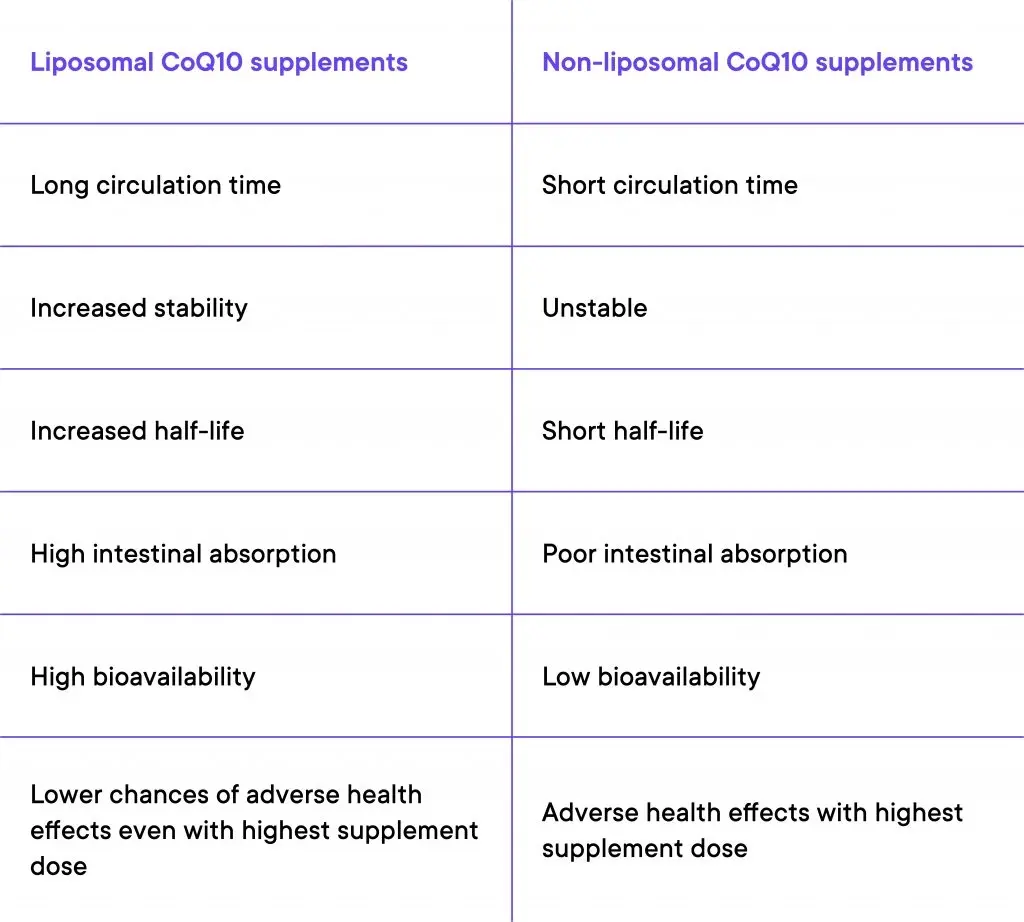
It's impossible to say enough good things about Liposomal Coenzyme Q10 Powder absorption. Standard crystalline CoQ10 needs bile acids and digestive enzymes to dissolve. This process is very different for each person and is much more difficult for people who have digestion problems or don't make enough bile. Through inactive membrane fusion, our liposomal method gets around these problems, ensuring constant absorption no matter how well a person digests.
Comparative studies that check plasma CoQ10 levels after giving the same doses show that liposomal forms always work better than both Ubiquinone and Ubiquinol supplements. Manufacturers of Ubiquinol say that it is better absorbed because its chemical state is lower, but liposomal encapsulation of Ubiquinone actually gets higher tissue concentrations because the protective lipid layer stops oxidation while traveling through the acidic environment of the stomach. This stability means that clinical results can be predicted, which is very important when making goods for heart health, athletic performance, or mitochondrial decline linked to getting older.
Stability and Shelf Life Enhancement
Powder reliability gives industrial uses a big edge over their competitors. Even though liquid liposomal solutions work, they need to be kept in the fridge and only last for a short time before the vesicles clump together and the phospholipids oxidize. Our lyophilized powder formulation keeps the product stable for up to 24 months at room temperature. This cuts down on transportation costs and inventory risk for makers and distributors by a huge amount.
Oxidative stability tests show that our packed CoQ10 stays active for a lot longer than solid forms that are exposed to oxygen. The phospholipid bilayer protects against oxygen exposure, and the powder structure stops degradation paths that are caused by water. Because of this stability edge, formulators can make goods with longer expiration dates, which cuts down on waste and raises profits all along the supply chain.
Manufacturing and Formulation Flexibility
From a production point of view, liposomal powder is very flexible. The substance mixes right away with water to create stable colloidal suspensions. This makes it perfect for functional beverage uses where regular CoQ10 makes oil drops or sediment sit on top of the drink. Because it mixes well with water, it doesn't need extra emulsifiers or solubilizers that make ingredient labels more complicated and raise the cost of preparation.
Formulators who work with hard pills and tablets like that improved absorption lets them use less medicine. A liposomal amount of 100 mg has therapeutic benefits similar to 300–500 mg of regular CoQ10. This makes capsule room available for ingredients that work well together, such as PQQ, alpha-lipoic acid, or resveratrol. This amount economy also lowers the cost of each ingredient, which increases profits while keeping the product's high-end status. Safety profiles from several clinical studies show that normal supplementation amounts are well tolerated, with no major side effects recorded. This addresses regulatory and customer safety concerns that procurement teams must think about.
Procurement Insights: Making the Right Choice for Your Business
When choosing a provider for advanced transport methods, you need to do more than just compare prices. There are different providers in the Liposomal Coenzyme Q10 Powder market, each with their own technical skills, quality control standards, and levels of legal compliance. Procurement experts have to look at a lot of different factors to find partners who can help a product be successful and competitive in the market over the long run.
Quality Verification and Certification Standards
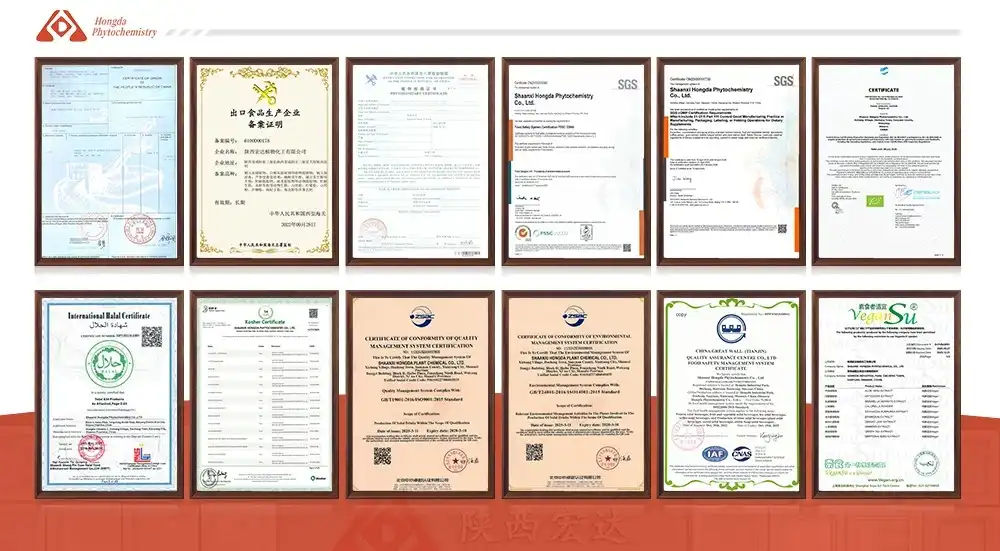
When looking at possible sources, certification files are very helpful because they show how skilled the manufacturer is and how well they follow the rules. Our Hongda plant is cGMP-certified and uses full quality control systems that are backed by ISO9001, ISO22000, and FSSC Certifications. These qualifications show that the company has strict control over the production areas, where the raw materials come from, making sure the process works, and checking the final product. These are all very important for pharmaceutical and nutraceutical uses in controlled markets.
Third-party proof through SGS lab testing adds another level of quality guarantee that buyers from other countries really value. An outside study backs up the requirements for particle size distribution, encapsulation efficiency, microbial purity, heavy metal content, and amounts of residual solvent. HALAL and KOSHER certifications help products that are going to certain areas. This opens up business possibilities for a wider range of consumers. Organic certification choices are available for brands that want to sell high-end natural products, but they need to prove the sources of both the CoQ10 fermentation and the phospholipids.
Supplier Capability Assessment
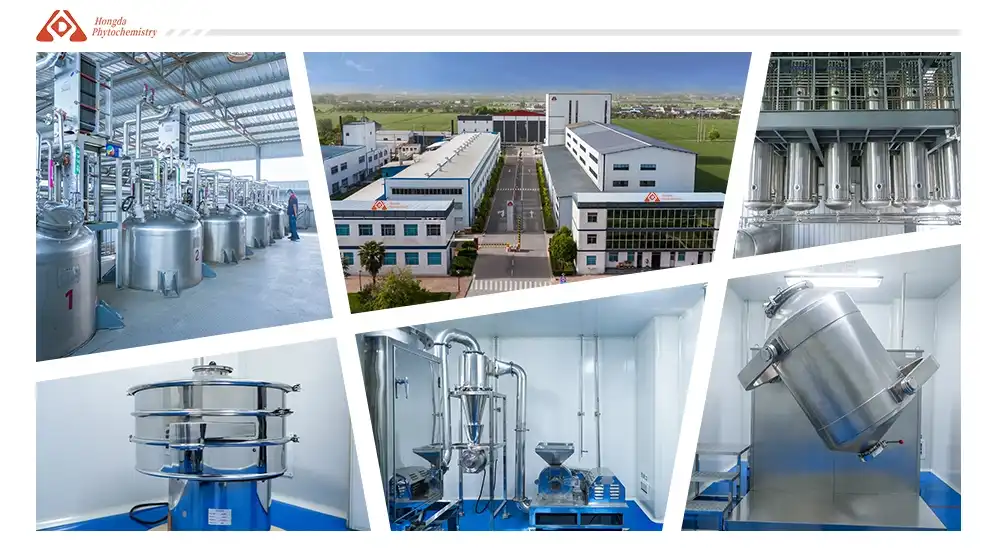
A technical capability review should look at more than just certifications when it comes to operating aspects. Production capacity is very important for brands that want to grow their markets. Our building has ten dedicated natural extract production lines that can handle orders ranging from 1 kg minimums to multi-ton commercial contracts. This flexibility keeps your supply from going down as your product becomes more popular.
Support for research and development is another important quality in a seller. Our team of more than twenty PhD-level scientists from top universities offers detailed advice on how to improve formulations, set up methods for stability testing, and make custom products. This knowledge is very helpful when changing liposomal CoQ10 into new delivery systems or mixing it with special ingredient mixes. Suppliers who don't have their own research and development departments may find it hard to support innovation beyond the sale of basic ingredients, which limits your chances to stand out from the competition.
Pricing Models and Procurement Optimization
Understanding how prices are set helps buying budgets work better while keeping quality standards high. The higher price of liposomal CoQ10 powder compared to basic crystalline forms is due to the more complex production process and better performance. However, the total cost study should take into account the benefits of dose reduction. For example, replacing 300 mg of standard CoQ10 with 100 mg of liposomal CoQ10 lowers the cost of each meal, even though the per-gram price is higher.
Bulk buying deals can save you even more money because they offer bulk savings and lower logistics costs per shipment. Our low minimum order number of 1 kg allows for initial product development and market testing. For commercial production, purchasing by the container load usually locks in better prices and ensures supply consistency. Along with unit price, payment terms, wait times, and inventory management services should all be taken into account when figuring out the total cost of ownership.
When buying something from another country, logistics are especially important. Our status as a Public Overseas Warehouse makes it easier to clear customs and speeds up shipping to markets in North America and Europe. During the whole delivery process, the purity of the product is protected by packaging choices such as aluminum foil bags with nitrogen flushing, fiber drums with PE liners, and options for custom labels. Even though these things are operational, they have a direct effect on the quality of the products that get to your factory and, eventually, your buyers.
How to Optimize the Use of Liposomal Coenzyme Q10 Powder in Your Products
For formulation integration to go well, technical details must be paid attention to so that ingredient performance is maximized while factory efficiency is maintained. The special features of Liposomal Coenzyme Q10 Powder are helpful, but they also mean that it needs to be handled and compatible with other things in a way that is different from other types of CoQ10. During the concept design and scale-up processes, development teams do better when they understand these subtleties.
Dosing Protocols and Industry Standards
Choosing the right dose amounts depends on the health claims that are being made and the types of people who will be buying the product. Cardiovascular health formulas usually have 100 to 200 mg of liposomal CoQ10 per serve, which gives blood levels that are therapeutically equivalent to 300 to 600 mg of regular amounts based on absorption multipliers. Higher doses of 200–300 mg may be used in sports nutrition and performance goods to help make ATP during strong physical activity and speed up recovery afterward.
Formulation scientists should think about combining ingredients in ways that make CoQ10 work better. When combined with vitamin E, selenium, or alpha-lipoic acid, they form powerful antioxidant networks that protect cell membranes better than methods that only use one ingredient. It may be even more bioavailable if it is combined with healthy fats in softgels or added to meal replacement powders that already contain natural lipids. However, our liposomal method already gets better absorption even when no fat is eaten.
Manufacturing Integration and Stability Considerations
When adding liposomal powder to production processes, it's important to pay attention to the recovery steps and processing conditions. The substance mixes easily in water at room temperature with light stirring, creating steady solutions in minutes without the need for high-shear mixing that could damage the structure of liposomes. This ease of inclusion is useful for beverage uses because it makes it easy to add during the liquid blending stages without having to buy expensive special equipment.
When processing, temperature sensitivity needs to be carefully managed. The powder itself is safe at room temperature, but long-term exposure to temperatures above 50°C during production may damage the structure of the liposomes. When possible, temperatures should stay reasonable during the encapsulation, tablet compression, and drying processes. Potential reactions can be avoided by trying the recipe with other ingredients that are compatible. For example, some preservatives, chelating agents, or pH modifiers might affect the longevity of liposomes and should be looked at during the development stages.
Quality Control and Verification Methods
Using strict quality control procedures makes sure that all production batches of a product work the same way. During the review of incoming raw materials, HPLC analysis should be used to check the particle size distribution, appearance, and assay strength. Certificate of Analysis documents from suppliers give you a starting point for specifications, but independent verification through your quality lab or third-party testing services boosts trust, especially when you're first getting to know a seller or looking for differences between batches.
When the product is finished, it should be tested for both CoQ10 quantity and liposomal structure protection. Standard potency tests measure the total amount of CoQ10 present, while more advanced methods, such as dynamic light scattering (DLS), show how the particle sizes are spread out in recovered samples. This shows that the liposomal transport system has not been damaged during the manufacturing process. Stability studies done under fast conditions can predict how well a product will last on store shelves and help find the best ways to package and store it so that it stays effective throughout the distribution chain and on store shelves.
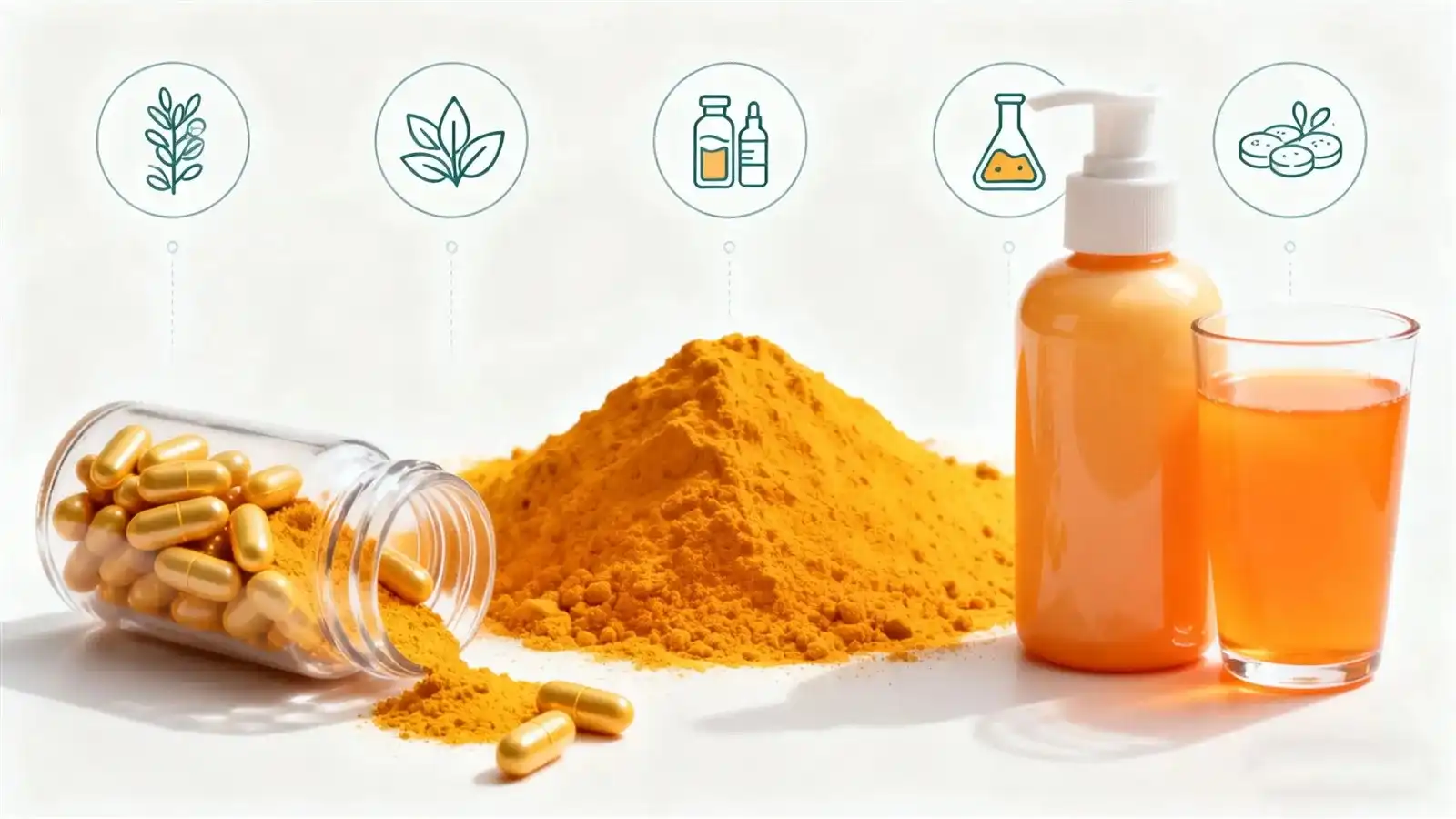
Why Liposomal Coenzyme Q10 Powder Is the Preferred Solution for B2B Clients
As customers learn more about how to judge the quality and effectiveness of supplements, the market is moving more toward advanced delivery methods. The "bioavailability revolution" is changing the way people buy all kinds of nutraceuticals. Smart customers are actively looking for liposomal, nano-emulsion, and other formats that improve absorption. Because of this trend, makers and brands that use cutting-edge ingredients that give measurable performance benefits have a lot of great options.
Market Demand and Consumer Trends
Health professionals' education and digital media coverage of supplement science have made a big difference in how much people know about the limits of CoQ10 absorption. Smart customers are now wondering if traditional supplements really do what they say they will do, which is increasing the need for formulations with known absorption rates. Liposomal Coenzyme Q10 manufacturer products are sold at higher prices in stores because customers are willing to pay more for clearly better results. This approach for positioning products increases profits at every stage of the value chain.
Application Opportunities Across Industries
Pharmaceutical uses are a big chance for liposomal CoQ10 in prescription-only supplements and medical foods that help with statin treatment, heart failure management, and mitochondrial diseases. Liposomal formulations meet therapeutic needs that standard products with varying absorption can't because their pharmacokinetics and dose-response relationships are always the same. Medical foods and pharmaceutical-grade supplements need to be made with consistent quality and strict production controls, which our cGMP center and many other certifications easily meet.
CoQ10's protective qualities are used in cosmetics and beauty products that you eat or put on your skin. As more people learn that healthy skin is a sign of healthy cells throughout the body, the "beauty from within" group grows quickly. Liposomal delivery makes sure that the right amount of medicine gets to the right tissues, which leads to changes in the skin's elasticity, wrinkle depth, and photoaging signs that can be seen. Formulators who make high-end beauty supplements or mixed cosmetic-supplement products set their products apart by using advanced delivery technologies that clearly work better than basic formulas.
Innovation and Competitive Differentiation
Customization options let you make your own formulas that give you a strong marketplace. Our research and development team works with clients to come up with custom specs, such as particle sizes that are just right for a given use, custom levels of strength, or hybrid liposomal-botanical combinations that offer something new and valuable. With this method to development partnerships, sellers are no longer just vendors of basic ingredients, but also key partners in innovation.
New studies keep finding new ways to use CoQ10 as a medicine. New studies look into the benefits for helping with pregnancy, preventing migraines, managing pain, and slowing down the development of neurodegenerative diseases. When more people learn about liposomal transport for these new uses, brands that are ahead of the curve will be in a position to lead the way. Putting money into cutting-edge technology now will put you ahead of the competition in the market tomorrow as more scientific evidence comes in and people learn more about products.
Conclusion
Liposomal Coenzyme Q10 Powder is a big change in the way supplement ingredients are made. It makes ingredients more bioavailable, which changes how well products work and how they are marketed. The nano-encapsulation method gets around long-standing problems with absorption by using biomimetic design to reach plasma concentrations that allow for useful health effects at lower doses. This technology has strong benefits for procurement teams, formulation scientists, and brand managers. These benefits include better clinical success, manufacturing freedom, longer stability, and a higher marketplace. As consumers become more knowledgeable and government rules change, improved delivery systems go from being competitive benefits to market needs. This means that strategic relationships between suppliers are necessary for long-term success.
FAQ1. Is liposomal CoQ10 powder safe for long-term supplementation?
A lot of clinical studies have shown that Liposomal Coenzyme Q10 Powder is safe for all types of people and at all doses. Studies that lasted months to years found no major side effects, other than mild stomach problems that happened sometimes at very high amounts. CoQ10 is generally thought to be safe for use in food by regulatory agencies like the FDA. The liposomal delivery method uses food-grade phospholipids that have a history of being safe. Manufacturers can safely make goods that can be used every day because extensive toxicology data and post-market monitoring show that the risks and benefits are positive across a wide range of customer groups.
2. How does particle size affect absorption rates?
The way particles are distributed has a big effect on how well they are absorbed in the intestines and how bioavailable they are throughout the body. Our 100–400nm size range makes capillary flow better while stopping premature breakdown. Smaller particles (less than 100nm) may be cleared quickly before they can be absorbed, while bigger particles (more than 500nm) have a harder time interacting with membranes. The small polydispersity index in our recipe makes sure that absorption rates are the same for everyone, which gets rid of the performance differences that can happen when liposomes aren't made under strict conditions.
3. What should I look for when selecting a liposomal CoQ10 supplier?
Give more weight to providers who can show that they have all the necessary quality standards (cGMP, ISO, SGS), clear specification documents with data on encapsulation efficiency, and expert help for formulating new products. Your manufacturing capacity should match your volume needs, and the ability to change the minimum order size to suit testing steps is important. Regulatory compliance paperwork, such as allergen statements, non-GMO proof, and important market certifications, makes it easier for you to register your products. Think about sellers who offer custom formulation services and work with you on research and development (R&D). This would change the connection from just buying things to a strategic partnership that helps you come up with new ideas and stay ahead of the competition.
Partner with Hongda for Premium Liposomal Coenzyme Q10 Solutions
Shaanxi Hongda Phytochemistry has been making advanced delivery systems for more than twenty years and has a lot of experience with natural extracts. Our pharmaceutical-grade Liposomal Coenzyme Q10 Powder blends a new way to improve bioavailability with the uniformity and legal compliance that your brand needs in the manufacturing process. As a qualified liposomal CoQ10 producer with cGMP facilities, SGS-verified labs, and a wide range of foreign approvals, we can help your formulation succeed from the very beginning of research to mass production. Our expert team is ready to talk about unique requirements, send samples for review, and come up with custom solutions that will make your product line stand out. Get in touch with us at duke@hongdaherb.com to find out how our liposomal technology can help your next recipe.
References
1. Bhagavan HN, Chopra RK. "Coenzyme Q10: Absorption, tissue uptake, metabolism and pharmacokinetics." Free Radical Research 40.5 (2006): 445-453.
2. Langsjoen PH, Langsjoen AM. "Comparison study of plasma coenzyme Q10 levels in healthy subjects supplemented with ubiquinol versus conventional ubiquinone." Clinical Pharmacology in Drug Development 3.1 (2014): 13-17.
3. Akbari A, et al. "The effects of coenzyme Q10 supplementation on lipid profiles among patients with coronary artery disease: a systematic review and meta-analysis." Critical Reviews in Food Science and Nutrition 58.4 (2018): 628-639.
4. Žmitek K, et al. "Relative bioavailability of two forms of a novel water-soluble coenzyme Q10." Annals of Nutrition and Metabolism 52.4 (2008): 281-287.
5. Hosoe K, et al. "Study on safety and bioavailability of ubiquinol after single and 4-week multiple oral administration to healthy volunteers." Regulatory Toxicology and Pharmacology 47.1 (2007): 19-28.
6. Pravst I, Žmitek K, Žmitek J. "Coenzyme Q10 contents in foods and fortification strategies." Critical Reviews in Food Science and Nutrition 50.4 (2010): 269-280.





YOU MAY LIKE