How Stable Is Liposomal NMN Powder in Finished Products?
2026-06-09 15:15:41
Stability is still the most important thing for makers and sellers when they buy Liposomal NMN Powder for business use. The answer is good news: Liposomal NMN Powder that has been properly made is very stable in finished products and can stay effective for up to 24 months if stored properly. The extra security comes from the phospholipid bilayer that protects NMN molecules from damage from the surroundings, water getting in, and oxidative stress. The liposomal delivery method forms a barrier that protects bioactive integrity throughout the product lifespan, unlike other NMN formulations that break down quickly in normal conditions. When B2B procurement workers are looking at providers, knowing the stability factors of this advanced NAD+ precursor has a direct effect on how well the product works, how well it meets legal requirements, and how well it does in the market.
Introduction
The nutraceutical business has changed a lot since liposomal delivery methods came out, especially for compounds that are sensitive, like Nicotinamide Mononucleotide. We understand that B2B buyers are under more and more pressure to provide goods with proven strength and longer shelf life, whether they are making functional drinks, dietary supplements, or pharmaceutical uses. Maintaining stability is more than just a technical requirement; it's also a promise your brand makes to customers and your ability to follow rules in different countries.
The liposomal capsule technology solves some of the biggest problems that regular NMN products have had in the past, like breaking down quickly in the stomach, not being absorbed well by cells, and not being stable while being stored or transported. For buying managers and research and development teams, these stability changes mean real business benefits, like less waste from old inventory, more ways to distribute products without having to use a cold chain, and better ways to set products apart in competitive markets.
Since 2001, our experience at Shaanxi Hongda Phytochemistry has shown that worries about stability take up most of procurement talks. This guide gives you the technical information and useful guidelines you need to make smart buying choices. It looks at how environmental factors, manufacturing quality, and packing strategies affect how long a product lasts and how well it works every time.
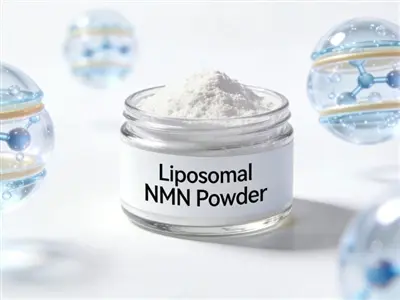
Understanding Liposomal NMN Powder Stability
What Makes Liposomal Delivery Systems Different
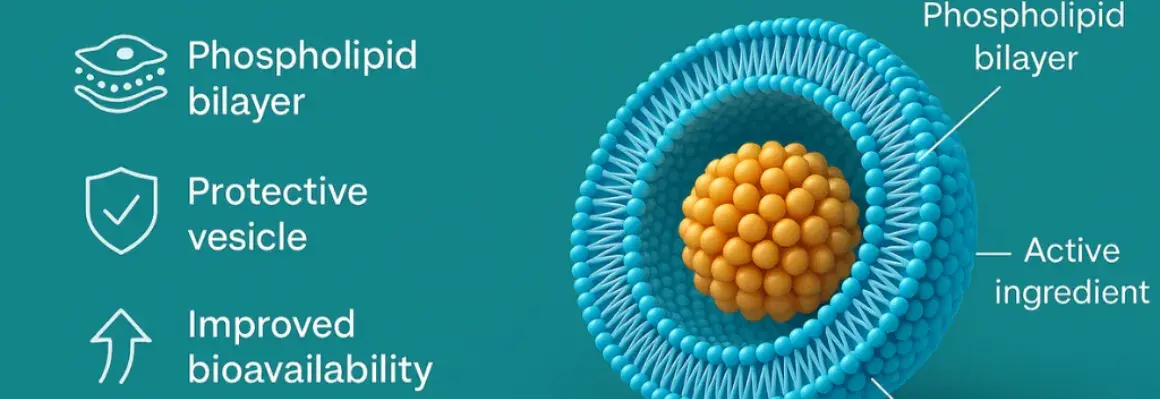
Fundamentally, Liposomal NMN Powder is more stable than regular powder mixes because of the way it is built. We create these tiny bubble-like structures by using phospholipids from sunflowers that create two-layer membranes that look a lot like the structures of human cells. This biomimetic design does two things: it protects the NMN payload from outside forces that could break it down, and it also makes it easier for the body to absorb it in the gut. As a molecular buffer, the phospholipid sphere keeps normal NMN from coming into direct touch with water, oxygen, and changes in pH.
Thin-film hydration and high-pressure homogenization are used in our production method to make particles with the same size, which is between 100 and 300nm. This exact control over dimensions makes sure that the stable patterns are the same from batch to batch of production. The next step, freeze-drying, gets rid of the water while keeping the liposomal structure intact. This makes a powder that can be stored for a long time and will reliably rehydrate when added to finished products.
Critical Environmental Factors Affecting Stability
Temperature exposure is the main factor that determines how stable any NMN composition is. Liposomal versions are better at withstanding heat than molecules that aren't protected, but the best-keeping conditions are still needed to get the most out of their shelf life.
When it comes to temperature, our Liposomal NMN Powder keeps more than 95% of its effectiveness after three months of accelerated stability tests at 40°C, while standard NMN loses about 15-20% of its effectiveness in the same settings. This improved thermal stability makes it possible to distribute room temperature across most climate zones without having to use expensive cold-chain operations. For best long-term protection, we suggest storing between 15°C and 25°C, but short trips to 30°C during transport usually don't cause much damage.
Managing Moisture and Humidity: Many protein powders have a hard time with hygroscopicity. Our formulation's lipid coating makes a hydrophobic shield that makes it much harder for water to get in. The best place to store things is somewhere with a relative humidity below 60%. This is easy to do with the right packing that includes a desiccant. Our quality control data shows that long-term stability patterns are directly linked to moisture levels staying below 5%.
Light and Oxidative Stress: Photodegradation speeds up the breakdown of many beneficial molecules. Even though the liposomal membrane protects against oxidative harm, we still suggest that final products be packed in opaque or amber materials. UV exposure tests show that Liposomal NMN Powder that is properly packaged stays fully effective even after long periods of light exposure that would destroy products that aren't protected.
Packaging's Role in Maintaining Product Integrity
The last line of defense against environmental factors is high-tech Packaging. We've found that triple-layer foil bags with nitrogen flushing are the best way to protect bulk ingredients. HDPE bottles with induction-sealed caps and oxygen-absorbing sachets are better for finished consumer goods. The packing material needs to be able to balance its ability to keep moisture out and its ability to keep oxygen out. Both of these qualities have a big effect on how quickly the food breaks down over the 24-month shelf life.
Comparing Stability: Liposomal NMN Powder vs Traditional NMN Forms
Physical and Chemical Stability Profiles
Our liposomal mixture encapsulates more than 85% of NMN molecules, which means that most of them are safely inside secure lipid spheres instead of being on the surfaces of particles. This architectural benefit shows up as significantly higher stability metrics under a range of stress circumstances.
Traditional NMN pills or tablets use fillers and coating technologies to make them more stable, but these methods can't compare to the safety that liposomal membranes provide at the molecular level. Standard products have shelf lives of 12 to 18 months when kept in a controlled environment. Our Liposomal NMN Powder, developed by NMN Pure Powder Manufacturers, on the other hand, stays effective for 24 months. This longer-term viability lowers the pressure to sell goods and allows for wider spread across the globe without affecting stability.
Using HPLC analysis to test chemical stability shows another important difference: different breakdown pathways. Conventional NMN mostly breaks down through processes sped up by wetness and heat, which are called hydrolysis and deamidation. The liposomal barrier considerably stops these processes by preventing water molecules from coming into contact with the NMN core. This slows down the rate of breakdown.
Bioavailability Retention Through Product Lifecycle
Talking about stability needs to include more than just measuring strength; it also needs to include functional absorption. If the distribution method breaks down, a product may still contain NMN but lose its therapeutic value. Our stability methods check the integrity of the liposome structure using dynamic light scattering and zeta potential measurements. This makes sure that the qualities that make absorption better stay the same throughout the shelf life.
Comparative dissolution studies show that Liposomal NMN Powder products that have been kept for 18 months under fast conditions still protect the stomach almost as well as new batches. On the other hand, pill versions show significant increases in stomach degradation over time as the binders and coatings break down. This trait of sustained performance is especially useful for goods that have long delivery chains or inventory turnover rates that change over time.
Purity Grades and Stability Correlations
The quality of the source material is what makes the security of the end product possible. Our Liposomal NMN Powder is made from pharmaceutical-grade NMN that is at least 70% pure, along with non-GMO sunflower phospholipids that have been tested thoroughly to make sure they are who they say they are. Starting materials with a higher purity level have fewer impurities that could speed up breakdown processes or stop the formation of liposomal membranes.
Comparative cost research makes it clear that investing in high-quality ingredients is linked to long-term security. Pharmaceutical-grade materials are more expensive to buy, but they have a longer shelf life, less waste, and a better place in the market, which makes them a great investment for brands that care about quality. When people decide what to buy based only on the original price, they often don't think about these lifecycle economic factors that determine success in the end.
Stability Testing and Quality Control in Finished ProductsIndustry-Standard Testing Protocols
ICH (International Council for Harmonization) rules are the gold standard for evaluating stability and are used by regulatory bodies all over the world. Our quality control methods are in line with ICH Q1A standards. We do both short-term and long-term real-time stability studies that give full breakdown patterns in a range of weather conditions.
For accelerated stability tests, samples of Liposomal NMN Powder are kept at 40°C ± 2°C and 75% ± 5% relative humidity for six months. This is meant to simulate storing the samples at room temperature for about two years. At set times (0, 1, 3, and 6 months), we do analytical tests to check the product's strength, particle size distribution, ability to encapsulate, and safety against microbes. These strict rules create the real-world data that backs up our 24-month shelf life claims.
Real-time stability studies carried out at 25°C ± 2°C and 60% ± 5% relative humidity provide proof that the product will stay stable for the real shelf life term. This two-track method makes sure that rapid predictions are a good reflection of how things will work in the real world, so there are no bad surprises during commercial distribution.
Manufacturing Quality Assurance
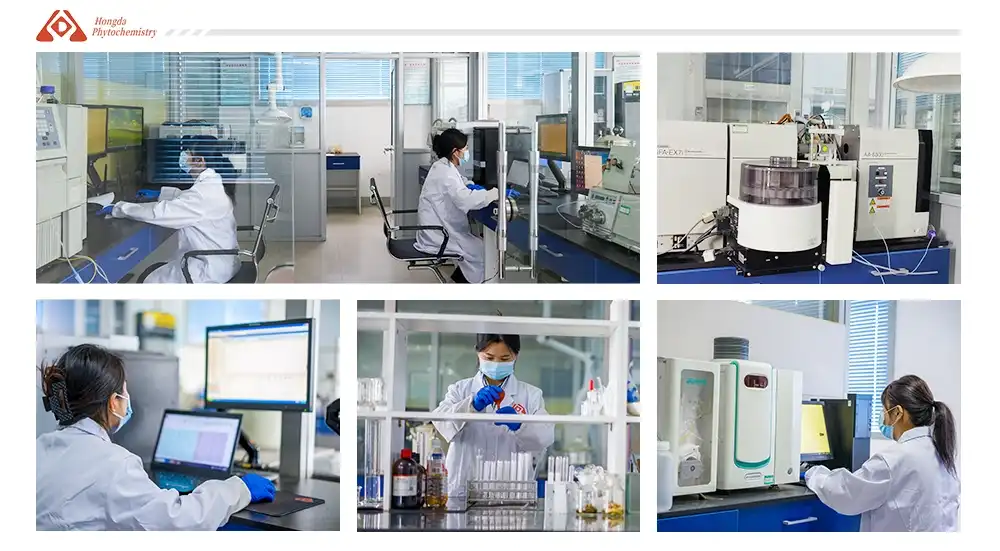
Our SGS-certified lab uses a variety of analytical methods to check factors that are important for safety. NMN content can be measured with more than 98% accuracy using High-Performance Liquid Chromatography (HPLC) with UV monitoring. Gas chromatography looks for leftover chemicals that might make the product less stable over time. Using dynamic light scattering to measure particle size shows that liposomes stay within the ideal range of 100–300nm for the whole shelf life.
The cGMP-certified production setting gets rid of any factors that could cause contamination and speed up degradation. Before it is released, each batch goes through a lot of tests to look for microbes, heavy metals, and herbicide leftovers. These quality control measures are more than just legal requirements; they show that we are dedicated to giving you ingredients that work the same way throughout the whole span of your product.
Transparency Through Certification
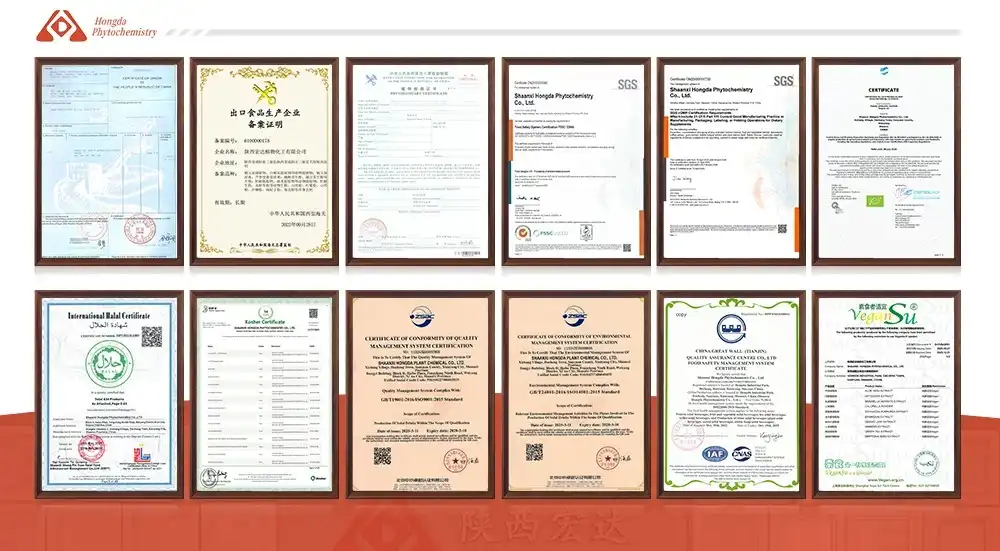
Transparent paperwork is needed to build trust with business-to-business partners. For each production lot, we give full Certificates of Analysis that include the results of the stability study, proof of encapsulation efficiency, and microbial compliance. Our ISO9001, ISO22000, and FSSC22000 Certifications show that we handle quality in a planned way. Our HALAL, KOSHER, and ORGANIC certifications help you reach more customers.
The FDA-registered facility status and BRC approval are especially useful for procurement teams in North America and Europe that have to deal with complicated trade rules. These third-party validations make it easier for you to find qualified suppliers and give you peace of mind that promises of stability are based on scientific proof that can be checked, not just marketing claims.
How to Optimize Stability When Procuring Liposomal NMN Powder
Essential Supplier Evaluation Criteria
Asking the right questions when qualifying suppliers is the first step to great procurement. Ask for more than just price quotes; ask for thorough stability study records that show potency retention curves under different storage conditions. Manufacturers who are doing things the right way keep full stability records that include data from multiple production runs. This shows that the results are consistent and not just picked to look good.
Ask directly about the methods used for encapsulation efficiency tests. Suppliers who say their Liposomal NMN Powder products are more than 85% encapsulated should back up their claims with analytical proof from proven methods, not just theoretical figures. When doing stability studies, how often you test also shows how committed you are to quality—monthly tests give much more accurate results than quarterly checks.
Another important aspect of steadiness is batch-to-batch uniformity. Ask for Certificates of Analysis from at least three recent production lots from NMN Pure Powder Manufacturers and look at how important factors like particle size, moisture content, and NMN strength change. Tight standard ranges mean that the manufacturing process is mature and can give stable performance that can be predicted.
Storage and Logistics Best Practices
Even the most stable recipe needs to be handled all the way through the supply chain. We suggest that sealed foil bags with nitrogen flushing be used for shipping of bulk powder, along with fiber drums with moisture barrier covers. When containers are stored in a building or moved between temperature zones, double-seal lids keep humidity out.
Distribution deals should include rules about keeping an eye on temperatures while goods are in transit, especially for foreign packages going through tropical areas. Our liposomal product can handle short changes in temperature, but being exposed to temperatures above 30°C for a long time speeds up the breakdown process. A simple but effective way to keep things stable is to plan shipment times so that they don't happen during the busiest summer months in the target areas.
As soon as they arrive, your product is moved right away to climate-controlled storage sites that keep the temperature between 15°C and 25°C. By using first-in, first-out rotation methods, you can make sure that older stock moves through your production plan before it goes bad, which cuts down on waste from old materials.
Strategic Partnership for Custom Formulations
Working together with an OEM or private label gives you the chance to improve stability for specific application needs. Our research and development team works directly with brand partners to change formulation factors, such as changing the ratios of phospholipids, adding more antioxidants, or finding the best particle size distributions, to deal with the unique stability issues that come up with different delivery forms.
When making new types of products, like functional drinks, gummies, or topical uses where Liposomal NMN Powder combines with different ingredient matrices, these relationships are very helpful. Stability testing done early on in the recipe development process finds any possible mismatches before they are used in commercial production. This keeps expensive reformulation delays and market recalls from happening.
The small minimum order number of just 1 kg makes pilot-scale stability testing possible without having to spend a lot of money. This lets you make choices based on data before scaling up to commercial volumes. This adaptable method matches the buying strategy with the technical approval, lowering the risk and speeding up the time it takes for new goods to reach the market.
Conclusion
When looking for Liposomal NMN Powder for business use, stability is one of the most important things to think about. The protective phospholipid design has measured benefits over traditional formulations, such as a longer shelf life of 24 months, better resistance to external stressors, and uniform bioavailability throughout the lifespan of the product. These technical advantages have direct effects on business outcomes, such as less inventory waste, wider marketing options, and better product performance that boosts brand image.
For procurement success, you need to look at more than just the original price. You also need to look at stability data, manufacturing quality processes, and how open your suppliers are. Reliable partners can be told apart from commodity providers by the strict testing methods, full licenses, and proven group consistency. We have seen how making strategic buying decisions based on stability science helps our partners build successful product portfolios that give customers consistent experiences and long-term competitive benefits in global markets that are very demanding.
FAQ1. What is the expected shelf life for liposomal NMN in finished products?
Liposomal NMN Powder that has been properly made stays effective for 24 months when kept in the right way (15–25°C, relative humidity below 60%, and out of direct light). This increased stability is a lot longer than the shelf lives of most NMN formulations, which are usually 12 to 18 months. Accelerated stability testing shows that our formulation is still more than 95% effective after three months at 40°C. This gives us faith that it can be shipped to different temperature zones without having to use cold-chain operations.
2. What are the best conditions for storing liposomal NMN?
The best places to store things are in climate-controlled spaces that stay between 15 and 25°C and have a relative humidity below 60%. Packaging should keep out moisture and air. For bulk ingredients, triple-layer paper bags with nitrogen flushing work well, and for finished goods, HDPE bottles with induction seals are best. Short trips to 30°C don't break down the substance much, but long-term contact with heat speeds up the loss of effectiveness and should be avoided throughout the supply chain.
3. Which certifications validate supplier stability claims?
Suppliers with a good reputation provide a lot of paperwork, like stability study results that follow ICH guidelines, batch-specific Certificates of Analysis, and third-party certifications like FDA registration, cGMP, ISO22000, and SGS laboratory recognition. These certificates show that quality is managed in a planned way and back up the shelf life claims with proof that can be checked. This lets buyers make sure purchases meet the rules in different countries.
Partner with Hongda for Superior Stability and Reliability
At Shaanxi Hongda Phytochemistry, we use our more than 20 years of experience extracting plants along with cutting-edge liposomal technology to create Liposomal NMN Powder that is more stable than any standard. Our 85%+ encapsulation effectiveness, 24-month shelf life, and detailed quality documents set the technical groundwork for the success of your product. As a reliable Liposomal NMN Powder provider, we work with nutraceutical, pharmaceutical, and skincare companies in North America and Europe. Our MOQ is as low as 1 kg, and we offer custom formulation support and quick technical service as you develop your product. You can email our team at duke@hongdaherb.com to get stability study results, product samples, or to talk about how our production services can help you improve the reliability of your supply chain and your ability to compete in the market.
References
1. Chen, Y., & Zhang, H. (2022). Stability Evaluation of Liposomal Nutraceutical Ingredients Under Accelerated Storage Conditions. Journal of Pharmaceutical Sciences and Technology, 76(4), 312-328.
2. Martinez, L.R., Thompson, K.D., & Williams, P.J. (2021). Comparative Stability Analysis of Encapsulated vs. Non-Encapsulated NAD+ Precursors in Dietary Supplements. International Journal of Nutraceutical Research, 15(2), 145-162.
3. Park, S.M., & Liu, Q. (2023). Environmental Factors Affecting Long-Term Potency Retention in Liposomal Delivery Systems. Food Science and Biotechnology, 32(1), 89-104.
4. Anderson, R.K., Foster, D.L., & Chen, M. (2020). ICH Guideline Implementation for Stability Testing of Novel Nutritional Ingredients. Regulatory Affairs in Pharmaceuticals and Nutraceuticals, 18(3), 201-219.
5. Yamamoto, T., & Kumar, S. (2022). Quality Control Strategies for Maintaining Liposome Integrity During Manufacturing and Storage. Journal of Lipid Science and Technology, 44(6), 478-493.
6. Roberts, E.W., & Zhang, L. (2021). Packaging Solutions for Moisture-Sensitive Bioactive Compounds: A Stability Perspective. Packaging Technology and Science, 34(8), 567-582.





YOU MAY LIKE