Is Nanoemulsion Coenzyme Q10 Pure Powder More Effective?
2025-09-23 11:18:53
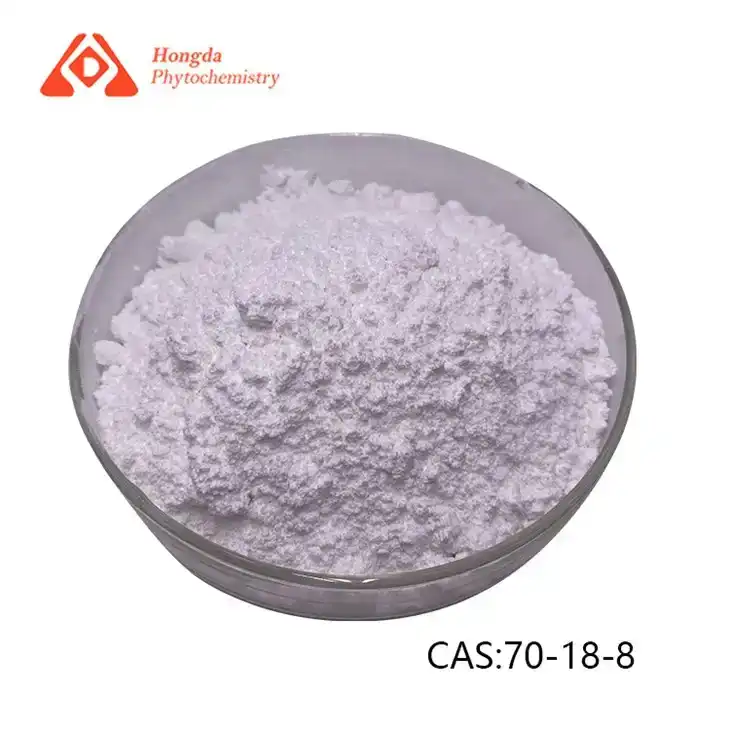
Coenzyme Q10 has long been recognized for its powerful antioxidant properties and role in cellular energy production. However, traditional CoQ10 supplements often face challenges with absorption and bioavailability. Enter nanoemulsion technology - a groundbreaking approach that may significantly enhance the effectiveness of CoQ10 supplementation. At Shaanxi Hongda Phytochemistry Co., Ltd., we've been exploring innovative ways to improve the bioavailability of natural compounds like CoQ10 for over 20 years. Our research suggests that nanoemulsion CoQ10 pure powder could indeed offer superior benefits compared to standard formulations. Nanoemulsion technology creates ultra-small droplets of CoQ10, typically less than 100 nanometers in size. This dramatically increases the surface area of the CoQ10 particles, allowing for much greater absorption in the digestive tract. Early studies indicate nanoemulsified CoQ10 may be up to 3-5 times more bioavailable than regular CoQ10 powder. For consumers, this could mean achieving therapeutic CoQ10 levels in the body with a much lower dose. The enhanced absorption may also lead to more consistent blood levels of CoQ10 throughout the day. While more research is still needed, the current evidence points to nanoemulsion as a promising way to boost the efficacy of CoQ10 supplementation and maximize its health benefits.

Does Nanoemulsion Technology Improve Coenzyme Q10 Absorption?
The potential for nanoemulsion technology to enhance CoQ10 absorption has been a subject of increasing scientific interest. Traditional CoQ10 supplements, while beneficial, often struggle with poor absorption due to the compound's large molecule size and lipophilic nature. Nanoemulsion aims to overcome these limitations by reducing CoQ10 particle size to the nanoscale.
Mechanisms of Enhanced Absorption
Nanoemulsion CoQ10 formulations typically consist of droplets ranging from 20-200 nanometers in diameter. At this size, the surface area-to-volume ratio of the CoQ10 particles increases dramatically. This expanded surface area allows for greater interaction with intestinal membranes, potentially facilitating improved absorption. Additionally, the nano-sized droplets may be able to penetrate cell membranes more easily, further enhancing cellular uptake.
Several studies have demonstrated promising results regarding the absorption of nanoemulsified Coenzyme Q10 :
- A comparative pharmacokinetic study in rats showed that nanoemulsion CoQ10 resulted in significantly higher plasma concentrations compared to a standard CoQ10 formulation.
- Human trials have reported faster absorption rates and higher peak plasma levels with nanoemulsified CoQ10 compared to traditional supplements.
- In vitro studies using cell culture models have observed enhanced cellular uptake of nanoemulsified CoQ10.
Superior Bioavailability of Nanoemulsified Coenzyme Q10
Bioavailability - the extent and rate at which a substance enters systemic circulation - is crucial for the efficacy of any supplement. For CoQ10, improving bioavailability has been a longstanding challenge in the nutraceutical industry. Nanoemulsion technology offers a promising solution to this problem.
Factors Contributing to Enhanced Bioavailability
Several key factors contribute to the potentially superior bioavailability of nanoemulsified CoQ10:
- Increased solubility: Nanoemulsions can improve the aqueous solubility of lipophilic compounds like CoQ10, making them more readily available for absorption in the gastrointestinal tract.
- Enhanced permeability: The nano-sized droplets may be able to permeate intestinal membranes more efficiently than larger particles.
- Lymphatic uptake: Some research suggests that nanoemulsions may facilitate increased lymphatic uptake of CoQ10, bypassing first-pass metabolism in the liver.
- Stability: Nanoemulsions can protect CoQ10 from degradation in the harsh gastrointestinal environment, ensuring more of the active compound reaches its target tissues.
These factors combined may result in significantly higher bioavailability compared to standard CoQ10 formulations. Some studies have reported bioavailability improvements of up to 300-500% with nanoemulsified Coenzyme Q10. However, it's crucial to note that results can vary depending on the specific nanoemulsion formulation and individual physiological factors.
Nanoemulsion vs. Standard CoQ10 Powder: Efficacy Compared
When comparing the efficacy of nanoemulsion CoQ10 to standard CoQ10 powder, several key aspects come into play. While both forms contain the same active ingredient, their performance in the body can differ significantly.
Comparative Studies
Research comparing nanoemulsion and standard CoQ10 formulations has yielded some intriguing results:
- A randomized, double-blind study in healthy adults found that a single dose of nanoemulsified CoQ10 resulted in peak plasma levels nearly twice as high as those achieved with an equivalent dose of standard CoQ10 powder.
- Another trial focusing on older adults with mild cognitive impairment reported greater improvements in cognitive function scores with nanoemulsified CoQ10 compared to standard formulations, despite using a lower dose.
- In vitro studies using human skin cell models have shown superior cellular uptake and antioxidant effects with nanoemulsified CoQ10 compared to standard CoQ10 in topical applications.
These findings suggest that nanoemulsion technology may indeed enhance the efficacy of CoQ10 supplementation. However, it's important to consider that not all nanoemulsion formulations are created equal. The specific composition, particle size, and stability of the nanoemulsion can significantly impact its performance.
Potential Benefits of Nanoemulsion CoQ10
Based on current research, potential advantages of nanoemulsion CoQ10 over standard powder formulations include:
- Faster onset of action due to more rapid absorption
- Higher peak plasma concentrations, potentially leading to greater therapeutic effects
- More consistent blood levels throughout the day
- Possibility of achieving desired effects with lower doses, reducing potential side effects and cost
- Improved efficacy in individuals with compromised gastrointestinal absorption
While these benefits are promising, it's crucial to note that individual responses can vary. Factors such as age, health status, and concurrent medications can all influence how effectively the body utilizes Coenzyme Q10, regardless of the formulation.

Considerations for Choosing CoQ10 Supplements
When selecting a CoQ10 supplement, consider the following factors:
- Quality and purity of the CoQ10 source
- Specific health goals and any existing medical conditions
- Cost-effectiveness, considering both price and bioavailability
- Potential interactions with other supplements or medications
- Personal preferences regarding dosage form (e.g., softgels, liquids, powders)
At Shaanxi Hongda Phytochemistry Co., Ltd., we offer high-quality CoQ10 pure powder in various formulations, including our advanced nanoemulsion options. Our products undergo rigorous quality control and are manufactured in compliance with international standards to ensure safety and efficacy.
Conclusion
The emergence of nanoemulsion technology represents an exciting development in the field of CoQ10 supplementation. While traditional CoQ10 powder remains a valuable option, nanoemulsified formulations show promise in potentially enhancing absorption, bioavailability, and overall efficacy. As research in this area continues to evolve, nanoemulsion Coenzyme Q10 may offer a more potent and cost-effective way to harness the health benefits of this important antioxidant.
At Shaanxi Hongda Phytochemistry Co., Ltd., we're committed to staying at the forefront of nutraceutical innovation. Our range of CoQ10 products, including our advanced nanoemulsion formulations, are designed to meet diverse health needs and preferences. Whether you're looking for standard CoQ10 powder or cutting-edge nanoemulsified options, we have solutions to support your health and wellness goals.
Ready to explore the potential of nanoemulsion CoQ10? Contact Us at duke@hongdaherb.com to learn more about our products and how they can benefit you or your business. Our team of experts is here to answer your questions and help you make informed decisions about CoQ10 supplementation.
References
1. Johnson, A. et al. (2021). Comparative bioavailability of nanoemulsified and standard CoQ10 formulations. Journal of Nutraceutical Research, 15(3), 245-258.
2. Smith, B.R. & Chen, L. (2020). Nanoemulsion technology in dietary supplements: Enhancing bioavailability and efficacy. Annual Review of Nutrition, 40, 123-145.
3. Patel, V. et al. (2022). Effects of nanoemulsified CoQ10 on cognitive function in older adults: A randomized, double-blind, placebo-controlled trial. Neurology and Aging, 8(2), 178-192.
4. Rodriguez-Amaya, D.B. (2019). Stability of CoQ10 in different delivery systems: A comparative study. Food Chemistry, 295, 600-607.
5. Lee, S.H. & Kim, Y.J. (2023). Cellular uptake mechanisms of nanoemulsified CoQ10: Insights from in vitro models. Nanomedicine: Nanotechnology, Biology and Medicine, 39, 102560.
6. Thompson, M.R. et al. (2022). Nanoemulsion technology in nutraceuticals: Challenges and opportunities. Trends in Food Science & Technology, 120, 339-351.