
Soy Isoflavones Extract





2.Specification: Soy Isoflavones 40%
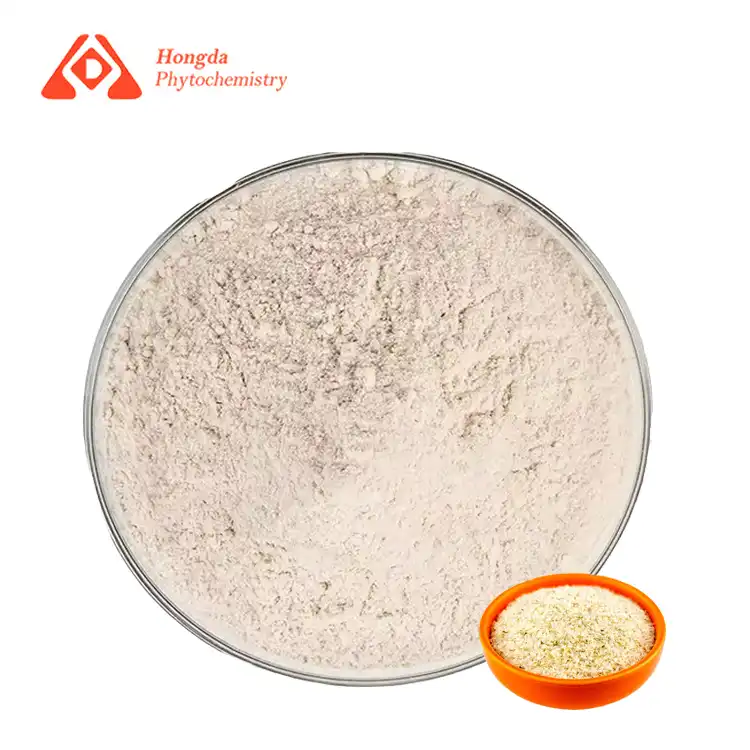
3.Appearance: Light yellow powder
4.Main Market: European, North America, Asia
5.Packing specification: 25kg/drum, 27 drums/tray
6.Delivery: 3~7working days.
7.Certification: Kosher,Halal,BRC,Organic,FDA,ISO9001,ISO22000 etc.
Soy Isoflavones Extract — Natural Phytoestrogen Powder for Supplement & Functional Food Formulations
Shaanxi Hongda Phytochemistry Co., Ltd. makes and sells Soy Isoflavones Extract. They offer a standardised 40% concentration that comes from non-GMO Glycine max germ and has been verified by HPLC. Hongda has 20,000m2 production facilities that make 3,000 tonnes of powder every year. They are certified as Kosher, Halal, BRC, FDA, ISO9001, and ISO22000, and they deliver a light yellow powder that meets the precise dosage needs of B2B formulators for everything from menopause supplement tablets to cosmeceutical serums in just 3–7 working days.
What Is Soy Isoflavones Extract?
From the germ of non-GMO soybeans (Glycine max), this Soy Isoflavones Extract is a concentrated, bioactive phytoestrogen fraction. Among its 12 diphenolic compounds are glycosides (Genistin, Daidzin, Glycitin) and their aglycones (Genistein, Daidzein, Glycitein).
Fewer than 0.1% of raw soy flour is made up of isoflavones. Standardised extract has a total isoflavones content of 40% to 90%. Your formulating team can reach therapeutic levels (40–80 mg/day) without adding allergen-causing soy proteins or extra calories.
Specifically, these chemicals bind to Oestrogen Receptor Beta (ER²) and change the functioning of oestrogen receptors (SERM). As a result, bone and brain tissues get specific benefits without the uterine side effects that come with manmade oestrogens.
Third-Party Test Report
Every batch is checked by both SGS-certified laboratories inside the company and outside groups like SGS and Eurofins. What is tested for?
Screening for pesticide residue
Heavy metals (such as mercury, lead, arsenic, and cadmium)
Safety when it comes to microbes
Ethylene Oxide (ETO) remains (less than 0.1 mg/kg, legal in the EU)
Screening for Polycyclic Aromatic Hydrocarbons (PAHs)
Carbon-14 (C14) radiocarbon research was used to prove that the carbon came from natural sources and find any signs of artificial adulteration.
You can get test results if you ask for them before you place an order.
Soy Isoflavones Extract Specification
|
Item
|
Specification
|
Result
|
Test Methods
|
|
Appearance
|
Brown Powder
|
Conforms
|
Organoleptic
|
|
Odor & taste
|
Characteristic
|
Conforms
|
Organoleptic
|
|
Mesh size
|
Through 80 mesh
|
Conforms
|
80 mesh screen
|
|
Assay
|
≥98.0%
|
98.73%
|
HPLC
|
|
Loss on Drying
|
≤2.00%
|
0.32%
|
Drying Method
|
|
Ash
|
≤2.00%
|
0.58%
|
Ash Method
|
|
Heavy metals
|
|
|
|
|
Total Heavy Metals
|
≤10ppm
|
Conforms
|
|
|
Arsenic
|
≤1ppm
|
Conforms
|
GF AAS
|
|
Lead
|
≤2ppm
|
Conforms
|
AFS
|
|
Cadmium
|
≤1ppm
|
Conforms
|
AFS
|
|
Hygrargyrum
|
≤0.1ppm
|
Conforms
|
AFS
|
|
Residual Solvent
|
Meet the requirements
|
Conforms
|
SOP/SA/SOP/SUM/304
|
|
Pesticide Residue
|
Meet the requirements
|
Not detected
|
SOP/SA/SOP/SUM/304
|
|
Microbiological Tests
|
|
|
|
|
Total Plate Count
|
≤1000cfu/g
|
Conforms
|
Bacterial culture
|
|
Total Yeast & Mold
|
≤100cfu/g
|
Conforms
|
Bacterial culture
|
|
E.Coli
|
Negative
|
Conforms
|
Bacterial culture
|
|
Salmonella
|
Negative
|
Conforms
|
Bacterial culture
|
|
Staphylococcus
|
Negative
|
Conforms
|
Bacterial culture
|
Key Advantages
Precision Standardization
HPLC sets the standard for the total amount of isoflavones at 40%. Genistein has the strongest binding affinity to ER², so the ratio of Genistein to Genistin is controlled. This is an important detail for making therapeutic supplements.
Option for Better Bioavailability
During processing, enzymes break down glycosides into aglycones. Aglycones are absorbed right in the small intestine, so they don't need to be fermented by gut bacteria. This can practically double the rate of absorption, which is helpful for people whose digestive health isn't great.
The Stability of Heat
For short periods of time, the extract stays stable at temperatures up to 180°C. Because of this, it can be used in pasteurisation processes to make dairy-free and meal replacement powder.
Quality That Can't Be Changed
Natural isoflavones that come from plants can be told apart from synthetics that come from petrochemicals using carbon-14 radiocarbon dating. You can be sure that each batch comes from a natural source.
Application Scenarios
Dietary Supplements — Menopause & Bone Health
This is the main B2B use. It is usually mixed with Calcium, Vitamin D3, or Black Cohosh and comes in capsules or pill form. Hongda's formulation requirements make it clear that the extract must stay stable in this matrix, even when it comes into contact with oxidation and mineral salts.
Functional Drinks and Foods
It is used in dairy substitutes and meal replacement powders. To keep clear water drinks from getting cloudy, there is a Water-Soluble Grade (nano-emulsion or cyclodextrin inclusion complexes) that can be used. Microencapsulation is suggested to hide bitterness in situations where the percentage is high.
Cosmetics: Topical anti-aging products
The Genistein part helps make collagen and stops matrix metalloproteinases (MMPs), which are what cause skin to age. Liposomal delivery systems are often used by formulators to get the extract through the stratum corneum without making emulsion bases less stable.

Production Process
Hongda's extraction is a managed process with several steps:
1. Choice of Raw Materials: non-GMO soybean germ from planting bases overseen by professional agronomists
Solvent Extraction: Using a mixture of ethanol and water to separate the isoflavone parts
Enzymatic Hydrolysis (optional aglycone grade)—This step changes glycosides to aglycones, which are better absorbed by the body.
4. Purification and filtration— removal of PAHs and processing without ETOs
5. Spray drying: makes a fine, consistent light yellow powder at 80 mesh
6. HPLC Standardisation and QC Testing—Each batch is checked before it is sent out.
7. Packaging: 25 kg per fibre drum, double-layer PE bag on the inside.
Why Choose Shaanxi Hongda Phytochemistry?
23 or more years of production experience (started in 2001)
3,000 tonnes of production a year with 10 or more modern lines and clean rooms that meet 100,000 standards
There is an SGS lab on-site that has HPLC, GC, UV, and atomic absorption tools.
cGMP, FSSC22000, ISO9001, ISO22000, Halal, Kosher, BRC, FDA, and organic (EU and NOP) are some of the qualifications that this company has.
3–7 working day delivery with 3,000▥ of different kinds of warehouse stock
Third-party checks on every batch by SGS and Eurofins

OEM / ODM Support
Full customisation options take care of all of your product needs:
Details: 40%, 60%, or 80% of the total isoflavones
Forms: tablet, hard capsule, soft capsule, powder that has already been mixed.
Private labelling: We accept custom label and package designs
Minimum order: Get in touch with us to confirm MOQ based on your needs.
Sample: 20–100g samples are offered in an aluminium foil bag and a carton.
Hongda's research and development team (R&D) has more than 20 professionals who can help you make formulas that work in the EU, North America, and Asia.

FAQ
Q1: How are glycoside and aglycone types different from each other?
A: Gut bacteria have to break down the sugar bond in glycosides before they can be absorbed. Aglycones are pre-hydrolyzed during extraction, so they can be absorbed directly. This makes them more bioavailable and faster. This matters for people who have problems with their gut health.
Q2: Can this extract be used in drinks with clear water?
A: Standard sizes of powder make clear liquids cloudy. For clear liquids, you need to ask for the Water-Soluble Grade, which is made with nano-emulsion or cyclodextrin complexation technology.
Q3: How can you stop manufactured isoflavones from getting into food?
A: Radiocarbon dating with carbon-14 is used. A modern carbon signature can be seen in natural botanical sources. Synthetics that come from petrochemicals have a fossil carbon profile. As part of our QC paperwork, you can get this test.
Q4: How long does it last on the shelf, and how should it be stored?
A: It usually lasts between 24 and 36 months. Keep the goods in double-lined polyethylene bags that keep air out inside fibre drums. Keep them somewhere cool (<25°C) and dry, out of direct sunlight and away from water.
Q5: Does your product follow the EU's rules on ETO and PAH?
A: Assuredly. EU Commission standards say that ETO residues must be less than 0.1 mg/kg. During the drying stage, specific PAH filtration is used to get rid of any hydrocarbons that were added by the heat treatment.
Q6: What kinds of licenses help businesses get into the US and EU markets?
A: Hongda has certificates from the FDA, BRC, cGMP, FSSC22000, ISO9001, ISO22000, the EU, and NOP Organic. These cover the main rules that dietary supplement ingredients must follow in both markets.
Contact Us
Ready to source Soy Isoflavones Extract for your next formulation? Send your requirements to duke@hongdaherb.com and receive a quote within 24 hours.