Zinc Bisglycinate Powder: A Bulk Buyer’s Guide to Quality, Supply, and Sourcing
2026-11-20 16:07:50
Take a trip to any supplement trade show and listen to how often people talk about zinc. This important mineral helps the immune system, keeps the skin clear, speeds up recovery after sports, and supports healthy aging. Formulators are choosing amino acid chelates over older salts more and more. Zinc bisglycinate powder is in the middle of this change. It is a mild, well-absorbed form that mixes easily into capsules, tablets, gummies, and powdered drink mixes. But it's not as easy as comparing prices per kilogram if you want to buy a lot of it. What you see on the shelf depends on the zinc content, the quality of the chelation, the behaviour of the particles, the documentation, and how reliable the supplier is. This guide tells you what's most important so you can feel good about your sources and keep your product line going.
Why Zinc Bisglycinate Powder Has Become a Formulator's Favorite
A Chelated Form That Earns Its Reputation
It all starts with chemistry. There is one zinc ion attached to two glycine molecules in zinc bisglycinate powder. This makes a stable ring-shaped chelate. The smallest amino acid is glycine. Its small size helps the mineral move easily through the digestive tract in a form that the body can use. A well-known crossover study with healthy volunteers found that the bisglycinate form of zinc was better absorbed than the zinc gluconate form. This is one reason why brands choose it for premium marketing. Ask a possible supplier how the chelate is made and checked, because a zinc bisglycinate powder that is really chelated acts differently than a powder that is just a mix of zinc salt and glycine.
Product Formats Where It Performs Best
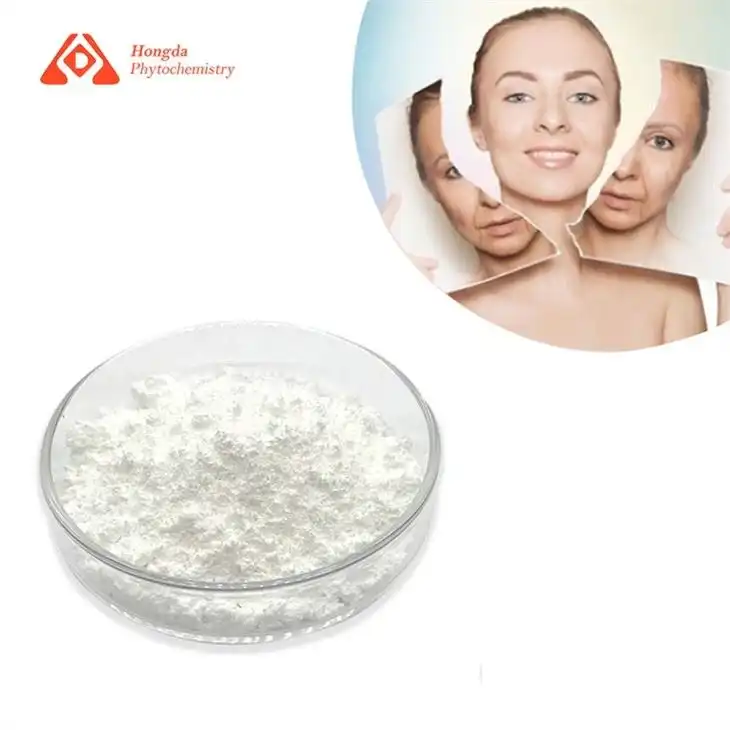
Another reason this ingredient keeps showing up in new products is that it can be used in many different ways. Zinc bisglycinate powder is usually a fine, off-white powder. It is mild, so it can be used in a lot of different dose forms. Manufacturers of capsules like that it has stable fill weights, manufacturers of tablets like that it can be compressed with common excipients, and manufacturers of powder mixes like that it doesn't take over the flavour like some zinc salts that taste metallic can. Test the zinc bisglycinate powder in your actual format before placing a large order. Pay attention to how it flows, how evenly it blends, and how it reacts with vitamin C, vitamin D, copper, and herbal extracts. Tests in the real world save a lot more money than they cost.
Reading the Market and Choosing Your Position
There are strong signs of demand, but positioning is still important. Some brands focus on body defence, others on hair and skin, and still others on wellness packages for men or women. All of these stories can be told with zinc bisglycinate powder, so the best thing to do is make sure that your grade, Packaging, and claims all meet the needs of the same customer. A company that makes sports nutrition might want a batch with more potency and a simple capsule, while a company that makes beauty-from-within products might want small, elegant doses mixed with other nutrients. Once you know what you want, let your supplier know as soon as possible. Skilled manufacturers can suggest specifications and paperwork that will work with your plan instead of just selling you a standard item from a catalogue.
Reading the Specification Sheet Like a ProfessionalZinc Content and Assay Basics
Zinc content should be the first line on any specification sheet that you read. Commercial zinc bisglycinate powder usually comes with a list of the percentage of elemental zinc it contains. Most sellers stick to a range of twenty to twenty-five percent, but exact numbers can change depending on the process and level of hydration. This number tells everything else what to do, from how much powder goes into each pill to what the mineral is called on the label. Find out what kind of analysis is done, like complexometric titration or atomic absorption, and ask for batch results that prove the value. You can figure out your dose once and trust it every time with a consistent assay. If a seller can't explain how they measure their zinc bisglycinate powder, that's a red flag that you should look elsewhere.
Appearance, Solubility, and Particle Behavior
How well production goes depends on the physical qualities. If the powder clumps or bridges in the bin, it will slow down the encapsulation line. Look for a powder that is a uniform colour, has fine particles, and flows well. If you want to use the substance in drinks or other bubbly things, its solubility is also important. Find out about the mesh size and ask if there is a free-flowing version for high-speed equipment. Too much water can make something less stable and cause it to clump while it's being stored. A trustworthy supplier will talk about these details openly and may even be able to make changes to fit your machinery. Before you place a large order, ask for a sample of the zinc bisglycinate powder and test its flow and blend on your own line.
|
Items
|
Specifications |
Test Results
|
Test Methods
|
||
|
Appearance
|
White crystalline powder
|
Conforms
|
In-house
|
||
|
Zinc Bisglycinate,w/%
|
≥98.0
|
98.7
|
In-house
|
||
|
Zinc(on dried basis),w/%
|
≥30.0
|
30.1
|
In-house
|
||
|
Loss on drying,w/%
|
≤1.0
|
0.49
|
In-house
|
||
|
pH
|
7.5~9.0
|
8.1
|
In-house
|
||
|
Particle size,w/%
|
90% passing 60 mesh
|
Conforms
|
In-house
|
||
|
Additional Guarantees
|
|||||
|
Items
|
Limits
|
Test Methods
|
|||
|
Individual Heavy metals
|
Pb, ppm
|
≤3
|
AAS
|
||
|
As, ppm
|
≤1
|
AAS
|
|||
|
Cd, ppm
|
≤1
|
AAS
|
|||
|
Hg, ppm
|
≤0.1
|
AAS
|
|||
|
Microbiologicals
|
Total plate count, cfu/g
|
≤1000
|
USP
|
||
|
Yeast and Mold, cfu/g
|
≤100
|
USP
|
|||
|
E. Coli, /g
|
Negative
|
USP
|
|||
|
Salmonella, /25g
|
Negative
|
USP
|
|||
Comparing Zinc Forms Side by Side
There are many buyers who want to know how this item compares to others. The honest answer is that it depends on your needs. Inorganic salts are often used in low-cost products, while chelates are preferred in high-end formulas because they are gentler and have a stronger label story. By comparing zinc bisglycinate powder to other forms, you can figure out if the extra cost is worth it for the customer. The table below gives a brief summary of the most common forms of zinc, based on what people in the industry know and what's written about nutrition. Always check your own specification sheet for exact information.
|
Zinc Form
|
Type
|
Typical Elemental Zinc
|
Common Positioning
|
|---|---|---|---|
|
Zinc bisglycinate
|
Amino acid chelate
|
About 20-25%
|
Premium, gentle, well-absorbed
|
|
Zinc gluconate
|
Organic salt
|
About 14%
|
Lozenges, classic supplements
|
|
Zinc citrate
|
Organic salt
|
About 31%
|
Mid-range, versatile
|
|
Zinc oxide
|
Inorganic salt
|
About 80%
|
Economy, high-dose fills
|
The comparison shows why zinc bisglycinate powder costs more: its pure zinc content is lower than oxide's, but its chelated structure makes it seem like a better product, which appeals to more people.

Quality Checks That Protect Your Brand
Certificates and Manufacturing Standards
Paperwork is the initial screening. North America, Europe, and the Middle East need cGMP-compliant zinc bisglycinate powder with ISO 9001 quality and ISO 22000 food safety management. FDA registration, HALAL, KOSHER, BRC, or FSSC certification are also required. These articles demonstrate that the factory follows a process rather than improvising. Request current copies, verify the job location, and check expiry dates. A reliable manufacturer will disclose them swiftly and allow audits, including virtual plant visits. Remember that a certificate for a trading firm is different from one for the factory that creates your zinc bisglycinate powder, so know who makes it.

Laboratory Testing and Batch Documentation
The lab is where consistency is made. A full batch dossier for zinc bisglycinate powder should include tests for heavy metals like lead, arsenic, cadmium, and mercury, as well as limits on microbes, moisture or loss during drying, and checks on the powder's appearance. Strong suppliers test their products in-house and also have third-party labs like SGS check them out. This gives you an extra layer of trust. Each shipment should come with a certificate of analysis that is specific to that batch, and the supplier should keep samples that can be used to test anything in the future that isn't clear. When the goods arrive, go through the certificate and match each line to the agreed-upon specification. This habit only takes a minute and can save you a lot of money in recalls, rejected retail orders, and lost customer trust.

Traceability and Change Control
There is a clear path behind every good batch. Find out where the seller gets the glycine and zinc they use, how they check each lot that comes in, and how they keep track of each production run, from the reaction to the drying, milling, and packaging. Traceability lets the company that makes zinc bisglycinate powder answer questions about a large amount of powder with facts instead of guesses. Change control is just as important. A professional supplier will let you know before they change the sources of raw materials, the steps of the process, or the specifications, so your formula is never changed without your knowledge. You should write down these promises in a quality agreement. It might feel formal, but it helps everyone understand each other, which keeps long-term partnerships smooth, predictable, and free of unpleasant surprises when business grows.
Bulk Supply, Packaging, and Smart SourcingOrder Quantities, Pricing, and Total Cost
Take a look at the total cost instead of just the unit price. There are different levels of pricing, payment terms, packaging fees, freight costs, and the cost of any lots that are returned. Ask the supplier to explain what affects the price of zinc bisglycinate powder, such as the amount of zinc in it, the purity grade, the particle size, or the way it is packaged, so you can make smart decisions. A lot of brands start with a trial order and then move on to blanket purchase deals. This way, they can lock in the price and supply while getting shipments in manageable chunks. This method protects cash flow and lowers the risk of storing things too long. Manufacturers who are honest are happy to talk about these structures because they know that steady repeat business is good for both of them.
Packaging, Storage, and Shelf Life
Good packaging preserves powder. Bulk zinc bisglycinate powder is shipped in sealed inner bags within fibre drums or cartons with batch number, manufacture date, and net weight labels. Mini aluminum-foil pouches are available for sample and smaller brands. Storage guidelines recommend a cold, dry, well-sealed, out-of-direct-sun setting to preserve flowability and shelf life. Ask the supplier about shelf life and retest policy, and verify food-contact packaging. Private labelling should be considered early in relabeling or repackaging. For planning, use the table below to list common bulk supply considerations. Always get written confirmation.
|
Supply Factor
|
Typical Industry Practice
|
What to Confirm
|
|---|---|---|
|
Bulk packaging
|
Inner liner in drum or carton
|
Food-grade materials, sealed liners
|
|
Sample size
|
Small foil bag with COA
|
Batch-matched documentation
|
|
Shelf life
|
Commonly around 24 months
|
Stated in spec sheet and label
|
|
Storage
|
Cool, dry, airtight
|
Humidity control recommendations
|
|
Documentation
|
COA, MSDS, allergen statement
|
Country-specific compliance letters
|
Logistics and Responsive Support
Fast shipping can determine a retail launch window. Choose an experienced exporter to your region, comfortable with customs paperwork, and flexible with air, sea, and express choices. Smaller zinc bisglycinate powder replacement orders from overseas suppliers can be shipped within days, reducing inventory. Equally important is responsive communication. A team that rapidly answers technical inquiries, clarifies packaging, and tracks shipments will save you hours. If you would like a tailored quotation, send your target zinc content, packaging preference, and annual volume to duke@hongdaherb.com, and the Hongda team will reply with practical recommendations and documentation suited to your market.
Choosing a Manufacturer You Can Grow WithCapacity, Equipment, and Technical Depth
A capable plant underpins every reliable supply chain. Ask about production lines, monthly output, labs, and process development technical teams. A factory with a big production floor, modern equipment, an in-house research team, and qualified operators can handle pilot runs and bulk zinc bisglycinate powder orders better. Questions concerning raw material shortages, peak-season scheduling, and contingency supplies show a supplier's planning. Visit the factory or request a live video walkthrough. The production floor typically reveals reliability better than a brochure.
Customization and OEM Flexibility
True cooperation implies the supplier adapts to you. You may need a specific zinc proportion, mesh size, carrier-free variant, or branded packaging. A competent zinc bisglycinate powder maker will explain technological constraints and offer alternatives rather than simply answering yes or no. Customized certificates of analysis, specification formats that match your quality system, and regulatory documentation for your target nation are also possible. More open supplier collaboration at this stage will streamline product development. Because every long-term partnership faces challenges, early chats might anticipate how problems will be handled later.
Building a Partnership That Lasts
The best sourcing relationships evolve. Start with a sample, then a trial order, analyze performance after a few shipments, and eventually longer agreements. Consider your supplier's consistency, honesty, delivery, and problem-solving, not just price. These properties make zinc bisglycinate powder a competitive advantage rather than a worry. Shaanxi Hongda Phytochemistry, a national high-tech firm created in 2001, produces over 400 plant-based and nutritional substances in a cGMP factory and SGS-certified laboratory. Customers like its personalization and 24/7 customer assistance, which helps projects bridge time zones.
Conclusion
Finding zinc bisglycinate powder requires looking beyond pricing. Before the first purchase, verify chelate quality and zinc content, batch-level testing, certificates, and packaging and logistics. Choose a customizable, fast-communicating manufacturer with proven capability. With cGMP manufacturing, an SGS-certified laboratory, 10 extraction lines, and over 400 products, Shaanxi Hongda has supplied worldwide brands since 2001. Customization and 24/7 assistance are available. Not all of our 400+ goods are on our website. If you cannot find the product you need, please Contact Us at duke@hongdaherb.com.
FAQWhat is zinc bisglycinate powder?
It is a chelated mineral in which one zinc ion is bound to two glycine molecules, creating a stable, well-absorbed form.
How much elemental zinc does it usually contain?
Many suppliers standardize around 20-25% elemental zinc, but you should confirm the exact value on the batch COA.
Which dosage forms suit this ingredient?
It works well in capsules, tablets, gummies, and powdered drink mixes once flow and particle size are matched.
What documents should I request before ordering?
Ask for a spec sheet, batch COA, MSDS, Certifications such as cGMP and ISO, and heavy metal and microbial test data.
Can the specification be customized?
Yes. Zinc content, mesh size, and packaging can usually be tailored to your formula and market.
Let Hongda Power Your Next Zinc Bisglycinate Powder Project
Ready to bring a well-absorbed zinc formula to market? Hongda brings more than two decades of experience in plant-based and nutritional ingredients, backed by a cGMP factory, SGS-certified testing, and a customer service team that responds around the clock. Whether you need a standard grade of zinc bisglycinate powder for capsules, a custom mesh size for your tablet line, or a complete OEM package with private packaging, our specialists will guide you from first sample to final shipment. Share your target specification, volume, and destination market, and we will prepare a clear quotation with the right documentation. Email us today at duke@hongdaherb.com and discover why brands worldwide trust Hongda as a long-term sourcing partner.
References
1. Gandia, P., Bour, D., Maurette, J. M., et al. (2007). A bioavailability study comparing two oral formulations containing zinc (Zn bis-glycinate vs. Zn gluconate) after a single administration to twelve healthy female volunteers. International Journal for Vitamin and Nutrition Research.
2. Prasad, A. S. (2008). Zinc in human health: Effect of zinc on immune cells. Molecular Medicine.
3. Maret, W., & Sandstead, H. H. (2006). Zinc requirements and the risks and benefits of zinc supplementation. Journal of Trace Elements in Medicine and Biology.
4. Wegmuller, R., Tay, F., Zeder, C., Brnic, M., & Hurrell, R. F. (2014). Zinc absorption by young adults from supplemental zinc citrate is comparable with that from zinc gluconate and higher than from zinc oxide. Journal of Nutrition.
5. Ashmead, H. D. (2012). Amino Acid Chelation in Human and Animal Nutrition. CRC Press.
6. Institute of Medicine, Food and Nutrition Board. (2001). Dietary Reference Intakes for Vitamin A, Vitamin K, Arsenic, Boron, Chromium, Copper, Iodine, Iron, Manganese, Molybdenum, Nickel, Silicon, Vanadium, and Zinc. National Academies Press.