What to Look for When Sourcing Liposomal Silymarin Powder from Factories?
2026-08-05 14:17:11
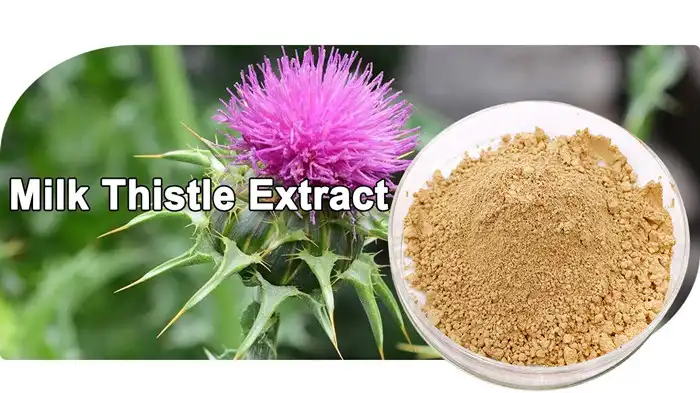
Not all “liposomal” powders live up to the bioavailability promise that makes Liposomal Silymarin Powder worth the increased price compared to regular milk thistle extract. That is why sourcing choices need to be carefully evaluated before you commit to a source. Shaanxi Hongda Phytochemistry Co., Ltd. filled this gap by developing a production technique based on high-pressure shearing encapsulation and spray freeze-drying nanotechnology, which achieves a genuine nanoscale liposomal structure instead of physical mixing with liposomal branding. In this article, we examine the technical, administrative, and capacity issues that separate a reliable manufacturer from one selling an inferior product under the same label, presenting formulators with a realistic checklist to use when analysing suppliers before placing a first order.
Why Liposomal Silymarin Powder Sourcing Decisions Matter So Much
With liposomal substances, it’s even more important to get your sourcing right than with other raw materials, since the whole value proposition relies on a manufacturing accuracy that’s simple to fake, and difficult to evaluate at a glance.
The Bioavailability Gap Between Genuine and Fake Liposomal Products
The major reason consumers pay more for Liposomal Silymarin Powder is the bioavailability advantage over regular silymarin extract, with completely encapsulated formulations demonstrating about eight to twelve times better absorption in research studies. This advantage is only obtained if the phospholipid bilayer really forms around the silymarin molecules during the manufacturing process, protecting them from digestion in the stomach and enabling them to be absorbed directly into the cells. You will not get any of these benefits from a cheap or fraudulent version that is just silymarin extract mixed with lecithin powder and not properly encapsulated, even if it has the same name. But this is why source inspection is so vital. Two things may seem comparable on a spec sheet, but perform radically differently in the body. Only actual manufacturing technology can bridge the gap consistently.
Common Red Flags in Low-Quality Suppliers
If you are seeking to purchase Liposomal Silymarin Powder, be on the lookout for warning signs that it is not really liposomal encapsulated, but rather a physical mixture. There are excellent grounds to do more research: the absence of clear or accessible particle size data, the unwillingness to provide zeta potential figures, and the pricing which looks too good to be true compared to respected manufacturers. Often, providers who can’t explain their encapsulation method in clear, scientific terms, or who avoid answering questions about their production technique, are retailing a lower quality product under the liposomal brand without the manufacturing capability to back it up. By asking these questions and performing this research prior to making a bulk order, you will be better equipped to protect the performance of your formulation and your brand’s reputation with end consumers who anticipate the greater absorption claims to truly be true.
Specification Benchmarks to Compare Against
Having concrete specification benchmarks in hand makes it far easier to evaluate competing suppliers on a like-for-like basis rather than relying on marketing language alone.
|
Analysis Item
|
Specification
|
Testing Method
|
|
Product Name
|
Liposomal Milk Thistle Extract
|
--
|
|
Active Ingredient
|
Silymarin (Total Flavonolignans)
|
HPLC
|
|
Standardized Assay
|
50%, 70%, 80% (Customizable)
|
USP / Internal Method
|
|
Appearance
|
Light Yellow to Yellow Fine Powder
|
Visual
|
|
Liposomal Diameter
|
50nm – 200nm (In aqueous state)
|
DLS/TEM
|
|
Solubility
|
Excellent Water Dispersibility
|
Gravimetric
|
|
Loss on Drying
|
≤ 5.0%
|
105℃, 2h
|
|
Heavy Metals
|
Meets stringent food safety standards
|
ICP-MS
|
|
Microbiological
|
Total Plate Count ≤ 1,000 cfu/g
|
USP Standard
|
Evaluating a Factory's Manufacturing Technology
Once you understand what separates genuine product from imitations, the next step is examining exactly how a candidate factory actually produces its Liposomal Silymarin Powder.
Encapsulation Method: High-Pressure Shearing vs. Basic Blending
The manufacturing method a factory uses tells you almost everything about whether their Liposomal Silymarin Powder will perform as claimed. High-pressure shearing encapsulation, followed by spray freeze-drying, is the gold standard approach, forming genuine phospholipid bilayers around silymarin molecules at a controlled nanoscale rather than simply mixing lecithin and extract together under low shear conditions. Ask potential suppliers directly which method they use and request technical documentation supporting their answer, since factories using proper high-pressure processing will typically have detailed process descriptions readily available. Basic blending methods are cheaper to run but produce a product that looks similar on paper while lacking the true encapsulation structure that drives the bioavailability advantage buyers are actually paying for.
Particle Size and Zeta Potential Verification
Legitimate Liposomal Silymarin Powder reconstitutes into particles consistently falling within the 100 to 300 nanometer range, a size window specifically chosen because it facilitates efficient cellular uptake. Zeta potential, typically measured between -20 mV and -40 mV for stable formulations, indicates how well the colloidal particles resist clumping and settling in liquid applications. A trustworthy factory will readily share dynamic light scattering data confirming both measurements, since these figures are standard quality control checkpoints in any properly equipped liposomal production facility. Suppliers who can't produce this data, or who provide numbers that seem inconsistent between batches, likely lack the process controls needed to manufacture genuine liposomal products at consistent quality.
Spray-Drying and Stability Processing
Converting liquid liposomes into a stable, flowable powder without destroying the delicate phospholipid structure requires specialized spray-drying or freeze-drying technology, and this step is where many lower-quality manufacturers cut corners. Properly processed Liposomal Silymarin Powder maintains its nanoscale structure through drying and storage, reconstituting back into stable liposomes when mixed into a liquid formulation or dissolved during digestion. Factories using low-temperature spray crystallization techniques generally preserve this structural integrity better than those relying on cruder drying methods that generate excess heat. Asking a potential supplier about their specific drying technology and requesting reconstitution stability data helps confirm whether their process actually protects the liposomal architecture rather than compromising it during the final manufacturing step.
Quality Documentation Every Buyer Should Request
Manufacturing technology matters, but documentation is what actually proves a factory's claims hold up under scrutiny, and buyers should never skip this verification step.
Certificate of Analysis and Third-Party Testing
Every batch of Liposomal Silymarin Powder should arrive with a detailed certificate of analysis confirming purity percentage, particle size distribution, zeta potential, and moisture content, along with microbial and contaminant testing results. Buyers formulating for pharmaceutical or premium nutraceutical applications should also ask whether independent third-party laboratories have verified these figures, since self-reported internal testing alone offers less assurance than externally validated results. Requesting a sample COA before placing a full order, and comparing it against documentation from competing suppliers, is one of the most effective ways to separate factories with genuine quality systems from those simply printing plausible-looking numbers on a spec sheet.
GMP and International Certifications
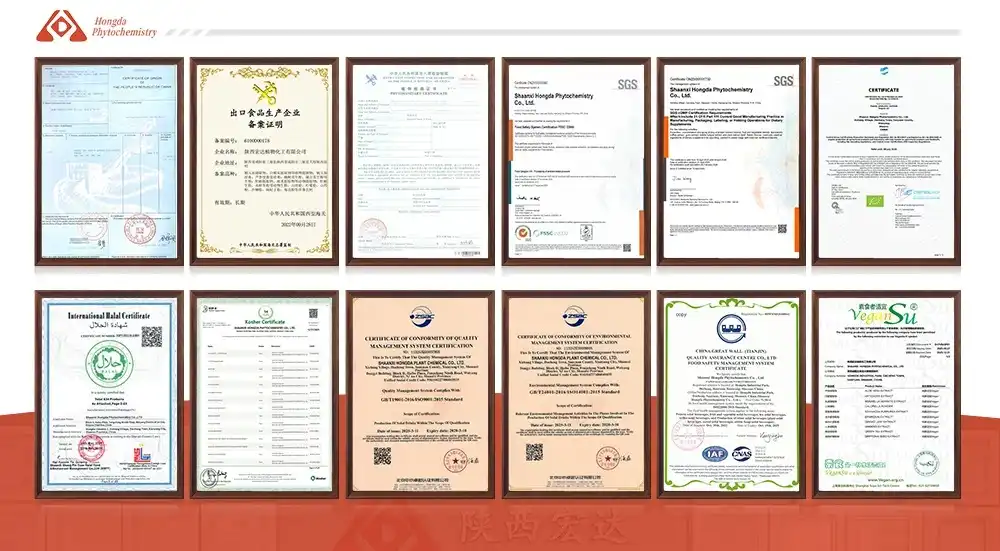
Certifications provide an additional layer of confidence that a factory's Liposomal Silymarin Powder production meets recognized international standards rather than relying solely on the manufacturer's own claims.
|
Certification
|
What It Confirms
|
|---|---|
|
GMP
|
Controlled, documented manufacturing process
|
|
ISO9001 / ISO22000
|
Quality and food safety management systems
|
|
SGS testing
|
Independent laboratory verification
|
Authenticity Tests: The Tyndall Effect and Centrifugal Stability
Beyond paperwork, there are practical laboratory tests that reveal whether a Liposomal Silymarin Powder sample is genuinely encapsulated. Mixing a small amount in water and observing whether it forms a translucent colloidal solution with a visible pale blue Tyndall effect is one of the simplest verification methods, since genuine liposomes scatter light this way while physical mixtures typically precipitate or form floating oil droplets instead. Centrifugal stability testing offers another useful check, as authentic liposomal structures remain suspended and stable under centrifugal force, while poorly encapsulated mixtures separate quickly. Reputable factories are usually willing to demonstrate these tests on video or provide samples for buyers to test independently, and any reluctance to do so is itself a meaningful red flag worth taking seriously.
Production Capacity and Supply Reliability
Technical quality only matters if a factory can actually deliver consistent volumes on schedule, making production capacity and support just as important as the underlying manufacturing science.
Annual Output and Scalability
Buyers planning to scale a product built around Liposomal Silymarin Powder need a factory with production capacity that can grow alongside their business, rather than one operating at the edge of its capabilities on every order. Facilities running multiple dedicated production lines with substantial annual output capacity offer more scheduling flexibility and are generally better positioned to absorb larger reorders without extending lead times significantly. Asking a potential supplier directly about their annual production capacity, and how much of that capacity is typically committed to existing customers, gives a realistic picture of whether they can support your growth plans over the coming years rather than just your initial trial order.
Customization and Formulation Support
Many buyers need Liposomal Silymarin Powder tailored to specific purity ranges, particle characteristics, or even combined with complementary liver-support ingredients like liposomal glutathione for a more complete formulation. If your project calls for a specification beyond a factory's standard catalog offering, it's worth asking directly whether custom development is possible, since experienced manufacturers regularly build tailored formulations based on individual customer needs — you can send your specific requirements to duke@hongdaherb.com and receive formulation guidance suited to your application. Factories offering this kind of responsive, technically informed customization tend to make far better long-term partners than those selling only fixed, off-the-shelf specifications.
MOQ, Lead Time, and Packaging Flexibility
Minimum order quantities, typical lead times, and Packaging options all affect how practical a given factory is for your specific stage of product development. A supplier offering a relatively low MOQ, sometimes as little as one kilogram for initial trials, makes it much easier to test Liposomal Silymarin Powder in your own formulation before committing to larger volumes. Lead times should also be clearly communicated up front, since delays in raw material delivery can cascade into missed production or launch schedules. Packaging flexibility, including options for smaller trial quantities versus full bulk drums, further signals a factory genuinely set up to support customers at different stages rather than only large, established buyers.
Questions to Ask Before Placing Your First Order
Once technical and documentation requirements are met, a brief set of practical questions may assist in transforming all of this examination into a confident final sourcing selection.
Verifying Real-World Application Support
In addition to raw specs, it’s good to enquire with a possible supplier about how their Liposomal Silymarin Powder works in various final product formats, such as capsules, effervescent pills, or ready-to-drink formulations. This is where manufacturers with real formulation experience can generally speak with authority on compatibility challenges, stability concerns, and dosing techniques for these various applications, since they have probably worked on comparable projects in the past. Suppliers who provide free formulation advice and synergistic mix suggestions (e.g. silymarin with complementing antioxidants) tend to be a more technical partner than those that only supply raw powder without further help.
Requesting Samples and Trial Batches
No Liposomal Silymarin Powder sourcing choice should be made without evaluating a sample in your real production process. Reconstitution behaviour, flowability, and compatibility with your unique formulation base may all disclose problems that will not be apparent from a specification sheet. Good manufacturers will usually provide you samples quickly and will be happy to go through any performance questions you have as you evaluate them. You may also do the Tyndall effect and centrifugal stability tests I mentioned above on your own sample, rather than just taking the supplier’s paperwork at face value. It’s another level of assurance before you decide to go for a bigger trial, or bulk manufacturing run.
Building a Long-Term Manufacturing Partnership
Since the quality of liposomal manufacture is so dependent on constant process control, most experienced buyers ultimately develop a long-term connection with one trustworthy factory rather than bouncing from supplier to supplier. A manufacturer with clear documentation and timely technical assistance, and a consistent history of Liposomal Silymarin Powder quality across numerous manufacturing runs makes growing a product much less dangerous over time. As reformulation, retesting, and re-qualifying a new factory mid-scale-up can quietly cost far more time and money than the initial savings ever justified, this type of stable partnership usually pays off handsomely once a product reaches meaningful commercial volume, while short-term price savings from an unproven supplier are usually not worth the risk.
Conclusion
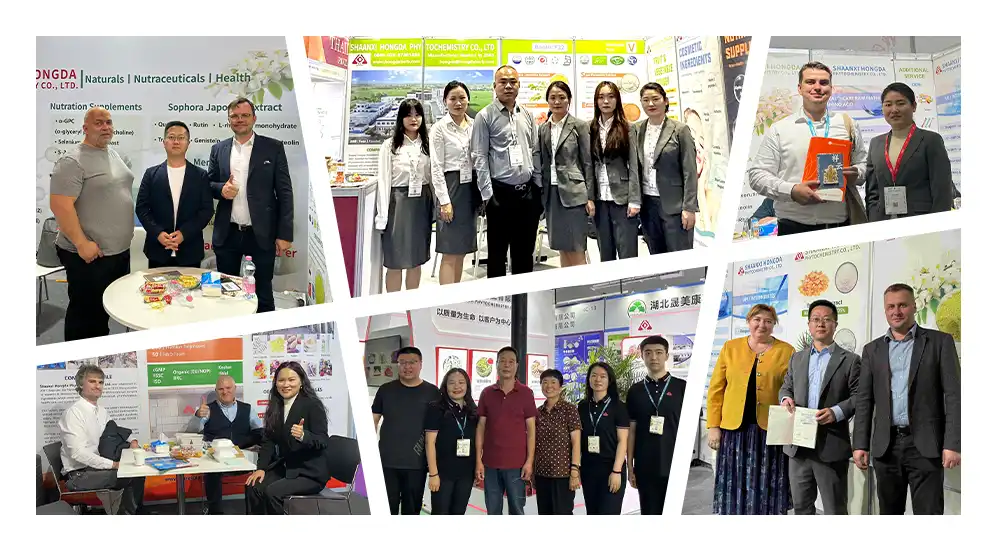
Instead of only looking at the labelling, you need to look at the manufacturing technique, documents, and production capacity when you are looking for real Liposomal Silymarin Powder. "Hongda Phytochemistry’s high-pressure encapsulation process, validated specs and flexible customisation give formulators a trusted factory partner to develop effective, bioavailable liver health products."
FAQQ1: How can I verify a supplier's Liposomal Silymarin Powder is genuine?
Check particle size, zeta potential data, and perform a simple water dispersion Tyndall effect test.
Q2: What particle size indicates proper liposomal encapsulation?
Reconstituted particles should fall within 100 to 300 nanometers.
Q3: What certifications should a reliable factory hold?
Look for GMP, ISO9001, ISO22000, and independent SGS testing.
Q4: Can the purity or formulation be customized?
Yes, factories like Hongda offer customized purity ranges and complementary ingredient blends.
Q5: What's a reasonable MOQ for testing this ingredient?
Some manufacturers offer trial quantities as low as 1kg for initial evaluation.
Source Genuine Liposomal Silymarin Powder from Hongda
Ready to work with a factory that manufactures authentic, verified Liposomal Silymarin Powder? Hongda Phytochemistry combines advanced encapsulation technology, full documentation, and flexible customization to support your formulation from sample to bulk order. Contact our technical team at duke@hongdaherb.com to request samples, specifications, or a tailored quote today.
References
1. Loguercio, C. & Festi, D., "Silybin and the Liver: From Basic Research to Clinical Practice," World Journal of Gastroenterology.
2. Javed, S., Kohli, K., & Ali, M., "Reassessing Bioavailability of Silymarin," Alternative Medicine Review.
3. Akbas, F. et al., "Liposomes as Potential Drug Carrier Systems for Drug Delivery," Advances in Colloid and Interface Science.
4. Kidd, P. & Head, K., "A Review of the Bioavailability and Clinical Efficacy of Milk Thistle Phytosome," Alternative Medicine Review.
5. Abrol, S. et al., "Formulation, Characterization, and In Vitro Evaluation of Silymarin-Loaded Lipid Nanoparticles," Colloids and Surfaces B: Biointerfaces.
6. Yanyu, X., Yunmei, S., Zhipeng, C., & Qineng, P., "The Preparation of Silybin-Phospholipid Complex and the Study on Its Pharmacokinetics in Rats," International Journal of Pharmaceutics.