What Quality Tests Ensure Safe Liposomal Silymarin Powder?
2026-09-21 14:01:50
Safety and consistency don't happen by mistake when working with specific chemicals like Liposomal Silymarin Powder. This ingredient is a botanical extract that has been combined with complicated phospholipid encapsulation technology and needs more stringent testing processes than typical herbal powders to ensure safety and functional effectiveness. If you are a buyer sourcing this ingredient for supplement production, private-label goods, or research uses, you need to know which quality tests are important and why. This guide covers the key testing benchmarks that distinguish genuinely safe, well-made Liposomal Silymarin Powder from unreliable or poorly validated options, and provides practical tips on how to evaluate testing transparency in China silymarin manufacturers before making a bulk purchase.
Why Rigorous Testing Matters for Liposomal Formulations
The Added Complexity of Testing Encapsulated Ingredients
Typical testing of herbal powder extracts includes basic purity and contaminant screening; however, Liposomal Silymarin Powder needs additional levels of verification owing to its encapsulation architecture. Quality testing should also confirm that the phospholipid encapsulation process was done correctly and that the underlying silymarin content matches label claims. A failed or incomplete encapsulation could leave a significant amount of the active unprotected despite marketing the product as liposomal. This two-part testing need, of the active chemical itself and the delivery system around it, makes quality control far more involved than your average extract verification. Buyers should also understand that vendors that provide just basic purity testing, without extra liposomal-specific verification, are likely not providing enough quality assurance for this specialist category of ingredients, no matter how strongly the product is represented as liposomal.
How Poor Testing Leads to Inconsistent Products
The absence of solid multi-stage testing processes may mean Liposomal Silymarin Powder producers are manufacturing with batch-to-batch variance even if the source material seems to be of good quality. Discrepancies in processing temperature, equipment calibration, or irregular phospholipid quality might affect encapsulation efficiency, and only rigorous testing can discover these discrepancies before the customer. This lack of uniformity may present serious issues for supplement companies depending on consistent dosage and performance claims. Products produced without sufficient quality checks may perform dramatically differently from batch to batch, even if the labels are the same. This batch inconsistency risk is a problem for buyers who do not ask for thorough test documentation but depend on general goodwill or low prices. This issue may be avoided for your branded formulations by establishing explicit testing requirements with any possible supplier up-front, so that it does not impact end product quality and user experience.
Setting Realistic Testing Expectations as a Buyer
Buyers new to obtaining liposomal silymarin should know what realistic testing documents to seek, since expecting extremely extensive testing for every single shipment may not be possible, while accepting inadequate testing presents significant quality risk. The usual balanced strategy is to ask for complete test data on the first samples and frequent batch verification, and to ask for a Certificate of Analysis on regular reorders from an already-vetted supplier. Knowing this practical balance helps buyers work out fair testing expectations with suppliers, rather than setting unreasonable expectations that drive up prices needlessly or delay standard order fulfillment timeframes. These are the precise tests worth prioritizing, detailed in depth in the following sections. They give a framework for buyers to assess which paperwork really matters most for verifying safe, effective Liposomal Silymarin Powder before finalizing any sourcing connection.
Raw Material Testing Before Liposomal EncapsulationHPLC Verification of Silymarin Content
Before encapsulation, the raw silymarin extract is analyzed by High-Performance Liquid Chromatography to verify the exact amount of active compounds and the precise flavonolignan profile, i.e., the ratios of silibinin, silydianin, and silychristin that together make up the silymarin complex. This first testing allows for determination of whether or not the beginning material satisfies the potency requirements necessary before going through the more complicated liposomal encapsulation procedure. In addition to the paperwork supplied by the supplier, Reputable manufacturers internally check each incoming raw material batch to discover possible differences before they become a part of the Liposomal Silymarin Powder product. Buyers should specifically request this raw material HPLC data; it should not be included in finished product testing. The reason this is important is that it helps to ensure that manufacturers are actually performing multi-stage quality control and not just testing the final product and trusting that the raw materials were quality checked without independent confirmation.
Screening for Adulteration and Extract Authenticity
Silymarin is another botanical extract that is extracted from milk thistle. There is sometimes worry about adulteration of botanical extracts when cheaper fillers or other botanical material is mixed in with the extract that is meant to be pure to decrease the cost of manufacturing. Good raw material testing includes authenticity screening tests such as botanical identification testing and chemical fingerprinting to validate that the extract is really derived from Silybum marianum seeds and not replaced or diluted with other sources. This authentication stage is critical when procuring from less-known sources, as the validated authenticity testing offers objective verification beyond the supplier’s claim of raw material origin. Ultimately, buyers who purchase finished Liposomal Silymarin Powder products tend to receive more reliable quality assurance from manufacturers who have their own laboratories capable of conducting this authentication testing in-house, rather than relying entirely on outside certificates from raw material suppliers.
Testing for Pesticide Residues and Agricultural Contaminants
As silymarin is an agricultural product, raw material testing must include screening for pesticide residues, herbicide contamination, and other agricultural chemical exposure that might affect the safety of the finished product. Pesticide screening is normally performed on a wide panel of regularly used agricultural pesticides, and findings are compared to regulatory guidelines for maximum allowable residues in botanical extracts for human consumption. Suppliers getting raw milk thistle material from well-managed agricultural locations with documented growing procedures often yield more consistent, lower-contamination raw material than unverified wild-harvested or poorly controlled sourcing places. Pesticide Residue Testing Report - This is another category that can be missed in the raw material verification review, as buyers tend to focus more on the usual purity percentage numbers when assessing potential Liposomal Silymarin Powder suppliers for bulk buying decisions.
Encapsulation-Specific Quality Verification Tests
Measuring Encapsulation Efficiency Accurately
Encapsulation efficiency testing determines what percentage of the total silymarin content actually became successfully encapsulated within the phospholipid liposome structure, as opposed to remaining as unprotected free-form extract mixed within the final powder. This measurement directly indicates whether the liposomal manufacturing process achieved its intended purpose, since low encapsulation efficiency essentially means much of the product functions no differently than standard unencapsulated extract despite carrying liposomal branding. Proper testing typically involves separating encapsulated from non-encapsulated material through specialized laboratory techniques, then measuring silymarin concentration in each fraction separately. Manufacturers genuinely committed to quality should readily share this specific efficiency percentage, ideally supported by consistent testing across multiple production batches, rather than making vague claims about "liposomal technology" without providing the actual efficiency data that substantiates meaningful encapsulation performance in their Liposomal Silymarin Powder.
Particle Size Distribution and Uniformity Analysis
Beyond confirming that encapsulation occurred, testing must also verify the physical characteristics of the resulting liposomes, particularly particle size distribution and uniformity across the batch. Smaller, more consistently sized liposomal particles generally indicate more controlled, higher-quality manufacturing processes, while broad or inconsistent particle size distributions may suggest less refined production methods that could affect both stability and potential performance. This testing typically uses specialized equipment such as dynamic light scattering instruments, capable of measuring particle sizes at the nanometer or micrometer scale relevant to liposomal structures. Manufacturers should conduct this testing routinely as part of standard quality control, not merely during initial product development, since particle size consistency can drift over time without ongoing verification. Requesting this specific data, alongside standard purity documentation, helps buyers distinguish between suppliers with genuine manufacturing precision and those producing inconsistent liposomal batches for their Liposomal Silymarin Powder offerings.
Stability Testing Under Storage Conditions
Liposomal structures can potentially degrade over time or under improper storage conditions, making stability testing an essential component of comprehensive quality verification. This testing typically involves storing product samples under various temperature and humidity conditions over extended periods, then periodically re-testing encapsulation efficiency and particle characteristics to determine how well the liposomal structure holds up throughout the intended shelf life. Accelerated stability testing, which exposes samples to elevated temperatures to predict longer-term storage behavior more quickly, provides useful preliminary data, though real-time stability testing under normal storage conditions offers more definitive confirmation. Buyers should request whatever stability data a supplier has available, understanding that manufacturers with longer market presence typically possess more extensive real-time stability data compared to newer entrants still building their testing history for Liposomal Silymarin Powder formulations.
Comparing Key Encapsulation Test Parameters
Understanding standard benchmarks for these liposomal-specific tests helps buyers evaluate whether a supplier's documentation reflects reasonable industry standards.
|
Test Parameter
|
What It Verifies
|
Typical Acceptable Range
|
|---|---|---|
|
Encapsulation Efficiency
|
Percentage of silymarin properly encapsulated
|
Higher percentages indicate better manufacturing control
|
|
Particle Size
|
Liposome vesicle diameter consistency
|
Sub-micron range for optimal stability
|
|
Zeta Potential
|
Liposome surface charge stability indicator
|
Manufacturer-specific validated range
|
|
Stability Duration
|
Shelf-life performance under storage
|
Supported by accelerated and real-time data
|
Reviewing this data alongside standard purity testing gives buyers a more complete picture of whether a specific Liposomal Silymarin Powder product genuinely delivers the enhanced delivery characteristics implied by liposomal branding.
Safety, Purity and Contaminant Screening StandardsHeavy Metals and Microbial Limit Testing
Standard safety testing for silymarin liposomal must include heavy metals screening, covering elements such as lead, arsenic, cadmium, and mercury, with results verified against established regulatory thresholds for botanical supplement ingredients. Alongside heavy metals, microbial testing confirms the absence of harmful bacteria, yeast, mold, and specific pathogens like E. coli or Salmonella that could compromise product safety if present above acceptable limits. These fundamental safety tests apply to virtually all botanical extract products, but remain equally essential for liposomal formulations, since the encapsulation process doesn't eliminate the need for baseline contaminant screening on the underlying raw materials and finished product. Manufacturers should conduct this testing on every production batch, not merely during initial product qualification, since safety verification requires ongoing consistency rather than one-time confirmation during early product development stages.
Residual Solvent Testing from Processing
Both the initial silymarin extraction process and subsequent liposomal encapsulation may involve solvents or processing aids that require testing to confirm residual levels remain within safe limits in the finished Liposomal Silymarin Powder. This testing typically uses gas chromatography methods capable of detecting trace solvent residues at very low concentration thresholds, ensuring that processing aids used during manufacturing don't persist in the final product at levels that could raise safety concerns. Manufacturers using cleaner, more controlled extraction and encapsulation methods generally produce lower residual solvent results compared to those using less refined processing techniques. Buyers should specifically request this testing documentation, since residual solvent screening is sometimes overlooked in basic quality documentation despite being a standard requirement for pharmaceutical-grade or high-quality nutraceutical ingredient verification across the broader botanical extract industry.
Endotoxin and Additional Safety Screening for Liposomal Products
Given that liposomal manufacturing sometimes involves specialized processing environments and equipment, additional safety screening for bacterial endotoxins may be relevant depending on the specific manufacturing process and intended product application. This testing becomes particularly important for liposomal ingredients intended for more sensitive applications, where any processing-related contamination could pose elevated concern compared to standard powder products. Manufacturers operating cGMP-certified facilities with dedicated liposomal production lines typically maintain more rigorous environmental controls that reduce this risk, supported by routine environmental monitoring alongside finished product testing. Buyers evaluating suppliers for sensitive applications should ask specifically whether this additional screening applies to their Liposomal Silymarin Powder production process, since not all manufacturers routinely conduct this more specialized testing beyond standard heavy metals and microbial screening protocols.
Verifying Testing Claims When Evaluating China Silymarin ManufacturersCertifications That Support Testing Credibility
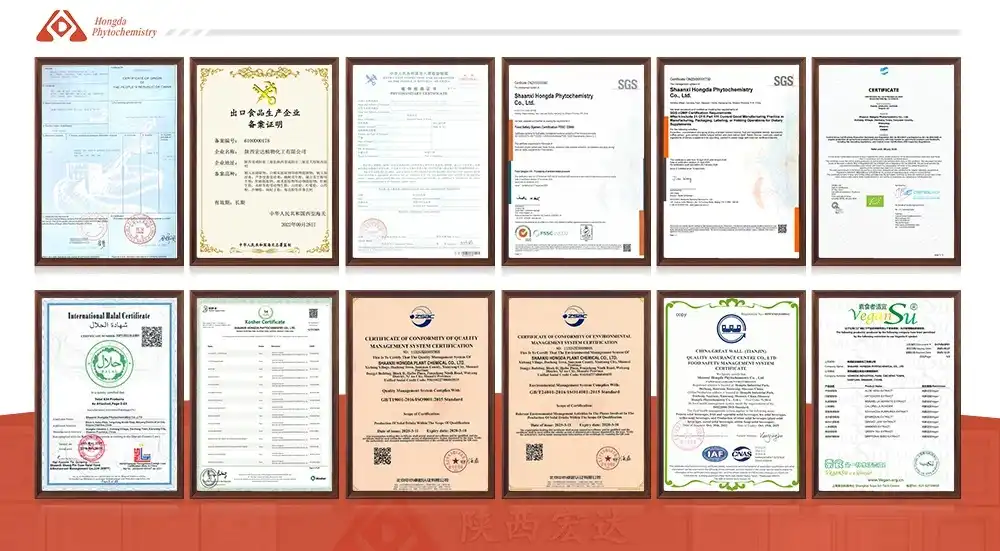
When evaluating China silymarin manufacturers, verifying proper certifications provides essential context for trusting their testing claims regarding Liposomal Silymarin Powder. Key certifications include cGMP for standardized manufacturing and testing protocols, SGS accreditation for independently verified laboratory capability, and ISO9001 or ISO22000 for broader quality management systems. Additional certifications such as FDA registration, HALAL, KOSHER, or Organic status may matter depending on target market requirements, though these don't specifically address liposomal testing capability on their own. Buyers should request current certificate copies directly rather than relying on website claims, verifying expiration dates and, where possible, confirming certificate authenticity with issuing bodies. Manufacturers maintaining this certification portfolio alongside specific liposomal testing documentation generally demonstrate more comprehensive, verifiable quality assurance practices compared to suppliers offering certifications without corresponding detailed testing data.
|
Certification
|
Relevance to Testing Credibility
|
|---|---|
|
cGMP
|
Confirms standardized manufacturing and QC procedures
|
|
SGS Accreditation
|
Validates independent laboratory testing capability
|
|
ISO9001
|
Demonstrates structured quality management systems
|
|
FDA Registration
|
Indicates compliance with export facility requirements
|
Cross-referencing these certifications with actual testing documentation provides a more complete verification process than relying on certification claims alone when evaluating potential suppliers.
Requesting Batch-Specific Testing Documentation
Rather than accepting generic, one-time sample testing results, buyers should request batch-specific Certificates of Analysis covering the exact production lot intended for their actual purchase order. This practice helps confirm that the testing data provided genuinely reflects the material being shipped, rather than referencing an idealized "representative" sample that may not match current production consistency. Established china silymarin manufacturers with mature quality systems typically maintain organized batch records readily available upon request, while suppliers hesitant to provide this specific documentation may be relying on outdated or non-representative testing data. If you're comparing multiple suppliers and want guidance on what specific testing documentation to request for verifying Liposomal Silymarin Powder quality, reaching out directly to an experienced manufacturer—such as via duke@hongdaherb.com—can help clarify reasonable expectations before finalizing your sourcing decision.
Conducting Independent Third-Party Verification
Beyond reviewing supplier-provided documentation, buyers making significant purchasing commitments should consider independent third-party laboratory verification for at least initial sample orders. This step provides objective confirmation of key parameters, including silymarin content, encapsulation efficiency where testing capability allows, and basic contaminant screening, independent of the supplier's own internal testing claims. While this adds some upfront cost and time to the sourcing process, it provides valuable risk mitigation, particularly when establishing a new relationship with previously unverified China silymarin manufacturers. This independent verification becomes less critical for ongoing reorders once a strong track record has been established with a proven supplier, but remains a worthwhile investment during initial supplier evaluation phases for any buyer planning substantial Liposomal Silymarin Powder purchases.
Evaluating Manufacturer Transparency and Communication
Beyond formal documentation, the general transparency and communication style demonstrated by potential suppliers offers additional insight into their genuine quality commitment. Manufacturers confident in their testing processes typically respond thoroughly and promptly to detailed technical questions about their Liposomal Silymarin Powder production and quality control methods, while evasive or vague responses to specific testing inquiries may signal underlying gaps in actual quality verification capability. Established China silymarin manufacturers with dedicated technical support teams can usually discuss their testing protocols knowledgeably, referencing specific equipment, methods, and typical result ranges rather than offering only generic assurances about "high quality" without supporting detail. This communication quality, combined with formal documentation review, provides a more complete picture for buyers making final supplier selection decisions for their liposomal silymarin sourcing needs.
Conclusion
Ensuring safe, effective Liposomal Silymarin Powder requires testing that goes beyond basic purity checks to include encapsulation efficiency, particle size analysis, stability verification, and comprehensive contaminant screening. Buyers should request batch-specific documentation, verify certifications, and consider independent testing when evaluating new suppliers. By prioritizing manufacturers who demonstrate genuine testing transparency and technical knowledge, brands can confidently source liposomal silymarin products that deliver consistent quality and safety across every production batch.
FAQQ1: Why does Liposomal Silymarin Powder require more testing than standard extract?
A: It needs additional verification for encapsulation efficiency and particle characteristics, beyond standard purity and safety testing.
Q2: What is encapsulation efficiency testing?
A: It measures the percentage of silymarin successfully encapsulated within liposomes versus remaining unprotected in the powder.
Q3: How can I verify a supplier's testing claims?
A: Request batch-specific Certificates of Analysis and consider independent third-party laboratory verification for initial orders.
Q4: What certifications indicate reliable testing practices?
A: Look for cGMP, SGS accreditation, ISO9001, and FDA registration as indicators of structured quality systems.
Q5: Should I test every reorder from an established supplier?
A: Not necessarily; routine batch documentation usually suffices once a strong quality track record has been established.
Source Verified Liposomal Silymarin Powder from Hongda(liposomal silymarin supplier)
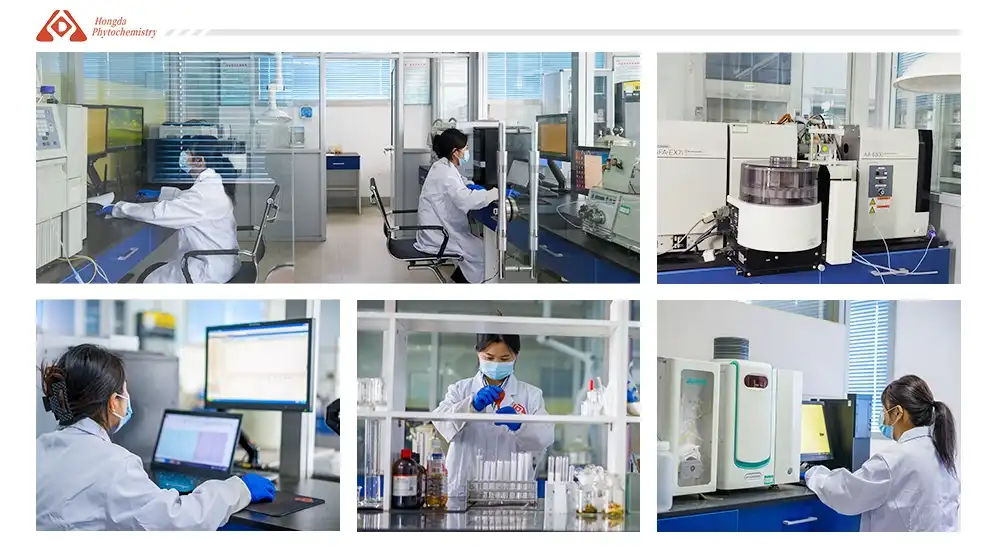
Choosing a supplier with genuine testing transparency makes all the difference in product safety and performance. Shaanxi Hongda Phytochemistry combines over two decades of manufacturing experience with cGMP and SGS-certified facilities, offering comprehensive quality documentation for Liposomal Silymarin Powder. Our dedicated R&D team and in-house laboratory support rigorous testing at every production stage. Ready to verify our quality standards for yourself? Contact Us today at duke@hongdaherb.com for samples, batch-specific testing documentation, and detailed specifications for your next order.
References
1. Abenavoli, L., et al. (2018). "Milk Thistle (Silybum marianum): A Concise Overview on Its Chemistry, Pharmacological, and Nutraceutical Uses in Liver Diseases." Phytotherapy Research.
2. Javed, S., Kohli, K., & Ali, M. (2011). "Reassessing Bioavailability of Silymarin." Alternative Medicine Review.
3. Bhattacharya, S. (2009). "Phytosome: A Novel Approach for Herbal Drug Delivery." International Journal of Health Research.
4. Danaei, M., et al. (2018). "Impact of Particle Size and Polydispersity Index on the Clinical Applications of Lipidic Nanocarrier Systems." Pharmaceutics.
5. Federico, A., Dallio, M., & Loguercio, C. (2017). "Silymarin/Silybin and Chronic Liver Disease: A Marriage of Many Years." Molecules.
6. González-Rodríguez, M.L., & Rabasco, A.M. (2011). "Charged Liposomes as Carriers to Enhance the Permeation Through the Skin." Expert Opinion on Drug Delivery.





YOU MAY LIKE