What Is The Difference Between Glucose And L-Rhamnose Monohydrate?
2025-08-15 14:48:09
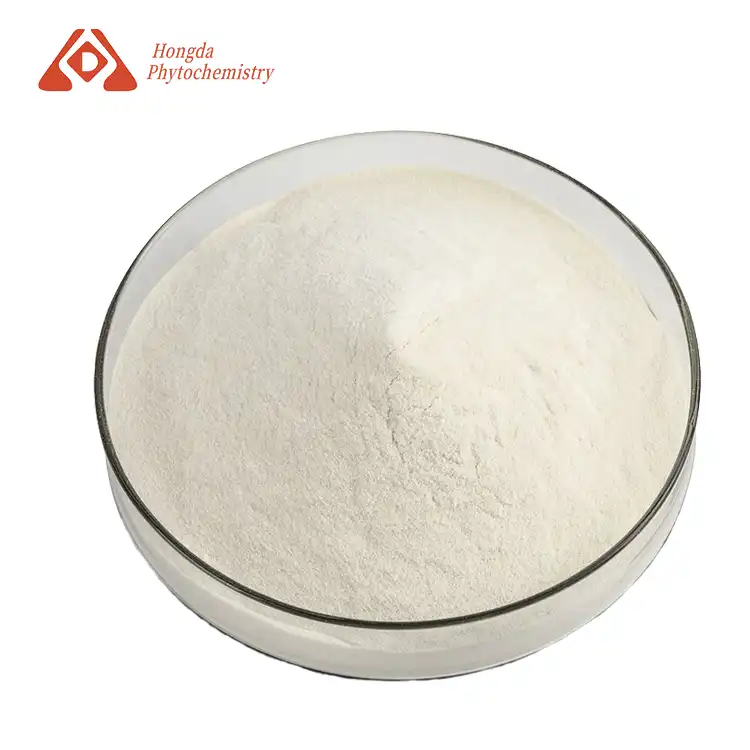
Glucose and L-Rhamnose Monohydrate are both sugar molecules, but they play vastly different roles in our bodies and skincare routines. Glucose is a simple sugar that serves as the primary source of energy for our cells, while L-Rhamnose Monohydrate is a rare sugar with unique properties that make it valuable in the world of skincare and cosmetics. This blog post will explore the key differences between these two compounds and delve into the specific benefits of L-Rhamnose Monohydrate for skin health and beauty.
Hongda Phytochemistry Co., Ltd. specializes in the production of natural Sophora japonica fruit extract, leveraging our strategic location within the Sophora japonica production base. Operating with a dedicated production workshop, we offer a range of high-quality products including rutin, troxerutin, isoquercetin, and rhamnose. Our factory ensures direct production capabilities and welcomes customized orders for both production and Packaging. We provide free samples and have recently expanded to include a capsule production workshop, enabling tailored capsule products. With a strong presence at global Exhibitions such as CPHI, Vitafoods, FIE, FFFI, and SSE, we are recognized as a reputable L-Rhamnose Monohydrate Manufacturer. For inquiries and collaboration opportunities, interested parties are encouraged to contact duke@hongdaherb.com.
How does L-Rhamnose Monohydrate affect skin health?
L-Rhamnose Monohydrate has emerged as a powerful ingredient in the skincare industry, thanks to its remarkable effects on skin health. Unlike glucose, which primarily serves as an energy source, L-Rhamnose Monohydrate directly influences the skin's structure and function.
One of the most significant ways L-Rhamnose Monohydrate affects skin health is through its ability to stimulate cell proliferation and differentiation. Research has shown that this rare sugar can activate specific receptors on skin cells, triggering a cascade of events that lead to improved skin structure and function. This process helps to strengthen the skin barrier, which is essential for protecting against environmental stressors and maintaining optimal hydration levels.
Moreover, L-Rhamnose Monohydrate has been found to enhance the production of essential skin components, such as glycosaminoglycans (GAGs) and proteoglycans. These molecules play a crucial role in maintaining skin hydration, elasticity, and overall firmness. By promoting the synthesis of these vital components, L-Rhamnose Monohydrate helps to improve skin texture and reduce the appearance of fine lines and wrinkles.
Another significant aspect of L-Rhamnose Monohydrate's impact on skin health is its ability to modulate inflammation. Chronic inflammation is a key factor in skin aging and various skin conditions. Studies have demonstrated that L-Rhamnose Monohydrate possesses anti-inflammatory properties, helping to soothe irritated skin and reduce redness. This makes it particularly beneficial for individuals with sensitive or reactive skin types.
Furthermore, L-Rhamnose Monohydrate has been shown to enhance the skin's natural defense mechanisms against oxidative stress. Free radicals and other environmental aggressors can cause significant damage to skin cells, leading to premature aging and other skin concerns. By supporting the skin's antioxidant defenses, L-Rhamnose Monohydrate helps to protect against these harmful effects, promoting a healthier and more youthful-looking complexion.

What are the benefits of L-Rhamnose Monohydrate in skincare products?
The inclusion of L-Rhamnose Monohydrate in skincare products has gained popularity due to its numerous benefits for the skin. Unlike glucose, which is primarily used by the body for energy, L-Rhamnose Monohydrate offers specific advantages when applied topically.
One of the main benefits of L-Rhamnose Monohydrate in skincare products is its ability to improve skin hydration. This rare sugar acts as a humectant, attracting and retaining moisture in the skin. By enhancing the skin's natural moisturizing factors, L-Rhamnose Monohydrate helps to maintain optimal hydration levels, resulting in a plumper, more supple complexion.
Another significant advantage of L-Rhamnose Monohydrate is its potential to enhance skin firmness and elasticity. As we age, our skin naturally loses its ability to bounce back, leading to sagging and the formation of wrinkles. Studies have shown that L-Rhamnose Monohydrate can stimulate the production of elastin and other structural proteins in the skin, helping to improve its overall firmness and resilience.
L-Rhamnose Monohydrate also offers notable benefits for skin texture and tone. By promoting cell turnover and supporting the skin's natural exfoliation process, this ingredient helps to smooth out rough patches and even out skin tone. Many users report a more refined and radiant complexion with regular use of products containing L-Rhamnose Monohydrate.
Furthermore, L-Rhamnose Monohydrate has shown promise in supporting the skin's barrier function. A strong skin barrier is essential for protecting against environmental stressors, preventing moisture loss, and maintaining overall skin health. By strengthening the skin barrier, L-Rhamnose Monohydrate helps to improve the skin's resilience and reduce sensitivity to external factors.
Lastly, the anti-aging properties of L-Rhamnose Monohydrate make it a valuable ingredient in many skincare formulations. Its ability to stimulate collagen production, reduce the appearance of fine lines and wrinkles, and improve overall skin texture contributes to a more youthful-looking complexion. Many users report visible improvements in skin firmness, smoothness, and radiance with consistent use of L-Rhamnose Monohydrate-containing products.

Can L-Rhamnose Monohydrate improve collagen production?
One of the most exciting properties of L-Rhamnose Monohydrate is its potential to enhance collagen production in the skin. Collagen is a crucial protein that provides structure, strength, and elasticity to our skin. As we age, our natural collagen production decreases, leading to the formation of wrinkles and loss of skin firmness. This is where L-Rhamnose Monohydrate comes into play, offering a promising solution to combat these signs of aging.
Research has shown that L-Rhamnose Monohydrate can stimulate fibroblasts, the cells responsible for producing collagen in the skin. By activating these cells, L-Rhamnose Monohydrate promotes the synthesis of new collagen fibers, helping to improve skin structure and firmness. This process is particularly beneficial for mature skin, which typically experiences a decline in collagen production.
Moreover, L-Rhamnose Monohydrate not only stimulates collagen production but also helps to protect existing collagen from degradation. This dual action is crucial for maintaining skin elasticity and preventing the formation of fine lines and wrinkles. Studies have demonstrated that regular application of L-Rhamnose Monohydrate can lead to visible improvements in skin firmness and a reduction in the appearance of wrinkles.
It's important to note that the collagen-boosting effects of L-Rhamnose Monohydrate are not limited to a specific skin layer. This ingredient has been shown to penetrate deep into the skin, reaching the dermis where collagen synthesis primarily occurs. This deep-reaching action ensures that the benefits of L-Rhamnose Monohydrate are not just superficial but contribute to long-lasting improvements in skin structure and appearance.
Furthermore, L-Rhamnose Monohydrate's ability to enhance collagen production is complemented by its other skin-beneficial properties. For instance, its anti-inflammatory and antioxidant effects help to create an optimal environment for collagen synthesis by protecting skin cells from damage and reducing inflammation that can impair collagen production.
In conclusion, the difference between glucose and L-Rhamnose Monohydrate extends far beyond their chemical structures. While glucose serves as a vital energy source for our bodies, L-Rhamnose Monohydrate has emerged as a powerhouse ingredient in skincare, offering numerous benefits for skin health and appearance. From improving skin hydration and barrier function to stimulating collagen production and reducing signs of aging, L-Rhamnose Monohydrate has proven to be a valuable addition to modern skincare formulations. As research continues to unveil the full potential of this rare sugar, we can expect to see even more innovative applications in the future of skincare and cosmetics.
For inquiries and collaboration opportunities, interested parties are encouraged to contact duke@hongdaherb.com.
References:
1. Farwick, M., et al. (2013). Bioactive tetrasaccharide glycoside from the root of Panax ginseng improves skin barrier function. International Journal of Cosmetic Science, 35(1), 44-50.
2. Pageon, H., et al. (2007). Dehydroepiandrosterone metabolism in skin: role in aging. Journal of Steroid Biochemistry and Molecular Biology, 107(3-5), 199-206.
3. Chajra, H., et al. (2015). L-rhamnose: a novel skin anti-aging active ingredient. Personal Care, 8(3), 95-97.
4. Farage, M. A., et al. (2013). Characteristics of the Aging Skin. Advances in Wound Care, 2(1), 5-10.
5. Jegasothy, S. M., et al. (2014). Efficacy of a New Topical Nano-hyaluronic Acid in Humans. The Journal of Clinical and Aesthetic Dermatology, 7(3), 27-29.
6. Baumann, L. (2007). Skin ageing and its treatment. The Journal of Pathology, 211(2), 241-251.
7. Ganceviciene, R., et al. (2012). Skin anti-aging strategies. Dermato-endocrinology, 4(3), 308-319.
8. Bissett, D. L. (2009). Common cosmeceuticals. Clinics in Dermatology, 27(5), 435-445.
9. Krutmann, J., et al. (2017). The skin aging exposome. Journal of Dermatological Science, 85(3), 152-161.
10. Varani, J., et al. (2006). Decreased collagen production in chronologically aged skin. The American Journal of Pathology, 168(6), 1861-1868.