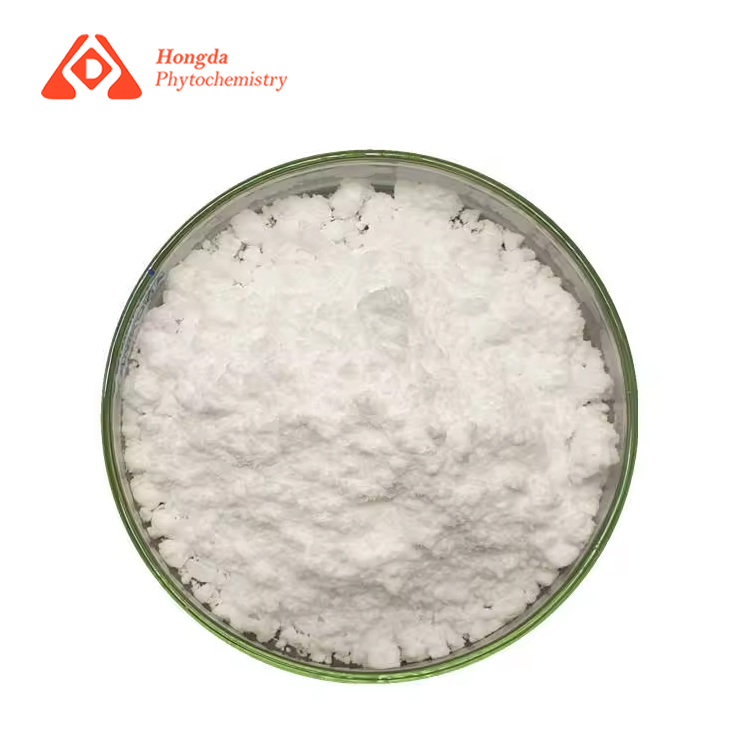
The worldwide demand for mood and sleep-supporting botanicals has made Natural Griffonia Seed Extract one of the most sought-after raw materials in the nutraceutical and pharmaceutical supply chain. With that demand comes a growing stream of diluted, mislabeled, or synthetically spiked “5-HTP” powders into the open market. For large volume customers, a dependable method to distinguish the real, standardised extract from the fake items that sneakily destroy brand image and consumer confidence is essential. This guide outlines the physical, documentary, and laboratory clues that can tell the authentic Natural Griffonia Seed Extract from counterfeits, and why, for formulators who can’t afford to gamble on ingredient integrity, the safer choice remains to choose manufacturers with a verifiable twenty-year production history like Shaanxi Hongda Phytochemistry Co., Ltd.
Understanding Natural Griffonia Seed Extract: The Foundation of Authenticity
In order for a consumer to recognise a counterfeit, it helps to know precisely what authentic Natural Griffonia Seed Extract is intended to be, where it originates from, and how its active constituent is tested. Purchasing teams need to know the botanical, chemical and market basics so they have a benchmark against which to measure every incoming consignment, and that is why so many counterfeit ones do not pass appropriate testing.
What Is Griffonia Simplicifolia and Its 5-HTP Content?
Natural Griffonia Seed Extract is obtained from the seeds of Griffonia simplicifolia, a climbing shrub. The little black seeds of this plant naturally contain 5-hydroxytryptophan, also known as 5-HTP. This aromatic amino acid is the direct biological precursor of serotonin, which is why it is sought as a component in sleep, mood, and appetite-related formulations. Authentic seeds generally make concentrations that are standardised by manufacturers into powders that are 10% up to 99% 5-HTP by HPLC. Any provider providing Natural Griffonia Seed Extract that does not specify a tested percentage is a red flag. Legitimate manufacturers will define the potency, not leave it unclear.
Botanical Origin and Native Growing Regions
The true Griffonia simplicifolia is found almost entirely in the humid tropical zone of West and Central Africa, such as Ghana, Côte d'Ivoire, and Togo. In these regions, the plant produces characteristic green seed pods with three to seven seeds apiece. Reputable makers of Natural Griffonia Seed Extract use raw seeds that can be traced back to these growing locations. Often these manufacturers have long-standing partnerships with local collectors. A quick approach to spot a provider providing unverified or blended material instead of processing verifiable botanical inputs is that counterfeit or substantially chopped goods often can't answer simple queries regarding seed origin, harvest season, or collecting techniques.
Why 5-HTP Concentration Matters for Quality
The most essential quality criterion for Natural Griffonia Seed Extract is the amount of 5-HTP. This is vital for dosage accuracy, effectiveness of the final product, and compliance with regulations in various markets. Often, low-quality or bogus extracts are “cut” with maltodextrin, rice flour, or other inexpensive fillers to increase the volume, but the efficacy on paper is the same. That's why professional purchasers need HPLC verification, not just a certificate that gives a round amount like "50%" without any chromatography to verify it. A good Natural Griffonia Seed Extract maker will always be happy to provide the underlying test methods together with the final specification document.
How Extraction Technology Affects Purity
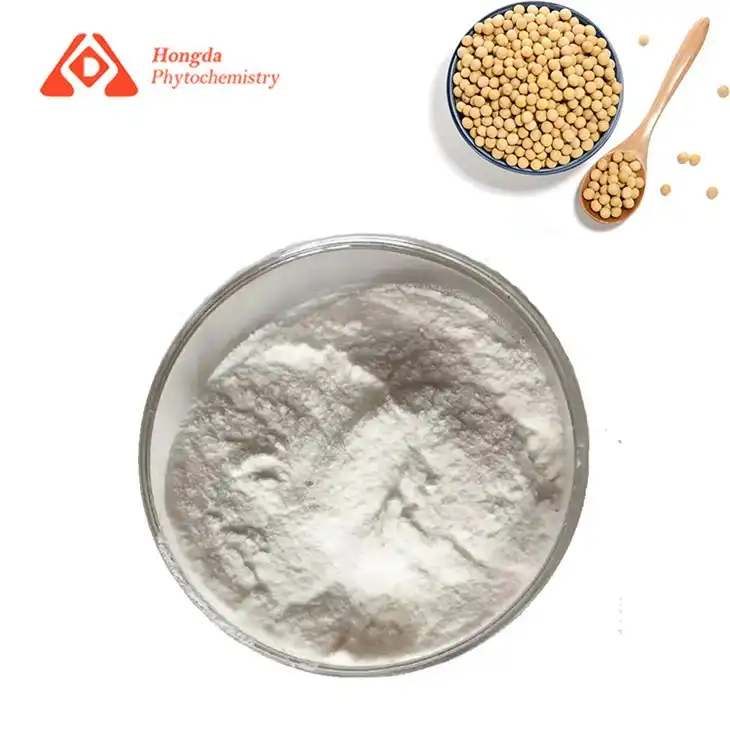
Today, the manufacturers extract the 5-HTP from the raw seeds using ethanol-water extraction methods or supercritical CO2 technologies to remove plant contaminants and to standardise the final concentration. This rigorous processing retains the delicate compound structure of Natural Griffonia Seed Extract and offers a consistent off-white to white fine powder with a stable shelf life. Fake or badly processed ones typically have irregular particle size, weird odour or discolouration as poorer extraction processes do not effectively remove remaining plant materials or solvents. One quick and easy way to verify authenticity before placing a purchase order is to ask a supplier for a description of their extraction method and compare the response to what is on their certificate of analysis.
|
Specification
|
Authentic Griffonia Extract
|
Typical Fake or Adulterated Product
|
|---|---|---|
|
Botanical Source
|
Griffonia simplicifolia seeds
|
Undisclosed or mixed plant sources
|
|
Appearance
|
Off-white to white fine powder
|
Discolored, clumpy, or inconsistent texture
|
|
5-HTP Specification
|
10%–99% verified by HPLC
|
Round numbers with no test data
|
|
CAS Number
|
56-69-9
|
Missing or incorrect CAS reference
|
|
Certification
|
cGMP, FDA, ISO9001, ORGANIC, HALAL, KOSHER
|
No third-party certification offered
|
Common Signs of Fake or Adulterated Griffonia Seed Extract
Once a customer has learned what real material looks like, recognising a fake is a pattern-recognition problem. Fraudulent Natural Griffonia Seed Extract often displays a few repeating warning signals, and being able to spot them before signing a purchase order may spare a formulation team from expensive recalls or failed quality audits down the road.
Inconsistent Color, Texture, and Appearance
Real Natural Griffonia Seed Extract is a fine, homogeneous, off-white to white powder with a subtle, somewhat earthy odour characteristic of a thoroughly dried plant. Counterfeit lots may have a yellow or greyish discolouration, clumping, or a coarse, uneven texture indicative of incomplete drying or the inclusion of filler materials. Some counterfeit items even smell strongly of chemicals, which might be a sign of remaining solvents from a hasty or uncontrolled extraction procedure. Visual and sensory testing is still one of the fastest and lowest-cost screening procedures available; therefore, buyers should always ask for a physical sample before proceeding with a large transaction.
Missing or Fraudulent Certificates of Analysis
A valid certificate of analysis for Natural Griffonia Seed Extract will state the precise 5-HTP content as determined by HPLC, and heavy metal, microbiological and residual solvent test findings associated with a particular lot number. Fraudulent vendors will often supply generic, undated or unbranded papers that cannot be tracked to an established laboratory, and others will simply replicate another company’s certificate and alter the logo. Cross-referencing the laboratory name, contacting the certifying authority directly and verifying batch numbers against shipping labels are all practical methods to verify that the documentation that comes with a shipment is real and not just made up to close a transaction.
Unrealistic Pricing and Vague Specifications
The true expenses of obtaining, manufacturing, and testing genuine Natural Griffonia Seed Extract mean prices that lie considerably below the recognised market range are almost usually a warning indicator of dilution or blatant replacement. In the case of very cheap pricing, sellers tend to provide ambiguous descriptions of the product, such as the process of extraction, the percentage of standardisation and the place of origin of the product. A genuine producer will be open about cost factors such as raw seed availability, extraction technique, and certification overhead and will not shy away from explaining why quality-assured Natural Griffonia Seed Extract cannot be marketed at a fraction of the industry average.
Lack of Traceable Botanical Sourcing
Real producers may lead a customer through their supply chain from seed collecting in West Africa through processing, testing, and Packaging at their own facilities. Fraudulent operators, on the other hand, are typically merely brokers that resell unverified stock bought from unknown middlemen, without any capacity to explain where the raw Griffonia simplicifolia seeds truly came from. This lack of traceability makes it very hard to ensure consistent quality from batch to batch of Natural Griffonia Seed Extract and raises the legal and reputational risk for any company that unwittingly bases a final product on unverifiable raw material.
How to Verify Authentic Griffonia Seed Extract Sourcing
Recognizing red flags is only half the process; buyers also need a proactive verification routine that confirms a supplier's Natural Griffonia Seed Extract meets the specification promised on paper. Building this habit into procurement protects both product safety and long-term brand credibility.
Checking HPLC Testing and Third-Party Lab Reports
The most reliable way to confirm the potency of Natural Griffonia Seed Extract is to request an independent, third-party HPLC test rather than relying solely on the supplier's internal certificate. Reputable manufacturers welcome this step because it validates their own quality claims and builds long-term trust with the buyer. When comparing lab reports, look closely at the testing date, the accredited laboratory's name, and whether heavy metals and microbial limits are included alongside the 5-HTP percentage, since a complete report signals a supplier confident in the consistency of their Natural Griffonia Seed Extract production process.
Reviewing Manufacturer Certifications
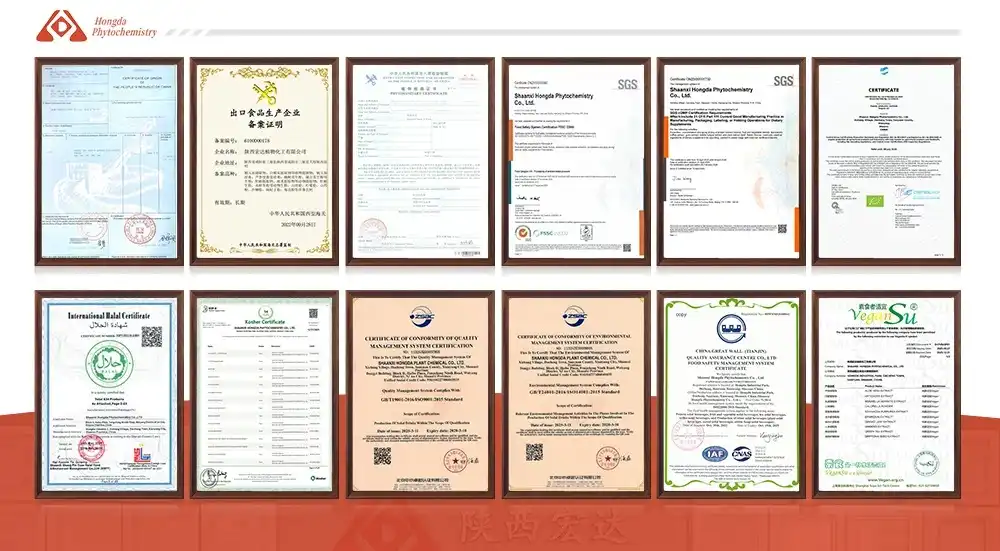
Internationally recognized Certifications such as cGMP, FDA registration, ISO9001, ISO22000, ORGANIC, HALAL, KOSHER, BRC, and FSSC provide independent assurance that a facility producing Natural Griffonia Seed Extract follows documented quality-control procedures. Buyers should ask suppliers to provide certificate numbers that can be verified directly with the issuing body rather than accepting a scanned image at face value. A manufacturer holding a broad certification portfolio has typically invested significant time and resources into audited processes, which correlates strongly with consistent batch-to-batch quality in their Natural Griffonia Seed Extract output.
Evaluating Extraction Methods and Standardization
Ask potential suppliers to describe, in detail, how their Natural Griffonia Seed Extract is standardized, including whether ethanol-water or supercritical CO2 extraction is used and how the finished powder is tested for uniformity between production runs. Suppliers unwilling or unable to answer these technical questions with specifics usually indicate a reseller rather than an actual manufacturer with in-house extraction capability. Understanding the standardization method also helps buyers anticipate how the ingredient will behave in downstream formulation work, whether in capsules, tablets, or functional beverage applications built around Natural Griffonia Seed Extract.
Requesting Samples and Documentation Before Bulk Orders
Before committing to a full container or drum-level order, always request a small sample of Natural Griffonia Seed Extract along with the accompanying certificate of analysis, safety data sheet, and relevant certifications. Testing the sample independently, even at a modest additional cost, provides peace of mind that the full shipment will match expectations. If you are evaluating new suppliers and want documented, verifiable sourcing details for your next formulation project, the team at duke@hongdaherb.com is available to walk through certificates, HPLC data, and sample logistics before you place a bulk order, ensuring every drum of Natural Griffonia Seed Extract you receive matches exactly what was promised on paper.
Why Choose Hongda Phytochemistry for Natural Griffonia Seed Extract
Given the number of red flags on the open market, customers benefit from cooperating with an established, vertically integrated manufacturer against an unknown trading organization. Shaanxi Hongda Phytochemistry Co., Ltd. has earned its reputation on the very transparency that procuring genuine Natural Griffonia Seed Extract demands.
Two Decades of Specialized Extraction Experience
Shaanxi Hongda Phytochemistry was founded in January 2001, and has been a national high-tech firm since 2010. We have been engaged in research, development, and manufacture of natural plant extracts for more than twenty years. With such a lengthy history of operation, the company’s Natural Griffonia Seed Extract is supported by an experienced R&D team of over twenty professors from renowned institutions and over a hundred competent factory operators who are well versed in the intricacies of botanical processing. It’s hard for smaller trading organisations to reproduce that depth of institutional expertise, and it translates directly into more reliable extraction outputs batch after batch.”
SGS-Certified Laboratory and cGMP Factory Standards
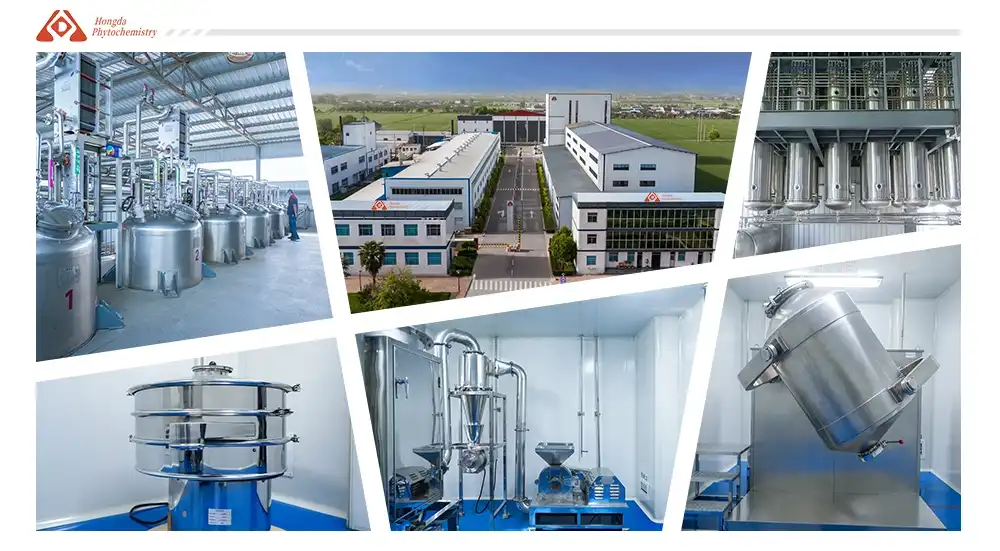
The firm has a 20,000 square metre facility with state-of-the-art extraction equipment, an SGS-recognised laboratory and a cGMP-compliant manufacturing environment, so every batch of Natural Griffonia Seed Extract is examined by a dedicated expert team before packing and release. Strict, standardised manufacturing standards across the supply chain, from intake of raw seed to final packaging, work to prevent the irregularities associated with counterfeit or weakly controlled providers. This is the kind of operational data that buyers should look for when assessing whether a supplier’s claims regarding Natural Griffonia Seed Extract are supported by actual production capacity.
Complete Qualification Certification Portfolio
Shaanxi Hongda offers a broad range of certifications such as SGS, cGMP, HALAL, KOSHER, BRC, FDA, ISO9001, ISO22000, ORGANIC, FSSC, which provide many independent verification points for foreign customers' Natural Griffonia Seed Extract orders. The firm is also awarded as the National High-tech R&D Enterprise and has a Public Overseas Warehouse, which simplifies logistics for the clients in Europe, North America, and Asia. This certification level is not typical for smaller regional suppliers and demonstrates a continuing long-term commitment to regulatory compliance across many foreign markets at the same time.
Customization, Free Samples, and After-Sales Support
The firm also provides bespoke specifications of Natural Griffonia Seed Extract (as per particular client formulation requirements) and free samples of the same for customers who provide freight costs to enable them to sample before committing to bigger quantities. Our skilled sales and customer support staff is at your disposal 24/7 for any queries you may have about specs, packing and logistics. This accessibility, plus a worldwide display presence at shows such as European CPHI, Vitafoods Europe and Food Ingredients Europe, means that foreign formulators can be assured of assistance even beyond the original purchase order.
|
Certification
|
Purpose for Buyers
|
|---|---|
|
cGMP
|
Confirms controlled, documented manufacturing process
|
|
SGS Laboratory
|
Independent testing and quality verification
|
|
FDA
|
Registration relevant to United States market access
|
|
ISO9001 / ISO22000
|
Quality and food safety management systems
|
|
ORGANIC / HALAL / KOSHER
|
Market-specific compliance for diverse regions
|
|
BRC / FSSC
|
Global food safety benchmarking standards
|
Conclusion
Authentic Natural Griffonia Seed Extract has a consistent look, verifiable HPLC testing, comprehensive certification, and traceable botanical origin. Fake items are sometimes hidden behind unclear specifications and excessive pricing. Buyers who authenticate documents, seek samples, and work with reputable, certified producers safeguard the safety of the product and the integrity of the brand. Shaanxi Hongda Phytochemistry, with 20 years of experience, an SGS-accredited laboratory, and cGMP standards, is a trustworthy supplier for formulators seeking authentic, standardised Natural Griffonia Seed Extract for the worldwide market.
FAQ
1. How can I tell if Natural Griffonia Seed Extract is genuine before ordering in bulk?
Request a physical sample along with a batch-specific certificate of analysis confirming the 5-HTP percentage by HPLC, and verify the certifying laboratory independently.
2. What 5-HTP percentage should I look for in authentic Griffonia seed extract?
Genuine extract typically ranges from 10% to 99% 5-HTP; the right percentage depends on your specific formulation, whether it is a food supplement or pharmaceutical application.
3. Why does pricing matter when identifying fake Griffonia extract?
Prices significantly below market range often indicate dilution with fillers or substitution with unverified material, since authentic processing carries real extraction and testing costs.
4. What certifications should a trustworthy Griffonia seed extract supplier hold?
Look for cGMP, FDA, ISO9001, ISO22000, ORGANIC, HALAL, KOSHER, BRC, and FSSC certifications, along with access to SGS or equivalent third-party laboratory testing.
5. How long does authentic Griffonia seed extract typically last in storage?
Properly standardized extract generally has a shelf life of about two years when stored in a cool, dry place away from moisture and direct sunlight.
Partner With Hongda for Verified Natural Griffonia Seed Extract
Since 2001, Shaanxi Hongda Phytochemistry Co., Ltd. has combined rigorous cGMP manufacturing, SGS-certified testing, and a full international certification portfolio to deliver Natural Griffonia Seed Extract that formulators can trust batch after batch. With more than 400 natural plant extracts produced across advanced production lines, our team can also customize specifications to match your exact application, whether food supplement, pharmaceutical, or cosmetic. If you cannot find the exact product listed on our website, or want documented proof of sourcing before your next order, reach out directly to duke@hongdaherb.com and our professional team will respond with certificates, samples, and pricing to help you source with complete confidence.
References
1. Birdsall, T. C. (1998). 5-Hydroxytryptophan: A clinically effective serotonin precursor. Alternative Medicine Review, 3(4), 271–280.
2. Hinz, M., Stein, A., & Uncini, T. (2012). 5-HTP efficacy and contraindications. Neuropsychiatric Disease and Treatment, 8, 323–328.
3. Jacobsen, J. P., Medvedev, I. O., & Caron, M. G. (2012). The 5-HT deficiency theory of depression: Perspectives from a naturalistic 5-HT deficiency model. Philosophical Transactions of the Royal Society B, 368(1615).
4. Das, Y. T., Bagchi, M., Bagchi, D., & Preuss, H. G. (2004). Safety of 5-hydroxy-L-tryptophan. Toxicology Letters, 150(1), 111–122.
5. Newmaster, S. G., Grguric, M., Shanmughanandhan, D., Ramalingam, S., & Ragupathy, S. (2013). DNA barcoding detects contamination and substitution in North American herbal products. BMC Medicine, 11, 222.
6. Booker, A., Johnston, D., & Heinrich, M. (2012). Value chains of herbal medicines: Research needs and key challenges in the context of ethnopharmacology. Journal of Ethnopharmacology, 140(3), 624–633.