How to Choose Liposomal Resveratrol Powder: A Buyer’s Guide
2026-09-23 16:15:08
Choosing a dependable ingredient source becomes significantly more challenging once liposomal delivery technology enters the picture, and that's precisely the problem confronting formulators today. Liposomal Resveratrol Powder has garnered major popularity across supplements, functional drinks, and cosmetic formulations because it addresses a long-time problem: conventional resveratrol just doesn't absorb properly in the body. This article takes you through what purchasers really need to look at, from the quality of the encapsulation through to the dependability of the provider, so you can select a product that performs the way your recipe demands.
What Is Liposomal Resveratrol Powder and Why Does Delivery Method Matter?
Understanding Liposomal Encapsulation Technology
What is liposomal encapsulation ? Liposomal encapsulation refers to the encasement of the resveratrol molecules in small spheres of phospholipids that are very similar to the membranes of cells in the body . This design enables the active component to go through the digestive system with far less degradation than that seen with unencapsulated powder. Rather of breaking down in stomach acid before reaching the circulation, encapsulated resveratrol travels safe inside these lipid carriers, releasing its contents closer to where absorption really occurs. The phospholipids themselves, commonly sourced from sunflower or soy lecithin, aren't merely a delivery method however, they offer their own nutritional value to the completed composition. Manufacturers, when assessing raw materials, this explains why liposomal forms always perform better than regular resveratrol in absorption experiments, while raw chemical purity is the same in both product kinds.
How Liposomal Resveratrol Powder Differs from Standard Resveratrol
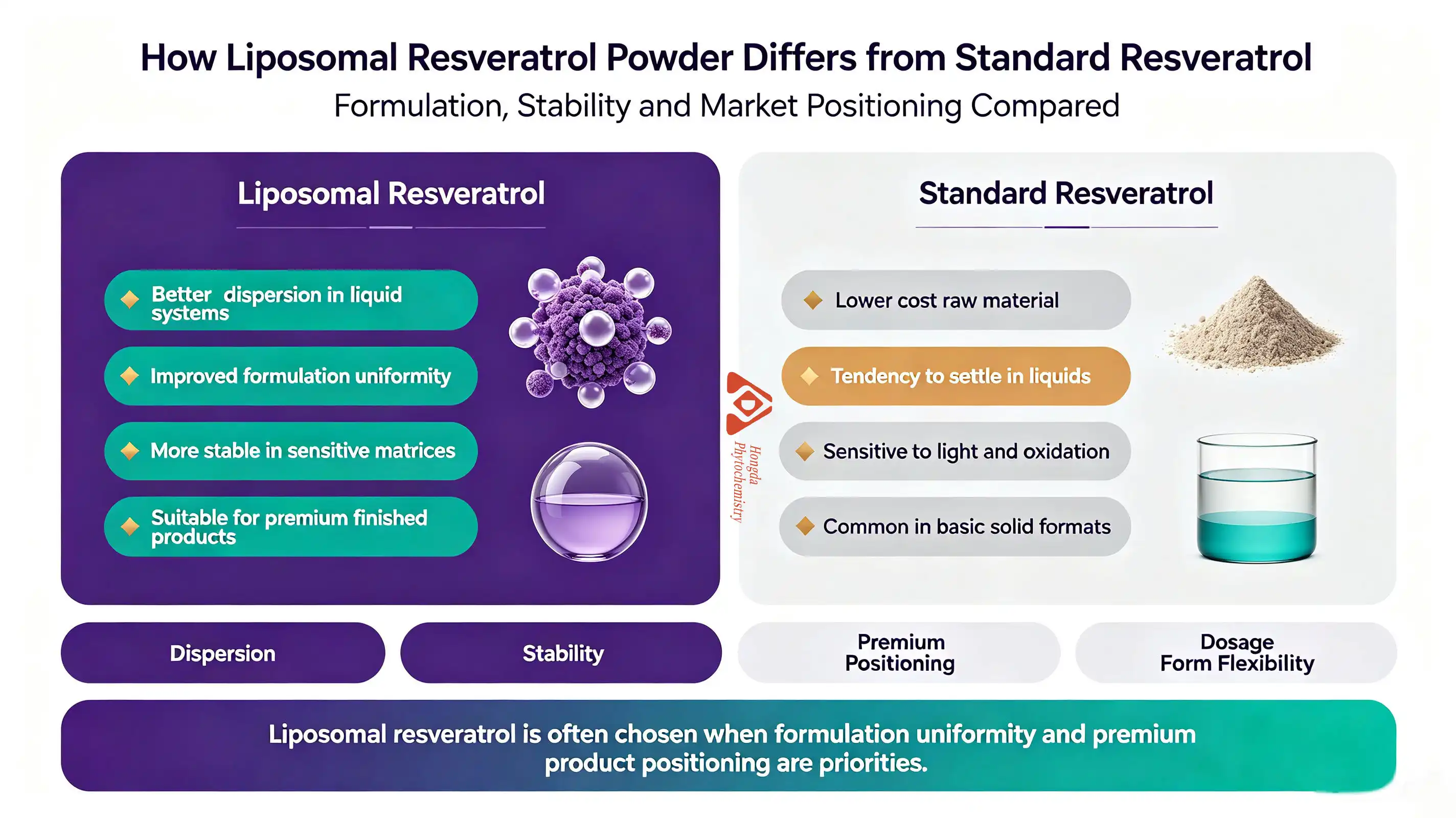
The key difference is bioavailability, and the margin between the two is wider than most customers originally imagine. Standard resveratrol powder is cheap and readily accessible, but it has low water solubility and is rapidly metabolised, thus a considerable amount of an oral dosage never makes it intact into systemic circulation. Liposomal Resveratrol Powder tackles this directly by enhancing both solubility and gut membrane permeability, enabling more of the active ingredient to actually reach target tissues. This is a huge difference for supplement companies who make effectiveness claims, since a poor absorption component could need a much greater dose to get the same outcomes. Furthermore, be aware that the particle size in liposomal formulations is often much smaller and more uniform than traditional powder, which helps to ensure consistent absorption rates across multiple batches and manufacturing cycles.
Key Benefits of Enhanced Bioavailability
This increased bioavailability has a number of practical benefits for both the formulators and the end consumer. The most immediate advantage may be that the effective dose is lower, since the liposomal delivery system requires less resveratrol to provide the same physiological impact as the normal resveratrol. This may significantly decrease capsule or tablet size, an oft-overlooked issue in consumer product design where smaller, simpler to take shapes tend to promote compliance. It also leads to more uniform product performance from consumer to consumer as variables such as stomach acidity and the speed of digestion vary greatly from person to person, which may otherwise alter how much of the unencapsulated resveratrol really gets absorbed. This performance advantage generally justifies the small cost premium of liposomal processing over traditional powder options for firms developing premium antioxidant or longevity goods.
Common Applications in Nutraceuticals and Cosmetics
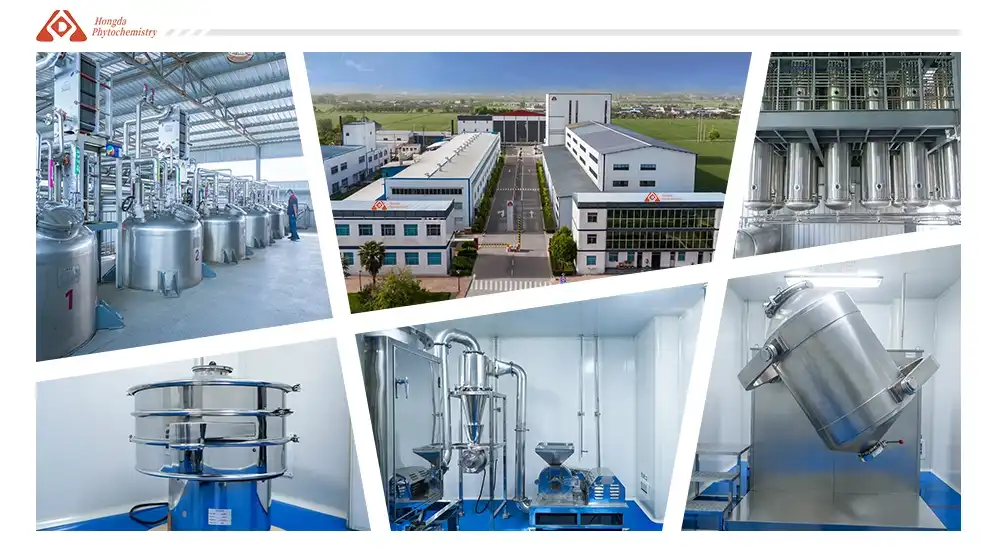
The versatility of the ingredient is proof of the impressively wide variety of final goods that Liposomal Resveratrol Powder shows up in. It is often made into capsules, sachets and functional beverage powders in nutraceuticals for antioxidant support and cellular health. Anti-aging and lifespan supplement lines tend to choose liposomal formulations, since the increased absorption matches well with marketing promises related to cellular protection and healthy ageing support. Another expanding area is for cosmetic and skin care products, where liposomal delivery might enhance transdermal penetration of resveratrol in products like serums or topical formulations. Functional food and beverage manufacturers are beginning to add it to powdered drink mixes and wellness shots as well, exploiting the better solubility that liposomal processing provides over standard resveratrol, which can be gritty or have poor solubility in aqueous formulations.
|
Application Category
|
Common Format
|
|---|---|
|
Dietary Supplements
|
Capsules, sachets, tablets
|
|
Functional Beverages
|
Powdered drink mixes, wellness shots
|
|
Skincare
|
Serums, topical creams
|
|
Longevity Products
|
Antioxidant blends, cellular health formulas
|
What Specifications Should Buyers Check When Sourcing Liposomal Resveratrol Powder?Purity and Resveratrol Content Standards
However, the purity of resveratrol content varies greatly from supplier to supplier even when the labelling claims are comparable; so purity testing should be the first thing purchasers look for. Reputable producers often carefully test for the trans-resveratrol level since this isomer is the physiologically active form that is primarily related with antioxidant and health benefits. Buyers should not take marketing statements at face value but rather acquire certificates of analysis confirming the findings of HPLC testing, which objectively confirms the real concentration of the active substance. It may also be good to verify if the liposomal encapsulation process itself has been tested such that the resveratrol is still stable and bioactive after processing, since certain techniques of encapsulation might mistakenly damage sensitive molecules. Repeated purity requirements from batch to batch are very important for companies who are committed to regulatory compliance and consistency of label claims throughout time.
Liposome Particle Size and Stability
The particle size distribution is a direct factor in the efficacy of a liposomal formulation and hence this is an important feature to check before buying. Smaller and more uniform liposomes tend to be better absorbed and have more predictable release characteristics. If the particle size is not constant, there may be unexpected product performance from batch to batch. Buyers should request particle size analysis data from the vendors, most often determined using dynamic light scattering, and information regarding encapsulation efficiency, which is the percentage of resveratrol that was effectively encapsulated against that which was not protected. Stability testing is also important since liposomes may decay if stored improperly, exposed to heat, or just left on the shelf for too long. A good Liposomal Resveratrol Powder provider will have stability data for actual world storage and shipping settings, not simply lab test conditions.
Certificates of Analysis and Testing Documentation
Documentation is what sets vendors you can depend on apart from those just making unsubstantiated promises, and that difference is more important than many customers realise at first. A thorough certificate of analysis should contain the percentage of resveratrol purity, heavy metal testing, screening for microbiological contamination and residual solvent analysis if extraction solvents were employed in the manufacture. Buyers sourcing for regulated markets such as supplements supplied in the United States or European Union should particularly validate that testing technique is in accordance with recognised pharmacopoeia standards. If feasible, seek third-party lab verification, independent of the manufacturer’s own internal testing, for another level of assurance. You can usually be certain that a manufacturer is being transparent and that they are following consistent quality control measures throughout the production process if the resveratrol bulk powder suppliers you work with are willing to provide you full documentation without any difficulty.
|
Documentation Type
|
What It Confirms
|
|---|---|
|
HPLC Purity Report
|
Trans-resveratrol content percentage
|
|
Heavy Metal Testing
|
Lead, arsenic, mercury, cadmium levels
|
|
Microbial Screening
|
Bacterial and mold contamination limits
|
|
Particle Size Analysis
|
Liposome uniformity and stability
|
Packaging and Storage Requirements
Proper Packaging protects liposomal compositions from the exact things that most compromise their stability, namely exposure to heat, light and moisture. Buyers should be aware that liposomes are far more susceptible to environmental deterioration than conventional powdered materials and therefore ensure that providers employ suitable barrier packaging, often foil-lined bags or containers. Storage suggestions for resveratrol bulk powder suppliers should also be carefully recorded, including temperature ranges and shelf-life expectations under those circumstances so downstream producers may arrange their own inventories and production timetables appropriately. It is also fair to question about the warehouse storage at the suppliers since inappropriate storage before shipping might affect the product quality before it ever reaches the consumer. Additional protective packaging or even nitrogen flushing may also be beneficial for bulk volumes intended for long-term storage to further prevent oxidative deterioration during transportation and warehousing.
|
ANALYSIS
|
SPECIFICATION
|
RESULTS
|
||
|
Appearance
|
White powder
|
Complies
|
||
|
Odor
|
Characteristic
|
Complies
|
||
|
Tasted
|
Characteristic
|
Complies
|
||
|
Assay
|
50%(Resveratrol 50% Liposome 50%)
|
Complies
|
||
|
Sieve Analysis
|
100% pass 80 mesh
|
Complies
|
||
|
Loss on Drying
|
5% Max.
|
1.02%
|
||
|
Sulphated Ash
|
5% Max.
|
1.3%
|
||
|
Extract Solvent
|
Ethanol & Water
|
Complies
|
||
|
Heavy Metal
|
5ppm Max
|
Complies
|
||
|
As
|
2ppm Max
|
Complies
|
||
|
Residual Solvents
|
0.05% Max.
|
Negative
|
||
|
Microbiology
|
|
|
||
|
Total Plate Count
|
1000/g Max
|
Complies
|
||
|
Yeast & Mold
|
100/g Max
|
Complies
|
||
|
E.Coli
|
Negative
|
Complies
|
||
|
Salmonella
|
Negative
|
Complies
|
||
How Do You Evaluate Resveratrol Bulk Powder Suppliers?Manufacturing Capability and Certifications
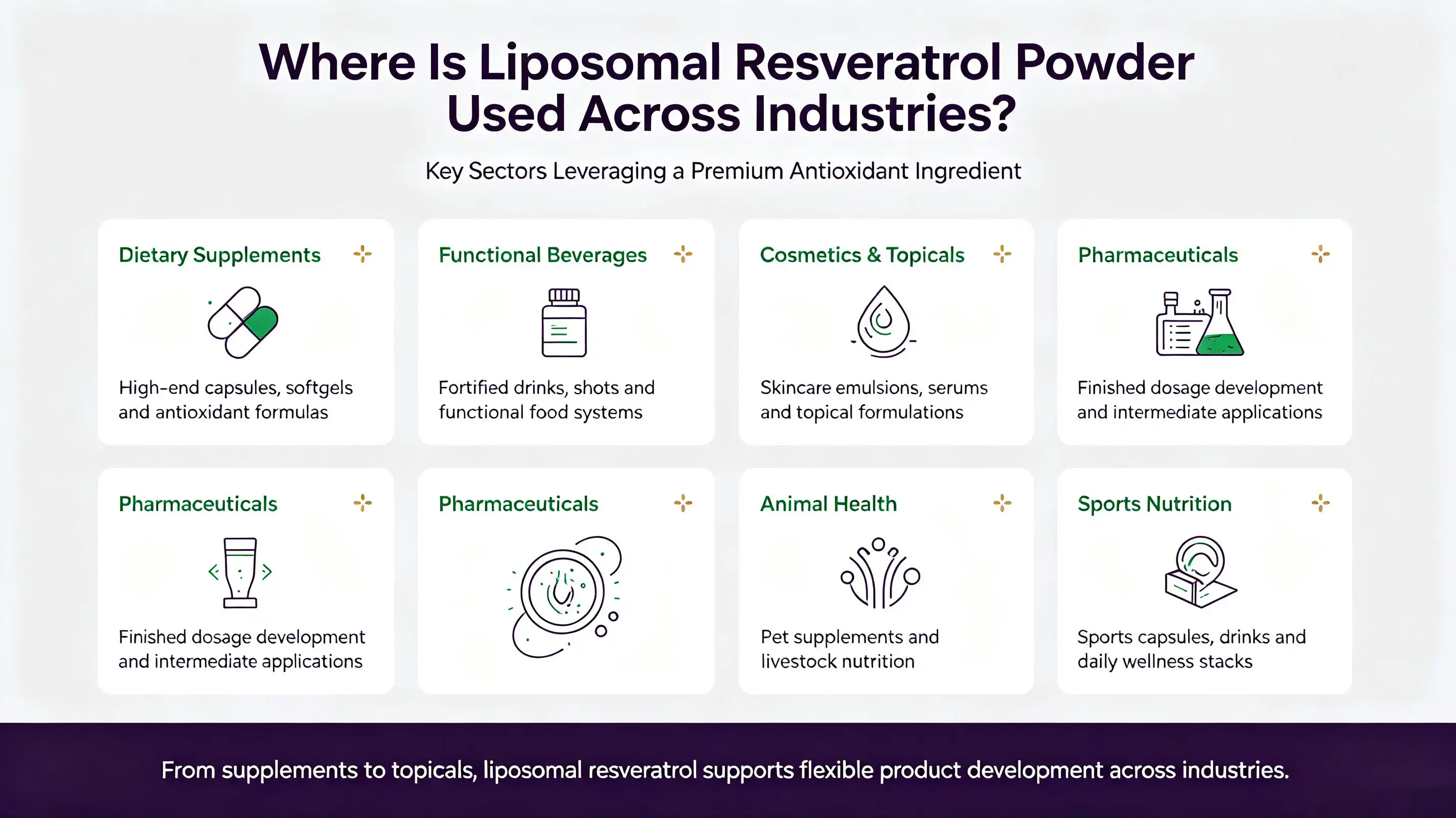
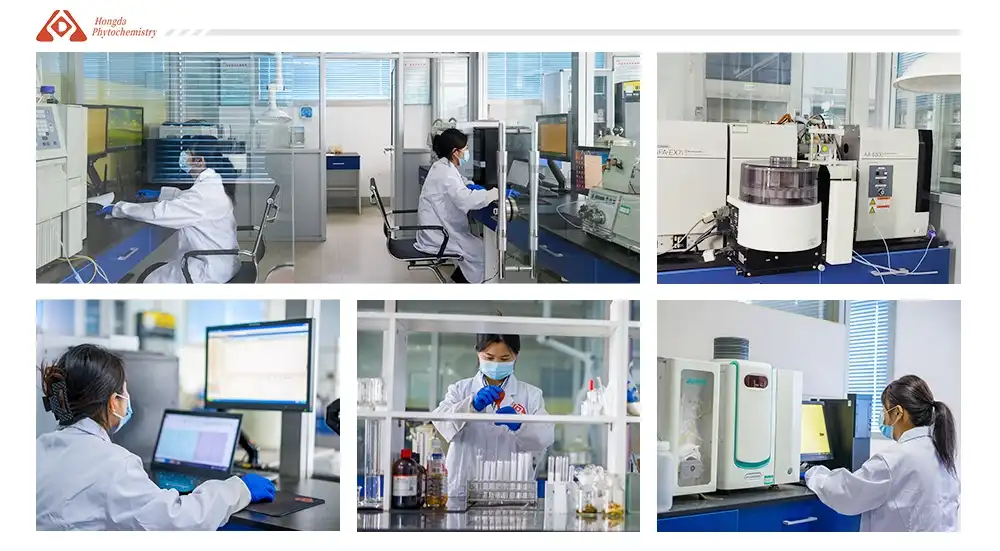
The first step in evaluating manufacturing competence is to know whether or not a supplier genuinely manufactures the ingredient or just resells material purchased from other sources. Manufacturers that source raw materials directly usually provide more consistent quality and more clarity in documentation, since they oversee the whole manufacturing process from the procurement of raw materials to the final encapsulation. Certifications are an objective approach for you to check production standards. Look for cGMP compliance, ISO9001 quality management certification and facility registrations relevant to your target market. Typically, resveratrol bulk powder providers that have SGS accredited lab facilities and committed quality control teams yield more consistent findings than those who do not have formal testing infrastructure in place. It is also worth looking at how long a supplier has been producing in this particular ingredient category, since extraction and encapsulation skill actually increases with continued manufacturing experience across multiple production cycles and formulation issues.
Quality Control and Traceability
Traceability is vital in the natural ingredients market, because the source of raw materials may greatly influence the quality and uniformity of the finished product. Buyers need to question their suppliers how they trace batches from the input of raw materials to completed powder manufacturing, since this traceability becomes crucial should any quality concerns crop up further down the supply chain. Good quality control methods usually include testing of incoming raw materials, monitoring throughout the encapsulation process, and verification of the completed product before release for transportation. Suppliers that check items directly with specialised technical teams, rather than relying on automated testing alone, are typically able to discover quality problems that instrumental testing alone could overlook. When you are looking for possible partners, ask pointedly about their internal rejection rates and what they do with batches that do not meet specification. It says a lot about real quality commitment vs marketing hype.
Customization and Private Label Options
Many buyers need more than a standard catalog product, and this is where supplier flexibility becomes genuinely valuable. Some resveratrol bulk powder suppliers offer customization around encapsulation percentage, particle size targets, or even combination formulations blending resveratrol with complementary antioxidants like quercetin or NAD+ precursors. Private label and white label packaging options also matter for brands building their own product lines, since not every supplier supports smaller custom packaging runs alongside their standard bulk offerings. It's worth discussing minimum order quantities specifically as they relate to customized formulations, since custom production runs often carry different MOQ requirements than standard stock products. Suppliers willing to accommodate exclusive formulation requests, rather than forcing every customer into identical standard specifications, tend to build stronger long-term partnerships with brands developing differentiated products in a competitive market.
Pricing, MOQ, and Lead Times
Pricing for Liposomal Resveratrol Powder varies considerably based on encapsulation quality, purity level, and order volume, making straightforward price comparisons somewhat misleading without accounting for these variables. Buyers should request detailed quotes broken down by specification tier, since a lower price point sometimes reflects reduced encapsulation efficiency or lower resveratrol purity rather than genuine cost savings. Minimum order quantities differ significantly between suppliers, and smaller brands should specifically seek out partners accommodating trial or sample-sized orders before committing to larger bulk purchases. Lead time reliability matters just as much as pricing, particularly for supplement brands operating on tight production schedules where supply delays can disrupt manufacturing timelines.
Where Is Liposomal Resveratrol Powder Used Across Industries?
Dietary Supplements and Functional Foods
Dietary supplement brands represent the largest application category for Liposomal Resveratrol Powder, driven largely by growing consumer interest in antioxidant and cellular health products. Capsule and tablet formulations dominate this space, though powdered sachets designed for mixing into water or beverages have gained popularity among consumers preferring flexible dosing options. Functional food manufacturers have started incorporating liposomal resveratrol into products like protein powders, wellness bars, and fortified beverages, capitalizing on improved solubility compared to standard resveratrol powder. This expanding application range reflects broader market trends toward evidence-based, bioavailability-focused ingredient formulations rather than simply listing high milligram doses of poorly absorbed compounds on product labels, a shift that increasingly favors liposomal technology across the wider supplement industry.
Cosmetic and Skincare Formulations
Skincare formulators have increasingly turned to liposomal resveratrol for its improved skin penetration compared to standard antioxidant extracts. Serums, night creams, and targeted anti-aging treatments commonly feature this ingredient, leveraging both its antioxidant properties and the liposomal carrier's natural compatibility with skin cell membranes. The phospholipid encapsulation structure, similar to skin's own lipid barrier, allows for more effective delivery through topical application compared to conventional resveratrol extracts that struggle to penetrate skin layers effectively. Cosmetic chemists formulating premium anti-aging lines often specifically request liposomal versions over standard extracts precisely because of this enhanced delivery characteristic, even accounting for the modest cost difference between the two ingredient forms.
Pharmaceutical and Clinical Research Applications
Pharmaceutical researchers have shown growing interest in liposomal resveratrol formulations for clinical study applications, largely because consistent bioavailability is essential for producing reliable research data. Standard resveratrol's unpredictable absorption has historically complicated dosing accuracy in clinical trials, making liposomal versions attractive for researchers needing more consistent systemic exposure across study participants. While pharmaceutical-grade applications require considerably more rigorous documentation and regulatory compliance than typical supplement ingredients, the underlying liposomal technology remains fundamentally similar. Researchers evaluating potential resveratrol bulk powder suppliers for clinical applications should specifically confirm GMP manufacturing standards and request detailed stability and bioavailability data supporting their specific research protocols and dosing requirements.
Emerging Applications in Longevity Products
The longevity and healthy aging product category has emerged as a particularly fast-growing application area for Liposomal Resveratrol Powder, often combined with complementary ingredients like NAD+ precursors, quercetin, or pterostilbene. These combination formulations aim to support cellular health through multiple complementary mechanisms, and liposomal delivery helps ensure each active ingredient actually reaches target tissues effectively. Premium longevity brands frequently emphasize bioavailability data in their marketing, making ingredient sourcing transparency increasingly important for building consumer trust in this competitive category. As scientific interest in cellular aging continues expanding, demand for well-documented, high-bioavailability resveratrol sources seems likely to keep growing across this emerging product segment.
How Do You Choose the Right Supplier Partnership for Long-Term Sourcing?
Evaluating Regulatory Compliance (FDA, ISO, GMP)
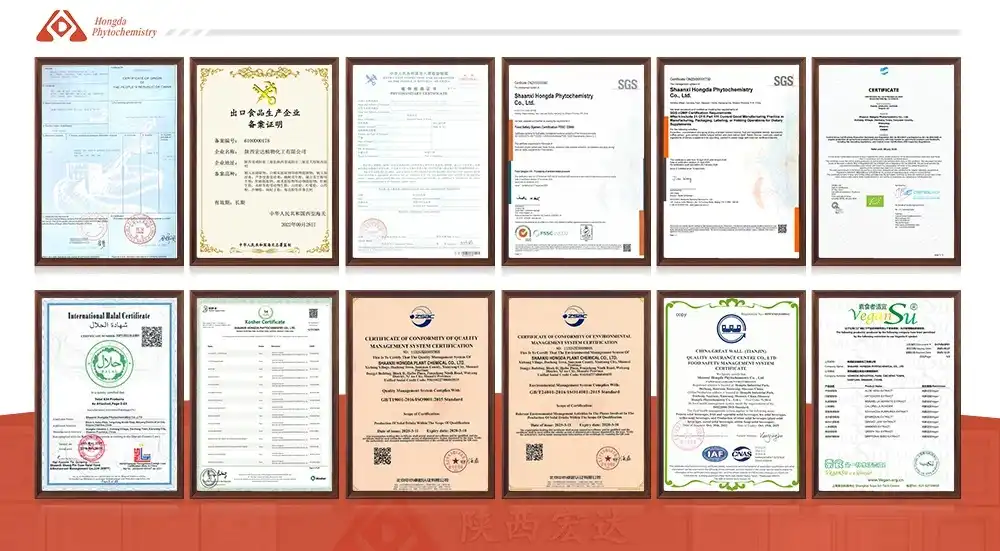
Regulatory compliance should never be treated as an afterthought, particularly for brands selling into markets with strict ingredient sourcing requirements. Confirm that potential suppliers maintain relevant certifications, including cGMP manufacturing compliance, ISO9001 and ISO22000 quality management systems, and facility registrations applicable to your target market's regulatory framework. FDA facility registration matters specifically for suppliers shipping into the United States market, while additional certifications like HALAL, KOSHER, or ORGANIC may matter depending on your specific product positioning and target consumer base. Suppliers maintaining comprehensive certification portfolios generally demonstrate stronger institutional commitment to quality systems than those with minimal or outdated documentation, reducing compliance risk for brands building their sourcing relationships around these ingredients.
Assessing Communication and After-Sales Support
Responsive communication often predicts how a supplier relationship will actually function once problems inevitably arise during production or shipping. Evaluate how quickly potential suppliers respond to technical questions during the sourcing process, since this pattern typically continues once you've become an established customer. Strong after-sales support should include assistance with documentation requests, batch-specific certificates of analysis, and prompt responses to any quality concerns that surface after delivery. Suppliers offering dedicated technical support teams, available to answer formulation and specification questions directly, generally provide more value than those treating every interaction as a purely transactional sale. This ongoing support relationship becomes particularly valuable as your formulation needs evolve or as you scale production volumes over time.
Building Long-Term Supply Chain Reliability
Long-term reliability depends on more than just a single successful order, it requires consistent quality, dependable lead times, and transparent communication sustained across many repeat purchases. Buyers should discuss capacity planning with potential suppliers early in the relationship, confirming they can reliably scale production to match anticipated growth in order volume. Diversifying supply slightly, rather than relying entirely on a single source, can also protect against unexpected disruptions, though maintaining a strong primary relationship with a trusted resveratrol bulk powder supplier generally simplifies quality consistency and formulation stability over time. Regular batch testing, even with established suppliers, remains good practice for catching any gradual quality drift before it affects finished product performance or regulatory compliance.
Red Flags to Avoid When Sourcing
Certain warning signs should prompt additional scrutiny before committing to a new supplier relationship. Reluctance to provide complete certificates of analysis, vague answers about manufacturing location or process, and pricing significantly below market average without clear explanation all warrant closer investigation. Suppliers unable to provide third-party testing verification, or those pressuring buyers into large orders before any trial quantity has been evaluated, represent additional red flags worth taking seriously. Genuine manufacturers with established quality systems generally welcome detailed questions about their processes, since transparency ultimately benefits both parties in building a sustainable, trust-based sourcing relationship over the long term.
Conclusion
Choosing the right Liposomal Resveratrol Powder supplier comes down to verified purity, transparent documentation, and consistent manufacturing standards. Shaanxi Hongda Phytochemistry has spent over two decades refining natural plant extract production, backed by cGMP facilities, SGS-certified testing, and a dedicated research team, giving formulators a dependable partner for sourcing bioavailable, well-documented antioxidant ingredients at scale.
FAQWhat makes Liposomal Resveratrol Powder more effective than standard resveratrol?
The liposomal encapsulation improves absorption, allowing more active compound to reach the bloodstream intact.
What certificates should I request from resveratrol bulk powder suppliers?
HPLC purity reports, heavy metal testing, microbial screening, and particle size analysis are essential.
Can Liposomal Resveratrol Powder be customized for specific formulations?
Yes, encapsulation percentage, particle size, and combination blends can often be customized.
How should liposomal resveratrol powder be stored?
In barrier packaging away from heat and light, following supplier-provided shelf-life guidance.
Is liposomal resveratrol suitable for cosmetic formulations?
Yes, its phospholipid structure supports effective skin penetration in serums and creams.
Partner with Hongda for Reliable Liposomal Resveratrol Sourcing
Since 2001, Shaanxi Hongda Phytochemistry has helped brands worldwide source dependable, well-documented natural extracts, including high-bioavailability Liposomal Resveratrol Powder backed by cGMP manufacturing and SGS-certified testing. Whether you need standard specifications or a fully customized formulation, our technical team is ready to help. Reach out today at duke@hongdaherb.com, and let's build a sourcing partnership that supports your product's long-term success and quality consistency.
References
1. Baur, J. A., and Sinclair, D. A., "Therapeutic Potential of Resveratrol: The In Vivo Evidence," Nature Reviews Drug Discovery.
2. Walle, T., "Bioavailability of Resveratrol," Annals of the New York Academy of Sciences.
3. Amri, A., et al., "Administration of Resveratrol: What Formulation Solutions to Bioavailability Limitations?" Journal of Controlled Release.
4. Summerlin, N., et al., "Colloidal Delivery Systems for Resveratrol: A Review," Colloids and Surfaces B: Biointerfaces.
5. Akbari, S., and Rasouli-Ghahroudi, A. A., "Vitamin K and Bone Metabolism: A Review of the Latest Evidence in Preclinical Studies," referenced alongside resveratrol delivery mechanism comparisons in nutraceutical formulation literature.
6. Davidov-Pardo, G., and McClements, D. J., "Resveratrol Encapsulation: Designing Delivery Systems to Overcome Solubility, Stability and Bioavailability Issues," Trends in Food Science & Technology.