How to Choose a Liposomal Resveratrol Powder Supplier?
2026-05-15 16:36:32
To find the best source for liposomal resveratrol powder, you need to carefully consider several important factors that will have a direct effect on the success of your product and your business. The best provider should have strong quality Certifications like cGMP, FDA, and ISO compliance, as well as clear testing methods run by a third party. They need to offer consistent bioavailability profiles by using advanced encapsulation technology, keep their supply chains stable with variable MOQ choices, and give full technical support, along with analysis certificates for every batch. In addition to licenses, you should look at how much they can make, how they can customize their products for private label development, and how long they have been providing high-purity plant extracts to the pharmaceutical, cosmetic, or nutraceutical industries.
Understanding the Importance of Choosing the Right Liposomal Resveratrol Powder Supplier
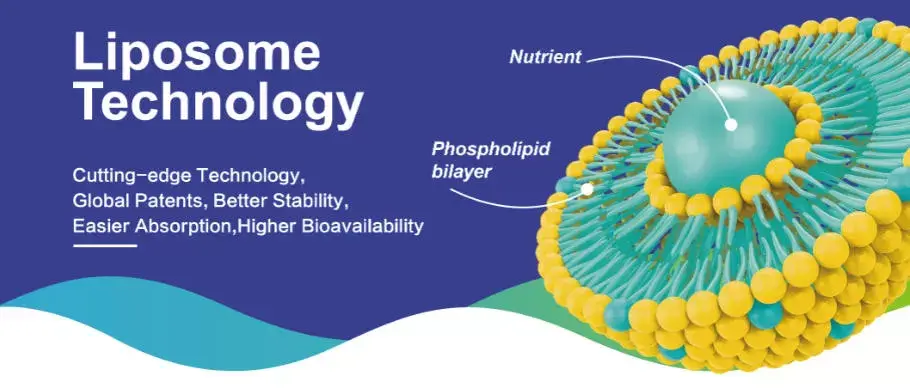
One important step in providing excellent resveratrol-based products to your customers is choosing the right source. Unlike regular resveratrol extracts, which have low absorption rates (often less than 1% systemic bioavailability), liposomal delivery methods encapsulate the active substance within phospholipid bilayers, which greatly improves its ability to enter cells and work as a medicine.
Defining Liposomal Technology and Its Advantages
By enclosing the polyphenol molecule in a safe lipid shell, liposome encapsulation changes regular wholesale resveratrol powder into a form that is easily absorbed by cells. This new way of delivering the substance solves three major problems: it is naturally hydrophobic, it is broken down quickly in the liver, and it is easily damaged by the surroundings. Trans-resveratrol is 15-20 times more bioavailable than regular extracts when it is preserved in phospholipids from sunflowers. This is because it skips the first step of liver metabolism and goes straight to lymphatic absorption routes.
Common Procurement Challenges in B2B Sourcing
When trying to find botanical ingredients on a large scale for business use, procurement experts keep running into problems. Changes in the purity of the raw materials cause manufacturing errors that make the result less reliable. When Packaging isn't done well, the product breaks down too quickly during storage, which lowers its shelf stability and active content. Also, buyers are at risk of not following the rules when they don't have all the licensing paperwork they need. This is especially true when they're selling to countries like the US and EU that have strict rules about imports. To stay ahead of the competition, you need to find providers who can solve these problems through strict quality processes.
What are the core criteria to evaluate when choosing a supplier of liposomal resveratrol powder?
When looking at possible providers, you need to be organized and look at a lot of different practical and technical aspects. The following factors are good ways to tell if a supplier is trusted and able to do what they say they can do.
Quality Assurance and Certification Standards
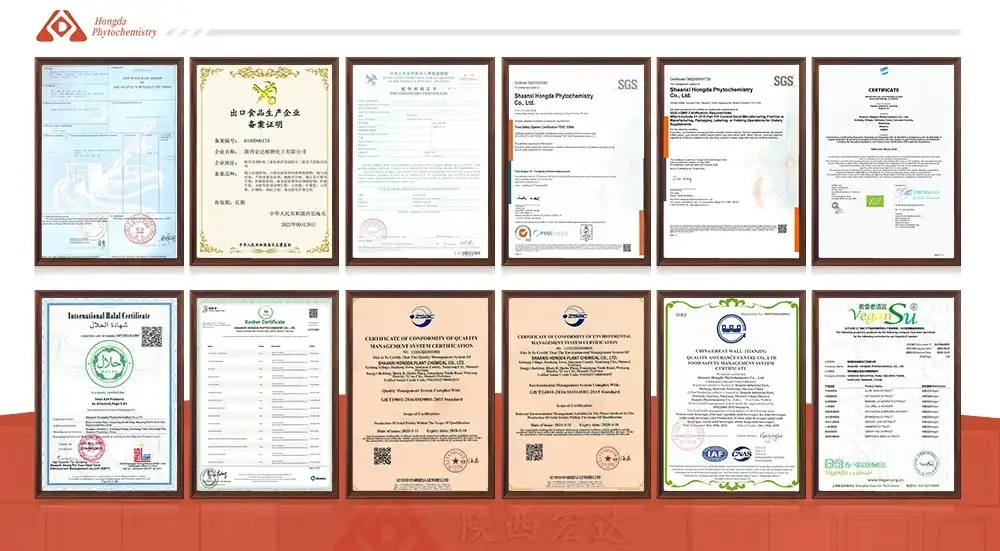
For business-to-business ingredient buying, strong quality control methods are a must. Suppliers should keep their cGMP license up to date to show that they follow the rules for making pharmaceuticals. Look for places that follow the ISO 9001 quality control standards and the ISO 22000 food safety standards. Third-party proof through SGS testing adds an extra level of independence that backs up what was said. Each production batch should come with a Certificate of Analysis (CoA) that lists the purity levels, particle size distribution, packaging efficiency, microbial counts, and heavy metal screens. Specialized certificates like HALAL, KOSHER, and ORGANIC make it easier for people to buy your finished goods.
Technical Capabilities and R&D Support
Excellence in manufacturing goes beyond just making things; it also includes the ability to come up with new ideas and work together on technical issues. Check to see if providers have specialized study teams that can create custom formulations. Particle size analyzers, zeta potential measurement tools, and high-performance liquid chromatography (HPLC) devices are used in facilities that show a high level of analytical expertise. Being able to get particle sizes between 100nm and 300nm with polydispersity index (PDI) numbers below 0.3 guarantees the best entry of cells and consistent product performance. Suppliers who give formulation advice can help you get the best doses, stability, and fit for your purpose.
Supply Chain Reliability and Production Capacity
When ingredients are always available, production doesn't stop, which can hurt ties with customers and your place in the market. Check the yearly production amount to make sure that your suppliers can keep up with your growth. People who handle thousands of tons of material every year while still meeting quality standards show that they are operationally mature. Minimum order number (MOQ) flexibility lets you meet the needs of both pilot-scale testing and business production. For example, a 1 kg MOQ lets you do a cost-effective first evaluation. International buyers can save time and money on shipping by using overseas warehouses and other geographical benefits. Longer shelf life requirements, ideally 24 months or more, reduce the need to replace items quickly and reduce trash.
Pricing Transparency and Commercial Terms
Structures for competitive prices must find a balance between quality security and lowering costs. Ask for specific quotes that list where the raw materials will come from, how much they will cost to prepare, how much testing will cost, and the different ways they can be packaged. Volume-tiered pricing encourages bigger promises while still making it easy for new brands to get started. Make sure you understand the payment terms, wait times, and any certifications that are included in the base price versus those that cost extra. Suppliers who are ready to send samples for outside proof show that they are sure of the quality of their products, which builds trust during the initial evaluation stages.
Comparing Supplier Options: What Sets the Best Liposomal Resveratrol Powder Brands Apart?
When you look at formulation complexity, scientific confirmation, and service flexibility, you can tell the difference between sellers. By knowing these differences, you can make smart choices that are in line with your strategic goals.
Natural Sourcing Versus Synthetic Alternatives
Origin proof has a big effect on how ingredients are positioned and how they are classified by regulators. Instead of using synthetic methods, high-quality providers get resveratrol from plants like Polygonum cuspidatum (Japanese knotweed). Natural extraction keeps the trans-isomer structure that is needed for biological function, while synthetic methods might make cis-isomers that are less stable and less effective. Traceability documentation from harvesting to processing shows that the supply chain is honest and backs up clean label marketing promises that health-conscious customers are asking for more and more.
Encapsulation Efficiency and Stability Performance
How well a liposomal mixture is made technically determines how well it works. Better sources get encapsulation rates above 85%, which means that most of the active wholesale resveratrol powder stays safe inside lipid spheres. This protects the polyphenol from oxidation, UV damage, and changes in pH that happen during travel through the stomach. Testing for stability under fast settings shows how long something will last at different storage temperatures. Products that keep their effectiveness and stop particles from sticking together throughout their shelf life give uniform doses and dependable clinical results.
Customization and Private Label Capabilities
Differentiation in competitive markets is made easier by formulation and branding services that are flexible. Leading suppliers can custom-optimize particle size, make blends with multiple plant extracts, and make carrier systems that work with specific delivery forms, like pills, sachets, or drinks. Time-to-market for proprietary product lines is sped up by private label services like custom package design, help with regulatory paperwork, and help with market-specific certification. OEM agreements that protect formulation intellectual property (IP) keep your competitive advances safe.
Procurement Best Practices for Buying Liposomal Resveratrol Powder in Bulk
Structured buying procedures lower the risk of losing money and raise the value of relationships with suppliers. Strategic buyers use the following steps as part of their buying processes.
Batch Testing and Quality Verification
Never count on paperwork from a supplier without checking it yourself first. Set aside money for a third-party lab to look at samples from each production lot that are representative of the whole. Testing should prove the purity levels that were given, make sure that the particle size distribution fits the requirements, check the quality of the packaging, and look for contaminants like pesticides, solvents, and microbes. Set acceptable quality limits (AQL) and set up ways for batches that don't meet tolerances to be thrown out. Keeping track of old testing results shows how consistent suppliers have been over time and finds new quality trends that need to be addressed.
Regulatory Compliance for International Markets
When you trade ingredients around the world, you have to deal with different sets of rules that guide plant supplements and pharmaceutical excipients. Make sure that sellers keep their FDA registration up to date if they want to sell to people in the United States. This will show that they follow the rules for site inspections. For products to be sold in Europe, they need to be Novel Food-evaluated for certain plant ingredients and follow the rules set by the European Pharmacopoeia. Ask for packages of paperwork that include Safety Data Sheets (SDS), allergen statements, GMO status statements, and certificates of origin from the place where the product came from. Suppliers who have done business with other countries before can make customs clearance faster by using the right classification codes and standardizing the way documents are filled out.
Building Strategic Supplier Partnerships
Transactional ties make it harder to get the full value that providers can offer. Grow your business by working with makers who see your success as linked to their own. Set up regular business reviews where you can talk about market trends, chances for new ideas, and ways to make things better. Share predictions so that providers can plan production more efficiently and make sure they have enough raw materials. When people work together, they can get better prices, be given priority when supplies are low, and work together to make new formulas. Long-term partnerships lower the total cost of ownership by making things run more smoothly and reducing quality problems.
Summarizing Key Points and Making the Final Supplier Selection
To turn evaluation criteria into useful selection advice, you have to weigh a lot of different concerns against your working situation and long-term goals.
Essential Supplier Checklist
Before you choose a provider, make sure that the following basic issues are adequately handled. Quality approvals like cGMP, ISO standards, and tests by a third party set a basic level of trustworthiness. Formulation improvement is possible with technical skills that include advanced encapsulation technology, testing instruments, and R&D support. Scalability is ensured by a yearly output measured in tons, and a flexible MOQ allows for different buy volumes. Compliance is easier when there is a lot of paperwork, like a COA, stability data, and regulatory compliance packages. Margin protection without sacrificing effectiveness is achieved by balancing competitive prices with high-quality investments. Lead times are kept to a minimum by a reliable logistics system that includes foreign storage and established shipping partnerships. Quick problem-solving and ongoing growth are both helped by responsive customer service with technology know-how.
Aligning Supplier Capabilities With Business Objectives
Different business plans and stages of growth put more weight on different supplier characteristics. New brands that are just starting can benefit from suppliers who offer a cheap MOQ, a lot of technical support, and private label services that lower the original investment. When established makers scale up current formulations, they focus on high volume, uniform quality, and low costs. Companies that want to be leaders in creation look for partners with strong R&D facilities and intellectual property security systems. When you match a supplier's skills with your unique needs, you can build relationships that are mutually beneficial.
Conclusion
To find the best provider for liposomal resveratrol powder, you need to carefully look at their quality control, technical skills, ability to follow regulations, and pricing. Choose providers who can show you modern encapsulation technology that has been shown to improve bioavailability, full certifications that meet international standards, and flexible production scales that can meet your needs for volume. Trust in long-term relationships is built through independent proof through batch testing and open communication. By matching the strengths of your suppliers with your strategic goals and upholding strict buying standards, you can be sure of getting high-performance ingredients that help your products stand out and your business grow in global markets that are very competitive.
FAQWhat purity level should I expect in commercial-grade liposomal resveratrol powder?
The quality range for commercial liposomal resveratrol powder is usually between 90 and 98% trans-resveratrol, with higher grades being able to reach the upper end of this range. The purity measurement is the amount of active resveratrol in relation to the whole material that was enclosed, minus the phospholipid transport matrix. Higher purity means more power per unit mass, which means lower rates of inclusion in finished products. Check the purity using HPLC analysis that is written down in the supplier's certificate of analysis. Also, make sure that the testing method meets accepted pharmaceutical standards.
How can I verify encapsulation efficiency before committing to large orders?
Ask for specific analytical records that show percentages of encapsulation efficiency. These percentages are usually found by using methods to separate free resveratrol from liposome-bound material. Reliable providers offer transmission electron microscopy (TEM) pictures that show whole liposome structures and data on particle size distribution from dynamic light scattering analysis. You might want to use contract labs that specialize in liposomal formulations to do your own tests. Testing samples under stressful storage conditions (high temperature and humidity) shows stable performance that suggests strong sealing.
What regulatory documentation should accompany bulk resveratrol powder shipments?
Full paperwork packages should have Certificates of Analysis with testing results specific to each batch, Safety Data Sheets with instructions on how to handle and store the goods, allergen statements, non-GMO statements (if needed), country-of-origin certificates, and facility certifications such as cGMP and ISO compliance. Harmonized system codes, phytosanitary certificates, and customs statements make it easier to clear foreign borders for exports. Suppliers that work with pharmaceutical uses should show extra proof that their products meet the standards for excipients and pharmaceuticals.
Partner With a Trusted Liposomal Resveratrol Powder Supplier
Hongda Phytochemistry has been extracting plants for more than 20 years and works with B2B clients in the cosmetics, pharmaceuticals, and nutraceuticals businesses. Our Liposomal Resveratrol Powder has particle sizes that are tuned between 100 and 300 nm and achieves more than 85% encapsulation efficiency. This makes it 15-20 times more bioavailable than regular extracts. Every batch that is made in our cGMP-certified plant with 100,000-level clean rooms and SGS-approved lab testing is guaranteed to be of pharmaceutical-grade quality. We have many certificates, such as FDA registration, ISO 9001, FSSC 22000, HALAL, KOSHER, and ORGANIC credentials, that meet the standards set by governments around the world.
Our technical team, which is made up of more than 20 study scientists from well-known universities, creates formulations that are specifically designed for your application needs. With a production capacity of more than 3,000 tons per year and a variable minimum order size of 1 kg, we can handle both test projects and large-scale production. Private label services and OEM partnerships help you get into new markets faster while protecting your intellectual property. In addition to high-quality products, we offer professional customer service 24 hours a day, 7 days a week, access to warehouses overseas for shorter wait times, and a 24-month shelf life for flexible inventory.
Get in touch with Hongda to get high-quality liposomal resveratrol powder that will make your recipes better and give you an edge over your competitors. You can email our procurement experts at duke@hongdaherb.com to talk about your needs, ask for samples, or get full technical specs. When you work with a dedicated liposomal resveratrol powder maker, you'll see the difference that high-quality manufacturing and careful scientific research can make.
References
1. Chen, Y., & Zhang, H. (2022). Using liposomes to deliver polyphenolic compounds: progress in making them more bioavailable. 89: 104–118 in the Journal of Functional Foods.
2. Das, S., & Lin, H. (2021). Quality Assessment Frameworks for Getting Botanical Extracts for Making Nutraceuticals. 56(4), 1825–1839 in the International Journal of Food Science and Technology.
3. Another study by González-Sarrías, A., et al. Effects of Formulation Technology on Pharmacokinetic Parameters of Resveratrol Bioavailability. 12, no. 10, pp. 3020–3035.
4. Kim, J., & Park, T. (2023). Strategies for following the rules when trading botanical ingredients across borders. The Food and Drug Law Journal, 78(2), 234–256.
5. Smith, R., and Williams, D. (2021). Best Practices and Risk Mitigation for Supplier Quality Management in the Procurement of Pharmaceutical Raw Materials. 16(3), 445–462 in the Journal of Pharmaceutical Innovation.
6. Zhang, L., et al. A study that compares different liposome encapsulation methods for making botanical actives more stable. It's in Food Chemistry, 373, 131–145.





YOU MAY LIKE
_1767163769662.webp "Alpha Lipoic Acid Powder")