Aspartic Acid Powder





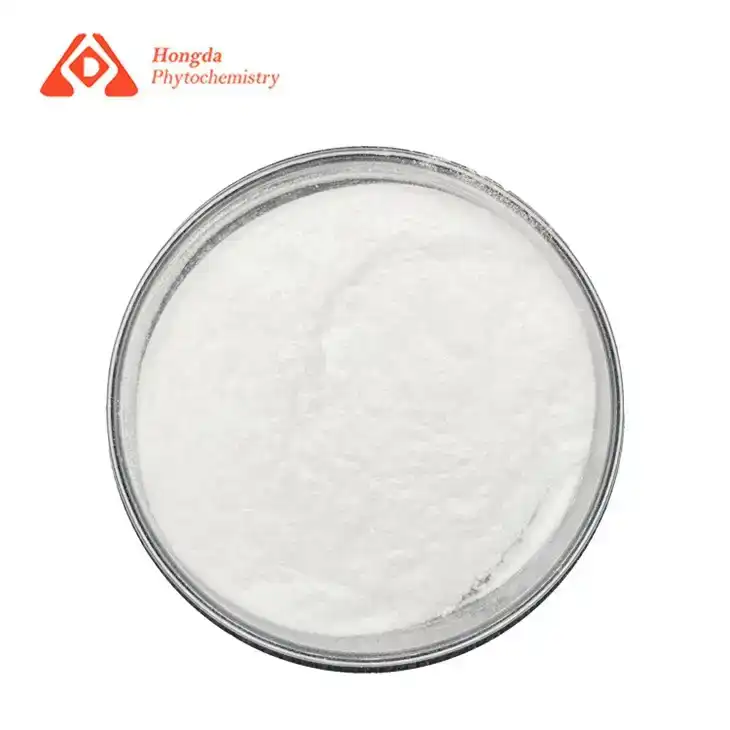
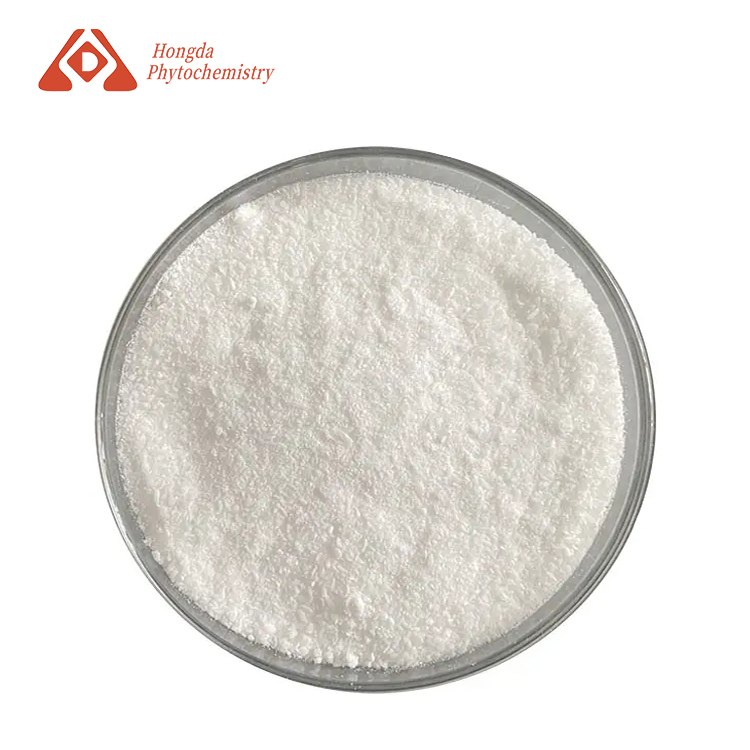
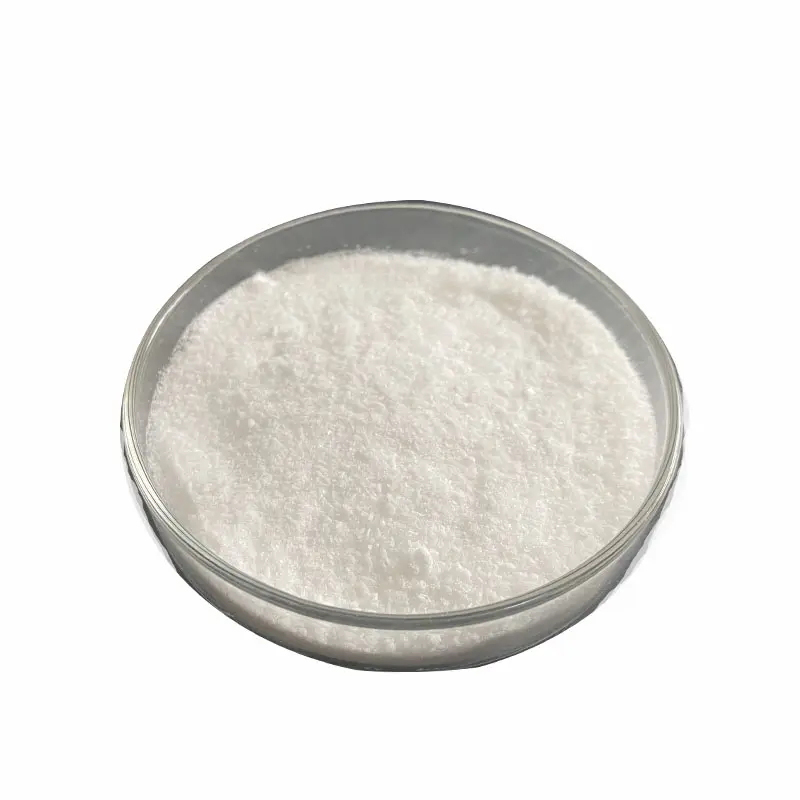
2.Appearance: White powder
3.Specification: 99%
4.CAS NO: 537-55-3
5.Packing Specification: 25kg/drum, 27 drums/tray
6.Delivery: 3-7working days
7.Main Market: North America, Europe, Switzerland, South Africa, Southeast Asia, Australia, etc.
8.Certification: KOSHER,HALAL,BRC,ORGANIC,ISO9001,ISO22000 etc.
Aspartic Acid Powder | 99% Purity L-Aspartic Acid for Pharma, Food & Agro Applications
We are a GMP-certified manufacturer and supplier of Aspartic Acid Powder, located in Shaanxi Hongda Phytochemistry Co., Ltd. with a manufacturing area of 20,000㎡ and an annual output of 3,000 tons. L-Aspartic Acid : Assay purity (dry basis) : ≥99%(USP, EP, AJI97) KOSHER, HALAL, ORGANIC, BRC, ISO9001, ISO22000 We also offer 3-7 working day shipping, 25kg/drum packing and B2B buyers in North America, Europe, South-east Asia and others. Our plant can provide you with proven quality at scale, whether you need pharma-grade input on a regular basis or food-tech raw material.
Product Introduction
L-Aspartic acid is a naturally occurring proteinogenic alpha-amino acid with the chemical formula C₄H₇NO₄ and a molecular weight of 133.10 g/mol. It is a white crystalline powder with a slightly acid taste and no odour.
This amino acid is important for the biosynthesis of proteins, the urea cycle and the Krebs cycle. Soluble in water (app. 0.5g/100ml at 25°C), insoluble in ethanol and ether. Solubility increases at higher temperatures or modified pH levels.
The isoelectric point (pI) is at pH 2.77 indicating the acidic character in aqueous solution, a trait of interest to formulation chemists involved in parenteral nutrition or aspartate salt production.
Third-Party Test Report
Shaanxi Hongda works with SGS and Eurofins as the authorised third party testing agency. Each batch is independently verified before shipment.
Scope of testing by a third party:
· Detection of pesticide residue
· Heavy metal profiling (Pb <10ppm, As <1ppm)
• Verification of specific optical rotation
· Adherence to nutritional labelling
· Endotoxin test for injectable grade material
Reports available on request. We provide batch specific documentation to support your import compliance and regulatory submissions.
Aspartic Acid Powder Specification
PHYSICAL & CHEMICAL PROPERTIES
|
Test Item
|
Specification
|
Results
|
Method
|
|
Appearance
|
White crystalline powder
|
Conforms
|
Visual Inspection
|
|
Identification
|
Infrared Absorption (IR)
|
Conforms
|
USP <197K>
|
|
Specific Rotation
|
+24.0° to +26.0°
|
+25.2°
|
Polarimetry (USP <781>)
|
|
Transmittance
|
≥98.0%
|
99.3%
|
430nm Spectrophotometry
|
|
pH (sat. solution)
|
2.5 – 3.5
|
2.85
|
Potentiometric
|
|
Loss on Drying
|
≤0.50%
|
0.12%
|
105℃, 3 Hours
|
|
Residue on Ignition
|
≤0.10%
|
0.03%
|
Gravimetric (USP <281>)
|
PURITY & IMPURITY PROFILE
|
Test Item
|
Specification
|
Results
|
Method
|
|
Assay (Dry Basis)
|
98.5% – 101.5%
|
99.76%
|
Potentiometric Titration
|
|
Chloride (Cl)
|
≤0.02%
|
< 0.01%
|
USP <221>
|
|
Sulfate ($SO_4$)
|
≤0.02%
|
< 0.01%
|
USP <221>
|
|
Ammonium ($NH_4$)
|
≤0.02%
|
< 0.02%
|
Colorimetric
|
|
Iron (Fe)
|
≤0 ppm
|
< 5 ppm
|
Atomic Absorption
|
|
Heavy Metals (Pb)
|
≤10 ppm
|
< 2 ppm
|
ICP-MS
|
|
Arsenic (As)
|
≤1 ppm
|
Not Detected
|
ICP-MS
|
MICROBIOLOGICAL ANALYSIS
|
Test Item
|
Specification
|
Results
|
Method
|
|
Total Plate Count
|
≤1000 cfu/g
|
40 cfu/g
|
USP <61>
|
|
Yeast & Mold
|
≤100 cfu/g
|
< 10 cfu/g
|
USP <61>
|
|
E. Coli
|
Negative
|
Negative
|
USP <62>
|
|
Salmonella
|
Negative
|
Negative
|
USP <62>
|
Aspartic Acid Powder Advantages
Verified L-Enantiomer Purity
Specific rotation testing (+24.0° to +26.0° in 6N HC) confirms the L-isomer exclusively — no D-isomer contamination. This matters directly for pharmaceutical synthesis and food-grade Aspartame production.
Enzymatic Production Process
Our product is made via enzymatic conversion of Fumaric Acid using Aspartase enzyme. This method delivers fewer organic impurities than older hydrolysis routes, resulting in cleaner HPLC profiles and better lot-to-lot consistency.
Pharma-Grade Transmittance
Transmittance rates above 98.0% ensure no turbidity in parenteral solutions — a non-negotiable spec for injectable-grade formulations.
Stable, Low-Moisture Format
LOD is controlled below 0.5%, preventing caking and extending shelf stability under standard storage conditions (25°C, humidity <60%).
Multi-Standard Compliance
The product meets USP, EP, AJI97, and FCC monographs simultaneously — simplifying your regulatory filing across multiple markets.
Aspartic Acid Powder Application
Pharmaceutical & Clinical Nutrition
Used in amino acid infusion solutions for post surgical nitrogen balance support. Its involvement in the Krebs cycle benefits the liver function and fatigue recovery in therapeutic applications.
Manufacture of Sweeteners
Serves as a carboxylic acid precursor interacting with Phenylalanine to form Aspartame . Here, a purity of >99% is essential – even trace contaminants can create off-flavors at huge production quantities.
Aspartate Synthesis Mineral
Reacts with Potassium or Magnesium to generate electrolyte aspartates, commonly utilised in sports nutrition and fatigue alleviation supplements to restore cellular energy.
PASP (Phosphates, Ammonium Sulphate, and Phosphates)
The Polyaspartic Acid in this powder is a biodegradable fertiliser synergist that can be used in place of polyacrylates in irrigation systems. It helps nutrient uptake and avoids scaling at different soil pHs.

Production Process
Aspartic Acid Powder is produced by Shaanxi Hongda with immobilised Aspartase using Fumaric Acid in a controlled environment of bioreactor. The main stages of production are:
1. Raw Material Verification – Testing for purity of Fumaric Acid and Ammonia inputs prior to usage
2. Aspartase Enzymatic Reaction . Aspartase transforms Fumaric Acid to L-Aspartic Acid with excellent stereospecificity
3. Crystallisation & Filtration – Crystallisation of the product followed by washing and filtration to remove reaction by-products
4. Drying & Milling – Controlled drying (LOD ≤0.5%) and particle size standardisation
5. QC Testing - HPLC assay, specific rotation, heavy metals, transmittance and microorganism testing
6. Packaging: Double layer PE bag in fibre drum, net weight 25 kg, sealed under moisture control
The purification workshop is at 100,000 level, ensuring a clean environment throughout the production process.
Why Choose Us?
· 23+ years of production experience since 2001, with a proven track record in amino acid supply
· 3,000-ton annual output — sufficient volume to support large and growing procurement schedules
· SGS + Eurofins third-party testing on every batch, not just internal QC
· Full certification stack — KOSHER, HALAL, BRC, ORGANIC (EU & NOP), cGMP, FSSC22000, ISO9001, ISO22000
· 3–7 working day lead time with warehouse stock available in dedicated amino acid storage zones
· One-to-one service — your account is managed by a dedicated specialist, not a generic sales desk

OEM / ODM Support
Shaanxi Hongda supports full OEM and ODM customization for B2B buyers. You can specify:
· Purity grade — standard 99% or higher-specification pharma grades
· Particle size — coarse crystal or fine milled powder for different dissolution profiles
· Packaging format — 1kg sample bags, 25kg drums, or custom retail-ready formats
· Label & documentation — private label, COA customization, and multilingual compliance paperwork
Our R&D team of 20+ professionals can reformulate or blend Aspartic Acid with complementary amino acids or mineral carriers to match your finished product spec. Minimum order quantities and sample requests are both supported.

FAQ
Q1. How do you prepare your L-Aspartic acid?
A: We use enzymatic conversion of Fumaric Acid with Aspartase. This provides higher purity and less organic contaminants than the methods of protein hydrolysis.
Q2: How do I get product to dissolve in cold water formulations?
A: Heat water to 50C or higher or alter pH to alkaline levels using hydroxides to make soluble salts of aspartate before incorporating into your final composition.
Q3: What is the difference between L-Aspartic Acid and D-Aspartic Acid?
A: L-Aspartic Acid is the proteinogenic form for food and medicinal uses. D-Aspartic Acid is utilised mostly in testosterone related products. Our usual product is the L-isomer, the D-form can be discussed individually.
Q4: Does the powder need some specific storage?
A: Store in tightly sealed poly-lined containers at 25°C and less than 60% humidity. Good sealing keeps out moisture that might otherwise induce caking.
Q5: Is your product compatible with vegan and kosher supply chains?
A: Yep. The product is certified as KOSHER, HALAL and VEGAN friendly since manufacture involves the use of Fumaric Acid and Ammonia without any animal derived substrates.
Q6: Can we have samples before bulk order?
A: Yes, that's right. Packaged in aluminium foil packets with full documentation of COA. Sample 20-100g. Contact Us to schedule your sample request.
Contact Us
Ready to source premium Aspartic Acid Powder for your formulation? Send your inquiry to duke@hongdaherb.com and our team will respond within 24 hours.
YOU MAY LIKE