Why Import Fish Oil Soft Capsules for Your Supplement Brand?
2026-08-20 11:34:45
Omega-3 vitamins are becoming more and more popular around the world, and Fish Oil Soft Capsules are still one of the safest ways for companies to start or grow their health product line. For more than 20 years, Shaanxi Hongda Phytochemistry Co., Ltd. has been making natural ingredients from plants and sea creatures. Their fish oil softgel line combines cGMP-certified production with the freedom that importers need to make a product that fits their market. This article goes over the business case for importing this category, how the formulations work, the import process, and how to build a private label brand around it. It does this in the right order so that you can go from strategy to execution without getting bogged down in the details too soon.

The Business Case for Importing Fish Oil Soft Capsules
Rising Global Demand for Omega-3 Supplements
Increasing Demand for Omega-3 Supplements Around the World
Omega-3 supplements are near the top of the best-selling lists in North America, Europe, and, more and more, Southeast Asia. This is because people are interested in their heart, brain, and joint health. Fish Oil Soft Capsules have a steady demand, which makes them one of the safer product categories for importers building a supplement catalog. This is because the need for cardiovascular and brain support isn't just a passing trend tied to seasonal marketing cycles. Scientists have known for decades that EPA and DHA fatty acids are good for you. This makes selling and educating customers a lot easier than with newer, less-studied ingredients. For bulk importers, that translated demand curve means more stable repeat cycles once a product gets noticed on a store shelf or online. This is exactly what a growing supplement brand needs when planning production runs and cash flow around a new import relationship.
What Sets Hongda's Fish Oil Soft Capsules Apart
Not every company that makes fish oil controls the whole production chain. But Hongda's 20,000-square-meter building does extraction, encapsulation, and quality testing all in one place. This gives buyers a level of consistency that's harder to guarantee when supply chains are spread out. The company's Fish Oil Soft Capsules are made according to strict cGMP guidelines, and each batch is checked by a quality team led by a professor before it can be packed. It is important to do this because softgel products are very sensitive to oxidation and the quality of the raw materials used. If you cut corners anywhere in the chain, it will show quickly in the taste, smell, or shelf life. More than 20 professors from well-known universities make up Hongda's research team. They bring recipe knowledge that goes beyond just filling pills; they help buyers find ratios and doses that work well with their target audience.
Certifications That Build International Buyer Trust
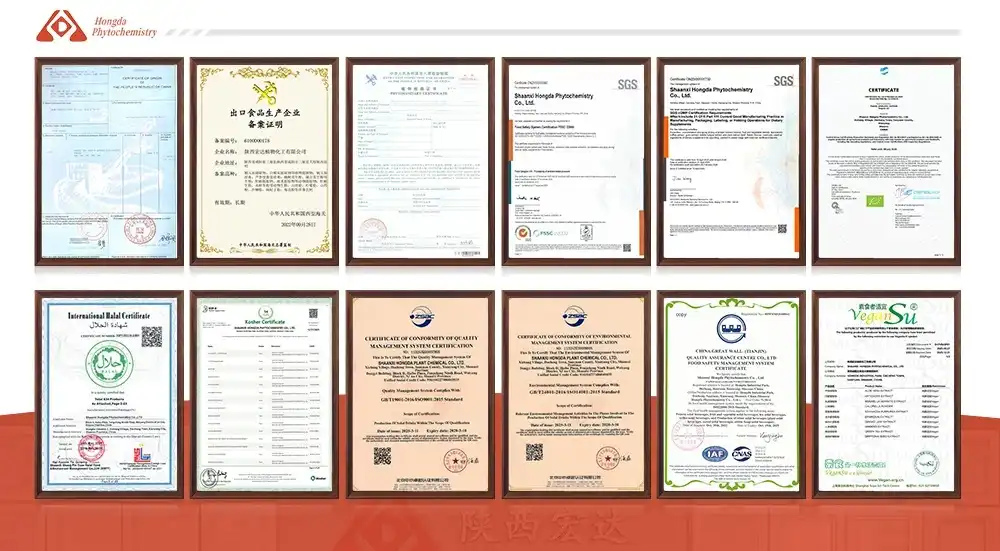
Certifications are a big part of how importers decide if they can trust a manufacturer with a large order. Hongda's fish oil line really stands out in this area. The business has certifications from SGS, cGMP, HALAL, KOSHER, BRC, FDA, ISO9001, ISO22000, and FSSC. This is a wide range of certifications that will please buyers from the US, EU, Middle East, and Asia as a whole. For a product type like Fish Oil Soft Capsules, where buyers care a lot about where the products come from and testing for contaminants like heavy metals and oxidation levels, this level of certification gives importers proof they can give directly to their own regulatory or retail partners. Buyers who work with a maker that is already licensed save a lot of time during retail training and customs clearance because they don't have to rush to get compliance paperwork after the fact.
Production Scale That Supports Wholesale Volume
Certifications are a big part of how importers decide if they can trust a manufacturer with a large order. Hongda's fish oil line really stands out in this area. The business has certifications from SGS, cGMP, HALAL, KOSHER, BRC, FDA, ISO9001, ISO22000, and FSSC. This is a wide range of certifications that will please buyers from the US, EU, Middle East, and Asia as a whole. For a product type like Fish Oil Soft Capsules, where buyers care a lot about where the products come from and testing for contaminants like heavy metals and oxidation levels, this level of certification gives importers proof they can give directly to their own regulatory or retail partners. Buyers who work with a maker that is already licensed save a lot of time during retail training and customs clearance because they don't have to rush to get compliance paperwork after the fact.
Understanding Fish Oil Soft Capsule FormulationsEPA and DHA Ratios Explained
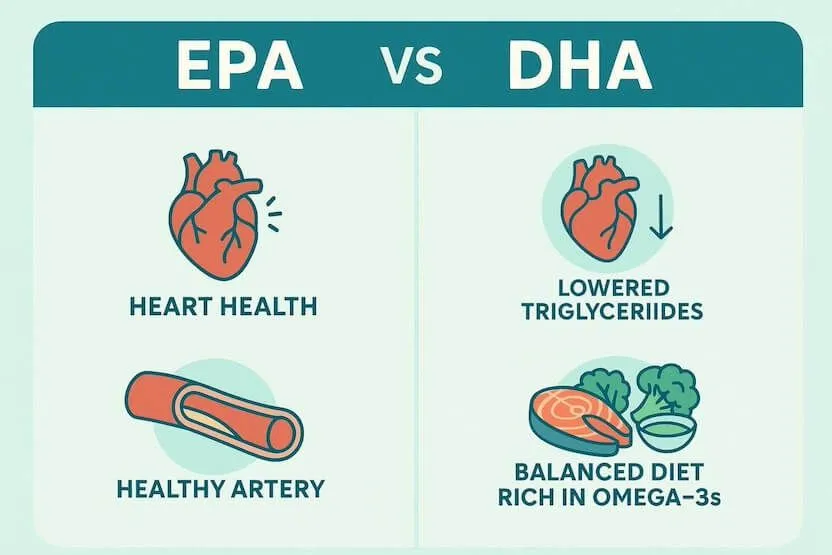
Any fish oil product's health benefits mostly depend on how much EPA and DHA it has. These are the two main omega-3 fatty acids that are said to help the heart and brain. Commercially available amounts include 18/12 (18% EPA, 12% DHA) and 30/20 formulas. The total omega-3 value of a pill can be anywhere from 300 mg to over 1000 mg, depending on where it is placed. When looking for Fish Oil Soft Capsules, buyers should make sure that the ratio fits their brand's marketing angle. Products with more EPA are often marketed around heart health, while products with more DHA are often marketed around brain and eye health. Here is a quick list of how these versions usually compare:
|
Formulation
|
EPA / DHA Ratio
|
Typical Total Omega-3
|
|---|---|---|
|
Standard
|
18% / 12%
|
300mg – 500mg
|
|
Enhanced
|
30% / 20%
|
600mg – 1000mg
|
|
High-Concentrate
|
50%+ combined
|
1000mg+
|
Sourcing and Purity of Raw Fish Oil
The biggest difference in quality between brands is where the raw materials come from. This is because the purity of fish oil rests a lot on the species used, the way of extraction, and how quickly oxidation is stopped after the fish is caught. Fish Oil Soft Capsules made by reputable companies get their omega-3s from deep-sea or cold-water fish that naturally have higher levels of these acids. Then, they use molecular distillation or similar methods to get rid of heavy metals and other contaminants to safe levels. Buyers should ask any possible supplier for certificates of analysis that confirm these levels of purity. This is what will protect your brand in the end if a retailer or regulator asks for proof. Hongda is an example of a maker that should not be afraid to give this information as part of the normal process of hiring a new buyer.
Softgel Shell Options for Different Markets
The biggest difference in quality between brands is where the raw materials come from. This is because the purity of fish oil rests a lot on the species used, the way of extraction, and how quickly oxidation is stopped after the fish is caught. Fish Oil Soft Capsules made by reputable companies get their omega-3s from deep-sea or cold-water fish that naturally have higher levels of these acids. Then, they use molecular distillation or similar methods to get rid of heavy metals and other contaminants to safe levels. Buyers should ask any possible supplier for certificates of analysis that confirm these levels of purity. This is what will protect your brand in the end if a retailer or regulator asks for proof. Hongda is an example of a maker that should not be afraid to give this information as part of the normal process of hiring a new buyer.
Common Dosage Strengths for Wholesale Buyers
When choosing a dosage strength, it's important to keep in mind the rules and expectations of the people you want to sell your fish oil to. This is because fish oil products sold at very different strengths often have completely different positioning strategies. Lower-dose forms, usually less than 500 mg of total omega-3 per serving, are better for general health and daily use. Higher-concentration forms, above 1000 mg, are usually promoted for specific circulatory or joint-support use cases. When buying Fish Oil Soft Capsules in bulk, buyers should also think about how many servings people in different regions expect. For example, some areas expect one capsule per day, while others expect two or more capsules per day. By being clear with your maker early on, you can avoid having to pay a lot of money to redo the recipe after the artwork for the Packaging and labels has already been approved.
Navigating the Import ProcessRegulatory Requirements Across Key Markets
Different markets have different rules about fish oil supplements. Knowing these differences ahead of time keeps packages from being held up, which can be very expensive. The Food and Drug Administration (FDA) regulates fish oil as a dietary supplement in the United States. In the European Union, on the other hand, labels must include more information about allergens and health claims. Traceability rules have become stricter in many major markets in recent years, so buyers of Fish Oil Soft Capsules who want to sell them in more than one area at the same time need to make sure they know what health claims are allowed, what warnings are needed, and if there are any limits on where the fish came from. Working with a maker like Hongda that has experience exporting to multiple regions makes this study easier because the company already ships to markets in Europe, the United States, and Southeast Asia and knows what kinds of paperwork are needed in each of those areas.
Documentation and Customs Considerations
For easy customs clearance, make sure you have all the necessary paperwork ready before you ship your goods. This includes certificates of analysis, certificates of origin, and any import permits that the country you're sending your goods to needs. One of the main reasons shipments are held up for supplement suppliers is still paperwork that is missing or not complete. This is especially true for marine-based goods like Fish Oil Soft Capsules that need to be more carefully tracked back to their source. Setting up a clear documentation checklist with your manufacturer before the first order ships can help you avoid these delays on subsequent orders, since the core paperwork usually stays the same after the first process has been mapped out and agreed upon by both parties.
Packaging and Cold-Chain Shipping Needs
Fish oil is naturally more sensitive to heat and light than many other types of supplements. This is because oxidation directly lowers the taste and effectiveness of the oil over time. Fish Oil Soft Capsules are better protected when they are shipped and stored for a long time before they are sold. The best bottles are usually opaque or amber, and nitrogen-flushed sealing is available if it is possible. Full cold-chain shipping isn't always needed for finished softgel goods, but buyers should still make sure that shipping packages don't stay in very hot places for long periods of time, especially if the orders are going through warmer areas or taking a long time to get there. Talking to your maker about these packing requirements before they start making the product will make sure that it comes in the state your customers expect.
Working with a Manufacturer Experienced in Exports
When your manufacturing partner has already fixed the problems that often come up with international shipping, the import process goes a lot faster. Hongda is a Public Overseas Warehouse, which means the business has shown it can handle international operations beyond a single domestic mailing. This can significantly shorten shipping times for repeat Fish Oil Soft Capsules orders once a relationship is formed. If a maker has experience exporting supplements, it helps buyers who are new to buying supplements a lot because it cuts down on the learning curve for things like paperwork, freight handling, and destination-market compliance, which can take weeks of back-and-forth on a first order.
Building Your Private Label Fish Oil Brand
Once you understand the product and the import mechanics, the next step is turning that knowledge into an actual branded offering — and this is where many importers either accelerate quickly or stall out on unnecessary back-and-forth. Let's walk through what that process typically looks like.
OEM vs ODM: Which Model Fits Your Brand?
You can choose between OEM and ODM services based on how quickly you need to get a product to market versus how much control your brand wants over the recipe. If you work with an OEM, you usually start with a formula that already exists and then add your own brand and packaging to it. With an ODM, on the other hand, you can work together more closely on the formula itself, changing things like the EPA/DHA ratios, the ingredients that are added, or the capsule specifications that are specific to your brand. Hongda supports both models for its Fish Oil Soft Capsules line, so buyers can choose whether they want a faster launch or a co-developed product that is more unique. Many new brands start with OEM to see how the market reacts before spending money on a fully custom ODM recipe for a second run of production.
Custom Packaging and Label Design
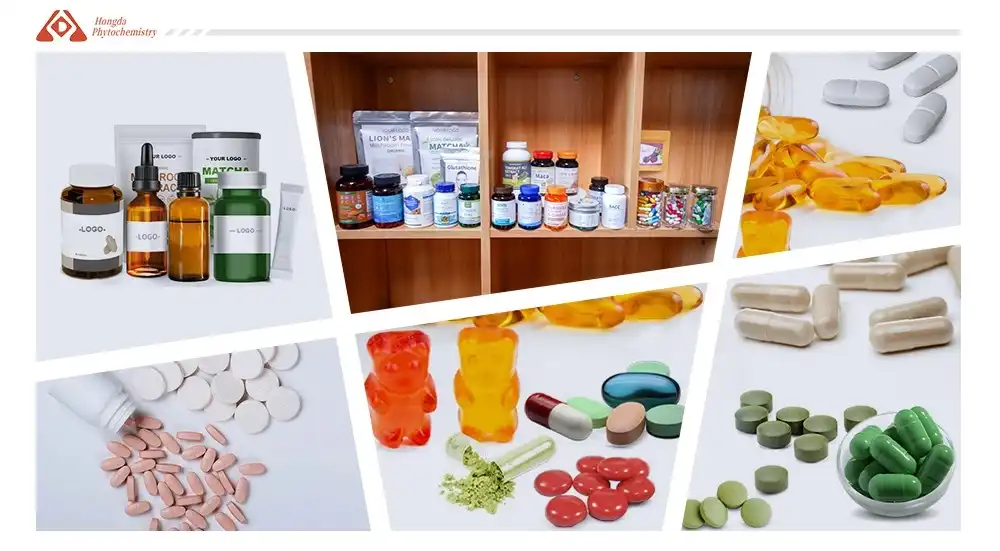
Packaging is frequently what separates a forgettable supplement from a shelf-ready brand, and this is an area where working directly with the manufacturer pays off considerably. Buyers can specify bottle style, capsule count, label artwork, and even secondary packaging like boxes or blister cards for their Fish Oil Soft Capsules order, aligning the finished product precisely with brand identity and target retail channel. Because Hongda handles bottling and labeling in-house rather than outsourcing this step, buyers typically see fewer coordination delays and more consistent quality control between the capsule production and final packaging stages of the order.
Sample Requests and Quality Verification
Before committing to a bulk production run, requesting physical samples remains one of the smartest steps any importer can take, regardless of how strong a manufacturer's certifications look on paper. Samples let you evaluate capsule size, shell texture, smell, and overall presentation firsthand, which specification sheets alone simply can't communicate. If you're evaluating Fish Oil Soft Capsules for the first time, or comparing Hongda against another supplier, requesting a sample batch — along with recent lab test results — gives you concrete evidence to base your decision on rather than relying purely on marketing claims or catalog photos.
Getting Started with Hongda
If your research has brought you this far, the most productive next step is usually a direct conversation rather than continued comparison shopping between suppliers indefinitely. Shaanxi Hongda welcomes inquiries from importers at any stage, whether you need technical specifications, certificate copies, or a sample of the Fish Oil Soft Capsules before committing to your first order. With more than 400 products across its broader catalog beyond what's listed online, the team can often accommodate custom formulation requests that aren't publicly advertised.
Conclusion
Importing Fish Oil Soft Capsules offers a stable, well-understood entry point into the supplement market, and choosing the right manufacturer determines how smoothly that opportunity translates into a real business. Hongda combines over two decades of production experience, broad international certifications, and flexible OEM/ODM support to help importers launch with confidence. From formulation guidance to export logistics, Hongda gives supplement brands the manufacturing partner needed to grow reliably in a competitive global market.
FAQWhat EPA/DHA ratios are available for Fish Oil Soft Capsules?
Hongda offers standard, enhanced, and high-concentration formulations, typically ranging from 18/12 up to higher combined omega-3 percentages.
Does Hongda offer HALAL or KOSHER-certified fish oil capsules?
Yes, the company's certifications include HALAL and KOSHER for relevant capsule formats and markets.
Can I request a custom formulation through ODM services?
Yes, ODM services allow buyers to co-develop ratios, dosage, and capsule specifications with Hongda's R&D team.
How does Hongda ensure fish oil purity and freshness?
Raw materials undergo refining to reduce contaminants, with each batch inspected under cGMP standards before packaging.
Start Your Fish Oil Import Partnership with Hongda
Ready to bring Fish Oil Soft Capsules into your supplement lineup? Shaanxi Hongda Phytochemistry offers over two decades of manufacturing expertise, full international certifications, and flexible OEM/ODM support to help your brand launch and scale with confidence. Whether you need bulk pricing, private label packaging, or a formulation not yet listed online, contact the team directly at duke@hongdaherb.com to request samples and start your sourcing conversation today.
References
1. National Institutes of Health, Office of Dietary Supplements, Omega-3 Fatty Acids Fact Sheet for Health Professionals.
2. U.S. Food and Drug Administration, Dietary Supplement Labeling Guide.
3. International Organization for Standardization, ISO 22000 Food Safety Management Systems.
4. Global Organization for EPA and DHA Omega-3s, Voluntary Monograph for Omega-3 Supplement Quality.
5. European Food Safety Authority, Scientific Opinion on Dietary Reference Values for Fats, Including Omega-3 Fatty Acids.
6. Codex Alimentarius Commission, Standard for Fish Oils.