Who Needs Customized Polygonum Cuspidatum Extract Resveratrol Formulations?
2026-08-06 11:07:38
Different brands operate with different raw material specifications, and that is exactly the reason why customisation has become such an essential debate around Polygonum Cuspidatum Extract Resveratrol. This natural antioxidant from the root of Polygonum cuspidatum has become one of the most popular botanical ingredients in the nutraceutical, pharmaceutical, cosmetic, and functional food industries. But the ideal concentration, particle form and blend for a capsule manufacturer is rarely the right one for a skincare formulator or a beverage brand. That's why Shaanxi Hongda Phytochemistry Co., Ltd. has invested more than 20 years developing extraction and customisation skills so customers may dictate purity grade, format and supplementary ingredients rather than settle for a one-size-fits-all solution. In this post, we’ll discuss who really needs a bespoke formulation, what alternatives are available for customisation and why working with an experienced manufacturer may make all the difference to the quality of your completed product.
Understanding Polygonum Cuspidatum Extract Resveratrol: Source, Specifications, and Quality Standards
Before discussing who needs a custom formulation, it helps to understand what this ingredient actually is and why its specifications vary so widely from one supplier to the next.
Botanical Origin and Extraction Process
Bulk polygonum cuspidatum extract is derived from the dried root and rhizome of Polygonum cuspidatum, or giant knotweed, a perennial plant that has been used in traditional Chinese medicine for centuries. Therefore, the root naturally includes not just resveratrol, but also related substances such as polydatin and emodin. Modern extraction procedures concentrate the resveratrol fraction, eliminating undesirable plant material. The extraction procedure usually comprises solvent extraction, filtration, and crystallisation to increase the proportion of resveratrol to a specific level. Since the raw material itself may differ according to the growing region, harvest season and root maturity, consistent sourcing and standardised processing are imperative to producing a Polygonum Cuspidatum Extract Resveratrol batch that can meet a declared specification every single time, which is precisely where an experienced manufacturer’s process control becomes valuable to downstream buyers.
Specification Table and Purity Grades
Buyers typically choose between several purity grades depending on their finished product category, and understanding these options up front makes the customization conversation much easier later on.
|
Products name
|
Resveratrol Extract
|
Use part
|
Root
|
|
ITEMS
|
SPECIFICATION
|
RESULT
|
METHOD
|
|
Assay(Resveratrol)
|
NLT 98%
|
98.35%
|
HPLC
|
|
Appearance
|
White or off-white powder
|
Conform
|
Visual
|
|
PHYSICAL CHARACTERISTICS
|
|||
|
Loss on Drying
|
NMT 1%
|
0.49%
|
GB5009.3
|
|
Sulphated
|
NMT 0.5%
|
0.25%
|
GB5009.4
|
|
CHEMICAL CHARACTERISTICS
|
|||
|
Heavy Metals(as Pb)
|
NMT 10ppm
|
Conform
|
GB5009.74
|
|
Arsenic (As)
|
NMT 2ppm
|
Conform
|
GB5009.11
|
|
Cadmium(Cd)
|
NMT 1ppm
|
Conform
|
GB5009.17
|
|
Mercury(Hg)
|
NMT 0.1ppm
|
Conform
|
GB5009.12
|
|
MICROBIOLOGICAL CHARACTERISTICS
|
|||
|
Total Plate Count
|
NMT 1000cfu/g
|
Conform
|
GB4789.2
|
|
Total Yeast & Mold
|
NMT 100cfu/g
|
Conform
|
GB4789.15
|
|
E.Coli
|
Not Detected
|
Not Detected
|
GB4789.3
|
|
Salmonella
|
Not Detected
|
Not Detected
|
GB4789.4
|
|
Staphylococcus
|
Not Detected
|
Not Detected
|
GB4789.10
|
|
Conclusion
|
Qualified.
|
||
Quality Certifications Backing Every Batch
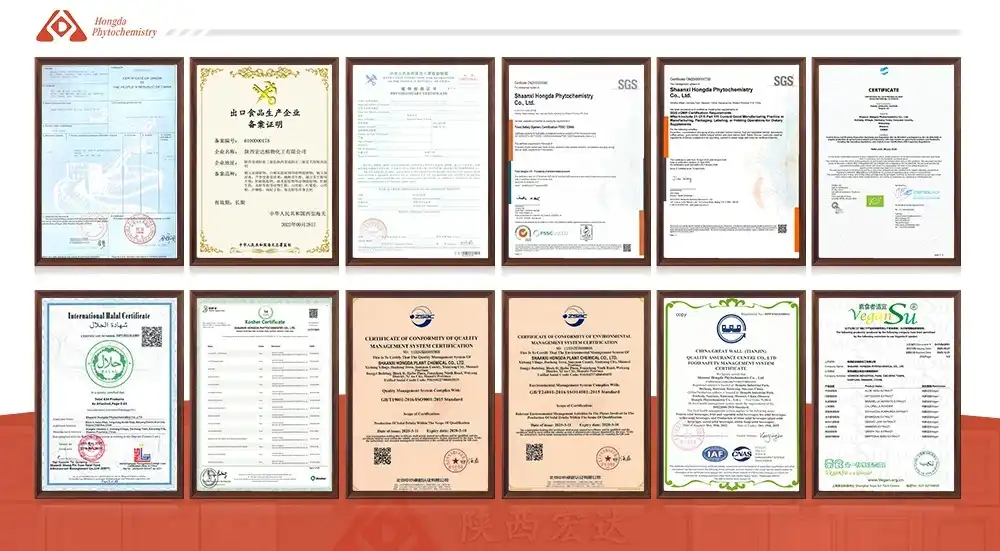
A specification sheet tells half the story; the certificates behind a batch of Polygonum Cuspidatum Extract Resveratrol prove that the statistics mentioned are dependable and repeatable. Reputable vendors verify raw material and final extract via SGS-accredited labs. Manufacture under cGMP conditions and have additional Certifications such as ISO9001, ISO22000, ORGANIC, HALAL, KOSHER, BRC, FSSC, depending on the target market. These certifications are very important to purchasers developing pharmaceutical or nutraceutical items, as regulatory reviewers and retail partners are increasingly expecting complete traceability and verified quality control. With certificates of analysis, stability data, and testing for heavy metal or pesticide residues behind every shipment, customers may feel confident developing long-term formulations using that component, instead of requalifying new suppliers over and over again.
Who Benefits Most from Customized Resveratrol Formulations?
With the basics established, the real question becomes which industries actually need a customized version of this ingredient rather than a standard catalog product.
Nutraceutical and Dietary Supplement Brands
The supplement brands are probably the biggest group looking for customised Polygonum Cuspidatum Extract Resveratrol, as capsule, tablet, and powder forms all need varied particle size, flowability, and mixing properties. A brand making a cardiovascular support capsule may need a 98% Trans-Resveratrol grade with good flow qualities to allow for automated encapsulation, but a powder-stick brand selling direct to consumer may be looking at solubility and taste-masking instead. The dosage approach also differs a lot between firms who are targeting general wellness customers and those creating higher-potency anti-aging products, which means that the proportion of resveratrol itself frequently has to be adjusted to meet a specified milligram objective per serving without making the capsule size too big. Because supplement formulas are often modified based on market feedback, dealing with a manufacturer that is ready to change batch specs on very short lead times provides these brands with substantial competitive flexibility.
Pharmaceutical and Clinical Formulators
Pharmaceutical-grade applications have the most stringent demands of any client group, frequently needing Polygonum Cuspidatum Extract Resveratrol with certified purity more than 98%, stringent residual solvent limitations, and comprehensive documentation to support regulatory submissions. Clinical researchers investigating the cardiovascular or metabolic effects of resveratrol also have a requirement for uniformity from batch to batch since even modest changes in composition might make replication of studies more difficult. In addition to the standards for commercial release, these formulators often need extra testing, including thorough impurity profiling and stability tests under accelerated settings. Pharmaceutical development timelines can stretch over years, and this group is looking for manufacturers who will offer long-term stability in their specifications, and who will invest in the manufacturing infrastructure (cGMP facilities, qualified laboratories, and documented change-control procedures) necessary to support a product through clinical development and eventual commercial launch with no unanticipated interruptions in supply.
Cosmetic and Skincare Manufacturers
Skincare manufacturers are looking at Polygonum Cuspidatum Extract Resveratrol with a whole new lens, focusing on antioxidant activity in topical formulations rather than oral bioavailability. For serums and creams, particle fineness and solubility in the selected formulation base are key parameters, and many cosmetic formulators request a customised micronised or water-dispersible version to better inclusion in emulsions. The second factor peculiar to this category is colour stability, since resveratrol may oxidise and become discoloured during the shelf life of a product if it is not effectively stabilised or if it is not shielded from light and air in the formulation. Cosmetic consumers often seek COA documents that are compliant with cosmetic regulations as opposed to pharmaceutical regulations because of the significant differences in the standards for compliance between the two categories, even if the underlying constituent is similar.
Functional Food and Beverage Companies
Food and beverage applications need a whole new set of requirements for customisation, especially in terms of solubility, flavour neutrality and heat stability during processing. A beverage company creating a functional drink with Polygonum Cuspidatum Extract Resveratrol needs an extract that dissolves cleanly without sediment or off-taste, and this may require a specially processed grade that is different from the usual powder used in capsules. Resveratrol for products that are pasteurised or hot filled also must be stable under heat stress, since breakdown during manufacture would defeat the antioxidant claims on the label. Also, this client segment often values cost-effective customisation to suit functional needs without needless specification inflation since food-grade applications frequently run on narrower margins than pharmaceutical items.
Why Customization Matters: Tailoring Concentration, Form, and Delivery
Once you know what group you’re in, the next step is to determine precisely what can be customised and why those options matter for the performance of your completed product.
Adjustable Resveratrol Concentrations for Different Applications
Resveratrol Polygonum Cuspidatum Extract: Resveratrol products typically vary from 50% to 98% or greater, with the correct concentration level depending on your desired dose and budget. A product needing a small daily dose of resveratrol may be just as effective using a lower-concentration extract combined with additional supportive compounds, thereby reducing the cost of raw materials. In contrast, a premium anti-aging or clinical strength formulation may justify the greater price of a 98% Trans Resveratrol grade to reach a therapeutic dosage in a modestly sized capsule or tablet. Manufacturers able to produce across the full range of concentrations give buyers the flexibility to fine-tune formulations without being locked-in to whatever concentration happens to be sitting in stock; this becomes especially valuable during product reformulation or when entering markets with different regulatory dosage expectations.
Powder, Granule, and Liquid Format Options
The physical form of Polygonum Cuspidatum Extract Resveratrol is as significant as the chemical content in terms of matching it to a particular production line. Fine powders are well suited for uses such as capsule filling and dry mixing, while granulated forms tend to flow better through high-speed tableting equipment and minimise dust creation during manufacturing. Fast, full solubility is the key for beverages and liquid supplements, not the ease of dry mixing; hence, liquid and dispersion forms have also appeared. Asking for the correct format up front can save substantial time during scale-up, since reformulating to a supplier’s default format after production trials are underway might delay a launch by months. A manufacturer that is willing to change particle size distribution and format according to your individual processing equipment reduces one of the most frequent friction points in getting a new supplement or functional product to market.
Blending with Complementary Antioxidants
Many formulators choose to include Polygonum Cuspidatum Extract Resveratrol into a pre-blended antioxidant system rather than sourcing it alone and blending it with components such as quercetin, green tea extract, or grape skin extract to produce a synergistic formula. Resveratrol is also naturally present in many other botanical sources, making it useful to compare possibilities so formulators may determine if a mix or single-source extract better suits their final product aims.
|
Resveratrol Source
|
Typical Resveratrol Content
|
Common Use Case
|
|---|---|---|
|
Polygonum cuspidatum root
|
50%–98%
|
Supplements, pharmaceuticals
|
|
Grape skin extract
|
0.5%–5%
|
Wine-derived nutraceuticals
|
|
Peanut and mulberry extracts
|
Trace–low %
|
Niche antioxidant blends
|
The Hongda Advantage: From Extraction to Custom Delivery
Understanding the customization landscape is one thing; finding a manufacturer capable of actually delivering on those requirements consistently is another matter entirely.
20+ Years of Natural Extract R&D
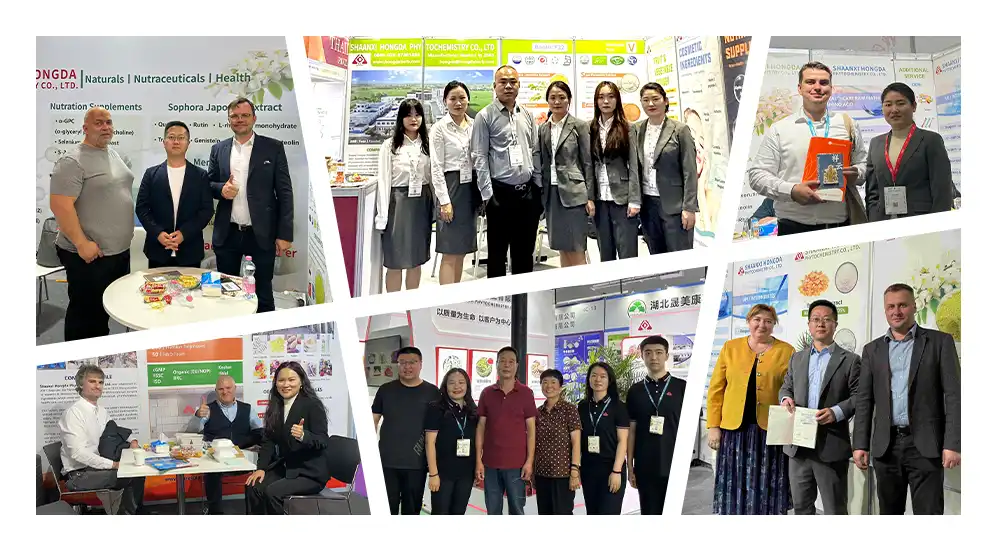
Shaanxi Hongda Phytochemistry Co., Ltd. has been developing natural plant extracts since 2001 and earned recognition as a national high-tech enterprise in 2010, building institutional knowledge around Polygonum Cuspidatum Extract Resveratrol and dozens of other botanical ingredients over more than two decades. This depth of experience matters when customization requests get technically demanding, since adjusting purity, solubility, or particle characteristics without compromising stability requires genuine process expertise rather than simple dilution or grinding. A research team of more than twenty professors drawn from leading universities supports ongoing formulation development, meaning customization requests are handled by people who understand both the underlying chemistry and the practical manufacturing constraints involved in scaling a custom batch from lab trial to commercial volume.
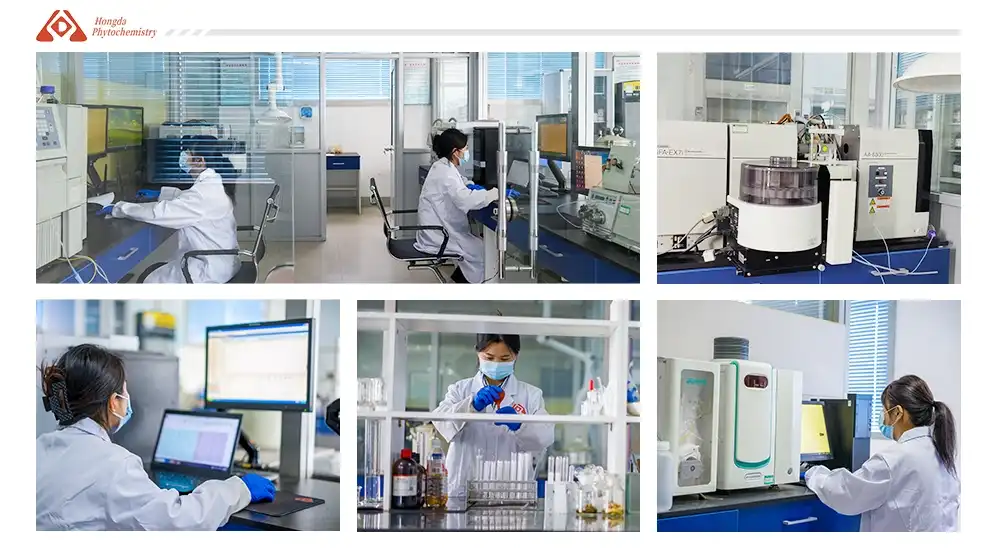
cGMP-Certified Manufacturing and SGS-Tested Labs
Every batch of Polygonum Cuspidatum Extract Resveratrol produced at Hongda's 20,000-square-meter facility passes through cGMP-compliant manufacturing processes and SGS-certified laboratory testing before release. This infrastructure allows the company to support customers across pharmaceutical, nutraceutical, and cosmetic categories simultaneously, since each category's compliance expectations are met through the same rigorous underlying quality system. Ten dedicated natural extract production lines provide the flexibility needed to run customized batches without disrupting standard production schedules, while a large team of skilled operators ensures customization requests are executed accurately rather than treated as disruptive exceptions to routine manufacturing.
Global Export Experience and Responsive Support
Hongda ships Polygonum Cuspidatum Extract Resveratrol and related botanical extracts to customers across Europe, North America, and Asia, and that export experience translates into practical familiarity with the documentation, labeling, and certification expectations that differ from market to market. If your project needs a specification that isn't listed on the standard product page, it's worth reaching out directly, since Hongda maintains more than 400 products beyond what's published online and regularly develops new customized formulations based on individual customer needs — you can send your requirements straight to duke@hongdaherb.com and the technical team will follow up with sourcing and formulation guidance tailored to your project. A 24-hour customer service team further supports international buyers working across different time zones, helping smooth out the logistics and communication challenges that often slow down cross-border ingredient sourcing.
How to Start a Custom Polygonum Cuspidatum Extract Resveratrol Project
Once you’ve decided that customisation is the way to go for your product, the actual process of project initiation usually follows a very standard route.
Defining Your Application Requirements
Document what you need your end product to do: target resveratrol concentration, physical format, solubility requirements, any regulatory certifications your market requires. This is the first step to a successful bespoke Polygonum Cuspidatum Extract Resveratrol project. Being explicit here will avoid a lot of back and forth later, as a manufacturer can much more effectively offer the proper formulation technique if given clear criteria up front rather than a generic request for “resveratrol extract.” It also helps to discuss your completed dosage form, whether it’s a capsule, tablet, powder stick, cream or beverage, since the optimal extract qualities vary greatly across different categories even when the underlying resveratrol % aim is comparable.
Requesting Samples and Technical Documentation
Most formulators will want to see samples, along with a certificate of analysis, specification sheet and any certificates before they agree to a bespoke production run. Testing a sample in your real formulation process – capsule filling, emulsion preparation or beverage mixing – can disclose compatibility difficulties that a specification sheet cannot foresee. Sample evaluation is a normal part of qualifying a new ingredient supplier, especially for pharmaceutical or cosmetic applications where formulation stability testing is a mandatory step before any larger commitment. Reputable suppliers are usually happy to provide these materials quickly.
Scaling from Trial Batch to Bulk Production
Once a sample formulation is successful, the following stage is usually a small trial production lot to test whether the customised specification holds up at commercial scale before advancing to full bulk orders. This tiered strategy minimises risk for everybody concerned, enabling small changes in particle size, moisture content or mix ratios to be accommodated before substantial quantities are committed. Flexible production lines at manufacturers can typically support this phased scale-up without much lead time penalty, and it’s especially useful for companies launching a new product when market timeliness is as important as formula perfection.
Conclusion
Polygonum Cuspidatum Extract Resveratrol custom Polygonum Cuspidatum extract formulations are designed for a broad variety of customers, including supplement brands, pharmaceutical developers, cosmetics manufacturers, and functional food businesses with unique demands in terms of concentration, format, and stability. Leveraging 20+ years of extraction know-how, cGMP-certified production, and customisation flexibility, Shaanxi Hongda Phytochemistry enables these sectors to develop trusted, efficacious formulations that meet their particular needs.
FAQQ1: What purity grades of Polygonum Cuspidatum Extract Resveratrol are available?
Common grades range from 50% up to 98% Trans-Resveratrol, customizable based on your application.
Q2: Can the extract be customized for cosmetic formulations?
Yes, micronized and water-dispersible versions can be produced for topical and skincare use.
Q3: Is this ingredient suitable for pharmaceutical-grade formulations?
Yes, higher-purity grades with full documentation and cGMP manufacturing support pharmaceutical applications.
Q4: What formats does Hongda offer for this extract?
Powder, granule, and liquid dispersion formats are available depending on your production line needs.
Q5: How do I request a customized formulation?
Share your target concentration, format, and certification needs with Hongda's technical team to begin the process.
Partner with Hongda for Your Custom Resveratrol Formulation
Whether you're formulating supplements, pharmaceuticals, cosmetics, or functional foods, Shaanxi Hongda Phytochemistry can tailor a Polygonum Cuspidatum Extract Resveratrol formulation to your exact specifications. With over 20 years of extraction expertise, cGMP-certified production, and full quality documentation, Hongda is ready to support your project from sample to bulk order. Contact our team at duke@hongdaherb.com to discuss your custom requirements today.
References
1. Fan, W., Wu, J., Gao, M., Zhang, X., & Zhu, W., "Preparation of Solid Dispersion of Polygonum Cuspidatum Extract by Hot Melt Extrusion to Enhance Oral Bioavailability of Resveratrol," Molecules.
2. Wang, C., Liu, X., Zhang, M., Shao, H., Zhang, M., Wang, X., Wang, Q., Bao, Z., Fan, X., & Li, H., "Efficient Enzyme-Assisted Extraction and Conversion of Polydatin to Resveratrol From Polygonum cuspidatum," Frontiers in Microbiology.
3. Chinese Pharmacopoeia Commission, Pharmacopoeia of the People's Republic of China, Polygonum cuspidatum monograph.
4. Baur, J.A. & Sinclair, D.A., "Therapeutic Potential of Resveratrol: The In Vivo Evidence," Nature Reviews Drug Discovery.
5. Salehi, B. et al., "Resveratrol: A Double-Edged Sword in Health Benefits," Biomedicines.
6. Ramírez-Garza, S.L. et al., "Health Effects of Resveratrol: Results from Human Intervention Trials," Nutrients.





_1761550292830.jpg "Bulk Inositol Powder")