Where to Buy Liposomal Iron Powder from the Manufacturer?
2026-05-11 15:32:46
When business-to-business buyers get liposomal iron powder directly from makers, they can get better quality control, lower prices, and formulations that can be changed to meet specific legal needs. Shaanxi Hongda Phytochemistry Co., Ltd. has been in business since 2001 and is a recognized maker of third-generation liposomal iron technology, which is 3.5 to 5 times more effective at absorption than regular iron salts. Our off-white to light yellow fine powder, which is set at 50%, solves important problems in the industry, like stomach irritation and a metallic smell, while keeping encapsulation efficiency at 85% or higher.
Understanding Liposomal Iron Powder and Its Market Demand
What Makes Liposomal Technology Superior?
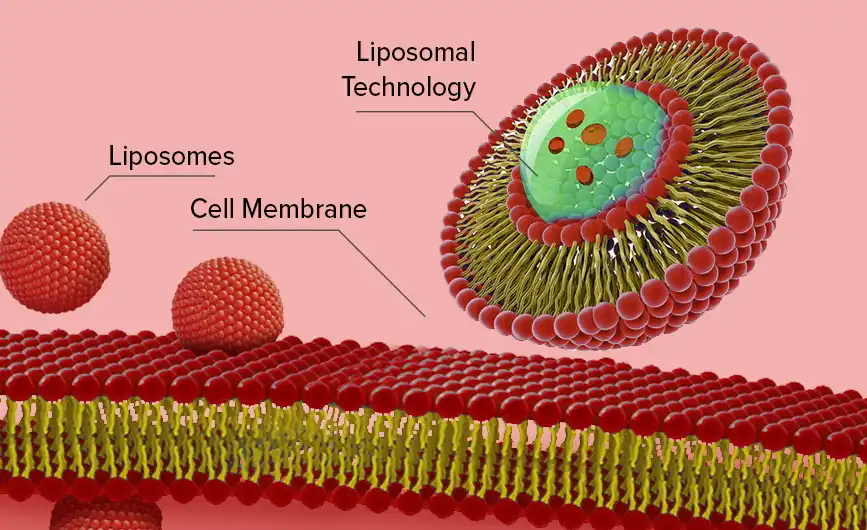
The fact that iron is enclosed in phospholipid bilayers is a big improvement over using ferrous sulfate or ferrous fumarate vitamins as usual. This supramolecular structure looks like biological membranes. It keeps iron ions from coming into direct contact with the mucosa while making it easier for M-cells to enter the walls of the intestine. Studies in humans show that this way of delivering iron circumvents hepcidin-regulated ion channels, which normally stop iron uptake at around 15-20%. Our liposomal version has solubility rates of more than 70%, which makes it especially useful for people who have trouble digesting food.
Core Applications Across Key Market Segments
The pharmaceutical and nutraceutical businesses are looking for high-purity iron ingredients that cause the fewest side effects and best treatment results. A big part of the market is made up of women's health products that help with menstrual health, prenatal diet, and healing after giving birth. Liposomal release is gentle, so it can be used on children without causing constipation or sickness like regular iron treatment does. This new form of nutrition is beneficial for vegetarians and vegans, office workers who don't get enough iron from their food, and endurance athletes who need better oxygen transport. Market data shows a steady rise, which is being driven by people's desire for pure, well-tolerated nutritional supplements. Liposomal iron is added to protein shakes, nutritional bars, and drinks to make them healthier without changing the way they taste in the functional food and beverage industry. Regulatory trends that support clean-label ingredients with clear sources are driving up demand even more among formulators looking for approved organic, non-GMO, and allergen-free raw materials.
Addressing Safety and Efficacy Requirements
Heavy metal content, bacterial purity, and stability across pH ranges and temperature changes are just some of the complicated quality factors that manufacturers have to deal with. Our production methods make sure that the iron level stays the same and that the phospholipid barrier stays in place during the whole shelf life. Third-party verification through SGS-certified laboratory testing proves that the product meets international pharmacopoeia standards. This gives important proof for regulatory applications in North American and European markets.
Key Factors to Consider When Buying Liposomal Iron Powder in Bulk
Quality Certifications and Manufacturing Standards
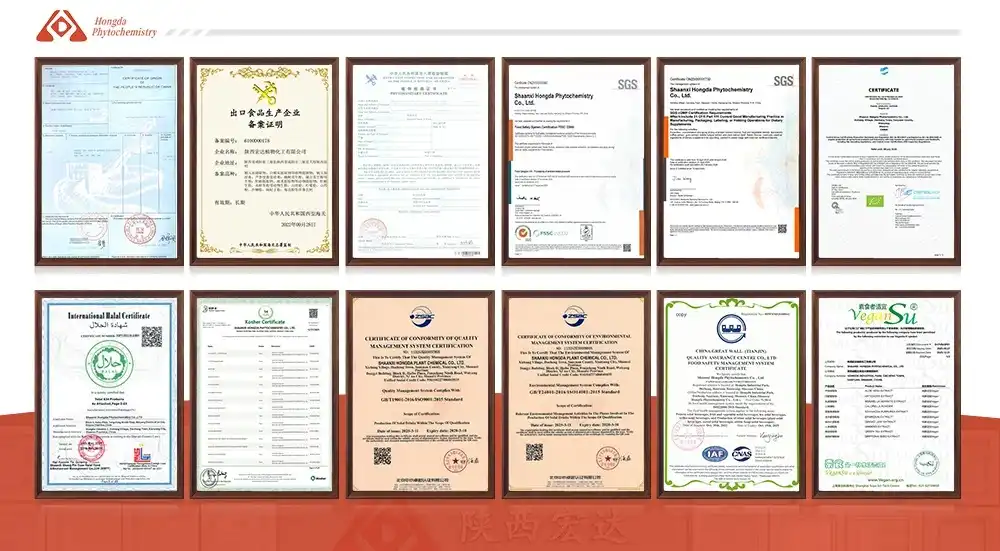
When purchasing professionals look at possible sources, they should give more weight to companies that have full Certifications that show they are committed to quality management systems. cGMP compliance makes sure that facilities that make medicines follow pharmaceutical-grade rules for keeping things clean, making sure equipment is calibrated, and keeping records on each batch. The ISO 9001 and ISO 22000 standards demonstrate that organizations carry out quality management and food safety management in an orderly way. HALAL and KOSHER certifications help recipes aimed at specific groups of consumers reach new markets. FSSC 22000 certification, on the other hand, proves compliance with strict food safety rules that international supply chains recognize. The lab's skills prove equally important. Real-time quality checks are possible thanks to an in-house SGS-certified lab that can do HPLC analysis, particle size distribution measurement, and Packaging efficiency tests. When suppliers include a Certificate of Analysis with every batch, which includes test results for heavy metals, microbiology, and assays, they show that they are honest, which lowers the risk of buying from them.
Evaluating Pricing Structures and Volume Economics
The costs of buying in bulk go beyond simple per-kilogram prices and need to be carefully looked at. Reputable makers set their prices in a way that takes into account economies of scale. For example, savings for large orders start at 100 kilograms and go up to 500 kilograms and 1,000 kilograms. The higher cost of liposomal iron, which is usually 40–60% more than regular iron salts, must be considered against the fact that less medication is needed because it is more bioavailable. When making finished goods, being able to use less iron per dose while still getting the same serum ferritin improvements gives you a competitive edge in terms of both cost per serving and label promises.
Packaging and Logistics Considerations
Standard packing standards of 12 kg per drum and 27 drums per pallet make it easier to store and move goods. Pharmaceutical-grade HDPE drums with moisture-barrier covers keep the purity of the product safe while it is being shipped and stored. Buyers should make sure that the materials used for packing meet FDA rules for food-contact materials and protect against rust, humidity, and temperature changes during foreign shipping. For initial purchases, the minimum order numbers are usually between 24 kg and 100 kg. Larger contracts that support ongoing production plans can be flexible.
Comparing Liposomal Iron Powder to Traditional Iron Supplements
Absorption Efficiency and Patient Outcomes
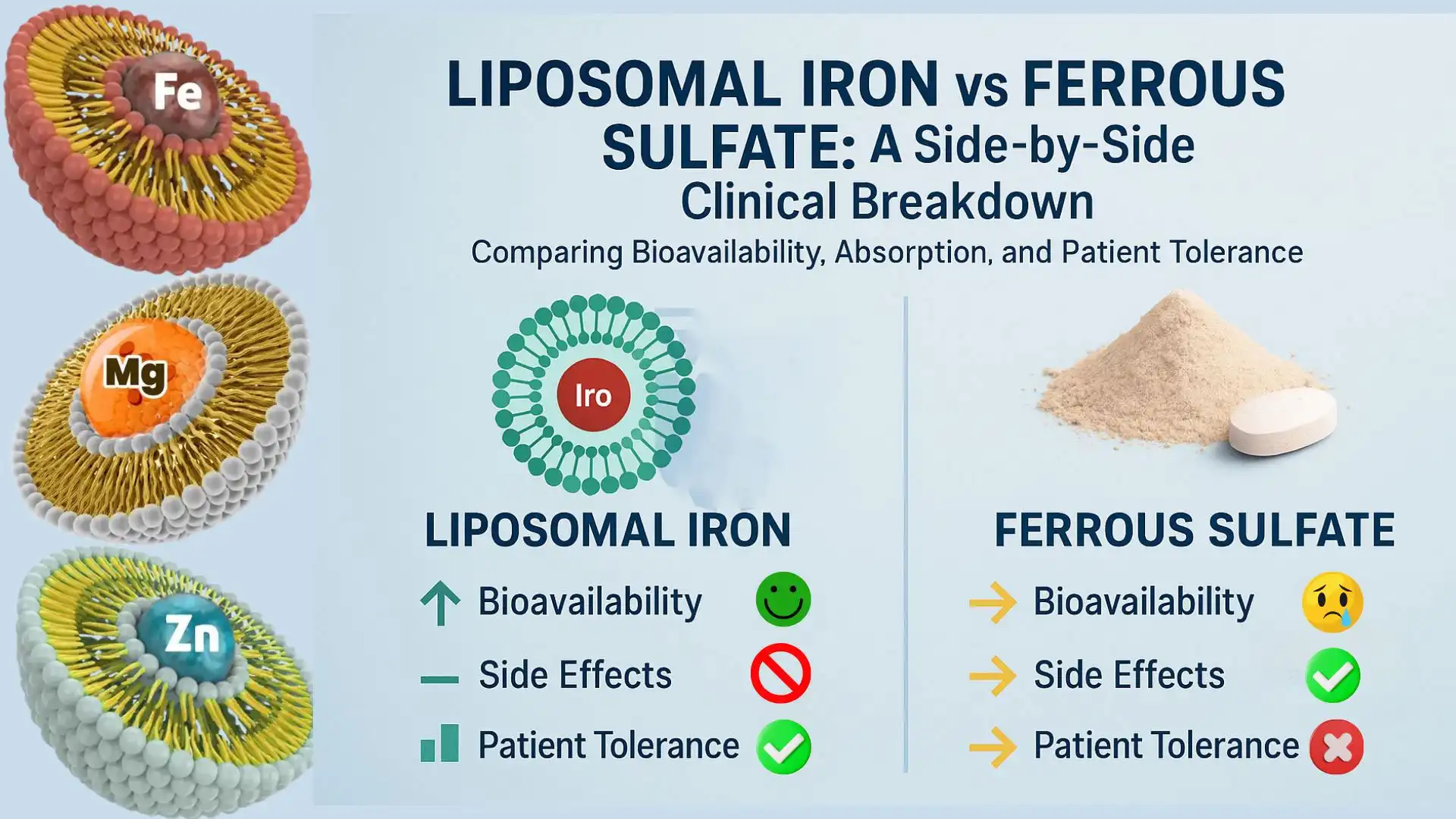
In ideal conditions, traditional iron supplements like ferrous sulfate are absorbed about 10-15% of the time. However, absorption rates drop by a lot when food inhibitors like tannins, phytates, and calcium are present. Iron bisglycinate chelates make it easier for the body to handle, but they still have problems with absorption because intestine transporters are full. Liposome packaging technology completely changes this way of thinking about digestion. The phospholipid bilayer protects iron from food interactions, and intestinal M-cells take up the structure and send it straight to enterocytes through endocytosis. Comparing clinical data shows that patient compliance rates are not all the same. 40–70% of people who take regular iron pills experience stomach problems like nausea, constipation, and abdominal cramps. These problems cause more than 30% of people to stop taking the supplements. Liposomal versions lower the number of adverse events to less than 15%, which makes it much easier for people to follow supplementation routines. This means that treating anemia will work better and people will not need as many expensive liquid iron treatments.
Manufacturing and Formulation Advantages
When it comes to production, liposomal iron powder is more flexible than standard iron salts. The wrapping gets rid of the metallic taste that is usually caused by using many flavorings and coating technologies in pill and capsule forms. This feature makes it possible to make powdered drink mixes, chewable pills, and liquid solutions at a low cost. The powder stays stable in pH ranges from 3.5 to 7.5, so it can be used in both acidic drinks and neutral-pH functional foods without losing its structure. Stability at low temperatures is another benefit of making it. Some iron salts change when they are processed because they oxidize or lose water, but liposomal iron that has been properly made can survive temperatures up to 70°C for short periods of time. This means it can be used in normal tableting, encapsulation, and spray-drying processes. This resistance to heat makes production easier and cuts down on waste caused by temperature-sensitive materials.
How to Identify and Choose Reliable Liposomal Iron Powder Manufacturers?
Assessing Technical Capabilities and Production Capacity
Specialized manufacturing centers for liposomal technology need high-tech tools and a lot of knowledge. When looking at possible providers, refer to their facilities for extraction and encapsulation. Advanced makers use separate production lines for liposomal goods to prevent contamination during the processing of regular ingredients. If a facility has 10 or more production lines for natural plant extracts, it shows that it can support both standard goods and unique formulation development. Having a separate R&D team shows that you are committed to coming up with new ideas and providing expert help. Companies that hire PhD-level experts and researchers from universities have a lot of experience with lipid chemistry, particle engineering, and making things more stable. This level of scientific knowledge is very helpful when making custom formulations that need certain particle size distributions, better stability profiles, or new ways to send products that are specific to each product idea.
Verifying Supplier Reputation and Track Record
Longevity in an industry tells us a lot about how reliable it is and how consistent the standard is. Manufacturers who have been in business for at least 20 years have seen many market trends, changes in regulations, and improvements in technology. This means that they have strong quality processes, established ties in the supply chain, and institutional knowledge that younger companies don't have. Ask for proof of current client ties and market position. Suppliers that work with markets in North America, Europe, and Asia have shown that they can meet a wide range of quality standards and legal requirements. Customers from different parts of the world show that the supply chain is skilled at foreign transportation, customs paperwork, and following import rules in many different countries.
Questions to Ask Prospective Suppliers
To do your due research properly, you need to ask specific questions about things like production details, quality assurance methods, and service capabilities. Find out how long it usually takes to fill and deliver orders. Reliable makers can finish orders in 3–7 business days for stock items and give clear timelines for custom formulas. Find out what the minimum order size is, how to pay, and how group discounts work. Ask for details on OEM and private label services, such as the ability to create custom particle sizes, different package forms, and co-develop your own liposomal matrices. Quality verification questions should cover testing methods, how often batches are tested, and how to handle results that don't meet specifications. Ask for access to recent Certificates of Analysis that show the quality of the product has been stable across multiple production runs. Ask about traceability systems that record where raw materials come from, how they are made, and where they are distributed. Full traceability is necessary to avoid recalls and follow regulations.
The Buying Process: From Inquiry to DeliveryInitial Engagement and Specification Development
The buying process starts with making sure that everyone understands the basic needs and planned uses. Specify the desired iron amount, particle size, maximum water, and any licensing needs important to your customers. Discuss your expected order volume, timing, and whether standard specs suffice or you need custom recipe development. Reliable makers quickly send technical data sheets, confirmations of specifications, and price offers. Many sellers, including Hongda, offer free samples that you can test in a lab before you make a large order. Sample tests should check the sample's appearance, particle characteristics, iron level (by assay), encapsulation effectiveness, stability, and how long it will last in conditions similar to your production setting and the product's shelf life.
Contract Negotiation and Quality Agreements
Putting together specific buy agreements with suppliers protects both sides and makes sure everyone knows what to expect. Contracts should spell out the exact specs of the product, along with any accepted tolerances. They should also include payment terms, shipping schedules, acceptable bulk discounts, and packaging standards. Quality agreements spell out who is responsible for testing, what the factors are for meeting specifications, and how to handle material that doesn't meet standards. When you buy something from another country, you have to pay extra attention to things like choosing the right Incoterms, filling out the correct customs paperwork, figuring out the import tax, and following the rules of the target country. Manufacturers who have done exporting before can help you figure out these rules and can suggest freight forwarders who specialize in pharmaceutical and nutraceutical services.
Establishing Long-Term Partnership Value
Manufacturers and buyers have more than just a business connection. They also work together strategically to help each other grow. Long-term relationships allow for the co-creation of new formulas, priority scheduling of production during times of high demand, and better pricing based on trust and volume promises. When suppliers care about their customers' success, they offer professional support such as formulation advice, stability testing consultations, and help with regulatory paperwork for product registrations and label claims. Regular lines of contact, like specialized account managers, technical support teams, or customer service that's open 24 hours a day, 7 days a week, make sure that questions about how to use a product, its status, or quality issues are quickly answered. This responsive support infrastructure sets makers who want to build partnerships with their customers apart from transactional commodity providers.
Conclusion
Buying high-quality liposomal iron powder directly from makers has many benefits, such as better product specifications, lower costs, and expert ties that help with formulation innovation. The better bioavailability and gentle tolerability of liposomal delivery technology solve important problems in iron supplementation, making unique goods that deserve a higher price. Evaluating producers based on their licenses, production skills, technical know-how, and service infrastructure makes sure that choices about what to buy are in line with business goals and quality standards. Working with well-known companies that offer fast shipping, adjustable order sizes, and a wide range of support services streamlines the supply chain while keeping the quality of the finished product consistent.
FAQWhat are typical lead times for liposomal iron powder orders?
Orders for standard products are usually shipped between 3 and 7 business days after the order is confirmed and payment is received. Depending on how complicated the development is, wait times may be extended to two to three weeks for custom formulations that need specific particle sizes, different packaging, or stricter testing methods. Setting up framework deals for planned deliveries improves inventory management and makes sure that materials are available at the right time for production. Reputable makers keep extras of their most important goods on hand in case demand changes. This keeps supply problems to a minimum.
How can I verify the authenticity and quality of liposomal iron powder?
Ask for full Certificates of Analysis that show the iron content test, how well the particles are encapsulated, the spread of particle sizes, heavy metal screens, and microbiological testing. Verification by a third-party laboratory through independent testing sites gives you even more peace of mind. Look at how it looks. Real liposomal iron powder looks like a fine, off-white to light yellow powder that is all the same consistency. More proof comes from testing the stability under rapid conditions and looking at the liposomes under a microscope to make sure they are still whole. Manufacturers who provide full tracking paperwork, such as records of where the raw materials came from and how they were made in batches, show openness, which boosts quality trust.
Partner with Hongda for Premium Liposomal Iron Powder Supply
Shaanxi Hongda Phytochemistry Co., Ltd. has been making natural extracts for more than 20 years and now uses cutting-edge liposomal technology to make pharmaceutical-grade iron ingredients that meet the strictest international standards. Our cGMP-certified, 20,000-square-meter plant makes uniform, high-purity liposomal iron powder. It has many certifications, such as FDA registration, ISO 9001, ISO 22000, HALAL, KOSHER, and FSSC 22000. We offer technical support ranging from helping with regulatory paperwork to formulating new products. Our study team is made up of more than 20 university teachers, and our lab is SGS-certified. Our flexible production capacity and delivery times of 3–7 days make sure that your supply chain runs smoothly, whether you need standard specs or custom-engineered solutions for private label uses. Email our team at duke@hongdaherb.com to discuss the needs of your project, get free samples, or set up a professional meeting. We provide the quality, dependability, and partnership your company deserves as a reputable liposomal iron powder manufacturer serving the international nutritional, pharmaceutical, and functional food industries.
References
1. Abbaspour, N., Hurrell, R., & Kelishadi, R. (2014). Review on iron and its importance for human health. Journal of Research in Medical Sciences, 19(2), 164-174.
2. Gómez-Ramírez, S., Brilli, E., Tarantino, G., & Muñoz, M. (2018). Sucrosomial iron: a new generation of iron for improving oral supplementation. Pharmaceuticals, 11(4), 97.
3. Pisani, A., Riccio, E., Sabbatini, M., Andreucci, M., Del Rio, A., & Visciano, B. (2015). Effect of oral liposomal iron versus intravenous iron for treatment of iron deficiency anemia in CKD patients. Nephrology Dialysis Transplantation, 30(4), 645-652.
4. Tolkien, Z., Stecher, L., Mander, A. P., Pereira, D. I., & Powell, J. J. (2015). Ferrous sulfate supplementation causes significant gastrointestinal side effects in adults. PLoS One, 10(2), e0117383.
5. Valenzuela, C., Hernández, P., Morales, M. S., & Pizarro, F. (2019). Comparative study of the bioavailability of different iron compounds. Food & Nutrition Research, 63, 3419.
6. Zhao, L., Zhang, X., Shen, Y., Fang, X., Wang, Y., & Wang, F. (2015). Obesity and iron deficiency: a quantitative meta-analysis. Obesity Reviews, 16(12), 1081-1093.