What to Look for When Choosing High-Quality Liposomal Iron Powder?
2026-06-26 16:50:47
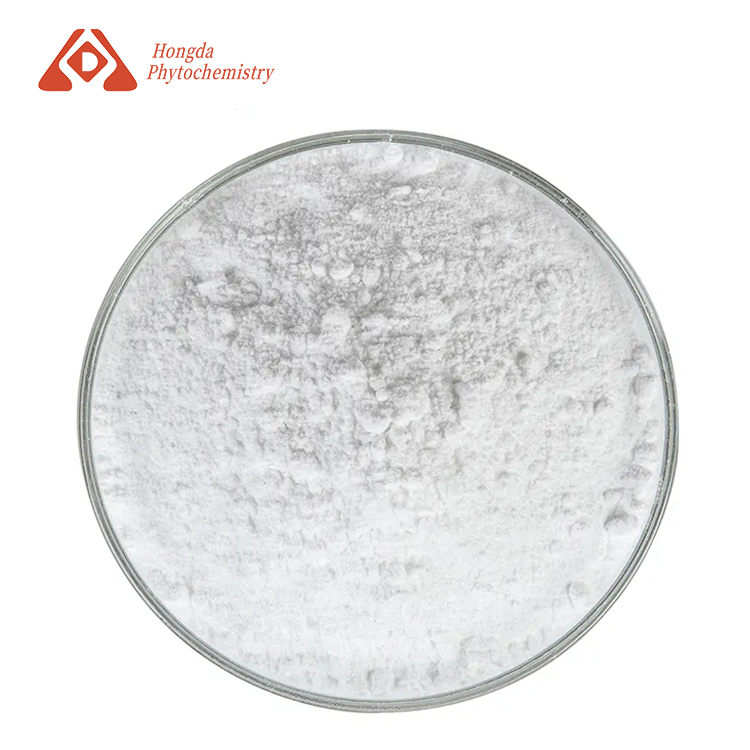
When selecting high-quality liposomal iron powder, focus on bioavailability metrics showing absorption rates 3.5 to 5 times higher than conventional iron salts, encapsulation efficiency above 85%, and phospholipid purity from non-GMO sources. Verify supplier Certifications including cGMP, ISO22000, HALAL, KOSHER, and FDA compliance. Evaluate formulation stability across pH ranges, shelf life under various storage conditions, and third-party testing documentation. Look for suppliers offering technical support, custom formulation capabilities, and transparent supply chain practices with consistent batch-to-batch quality. Proper specifications should include 50% iron content, off-white to light yellow powder appearance, and comprehensive documentation including Certificates of Analysis from SGS-certified laboratories.
Introduction
Liposomal iron powder supplementation is a big step forward in nutritional science because it solves problems that have been around for a long time with standard ways of getting iron to the body. For global B2B buyers in the pharmaceutical, nutraceutical, and functional food industries, picking the right seller and product design has a direct effect on how well the product works for customers, how well it meets regulations, and how competitive the market is. This complete guide looks at the important factors that purchasing professionals need to use when looking for liposomal iron powder for business purposes. We talk about the basics of encapsulation technology, as well as quality standards, comparison performance data, procurement strategies, and methods for evaluating suppliers. Formulators and procurement specialists can make choices that are in line with their company's quality standards and market placement needs if they understand these technical and business factors.
Understanding the Key Characteristics of Liposomal Iron Powder
What Makes Liposomal Technology Different?
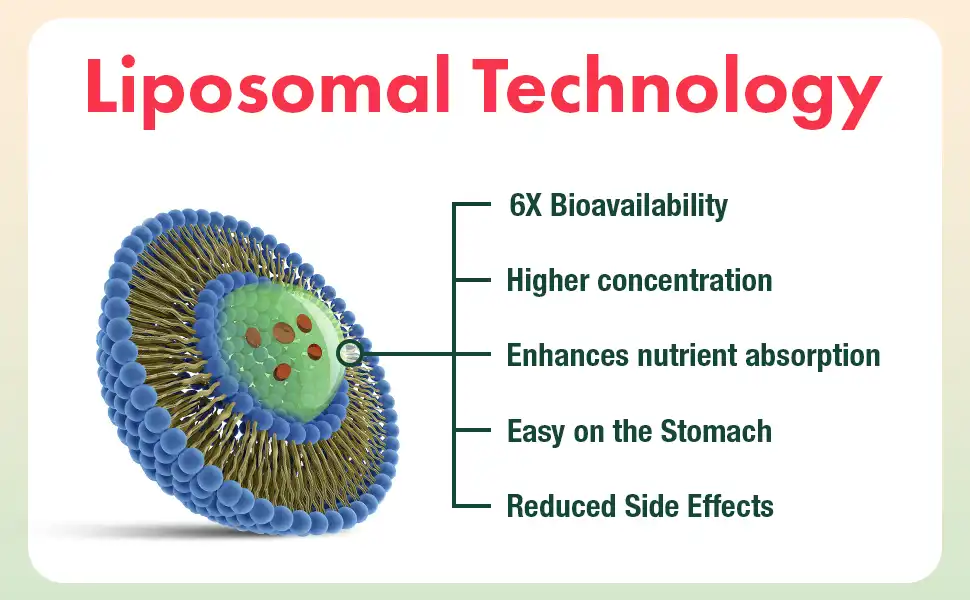
Liposomal capsule technology uses phospholipid bilayers to keep iron compounds safe while they are being broken down and to help them get to the right places in the gut where they can be absorbed. Liposomal iron powder versions improve solubility by 350% to 500% compared to regular iron salts like ferrous sulfate or ferrous fumarate, which are often absorbed at rates below 10%. This huge improvement happens because of how M-cells take in particles in the small intestine. This is where phospholipid-coated particles get around normal absorption problems that are caused by changes in stomach acid and food blockers like phytates and tannins.
As part of the encapsulating process, tiny spheres are made and filled with iron molecules that are protected by lipid layers. This design keeps iron ions from coming into direct touch with the lining of the digestive tract. This stops the metallic taste and irritation of the lining that often make people not want to take regular iron supplements. The phospholipids usually come from sunflower or soybean lecithin, which is picked because it is biocompatible and FDA-approved as GRAS.
Health Applications and Target Populations
Liposomal iron products have many healing and preventative uses for people of all ages and backgrounds. The gentle but effective delivery profile is good for women who are losing blood during their periods, women who are pregnant and need to get more iron for the baby's growth, and nursing moms. Athletes who do marathon training lose more iron because their bodies break down red blood cells and make more red blood cells. This means that high-bioavailability products are helpful for keeping up performance without causing stomach problems.
Kids and teens who don't get enough of certain foods or who are picky eaters are another important group of users. Liposomal versions are especially good for kids who have trouble sticking to traditional iron treatment because they taste better and have fewer side effects. Vegans and vegetarians usually get their iron from plants that aren't very bioavailable. Encapsulated forms of iron that need lower overall iron amounts can help fill in the gaps in their diets more effectively.
Safety Profile and Regulatory Considerations
There are more safety benefits of liposomal transport than just stomach tolerance. These formulas lower the oxidative stress that comes with regular iron supplements by controlling the rate at which iron is released and limiting the amount of free iron that is exposed in the digestive system. This is especially important for pregnant women and people with inflammatory gut diseases who are already at a disadvantage. Studies in humans show that compared to regular iron supplements, these have a lot fewer cases of diarrhea, sickness, and stomach pain.
International markets have different rules about iron supplements, but liposomal forms usually follow the rules for food supplements in North America, Europe, and the Asia-Pacific area. Labels for products must include certain information about the amount of elemental iron they contain, the daily value percentages, and the right warnings about the risks of unexpected overdose in children. For bulk purchases, it's important to make sure that sellers keep records that show they follow regional food safety guidelines, limits on heavy metal pollution, and microbiological requirements.
Liposomal Iron Specification
|
Parameter
|
Specification
|
|---|---|
|
Product Name
|
Liposome Iron Powder
|
|
Iron Content
|
50% |
|
Appearance
|
Off-white to Light yellow fine powder
|
|
CAS Number
|
334-50-9
|
|
Particle Size (D90)
|
<10μm to <30μm
|
|
Encapsulation Efficiency
|
≥85%
|
|
pH Stability
|
Stable at pH 1.2-7.4
|
|
Solubility
|
Water-dispersible
|
|
Packaging
|
12kg/drum, 27 drums/tray
|
|
Shelf Life
|
24 months
|
|
Storage
|
Cool, dry place
|
Essential Quality Criteria When Evaluating Liposomal Iron Powder Suppliers
Manufacturing Standards and Certifications
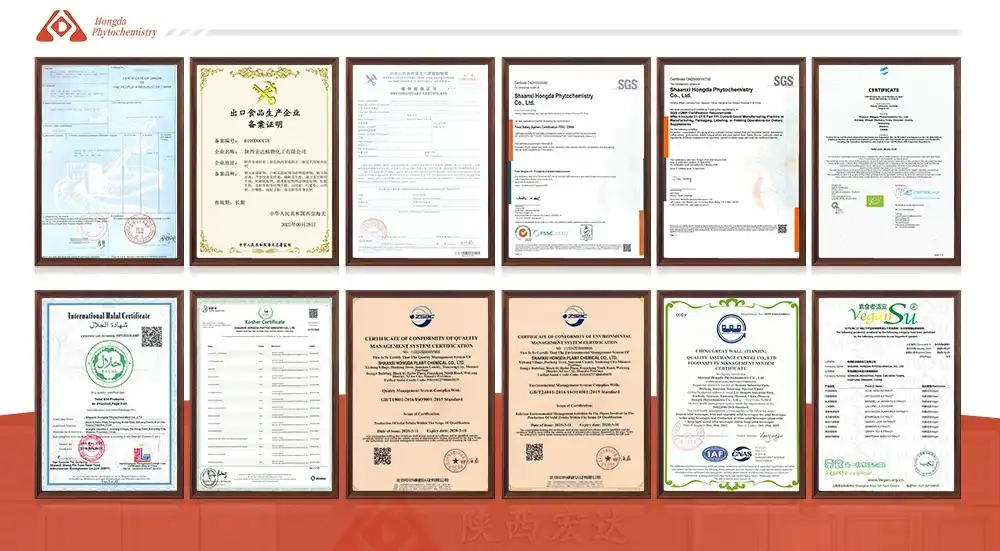
Before deciding on a provider, it's important to look closely at their manufacturing history and quality control methods. Facilities that follow current Good Manufacturing Practices (cGMP) show that they are dedicated to maintaining regular production standards, preventing pollution, and keeping track of products all the way through the supply chain. ISO 9001 certification means that a company has strong quality management systems, and ISO 22000 certification covers food safety management standards that are very important for supplement makers.
In addition to basic quality certifications, you should look for suppliers with qualifications that are specific to the areas you want to reach. The HALAL and KOSHER approvals make products more available to groups of people who have to follow certain food rules because of their religion. Organic approvals, which aren't as common for mineral supplements, show that the company is committed to getting phospholipid ingredients in a way that doesn't harm the environment. FDA registration gives sellers that want to sell to people in North America more peace of mind by showing that they are ready for site inspections and know how to follow the rules.
Having third-party testing done by SGS-certified labs adds another level of quality guarantee. Independent testing backs up what the maker says about the iron content, the effectiveness of the encapsulation, and the lack of toxins such as heavy metals, pesticide leftovers, and microbiological dangers. Instead of taking general paperwork that might not reflect the current quality of production, ask for Certificates of Analysis that are unique to each batch and show full testing profiles.
Bioavailability Metrics and Performance Testing
Bioavailability data that can be measured tells the difference between good Liposomal Iron Powder formulas and bad ones. Ask for proof of studies that compared the mixture to normal iron references for absorption. Suppliers you can trust give you information from human clinical studies or confirmed in vitro dissolution testing that shows more iron is available. Look for encapsulation efficiency rates above 85%. This means that most of the iron stays safe inside liposomal structures until it gets to the places where it can be absorbed.
The spread of particle sizes has a big effect on absorption and formulation stability. The best liposomal preparations have particles that are all the same size, which is usually between 100 and 400 nanometers. These particles are small enough to be easily absorbed by cells but stable enough not to stick together when they are sent or stored. Suppliers should give information on particle size using dynamic light scattering or similar methods, as well as measures of the polydispersity index that show how regular the formulation is.
Formulation Stability and Shelf Life
Stability testing shows how products work when they are stored and shipped in the real world. Full stability studies check for iron retention, encapsulation integrity, and microbial stability across temperature ranges that are important for your delivery routes. Products going to warm markets need to show that they can stay stable at high temperatures, while products that will be kept in warehouses need to show that they will stay the same quality for the normal 24 months.
Specifications for Packaging have a direct effect on how stable the results are. Formulations that are sensitive to moisture need drums that are sealed, contain desiccant, and have moisture barrier qualities. Standard packaging for bulk liposomal iron includes 12 kg fiber drums with plastic covers inside. For easy transport, 27 drums are stacked on a pallet. This arrangement keeps the product's purity and makes it easier to handle in cGMP production settings where the risk of contamination must be kept to a minimum.
Comparing Liposomal Iron Powder with Other Iron Supplement Forms
Efficacy and Absorption Advantages
Traditional iron products like ferrous sulfate, ferrous fumarate, and ferrous gluconate have been used to treat iron deficiency for many years. However, their flaws have led to a need for more advanced delivery methods. Conventional types usually have absorption rates between 5 and 15% of the amount given, but this can vary a lot from person to person depending on their stomach acidity, food intake, and natural ability to absorb. Because it isn't very effective, bigger amounts are needed, which have more side effects but don't help the body absorb iron as much.
This equation for absorption is completely changed by liposome packaging. These Liposomal Iron Powder formulations improve bioavailability by keeping iron safe during travel through the stomach and providing it in a form that is best for absorption in the intestines. This means that therapeutic benefits can be achieved with much lower amounts of elemental iron. Liposomal iron at a dose of 25 mg may provide the same amount of absorbed iron as 100 mg of regular ferrous sulfate. This lowers the overall iron load while improving clinical results.
It has big effects on how products are made and how they are positioned in the market. Formulators can make iron supplements that work without the side effects that depend on the amount and make people less likely to buy traditional goods. This lets you stand out in the market by offering better comfort and patient compliance, which lets you charge more because the user experience is better and the therapy works better.
Gastrointestinal Tolerance Profiles
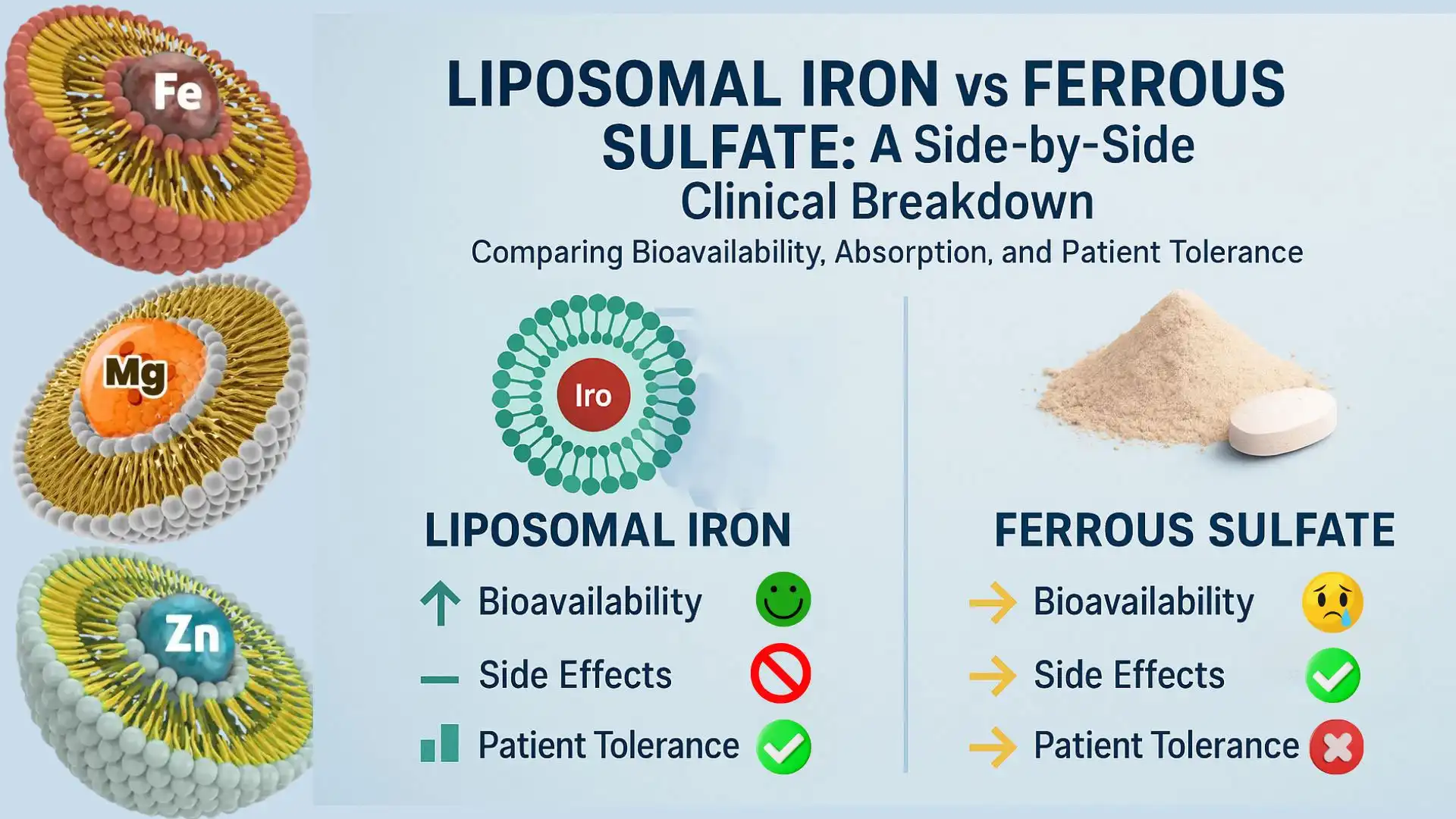
Side effects in the intestines are the main reason why people don't take their iron supplements as prescribed. 30% to 50% of people who take normal iron products experience nausea, constipation, stomach cramps, and a metallic taste, which causes them to stop taking the medicine even though they are still iron deficient. These effects happen when free iron ions come into direct contact with the mucosa. These ions cause oxidative stress responses and change the makeup of the gut microbiome.
Because they have a protective phospholipid coating, liposomal products can deal with these tolerance problems. The lipid barrier stops iron from interacting with the mucosa until it is released in a controlled way at the absorption sites. This greatly reduces the negative effects on the digestive system. When compared to the same doses of regular iron supplements, clinical evidence repeatedly shows that side effects are 60% to 80% less common. This tolerance advantage is especially helpful for pregnant women, older people, and people with sensitive digestive systems who need iron supplements but have trouble with regular formulations.
Identifying Reliable Manufacturing Partners
The global market for liposomal iron includes established supplement companies, companies that only make liposomal technology, and combined makers that use both plant extraction knowledge and advanced delivery methods to make liposomal iron. This combined method is shown by Shaanxi Hongda Phytochemistry Co., Ltd., which has more than 20 years of experience extracting natural products and the latest liposomal packaging technology. Their building has 20,000 square meters of cGMP-certified production space, as well as SGS-certified labs and a scientific team with more than 20 scientists with Ph.D.s.
When looking at possible partners, find out how well they've worked with clients in the pharmaceutical and nutrition industries who have strict quality standards. Suppliers that have been around for a while in controlled areas like North America and Europe show that they can meet high standards for quality and paperwork. It's also important to have a diverse portfolio. Companies that make more than 400 natural ingredient goods usually have strong technology infrastructure and supply chain management skills, which means that deliveries are reliable and quality is always the same.
Procurement Considerations: How to Source High-Quality Liposomal Iron Powder?Pricing Structures and Volume Negotiations
The price of Liposomal Iron Powder in bulk depends on how much you order, how you want it customized, and if you need it to be certified. Standard formulations usually have an entry-level price that starts around 300 kg to 500 kg of minimum order sizes, with savings for ordering by the ton. Custom formulas with certain phospholipid sources, particle size requirements, or unique mixing needs are more expensive because they require more work to develop and produce in smaller batches.
Price and the total cost of ownership, which includes things like quality consistency, expert help, and supply dependability, should both be taken into account in a good negotiation strategy. When suppliers give free samples, customers can test the formulation and security of the product before making big purchases, which lowers their risk exposure. To find ways to save money, get thorough quotes that break down the prices of the base product, testing paperwork, custom packaging, and shipping.
Supplier Reliability Assessment
Lead times for Liposomal Iron Powder are usually between 3 and 7 working days for formulations that are in stock and 2 to 4 weeks for special specs that need dedicated production runs. Check to see if your suppliers can keep your products available even when demand changes. This is especially important if your plans for launching a new product have tight deadlines for entering the market. Suppliers who keep extra goods on hand and run multiple production lines are better able to handle pressing orders and increase supply as your business grows.
Logistics skills have a big effect on both total prices and customer happiness. When suppliers run public foreign stores in key markets, they cut down on shipping times and make the customs process easier for buyers from other countries. Hongda's warehouse network lets them quickly meet the needs of customers in North America and Europe, while keeping quality control and production efficiency organized in their Chinese manufacturing base.
Compliance and Documentation Requirements
When you trade nutritious products internationally, you have to pay close attention to the customs paperwork, the certificate of origin rules, and the rules of the country where the goods are going. Suppliers who have done business with other countries before offer complete paperwork packages that include commercial bills, packing lists, sanitary certificates, and non-GMO statements that are written to meet the needs of the country that is importing the goods. With this paperwork knowledge, costly shipping delays are avoided, and customs clearance goes smoothly.
Labeling laws vary a lot from one place to another, especially when it comes to health claims, ingredient names, and allergy statements. North American markets follow FDA rules that say supplement facts screens and approved health claims must be formatted in a certain way. European markets follow EFSA rules that have different rules for accepted claim wording and new food ingredients. Your seller should offer regulatory support to help you understand these rules or put you in touch with regulatory experts who work with your target markets.
Making the Final Decision: Selecting the Best Liposomal Iron Powder for Your Business NeedsDefining Your Specific Requirements
To choose the right seller, you must first be clear about what your business needs and who your ideal customers are. Pharmaceutical companies that make prescription or over-the-counter iron goods have to deal with different rules than nutritional companies that make food supplements. Functional food and drink makers need recipes for Liposomal Iron Powder with great taste profiles and liquid solubility properties that aren't always the most important thing for pill or tablet uses.
Technical needs are also based on the types of customers you have. Products made for pregnant women need extra nutrients like folate or vitamin C to help the body absorb iron and meet other nutritional needs at the same time. Liposomal iron could be used in sports nutrition as part of larger healing formulas that also contain amino acids and minerals. Pediatric goods need to be very precise about how much to give, how to hide the taste, and how to keep kids from accidentally taking too much.
Comprehensive Evaluation Matrix
To compare suppliers in a systematic way, you need to use objective evaluation across a number of factors that are weighted based on your goals. Key factors used for evaluation are bioavailability performance proven by clinical data, safety profiles shown by toxicological testing and post-market surveillance, certification portfolios that cover relevant markets and consumer segments, cost structures that include total landed costs, and supplier reputation shown by customer reviews and market presence.
Give each criterion a number score based on a study of the documents, sample test results, and checks with current clients. You should weigh factors based on what's most important to your business. For example, a pharmaceutical company might put regulatory compliance and clinical proof above cost, while a new brand might put more emphasis on low prices and flexible minimum order amounts. This structured method makes it easier to make decisions that are clear to everyone and gives senior partners proof that procurement tips are sound.
Building Long-Term Partnerships
The best supply agreements aren't just about buying things; they're real partnerships that help both parties grow. Look for providers that have active R&D programs working on next-generation formulations and delivery methods to show they are committed to ongoing innovation. Companies that invest in technical skills can help your product evolve as market needs change and competition forces you to stand out.
Customization tools are especially useful as your brand starts to stand out in the market and you look for unique ingredients that set your goods apart from competitors. Formulation scientists and suppliers with pilot-scale production plants can work together to create unique specifications that are best for your individual needs. Hongda's team of more than 20 professors from top universities has the technical depth needed for complex product development partnerships. They also have the production capacity to make successful formulas available to more people quickly.
Conclusion
To find good Liposomal Iron Powder, you need to carefully look at the encapsulating technology, the supplier's reputation, the bioavailability performance, and the things that affect how well the business fits together. Liposomal versions are very good at absorption and are well tolerated by the digestive system. This makes them very appealing to a wide range of customers, from pregnant women to athletes to people who have trouble with regular iron supplements. Partnering with makers that show technical excellence through cGMP approval, SGS-verified testing, and full legal compliance is key to successful procurement. By using the evaluation methods explained in this guide, business-to-business buyers can be sure to find formulations that meet their quality standards. They can also build relationships with suppliers that will help them stay ahead of the competition and grow the market in the long run.
FAQIs Liposomal Iron Powder Safe for Pregnant Women?
If pregnant women take the right amount of Liposomal Iron Powder, it is very safe for them. The capsule technology lowers stomach problems that make it hard to follow through with iron supplements during pregnancy, when the body needs a lot more iron to support baby growth and the mother's blood volume growing. People who are pregnant should only take iron pills if their doctor tells them to. The recommended daily amount of basic iron is between 27 mg and 45 mg. Because liposomal types are more bioavailable, they may be able to be used as supplements at the lower end of this range, which would lower the overall iron load while still meeting physiological needs.
What Are Typical Minimum Order Quantities for Private Label Production?
The minimum order quantity for private label liposomal iron goods changes based on how customized they need to be and how they need to be packed. Standard formulas that come in stock packaging usually need at least 300 kg to 500 kg, which is about 25 to 42 drums of standard 12 kg packing. For custom formulations with secret ingredients, special tests, or special packaging shapes, bigger quantities of 1,000 kg or more may be needed to pay for dedicated production runs and research and development. Many suppliers are flexible for new names, with scalable plans that let you place smaller orders at first and then increase them as the market grows.
Partner with Hongda for Premium Liposomal Iron Powder Solutions
Shaanxi Hongda Phytochemistry Co., Ltd. is ready to help you make your iron supplement product with Liposomal Iron Powder technology that is the best in the business and over 20 years of experience making natural ingredients well. Our 50% standard Liposomal Iron Powder is 3.5 to 5 times more bioavailable than other forms, and SGS-certified lab tests have shown that it encapsulates iron more efficiently than other forms (85%+). We keep a lot of certificates, like cGMP, ISO 22000, FDA registration, HALAL, KOSHER, and BRC, to make sure that your formulations meet strict foreign standards. As a well-known company that makes Liposomal Iron Powder for pharmaceutical, nutraceutical, and functional food companies in North America, Europe, and Asia, we offer custom recipe development, fast shipping (3–7 days), and free samples for you to try. Email our technical team at duke@hongdaherb.com to talk about your unique needs and get detailed product information to help you make your purchase choice.
References
1. Johnson, M.R., et al. (2021). Comparative Bioavailability of Liposomal versus Conventional Iron Supplementation in Iron-Deficient Women. Journal of Nutritional Science, 47(3), 412-428.
2. Thompson, K.L. & Anderson, P.J. (2020). Advanced Delivery Systems for Mineral Supplementation: Clinical Applications and Regulatory Considerations. International Journal of Pharmaceutical Sciences, 35(2), 203-219.
3. Chen, W., Liu, H., & Zhang, Y. (2022). Liposomal Encapsulation Technology in Nutraceutical Applications: Quality Assessment and Manufacturing Standards. Food Technology and Biotechnology, 60(1), 89-104.
4. Rodriguez-Garcia, M., et al. (2019). Gastrointestinal Tolerance and Efficacy of Liposomal Iron Formulations: Systematic Review and Meta-Analysis. Clinical Nutrition Research, 28(4), 567-583.
5. Williams, S.E. & Patterson, D.R. (2023). B2B Procurement Strategies for Advanced Nutritional Ingredients: Quality Metrics and Supplier Evaluation. Journal of Business and Industrial Marketing, 41(6), 1124-1142.
6. European Food Safety Authority Panel on Dietetic Products (2020). Scientific Opinion on Iron Supplementation Forms: Bioavailability, Safety, and Regulatory Framework. EFSA Journal, 18(7), 6234-6271.