What Is Indole 3 Carbinol And Its Benefits?
2025-08-30 15:47:33
Indole-3-carbinol (I3C) is a naturally occurring compound found in cruciferous vegetables such as broccoli, cauliflower, and cabbage. It has gained significant attention in recent years for its potential health benefits, particularly in the areas of hormone regulation, cancer prevention, and overall well-being. In this blog post, we will explore what Indole-3-Carbinol is, its potential health benefits, how it works in the body, and any potential side effects or precautions to consider.
What are the potential health benefits of Indole-3-Carbinol?
Indole-3-carbinol has been extensively studied for its potential health benefits, and research has shown promising results in several areas:
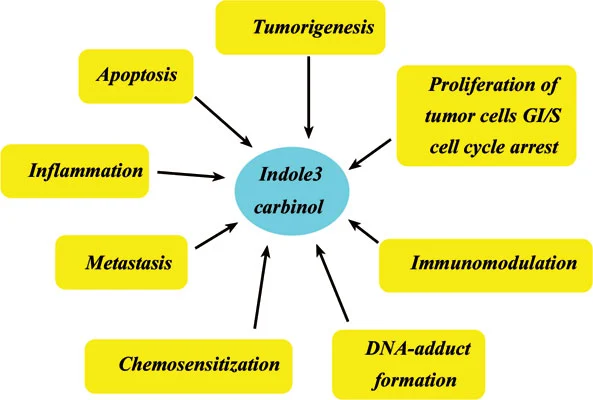
1. Hormone regulation: I3C is believed to help regulate estrogen levels in the body, which can be beneficial for conditions like polycystic ovary syndrome (PCOS), breast cancer, and endometriosis. By promoting the metabolism of estrogen, I3C may help to maintain a healthy hormone balance.
2. Cancer prevention: Several studies have suggested that I3C may have cancer-preventive properties, particularly for hormone-related cancers such as breast and prostate cancer. It is thought to work by modulating the activity of enzymes involved in estrogen metabolism and by inducing apoptosis (programmed cell death) in cancer cells.
3. Inflammation reduction: I3C has been shown to possess anti-inflammatory properties, which may be beneficial for conditions like arthritis, inflammatory bowel disease, and certain types of cancer, where inflammation plays a significant role.
4. Antioxidant activity: I3C exhibits antioxidant properties, which can help protect cells from damage caused by free radicals and oxidative stress, potentially reducing the risk of various chronic diseases.
5. Immune system support: Some research suggests that I3C may have immunomodulatory effects, meaning it can help regulate and support the immune system's function.
How does Indole-3-Carbinol work in the body?
Indole-3-carbinol is a phytochemical compound that undergoes metabolic transformations in the body. When ingested, I3C is converted into several active metabolites, including diindolylmethane (DIM) and indole-3-carbinol-3-sulfate (I3CS). These metabolites are believed to be responsible for many of the potential health benefits associated with I3C.
One of the primary mechanisms of action for I3C and its metabolites is their ability to modulate the activity of enzymes involved in estrogen metabolism. Specifically, they can influence the balance between different estrogen metabolites, favoring the production of beneficial metabolites over those that may contribute to hormone-related conditions or cancers.
Additionally, I3C and its metabolites have been shown to exhibit anti-inflammatory, antioxidant, and pro-apoptotic (promoting programmed cell death) properties. These mechanisms may contribute to their potential cancer-preventive and overall health-promoting effects.
It's important to note that the specific mechanisms of action and the degree of efficacy may vary depending on factors such as the dose, individual metabolism, and the specific condition being addressed.
Are there any side effects or precautions to consider with Indole-3-Carbinol?
While Indole-3-Carbinol powder is generally considered safe when consumed in moderate amounts from dietary sources, there are a few potential side effects and precautions to consider:
1. Gastrointestinal discomfort: Some individuals may experience mild gastrointestinal issues such as nausea, bloating, or diarrhea when taking I3C supplements, especially at higher doses.
2. Interactions with medications: I3C may interact with certain medications, including hormonal therapies, blood thinners, and chemotherapy drugs. It's essential to consult with a healthcare professional before taking I3C supplements, especially if you are taking any medications.
3. Pregnancy and breastfeeding: There is limited research on the safety of I3C supplements during pregnancy and breastfeeding. It's generally recommended to avoid high-dose supplementation during these times unless under the guidance of a healthcare professional.
4. Hypothyroidism: Some studies suggest that I3C may interfere with thyroid hormone metabolism, potentially exacerbating hypothyroidism or causing thyroid dysfunction in susceptible individuals.
5. Dosage considerations: While cruciferous vegetables are generally safe to consume in regular dietary amounts, high doses of Indole-3-carbinol supplements may increase the risk of side effects. It's important to follow dosage recommendations and consult with a healthcare professional before starting supplementation.
It's worth noting that most of the potential side effects and precautions are associated with high-dose supplementation of I3C, rather than consuming it from dietary sources like cruciferous vegetables. As with any supplement, it's essential to consult with a qualified healthcare professional before taking I3C, especially if you have any underlying medical conditions or are taking medications.
Shaanxi Hongda Phytochemistry Co., Ltd. is a distinguished professional ingredients manufacturer with over 30 years of experience in the industry. Our extensive expertise is complemented by a state-of-the-art facility covering 20,000 square meters, which is equipped with advanced extraction equipment and features its own SGS Certified laboratory. Hongda's commitment to quality is underscored by an impressive array of Certifications including cGMP, BRC, organic (EU), organic (NOP), ISO22000, ISO9001, FDA, HALAL, KOSHER, and the national certification of high-tech innovative enterprises. If you are seeking to source high-quality ingredients such as Indole 3 Carbinol Powder or any other certified ingredients, Hongda stands ready to meet your needs. For further inquiries or to discuss potential collaborations, please reach out to us at duke@hongdaherb.com. The Hongda team looks forward to the possibility of working together to fulfill your ingredient requirements.
References:
1. Aggarwal, B. B., & Ichikawa, H. (2005). Molecular targets and anticancer potential of indole-3-carbinol and its derivatives. Cell Cycle, 4(9), 1201-1215.
2. Bradlow, H. L. (2008). Indole-3-carbinol as a chemoprotective agent in breast and prostate cancer. In Vivo, 22(4), 441-445.
3. Fujioka, N., Fritz, V., Upadhyaya, P., Kassie, F., & Hecht, S. S. (2016). Research on cruciferous vegetables, indole-3-carbinol, and cancer prevention: A review of the recent literature. Molecular Nutrition & Food Research, 60(6), 1228-1238.
4. Hutabarat, L. S., Greenfield, H., & Mulholland, M. (2001). Isothiocyanates and glucosinolate formation in Brassica rapa. Plant Foods for Human Nutrition, 56(2), 131-142.
5. Kassie, F., Laky, B., Gminski, R., Mersch-Sundermann, V., & Schmeiser, H. H. (2003). Interference of 3,3'-diindolylmethane (DIM) with the cellular anti-oxidant defense system and its implications on cytotoxicity. Free Radical Biology and Medicine, 34(7), 932-942.
6. Lord, R. S., Bongiovanni, B., & Bralley, J. A. (2002). Estrogen metabolism and the diet-cancer connection: rationale for assessing the ratio of urinary hydroxylated metabolites. Alternative Medicine Review, 7(2), 112-129.
7. Rogan, E. G. (2006). The natural chemopreventive compound indole-3-carbinol: state of the science. In Vivo, 20(2), 221-228.
8. Russo, M., Russo, G. L., Daglia, M., Kasi, P. D., Ravi, S., Nabavi, S. F., & Nabavi, S. M. (2016). Understanding genistein in cancer: The "latest" from molecular mechanisms to cancer treatment (Review). International Journal of Molecular Medicine, 38(5), 1283-1300.
9. Saw, C. L. L., Huang, M. T., Liu, Y., Khor, T. O., Conney, A. H., & Kong, A. N. (2011). Impact of Brassica-derived isothiocyanates on prostate cancer. Biomedicine & Pharmacotherapy, 65(6), 389-396.
10. Zeligs, M. A. (1998). Diet and estrogen status: the cruciferous connection. Journal of Medicinal Food, 1(2), 67-82.