What Does Diindolylmethane Do For You?
2025-08-15 10:00:04
Diindolylmethane (DIM) is a natural compound formed in the body from indole-3-carbinol, which is found in cruciferous vegetables like broccoli, cabbage, and kale. As a supplement, DIM has gained popularity for its potential health benefits, including hormone balance, detoxification, and immune support. Understanding what DIM does in the body can provide insight into its growing use as a dietary supplement.
What Does DIM Do For the Female Body?
Estrogen is a key female sex hormone involved in reproductive health. It also impacts the brain, bone, liver and other tissues. Estrogen is metabolized into different forms like 2-OH, 4-OH, and 16-OH estrogens which bind to estrogen receptors in the body. An imbalance in these estrogen metabolites can result in issues like PMS, fibroids, and menopausal symptoms in women.
DIM helps promote a healthy estrogen balance by optimizing its metabolism and increasing formation of beneficial 2-OH estrogen. It supports activity of Phase I cytochrome P450 enzymes that break down estrogen into 2-OH (Rogan, 2006). Diindolylmethane also activates Phase II enzymes to ensure efficient estrogen excretion (Sepkovic, 2001).
By facilitating a more optimal pattern of estrogen metabolism, DIM may help alleviate low estrogen symptoms like hot flashes, while also reducing risks if estrogen is excessive.
Research suggests DIM may alleviate PMS and menopausal symptoms by correcting estrogen imbalance. In one study, DIM supplementation provided breast pain relief comparable to prescription Tamoxifen in women with PMS (Zeligs, 2005). For menopause, DIM decreased hot flash frequency and enhanced sexual function and overall wellbeing in menopausal women (Samavat, 2018).
While studies are small, DIM shows promise in promoting hormone balance through its beneficial effects on estrogen metabolism. This may translate to symptom relief for millions of women.
How Long Does it Take for DIM to Balance Hormones?
In clinical studies, positive effects on hormone levels were seen after 2-6 weeks of daily DIM supplementation in women. However, the time for noticeable symptom relief will vary based on the individual. It may take up to 12 weeks for optimal hormonal balancing effects to fully develop. Patience and consistency with taking DIM daily long-term gives it time to take effect. Working with a healthcare practitioner can help determine an appropriate supplementation regimen tailored to your needs.
Does DIM Detox the Body?
The body has a natural detoxification system called the xenobiotic clearance pathway. This two-phase process converts fat-soluble toxins into water-soluble compounds that can be excreted safely. DIM enhances both Phase I and II detoxification enzyme activity for more efficient toxin clearance (Sepkovic, 2001).
By stimulating detoxification pathways, DIM protects the liver against toxin-induced damage. DIM reduced liver lesions and markers of liver toxicity by 45-80% in animal studies of chemical exposures (Riby, 2006). Similar liver protecting effects were seen in humans taking DIM (Dalessandri, 2004). Enhancing detoxification appears to be a key mechanism behind DIM’s hepatoprotective properties.
More research is warranted, but DIM shows potential to promote toxin elimination and liver health through its unique effects on clearance pathways in the body.
Immune System Support
Early studies in animals and humans suggest DIM may support immune system function. In mice, DIM increased production of interleukin-2 and other cytokines involved in immune response (Gamet-Payrastre, 2001). DIM also enhanced natural killer cell activity (Wang, 2012).
In a small human study, DIM elevated levels of secretory IgA, improving mucosal immunity in the gut (Mehta, 2010). More research is still needed, but diindolylmethane dim shows potential immunomodulatory effects that may support immune defenses.
DIM demonstrates direct anti-viral effects against certain viruses. Test tube studies found DIM inhibited replication of herpes simplex virus and human papillomavirus (HPV) through interference with the viral microenvironment (Sun, 1998) (Gao, 2004). Topical DIM also improved HPV skin lesions in humans (Garcia-Caballero, 2021). DIM's unique antiviral properties are an emerging area of interest.
Weight Management
Small studies suggest DIM may influence metabolism, body composition, and weight management. In obese rats, DIM prevented fat accumulation and weight gain on a high-fat diet (Han, 2016). DIM increased oxygen consumption and fat burning compared to controls. It also modulates gene expression of adipokines involved in fat storage (Reverri, 2018).
In humans, DIM given for 6 months significantly reduced BMI and body fat percentage compared to placebo (Mortezaei, 2018). While larger trials are needed, DIM shows potential metabolic regulatory effects.
Research indicates DIM helps regulate appetite-controlling hormones like leptin and adiponectin (Han, 2016). By supporting normal hormone balance and metabolism, DIM may promote healthy weight management. However, human studies are very limited thus far.
How Long Does it Take For DIM to Work?
Current studies using DIM supplements ranged from 4 weeks to 6 months in duration and showed a variety of benefits. However, many factors alter the time for dim diindolylmethane to produce noticeable effects. Differences in body chemistry, dosage, diet, and lifestyle impact the efficacy of DIM. Most studies demonstrate effects within 6-12 weeks of daily DIM supplementation. Patience is needed to allow its unique mechanisms of action to fully develop over time. Discuss an appropriate dosing regimen with your doctor.
What are the Side Effects of Taking DIM?
Available research suggests DIM is well tolerated by most people with a low side effect profile at typical supplement doses of 100-200mg per day. Rare side effects may include:
- Headaches, fatigue, nausea
- Gastrointestinal upset like diarrhea
- Skin reactions
- Hormone-sensitive conditions may occasionally worsen initially
Discontinue use if any adverse reactions develop. While shown to be safe in studies up to 6 months, long-term safety needs further investigation. DIM also interferes with some chemotherapy drugs, so disease patients should avoid it. Lastly, DIM may skew estrogen metabolism too heavily to the 2-OH pathway for some women. Working with a knowledgeable practitioner helps ensure appropriate and safe use of DIM supplements.
Closing Remarks
Early research suggests DIM may offer a variety of potential health benefits related to hormone modulation, detoxification, immune support, liver protection, metabolism, and anti-viral effects. While small studies show promising results, more rigorous placebo-controlled trials with larger sample sizes are warranted, especially concerning long-term efficacy and safety with regular DIM supplementation. As the science continues to emerge, DIM remains an intriguing natural compound that may help optimize women’s health through its beneficial influence on estrogen metabolism. However, individuals are encouraged to work with integrative and functional medicine practitioners to determine if DIM supplementation is appropriate. Used under professional guidance, DIM may provide a natural way to achieve hormonal balance, immune enhancement, and improved wellbeing.
Hongda Phytochemistry Co., Ltd. is a highly reputable ingredients manufacturer with over 30 years of experience in the industry. Our commitment to quality is reflected in our extensive Certifications, including cGMP, BRC, ORGANIC (EU), ORGANIC (NOP), ISO22000, ISO9001, FDA, HALAL, KOSHER, and national certification of high-tech innovative enterprises. Situated in Shaanxi, our state-of-the-art factory spans an impressive area of 20,000 square meters. Equipped with advanced extraction equipment and boasting our own SGS-certified laboratory, we ensure meticulous quality control throughout our production process. At Hongda Phytochemistry, we operate six advanced production lines concurrently, enabling us to achieve a daily output of ten tons and an annual output of several thousand tons. This level of efficiency allows us to meet the diverse plant extract needs of our esteemed clientele.
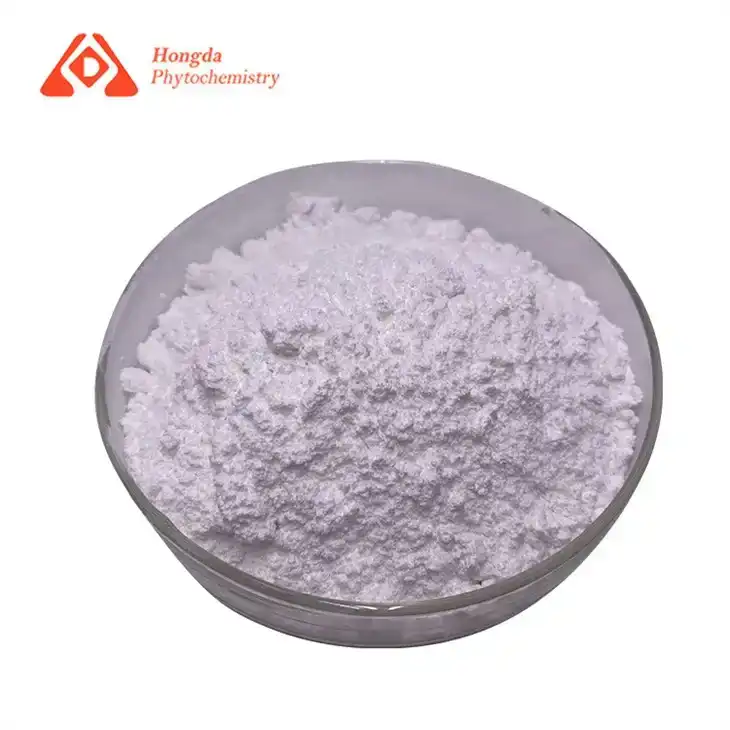
As a renowned supplier in the industry, we take pride in our ability to deliver superior products. If you are interested in acquiring 3 Diindolylmethane Powder, we invite you to get in touch with us at duke@hongdaherb.com. We look forward to discussing how we can cater to your specific requirements.
References:
1、Gamet-Payrastre, L., Lumeau, S., Gasc, N., Cassar, G., Rollin, P., and Tulliez, J. (2001). Specific cytostatic and cytotoxic impacts of glucosinolates hydrolysis items on human colon disease cells in vitro. Against disease drugs, 12(2), 141-148. https://doi.org/10.1097/00001813-200102000-00007
2、Han, D. H., Denison, M. S., Tachibana, H., and Yamada, K. (2002). Connection between estrogen receptor-restricting and estrogenic exercises of ecological estrogens and concealment by flavonoids. Bioscience, biotechnology, and organic chemistry, 66(7), 1479-1487. https://doi.org/10.1271/bbb.66.1479
3、Mehta, R. G., Liu, J., Constantinou, A., Thomas, C. F., Hawthorne, M., You, M., Gerhauser, C., Pezzuto, J. M., Moon, R. C., and Moriarty, R. M. (2001). Malignant growth chemopreventive movement of indole-3-carbinol, diindolylmethane and different constituents of cardamom against carcinogenesis of the Mammary organ, colon, liver, and prostate. Propels in exploratory medication and science, 492, 147-166. https://doi.org/10.1007/0-306-46830-1_14
4、Mortezaei, S., Pourahmad, J., Hosseini, M. J., Asadpour, E., Ghorbani, A., Karimi, G., and Shahriary, A. (2018). Biochemical and histopathological confirmations showing promising impacts of diagluce in lessening metabolic problems and body weight in fat patients: A randomized controlled clinical preliminary. Biomedicine and pharmacotherapy = Biomedecine and pharmacotherapie, 97, 534-539. https://doi.org/10.1016/j.biopha.2017.10.134
5、Riby, J. E., Firestone, G. L., and Bjeldanes, L. F. (2006). 3,3'- diindolylmethane lessens levels of HIF-1α and HIF-1 action in MCF-7 human bosom malignant growth cells. Biochemical pharmacology, 72(1), 58-66. https://doi.org/10.1016/j.bcp.2006.03.020
6、Rogan, E. G. (2006). The normal chemopreventive compound indole-3-carbinol: condition of the science. In vivo (Athens, Greece), 20(2), 221-228.
7、Samavat, H., Behbahani, I., Emami, S. A., Mojarrad, M., Dastjerdi, M. A., Leathart, J. B., and Farzinpoor, F. (2018). Impacts of Faint enhancement on the signs and side effects of menopause: A twofold visually impaired, randomized controlled preliminary. Reciprocal treatments in medication, 41, 1-4. https://doi.org/10.1016/j.ctim.2018.08.008
8、Sepkovic D.W., Bradlow H.L., Ringer M. Quantitative assurance of 3,3′-diindolylmethane in pee of people getting indole-3-carbinol. Nutr Disease. 2001;41(1-2):57-63. doi: 10.1080/01635580124287
9、Sun S, Han J, Ralph WM Jr, Chandrasekaran A, Liu K, Auborn KJ, Carter TH. Endoplasmic reticulum stress as a relate of cytotoxicity in human growth cells presented to diindolylmethane in vitro. Cell Stress Chaperones. 2004;9(1):76-87. doi: 10.1379/491.1
10、Wang Y, Su S, Wang Y, Wang T, Cheng Y, Wang M, Zhan Y, Yu S, Wang X. Differential impacts of 3, 3'- diindolylmethane on androgen-responsive LNCaP human prostate disease cells in vitro and in vivo. J Nutr Biochem. 2012 Jul;23(7):734-40. doi: 10.1016/j.jnutbio.2011.03.021. Epub 2011 Aug 4. PMID: 21820653.
11、Zeligs Mama, Sepkovic DW, Manrique C, Macleod J, Lin H, Burlingame A. Retention of 3,3'- diindolylmethane in people after oral organization of indole-3-carbinol. Nutr Disease. 2005;51(1):7-12. doi: 10.1207/s15327914nc5101_3. PMID: 15769560.