How to Choose the Best Resveratrol Extract Supplier
2026-09-02 14:55:48
On paper, sourcing resveratrol seems easy, until you start comparing providers and discover how much variety there is between one "98% resveratrol" listing and another. Resveratrol, extracted from the root of Polygonum cuspidatum (also known as Japanese knotweed), remains the industry’s preferred source of high-purity resveratrol because this botanical naturally contains much higher concentrations than sources like grape skin. But purity % alone does not tell the whole picture – extraction process, certification, and manufacturing consistency all shape whether a certain batch of Polygonum Cuspidatum Extract Resveratrol will really function the way your recipe wants it to. With demand for resveratrol in anti-aging, cardiovascular, and cosmetic ingredients on the rise, more buyers than ever are questioning how to differentiate a really skilled producer from a reseller merely relabeling unreliable third-party stock. This tutorial tells you what to look for when picking a provider, so you can source with certainty, not guessing.
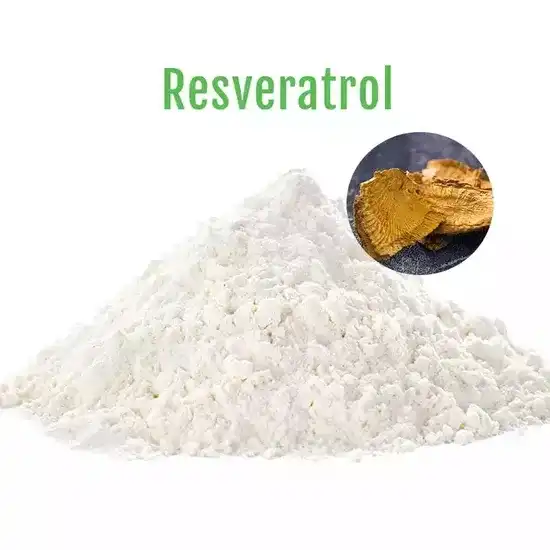
Why Resveratrol Sourcing Starts With Polygonum Cuspidatum Extract Resveratrol
Before comparing suppliers, it helps to understand why this particular botanical source has become the default starting point for nearly every serious resveratrol supply chain.
A Botanical Source With Proven Standardization
Polygonum Cuspidatum Extract Resveratrol has become a market leader because the levels of resveratrol found in the root of this plant are much higher than in grape skin, red wine, or peanuts, making it possible to extract this compound on a commercially viable, big scale, in standardized form. This natural abundance allows producers to attain pharmaceutical-grade purity (often 98% resveratrol) via relatively simple purifying techniques, avoiding the large raw material amounts that lower-yield botanical sources would need. This equates to more consistent pricing and longer-term supply for formulators that is more predictable than acquiring resveratrol from less concentrated plant sources. It also takes into account that a lot of the existing companies in the supplement, cosmetic, and functional beverage space choose to resort to Polygonum cuspidatum root as their beginning material rather than try with other botanical sources that just can’t match its yield efficiency at commercial scale.
Understanding Purity Grades and Specifications
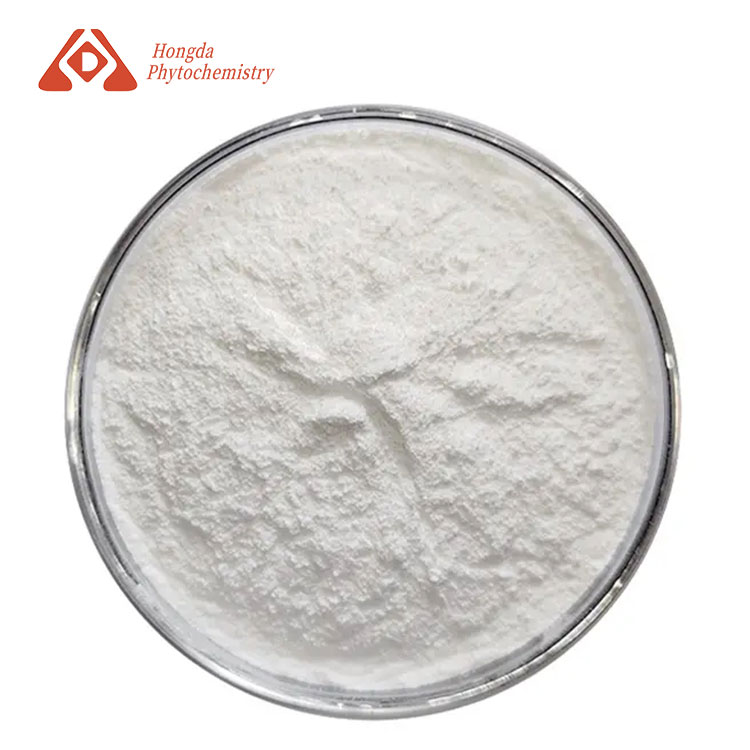
Not every Polygonum Cuspidatum Extract Resveratrol on the market is the same batch, and specification does important in terms of the performance and label claims of your completed product. Quality producers will supply pharmaceutical-grade material that is standardized to 98% resveratrol content. This is validated by HPLC testing, not by less accurate analytical techniques. Buyers should constantly ask suppliers how they test to check potency. Inconsistent or obsolete testing techniques might give deceptive specification claims that may not be evident until the product is already on the market.
Why Sourcing Origin Affects Final Product Quality
The quantity and purity of resveratrol obtainable by extraction are quantifiable functions of the location and method of cultivation and harvesting of the raw Polygonum cuspidatum root. In general, suppliers that directly deal with the growing areas instead of buying unverified raw material from many intermediaries are more capable of guaranteeing the quality of their Polygonum Cuspidatum Extract Resveratrol year by year. This traceability is increasingly important to brands that need to be able to document supply chain transparency for retail partners or regulatory purposes, and it is especially important if a formulation is being marketed with clean-label or sustainability claims that are based on verifiable sourcing practices upstream.
|
Products name
|
Resveratrol Extract
|
Use part
|
Root
|
|
ITEMS
|
SPECIFICATION
|
RESULT
|
METHOD
|
|
Assay(Resveratrol)
|
NLT 98%
|
98.35%
|
HPLC
|
|
Appearance
|
White or off-white powder
|
Conform
|
Visual
|
|
PHYSICAL CHARACTERISTICS
|
|||
|
Loss on Drying
|
NMT 1%
|
0.49%
|
GB5009.3
|
|
Sulphated
|
NMT 0.5%
|
0.25%
|
GB5009.4
|
|
CHEMICAL CHARACTERISTICS
|
|||
|
Heavy Metals(as Pb)
|
NMT 10ppm
|
Conform
|
GB5009.74
|
|
Arsenic (As)
|
NMT 2ppm
|
Conform
|
GB5009.11
|
|
Cadmium(Cd)
|
NMT 1ppm
|
Conform
|
GB5009.17
|
|
Mercury(Hg)
|
NMT 0.1ppm
|
Conform
|
GB5009.12
|
|
MICROBIOLOGICAL CHARACTERISTICS
|
|||
|
Total Plate Count
|
NMT 1000cfu/g
|
Conform
|
GB4789.2
|
|
Total Yeast & Mold
|
NMT 100cfu/g
|
Conform
|
GB4789.15
|
|
E.Coli
|
Not Detected
|
Not Detected
|
GB4789.3
|
|
Salmonella
|
Not Detected
|
Not Detected
|
GB4789.4
|
|
Staphylococcus
|
Not Detected
|
Not Detected
|
GB4789.10
|
|
Conclusion
|
Qualified.
|
||
Core Certifications to Demand From Any Supplier
Once you understand the raw material itself, the next filter for narrowing down suppliers is certification — arguably the fastest way to separate serious manufacturers from resellers.
cGMP and Pharmaceutical-Grade Manufacturing
The supplier manufacturing Polygonum Cuspidatum Extract Resveratrol under current Good Manufacturing Practice (cGMP) standards confirms that their facility follows documented, auditable processes from receipt of raw materials to final Packaging. This is very important for buyers serving pharmaceutical, nutraceutical, or cosmetic sectors where regulatory agencies are increasingly demanding verified production credentials from their ingredient suppliers rather than informal quality promises.
Internationally Recognized Quality Marks
In addition to cGMP, seek out suppliers that have a wider variety of Certifications. When a Polygonum Cuspidatum Extract Resveratrol manufacturer has certifications such as ISO9001, ISO22000, ORGANIC, KOSHER, and HALAL, this is a good sign that they are operationally mature and have the ability to serve a broad spectrum of international markets. This is especially useful for buyers who are exporting to many locations, since they may deal with a single authorized provider rather than a number of suppliers to meet varied market needs.
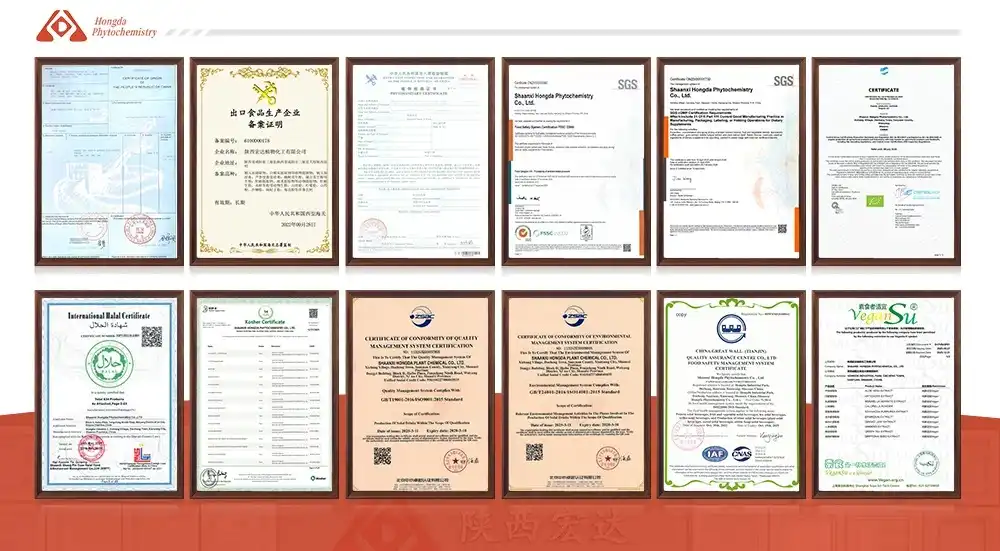
Documentation That Should Accompany Every Batch
You should get a certificate of analysis for each batch of Polygonum Cuspidatum Extract Resveratrol you see with the actual tested potency, heavy metal screening, microbiological testing findings, and a batch number for complete traceability. If a supplier is reluctant or unable to give this paperwork as a matter of course – and only provides it on special request – this should immediately raise a red flag about their internal quality control methods. Buyers should also maintain these papers for their own regulatory or customer-facing objectives, since retailers and downstream manufacturers are increasingly requiring complete traceability paperwork as a condition of doing business.
Evaluating a Manufacturer's Production Capability
Certifications tell part of the story, but a supplier's actual production infrastructure determines whether they can reliably deliver at the volume and consistency your business needs.
In-House Extraction vs. Trading Companies
One of the most important distinctions buyers often overlook is whether a supplier actually manufactures Polygonum Cuspidatum Extract Resveratrol in-house or simply resells material sourced from third-party factories. Trading companies can introduce unpredictable quality variation between orders, since they may switch upstream suppliers without notice, while a vertically integrated manufacturer maintains direct control over extraction, purification, and testing throughout the entire process. Asking a supplier directly whether they own their extraction facility and requesting a factory tour or video walkthrough when an in-person visit isn't practical is one of the simplest ways to confirm you're dealing with an actual manufacturer rather than a middleman adding an unnecessary layer of uncertainty to your supply chain.
Laboratory Testing and Batch Consistency
A capable manufacturer should operate its own analytical laboratory, ideally SGS-certified, capable of independently verifying the potency and purity of every batch of Polygonum Cuspidatum Extract Resveratrol before release. Ask potential suppliers directly how many quality checkpoints exist between raw material intake and finished product packaging — a well-run operation should be able to answer this question specifically rather than offering vague reassurances.
Scalability for Growing Order Volumes
If your brand is planning to grow, it's worth confirming upfront whether a prospective supplier's production lines can scale to meet increasing demand for Polygonum Cuspidatum Extract Resveratrol without sacrificing lead times or consistency. Wondering how to evaluate this without visiting the factory in person? A straightforward way is to ask directly about production line count, annual output capacity, and current lead times — and if you'd like a second opinion on your sourcing plan, our team at Hongda is available at duke@hongdaherb.com to walk through your specific volume requirements.
Questions to Ask Before Placing Your First Order
With a shortlist of certified, capable manufacturers in hand, a few final practical questions help finalize your decision before committing to a purchase order.
Confirming Specification and Analytical Methods
Always confirm in writing that the Polygonum Cuspidatum Extract Resveratrol you're quoted matches your required specification, and ask specifically which analytical method — typically HPLC — was used to verify the stated potency. This simple step prevents costly surprises if incoming material testing later reveals a discrepancy between the quoted and actual resveratrol content.
Understanding Lead Times and Packaging Options
Lead times for Polygonum Cuspidatum Extract Resveratrol typically range from a few days for in-stock standard specifications to several weeks for custom potency or packaging requirements, so clarify this timeline early in your planning process. Standard packaging is commonly supplied in 25kg drums, though many manufacturers can accommodate alternative packaging formats for smaller trial orders or specialized private label needs. It's also worth asking about shelf life and recommended storage conditions upfront, since proper handling guidance helps preserve potency throughout your own warehousing and distribution timeline before the ingredient reaches final formulation.
Requesting Samples and Certificates of Analysis
Before committing to a full production order, request a small sample of Polygonum Cuspidatum Extract Resveratrol along with its accompanying certificate of analysis, and consider having it independently tested if the order size justifies the additional verification cost. This due diligence step is inexpensive relative to the risk of discovering a specification mismatch only after a large shipment has already arrived.
|
Supplier Evaluation Step
|
What to Request
|
Why It Matters
|
|---|---|---|
|
Certification review
|
cGMP, ISO9001, ISO22000 certificates
|
Confirms auditable manufacturing standards
|
|
Analytical verification
|
HPLC testing method disclosure
|
Confirms accurate potency claims
|
|
Sample and COA
|
Physical sample plus certificate of analysis
|
Validates quality before bulk purchase
|
|
Production capacity
|
Line count and annual output figures
|
Confirms ability to scale with your demand
|
Why Hongda Is a Trusted Choice for Polygonum Cuspidatum Extract Resveratrol
After walking through the evaluation criteria that matter most, it's worth explaining concretely how Hongda measures up against each of them.
Two Decades of Natural Extract Expertise
Shaanxi Hongda Phytochemistry has been specializing in the research and manufacture of natural plant extracts since 2001 and was recognized as a national high-tech firm in 2010, developing significant institutional knowledge in polyphenol-rich botanicals such as Polygonum Cuspidatum Extract Resveratrol. This continuous emphasis, rather than seeing resveratrol as a side product in unrelated areas, gives the company’s R&D and quality teams a level of process understanding that younger or more generic suppliers simply haven’t had time to develop. Hongda has established continuing research collaborations with scientific institutes and has 10 full natural plant extract manufacturing lines in a 20,000-square-meter factory, which significantly improves the technological platform of each batch of products it makes.
Full-Spectrum Certification Portfolio
Hongda’s Polygonum Cuspidatum Extract Resveratrol has a comprehensive certification portfolio including cGMP, ISO9001, ISO22000, ORGANIC, BRC, KOSHER and HALAL that provides international buyers with the documentation they need to meet regulatory requirements across pharmaceutical, nutraceutical and cosmetic applications simultaneously. Before leaving the 20,000-square-meter manufacturing facility, each batch is tested by an in-house SGS-certified laboratory with a research team of more than twenty academics. This combination of wide certification scope and comprehensive in-house testing means purchasers almost never need to hunt out further documents elsewhere, which greatly streamlines their own compliance process.
Customization and Long-Term Partnership Support
Beyond the normal 98% specification material, Hongda also provides bespoke formulation services for Polygonum Cuspidatum Extract Resveratrol and other ingredients for private label and contract manufacturing customers that need particular potency, packaging or blending. We have a committed customer care staff available 24/7 to aid overseas purchasers in making procuring this ingredient a seamless, long-term collaboration rather than a series of one-off transactions.
Conclusion
When choosing the proper source for Polygonum Cuspidatum Extract Resveratrol, it is important to check certification, testing rigor, and manufacturing competence, not just price, since the cheapest quoted material sometimes has hidden costs in inconsistency or non-compliance down the road. Shaanxi Hongda Phytochemistry has more than 20 years of experience with natural extracts, complete certification paperwork, and in-house testing to provide the consistency formulators need to create and grow a reliable product line. Looking for a trusted source of resveratrol for your next product? Reach out and let’s start the discussion.
FAQQ1: What is the typical purity specification for this ingredient?
Most pharmaceutical-grade Polygonum Cuspidatum Extract Resveratrol is standardized to 98% resveratrol content, verified by HPLC testing.
Q2: Why is Polygonum cuspidatum the preferred source over grape skin?
Its root naturally contains much higher resveratrol concentrations, making large-scale standardized extraction more efficient and cost-effective.
Q3: What certifications should I look for in a supplier?
Look for cGMP, ISO9001, ISO22000, ORGANIC, KOSHER, and HALAL certifications to confirm manufacturing quality and market compliance.
Q4: How should I verify a supplier's quality claims before ordering?
Request a sample along with a certificate of analysis, and consider independent testing for larger orders.
Q5: What packaging and lead times are typical?
Standard packaging is usually 25kg drums, with lead times ranging from a few days for in-stock material to several weeks for custom orders.
Ready to Partner With Hongda for Reliable Resveratrol Supply?
If you're ready to work with a certified, experienced manufacturer of Polygonum Cuspidatum Extract Resveratrol, Hongda is here to help. With over two decades of natural extract expertise, a full certification portfolio, and in-house testing capability, our team supports your project from sample request through full-scale production. Email us today at duke@hongdaherb.com to request a certificate of analysis, discuss specifications, or place your first order — let's build a dependable supply chain together.
References
1. Baur, J. A., & Sinclair, D. A. "Therapeutic potential of resveratrol: the in vivo evidence." Nature Reviews Drug Discovery.
2. Chinese Pharmacopoeia Commission. Pharmacopoeia of the People's Republic of China.
3. European Food Safety Authority. Scientific Opinion on the Safety of Resveratrol as a Novel Food Ingredient.
4. U.S. Food and Drug Administration. Dietary Supplement Health and Education Act Guidance.
5. International Organization for Standardization. ISO 9001: Quality Management Systems — Requirements.
6. World Health Organization. WHO Monographs on Selected Medicinal Plants.