Zinc Bisglycinate Powder Quality Standards and Testing Guide
2026-10-10 15:22:49
Anyone who's ever bought a bad batch of mineral powder understands the sinking feeling: the color's off, the zinc amount doesn't match the label, or the documentation opens more questions than it answers. Zinc bisglycinate powder is a highly regarded, amino acid chelated form of zinc, but only when it satisfies specified quality criteria and is proven by thorough testing. This tutorial explains these criteria, the tests that prove them, and how to evaluate the findings with confidence.
What "Good" Looks Like: Core Quality Standards
Identity and True Chelation
Zinc bisglycinate is a chelated form of zinc (CAS number 14281-83-5, chemical formula C4H8N2O4Zn) in which one zinc ion is bound to two molecules of glycine. The first quality issue is whether the powder is a real chelate, or merely a combination of zinc salt and free glycine. A true chelate is different in solubility, in infrared spectrum, and in free glycine concentration. This is why expert labs verify, rather than presume identity. If you are searching for natural zinc bisglycinate chelate wholesale in China, make chelation proof a common inquiry. Accurate zinc bisglycinate powder is the foundation on which every subsequent claim about absorption and gentleness rests.
Zinc Content and the Glycine Ratio
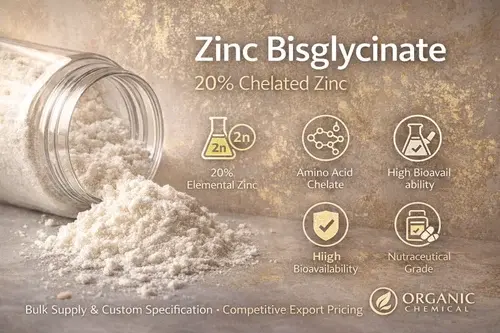
The theoretical zinc content of the pure chelate is around 30 percent. Commercial zinc bisglycinate powder is often marketed at about 20 percent zinc or more (depending upon quality, hydration and moisture). What counts is that the number presented is the real number and can be duplicated lot after lot. Ask about the technique, acceptance range, and some recent results. A reliable natural zinc bisglycinate chelate supplier in China will also check the glycine level, since the right two-to-one glycine-to-zinc ratio indicates proper manufacture. It enables your team to establish serving sizes that are identical to your label.
Appearance, Solubility, and Moisture
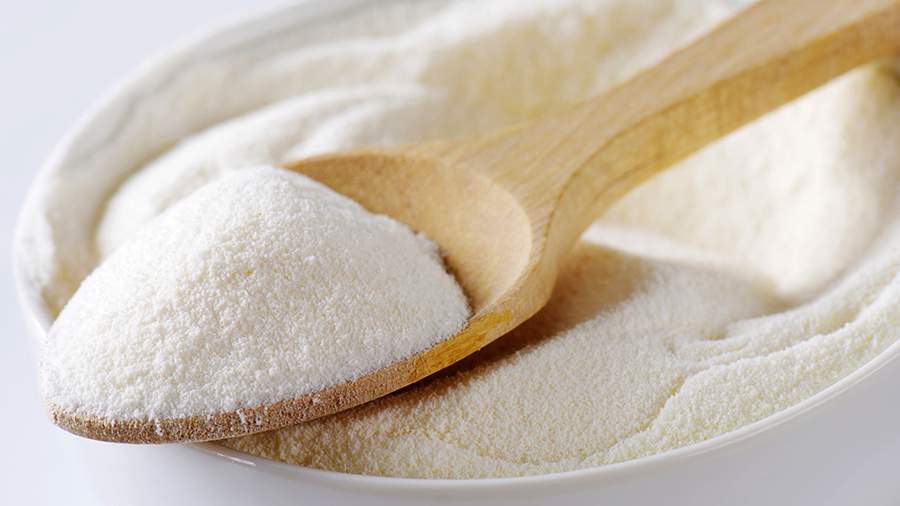
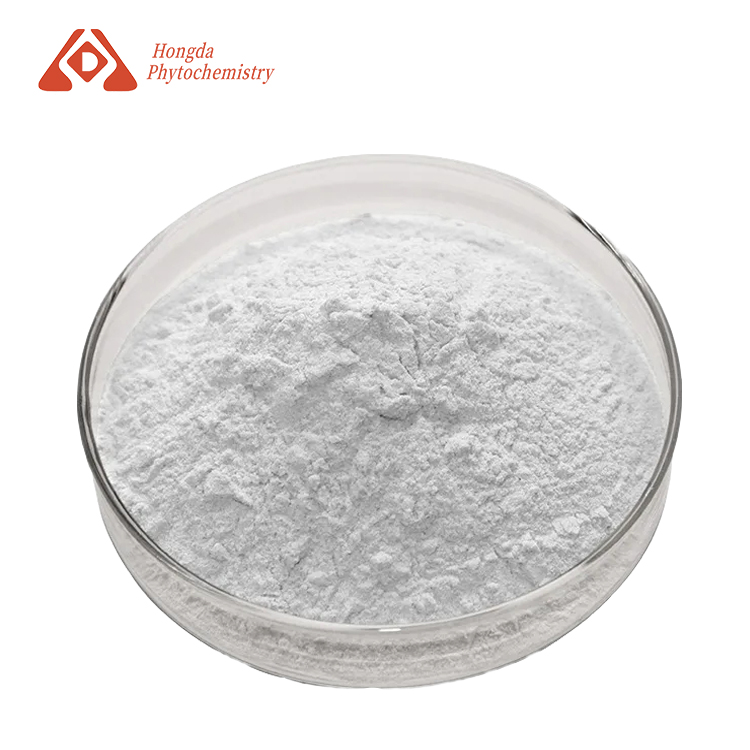
Simple physical examinations might reveal a surprising amount. Good zinc bisglycinate powder should be white to off-white in color, fine and free-flowing without black specks or hard lumps. Dissolves fast in water to provide a clear or nearly clear solution. Moisture should be kept to a minimum, as too much water decreases shelf life and causes caking. Compare offers of natural zinc bisglycinate chelate wholesale in China by looking at appearance, solubility, and loss on drying specifications. They are easy to carry out and may detect many problems long before expensive analytical methods.
|
Items
|
Specifications
|
Test Results
|
Test Methods
|
||
|
Appearance
|
White crystalline powder
|
Conforms
|
In-house
|
||
|
Zinc Bisglycinate,w/%
|
≥98.0
|
98.7
|
In-house
|
||
|
Zinc(on dried basis),w/%
|
≥30.0
|
30.1
|
In-house
|
||
|
Loss on drying,w/%
|
≤1.0
|
0.49
|
In-house
|
||
|
pH
|
7.5~9.0
|
8.1
|
In-house
|
||
|
Particle size,w/%
|
90% passing 60 mesh
|
Conforms
|
In-house
|
||
|
Additional Guarantees
|
|||||
|
Items
|
Limits
|
Test Methods
|
|||
|
Individual Heavy metals
|
Pb, ppm
|
≤3
|
AAS
|
||
|
As, ppm
|
≤1
|
AAS
|
|||
|
Cd, ppm
|
≤1
|
AAS
|
|||
|
Hg, ppm
|
≤0.1
|
AAS
|
|||
|
Microbiologicals
|
Total plate count, cfu/g
|
≤1000
|
USP
|
||
|
Yeast and Mold, cfu/g
|
≤100
|
USP
|
|||
|
E. Coli, /g
|
Negative
|
USP
|
|||
|
Salmonella, /25g
|
Negative
|
USP
|
|||
Inside the Lab: The Tests That Prove QualityMeasuring Zinc by Titration or ICP
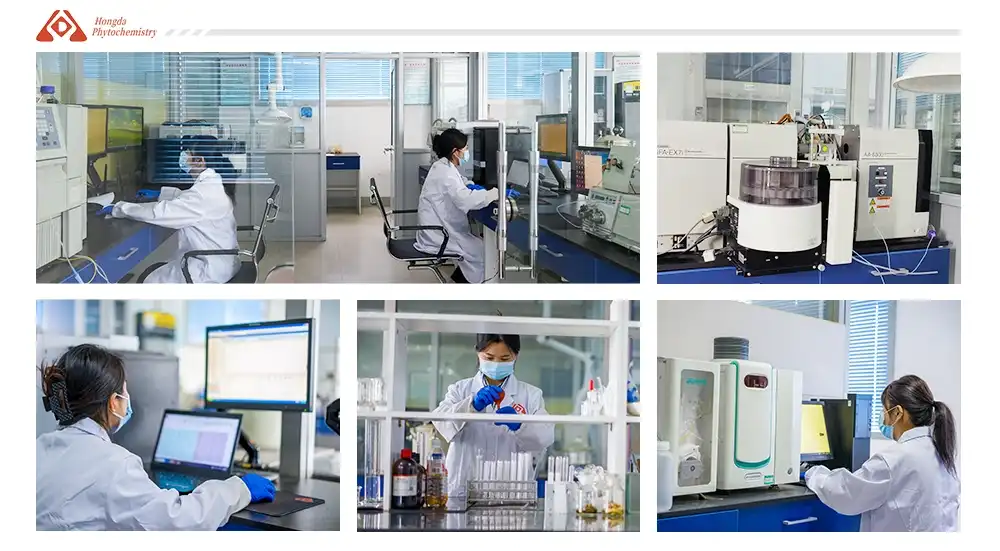
The amount of zinc is normally determined by complexometric titration with EDTA or by experimental methods (ICP-OES or atomic absorption). Titration is classic, cheap, and accurate if done properly. ICP is rapid and offers a broader view of other components. Good suppliers of zinc bisglycinate powder will describe the method they use and will do it using calibrated standards and duplicate samples. If you are going to buy nature zinc bisglycinate chelate wholesale in China, it is suggested to send your first sample to an independent lab and verify its result with the supplier’s certificate. They both agree. Trust builds fast.
Confirming the Chelate with FTIR and Glycine Analysis
For this reason, laboratories employ infrared spectroscopy to see the binding of glycine to zinc and chromatographic methods to measure free glycine or total amino acid levels, since a physical combination could look like a chelate on paper. The shift of the normal IR bands shows the establishment of coordination bonds. A wholesale natural zinc bisglycinate chelate supplier in China that invests in these tests demonstrates real process control. This sort of data is a proven and defensible ingredient for zinc bisglycinate powder for your brand when merchants or regulators request evidence behind your labeling.
Heavy Metals and Microbiological Safety
Safety testing protects customers and brands. ICP-MS is often used to determine elemental pollutants (e.g., lead, cadmium, arsenic, and mercury) in accordance with techniques described in USP general chapter 2232 for dietary supplements. Microbiological screening covers total aerobic count, yeast and mold, and absence of pathogens like Salmonella and E. coli. Good zinc bisglycinate powder gives clean results for all of them. And a responsible partner in nature, zinc bisglycinate chelate wholesale in China supplies it for every lot so that your own release testing becomes a confirmation and not a surprise.
For help interpreting any report or specification, write to the Hongda team at duke@hongdaherb.com with your target market and formula, and our specialists will respond with practical guidance.
Reading a Certificate of Analysis Like a Specialist
The Anatomy of a Good Certificate
A certificate of analysis should be more than just a collection of statistics. It contains the product, batch number, production and expiration dates, the test techniques utilized, the specification limits, and the actual result for each parameter. For zinc bisglycinate powder, at a minimum you should observe zinc content, appearance, moisture, heavy metals, and microbiological. Methods, e.g., titration, ICP, or a pharmacopeial method, should be defined so that they may be repeated by a different laboratory. When sourcing Certifications from many nature zinc bisglycinate chelate wholesale providers in China, the clearest, most comprehensive paper often indicates the most disciplined operation behind it.
Lot-to-Lot Consistency
One good certificate doesn't prove much. Five comparable certificates show a lot. Compare side by side the zinc content, moisture, and physical qualities of many successive batches of zinc bisglycinate powder and note the spread. Tight, steady statistics point to a process under control; large swings indicate poor standardization. Good partners in nature zinc bisglycinate chelate wholesale in china are prepared to give past data under a confidentiality agreement. Consistency is their best selling point and a main reason brands come back for repeat purchases.
Red Flags to Watch For
Some warning indicators are simple to see if you know what to look for. If you don't see method names on a certificate, similar findings in various batches, round figures that never change, or no safety testing, be wary. Also be wary of suspiciously cheap pricing for zinc bisglycinate powder, since skimping on chelation or purity is a typical technique to minimize costs. A trustworthy natural zinc bisglycinate chelate wholesale provider in China will welcome queries regarding any of these topics and will respond with facts rather than comfort. This is precisely the behavior a long-term partner should have.
|
Elemental Impurity
|
USP <2232> Daily Oral Limit
|
|---|---|
|
Lead (Pb)
|
5 µg/day
|
|
Cadmium (Cd)
|
5 µg/day
|
|
Inorganic arsenic (As)
|
15 µg/day
|
|
Mercury (Hg)
|
15 µg/day
|
Source context: United States Pharmacopeia, General Chapter <2232>, Elemental Contaminants in Dietary Supplements.
Building Quality In: Systems, Storage, and SupplyHongda's Factory and Quality System
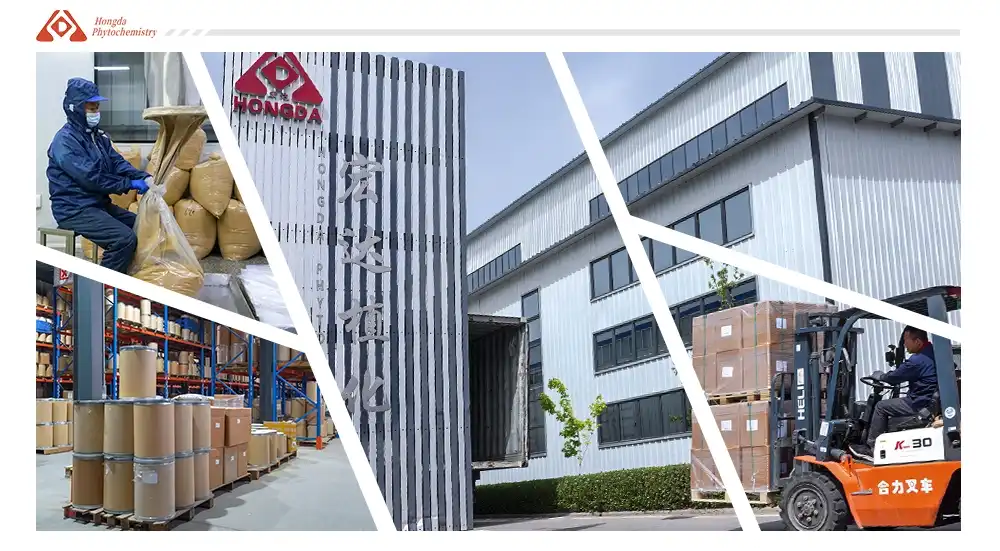
The easier it is to meet the quality criteria, the easier it is to design the plant to meet them. Shaanxi Hongda boasts a 20,000-square-meter cGMP-compliant facility, an SGS-certified laboratory, and 10 complete natural ingredient production lines supported by more than 20 academics and over 100 trained operators. Raw material selection is meticulously made, produced under strict cGMP standards, evaluated by the technical team, and only issued after passing. This structure gives you the repeatable results that testing is expected to validate, whether you buy one drum or a standing order on a regular basis... if you’re a zinc bisglycinate powder buyer.
Certifications and Documentation Support
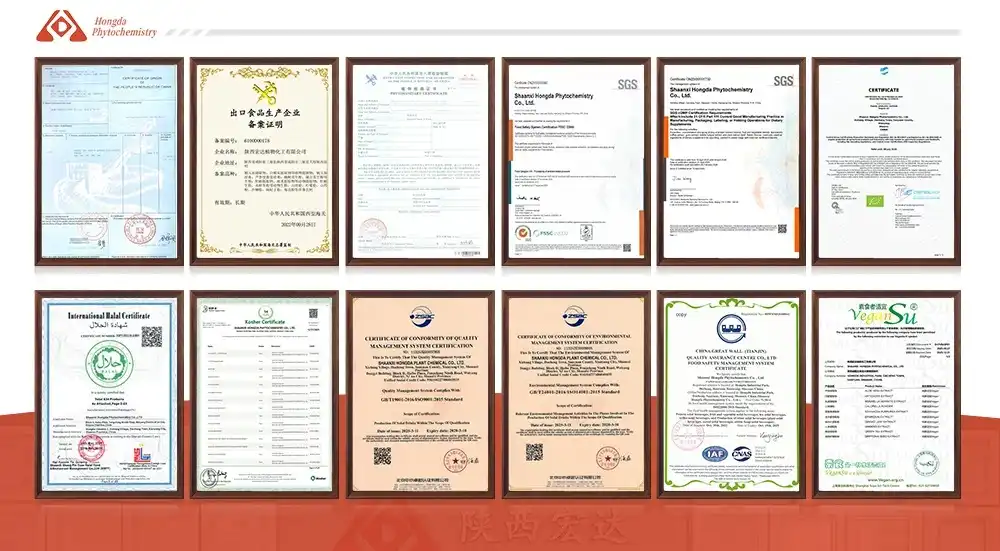
Certificates can accelerate market entry and simplify the audit. Hongda is SGS, cGMP, HALAL, KOSHER, BRC, FDA, ISO 9001, ISO 22000 ORGANIC, FSSC certified, and a National High-tech R&D Enterprise. Brands purchasing natural zinc bisglycinate chelate wholesale in China from a provider with this portfolio can respond to inquiries from retailers better and faster. Ensure that every certificate is current and site-specific, and retain copies with your batch records to finalize your quality file for zinc bisglycinate powder and make it audit-ready.
Storage, Packaging, and Sample Testing
Even the greatest powders need to be protected after they leave the producer. Zinc bisglycinate powder should be kept in a cold, dry, dark, airtight, and moisture-proof place, with a shelf life of around 2 years. Get a sample, test it to your spec, and do a little stability trial in your recipe before you commit to volume. Wholesale providers of natural zinc bisglycinate chelate in China are trusted; you can receive samples, unique Packaging upon request, and a customer support staff that is always available 24/7, which makes the whole evaluation process simpler and faster for your team.
Conclusion
Zinc bisglycinate powder quality is not a secret. It’s from verified chelation, correct zinc content, pure physical qualities, complete metals and microorganisms testing, and certifications you can read and compare. If you’re considering natural zinc bisglycinate chelate wholesale in China for the first time, or tightening up an existing program, employ samples, independent testing, and lot-to-lot inspection to defend your brand. Shaanxi Hongda has twenty years of expertise, cGMP manufacturing, and dedicated service.
FAQ1. What is the chemical formula of zinc bisglycinate?
It is C4H8N2O4Zn, with the CAS number 14281-83-5.
2. How is zinc content usually tested?
By EDTA titration or instrumental methods such as ICP.
3. How can I confirm the powder is a true chelate?
Laboratories use infrared analysis and glycine testing to confirm chelation.
4. Which safety tests should appear on a certificate?
Heavy metals and microbiological results, in line with recognized standards.
5. Does Hongda provide samples and customization?
Yes, samples and customized specifications are available.
Test Smarter, Source Better: Partner with Hongda Today
Reliable quality begins with a supplier who welcomes your questions. Hongda combines more than twenty years of experience, a cGMP factory, an SGS-certified laboratory, a full certification portfolio, and a customer team that answers around the clock. Share your required zinc content, testing needs, packaging, and target market, and we will recommend a suitable grade, provide samples, and prepare a clear quotation. Write to us today at duke@hongdaherb.com, and let Hongda help you build a consistent, well-documented supply of zinc bisglycinate powder for your next product.
References
1. National Institutes of Health, Office of Dietary Supplements. Zinc: Fact Sheet for Health Professionals.
2. United States Pharmacopeia. General Chapter <2232> Elemental Contaminants in Dietary Supplements. USP–NF.
3. Gandia, P., et al. "A Bioavailability Study Comparing Two Oral Formulations Containing Zinc (Zn Bis-glycinate vs. Zn Gluconate) After a Single Dose Administration to Twelve Healthy Female Volunteers." International Journal for Vitamin and Nutrition Research, 77(4), 2007.
4. Ashmead, H. D. Amino Acid Chelation in Human and Animal Nutrition. CRC Press.
5. Maret, W., & Sandstead, H. H. "Zinc Requirements and the Risks and Benefits of Zinc Supplementation." Journal of Trace Elements in Medicine and Biology, 20(1), 2006.
6. Nakamoto, K. Infrared and Raman Spectra of Inorganic and Coordination Compounds. Wiley.