



What Should You Look for in Magnesium Glycinate Powder?
2026-10-12 14:52:19
Browse any supplement catalog, and Magnesium Glycinate Powder will be there with confident promises and very similar photos. The important distinctions are not visible. How the chelate is manufactured, how much magnesium is provided per gram, what the laboratory discovered, and who is behind the batch. Knowing what to look for saves you money, protects your brand, and makes your consumers happy. This handbook provides a straightforward buyer’s checklist from first glimpse at a specification to the final purchase order. It is supplied by Shaanxi Hongda Phytochemistry Co., Ltd., a supplier of natural ingredients to companies throughout the globe since 2001.
The First Five Minutes: Reading the Label and the Spec
Is It a True Chelate?
Begin with the most critical question. Magnesium glycinate, also termed magnesium bisglycinate, is created when the magnesium ion joins itself to two glycine molecules, with the formula C4H8MgN2O4. A true chelate is not a mere mixing of a magnesium salt and free glycine, and the distinction is seen in tolerability, solubility, and lab analysis. When reading reviews of magnesium glycinate powder, inquire how they verified the chelation, e.g., by infrared analysis or free glycine testing. This is a non-negotiable issue for buyers who obtain magnesium glycinate pure bulk material, since everything else – from the label narrative to consumer satisfaction – hinges on getting the chemistry correct.
Magnesium Percentage and Real Serving Math
The headline figure on a standard is elemental magnesium content. Pure magnesium bisglycinate has around 14 percent magnesium, while commercial magnesium glycinate powder is typically sold around 10 to 14 percent magnesium, with some buffered varieties claiming greater percentages due to the inclusion of magnesium oxide. Higher is not always better since the buffering modifies the nature of the product and label narrative. Ask for the test technique and current results. A clear magnesium glycinate purebulk partner is going to tell you precisely what is in the powder so you can figure out how many mg of powder will give you the elemental dosage you desire.
Appearance, Solubility, and Flow
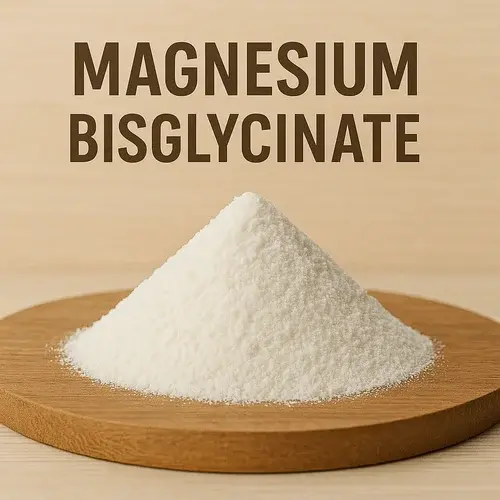
Your senses are good instruments; they are valuable. The magnesium glycinate powder should have a white to off-white color, fine and free-flowing, without hard lumps, gray particles or a strong chemical smell. It should easily dissolve in water. This is important for drink mixes and stick packs. Poor flow will impede the capsule filling and cause weight variance; therefore, verify with a brief sample. You can’t tell quality by looking at it, but a sample that looks, smells, and pours as it should, and comes with appropriate documentation from a magnesium glycinate purebulk provider, is a good first clue.
|
ITEM
|
SPECIFICATION
|
METHOD
|
|
Appearance
|
White powder
|
Visual
|
|
dentification
|
Consistent with the references
|
In-house
|
|
Magnesium (on dried basis) ,w/%
|
≥30
|
ICP-OES
|
|
Loss on drying , w/%
|
≤6.0
|
USP
|
|
PH
|
9~11
|
USP
|
|
Bulk density , g/ml
|
≥0.55
|
Balance
|
|
Tapped density , g/ml
|
≥0.85
|
Balance
|
|
Particle size , w%
|
9o% passing 6o mesh
|
Sieving
|
|
Heavy metals , mg/kg
|
≤10
|
USP
|
|
pb , mg/kg
|
≤1
|
ICP-MS
|
|
As , mg/kg
|
≤1
|
ICP-MS
|
|
As , mg/kg
|
≤1
|
ICP-MS
|
|
Hg , mg/kg
|
≤0.1
|
ICP-MS
|
|
Total viable count , cfu/g
|
≤1000
|
UsP or GB
|
|
Yeast and Mould , cfu/g
|
≤25
|
UsP or GB
|
|
Coliform bacteria , /g
|
Negative
|
UsP or GB
|
|
Escherichia Coli , g
|
Negative
|
UsP or GB
|
|
Salmonella , /og
|
Negative
|
UsP or GB
|
Behind the Number: Purity, Safety, and Proof
Heavy Metals and Elemental Impurities
A clean specification sheet always lists limitations for lead, cadmium, arsenic, and mercury. They are often measured by ICP-MS by laboratories using methods such as USP General Chapter 2232 for dietary supplements. You want to see results well within those parameters for a quality magnesium glycinate purebulk. The report should provide the numbers in simple figures, not simply “pass”. If you are comparing offers from various purebulk magnesium glycinate providers, ask for the most current findings and the name of the testing laboratory. It’s good practice to have independent confirmation on your initial purchase, and it rapidly becomes evident whether a supplier’s documentation can be relied upon.
Microbiological Cleanliness
Also worth a look is microbiology, since mineral powders are not immune to contamination. Review the certificate of analysis for total plate count, yeast and mold, and absence of Salmonella and E. coli. This is readily met using magnesium glycinate powder manufactured in a controlled cGMP setting and kept in sealed liners. Moisture is also a factor, since too much water may lead to microbial development and clumping. A quality magnesium glycinate Purebulk partner is low moisture, well packed, and more than happy to provide its cleaning, inspection, and release methods upon request during a supplier assessment.
Reading the Certificate of Analysis and Comparing Lots
A good certificate will include the batch number, production and expiration dates, test methodologies, specification limitations, and actual results. It’s good to have one excellent report, but 5 comparable reports are far more compelling. Place multiple batches of magnesium glycinate powder side by side and observe the variation in magnesium concentration, moisture, and physical qualities. Tight, consistent statistics indicate that the process is under control, but broad swings mean that standardization is poor. If you can’t get technique names or history from a magnesium glycinate purebulk source, be wary since openness is the simplest way for a producer to demonstrate confidence.
Matching the Powder to Your ProductServing Size and Intake Guidance
Good formulation is in line with established recommendations. The NIH Office of Dietary Supplements recommends that adult males consume roughly 400 to 420 milligrams of magnesium per day and adult women consume 310 to 320 milligrams. It also has an upper limit of 350 mg daily for magnesium from supplements and pharmaceuticals in adults. Magnesium glycinate powder is around 14 percent magnesium; therefore, a 100 milligram elemental dosage would need about 700 milligrams of powder, which may affect capsule size and cost. Work through this arithmetic early with your magnesium glycinate purebulk source, so your serving amounts are realistic, accurate, and well below acceptable limits.
|
Adult Group
|
RDA for Magnesium
|
Supplemental Upper Limit
|
|---|---|---|
|
Men, 19–30 years
|
400 mg per day
|
350 mg per day
|
|
Men, 31+ years
|
420 mg per day
|
350 mg per day
|
|
Women, 19–30 years
|
310 mg per day
|
350 mg per day
|
|
Women, 31+ years
|
320 mg per day
|
350 mg per day
|
Choosing Capsules, Tablets, or Sticks
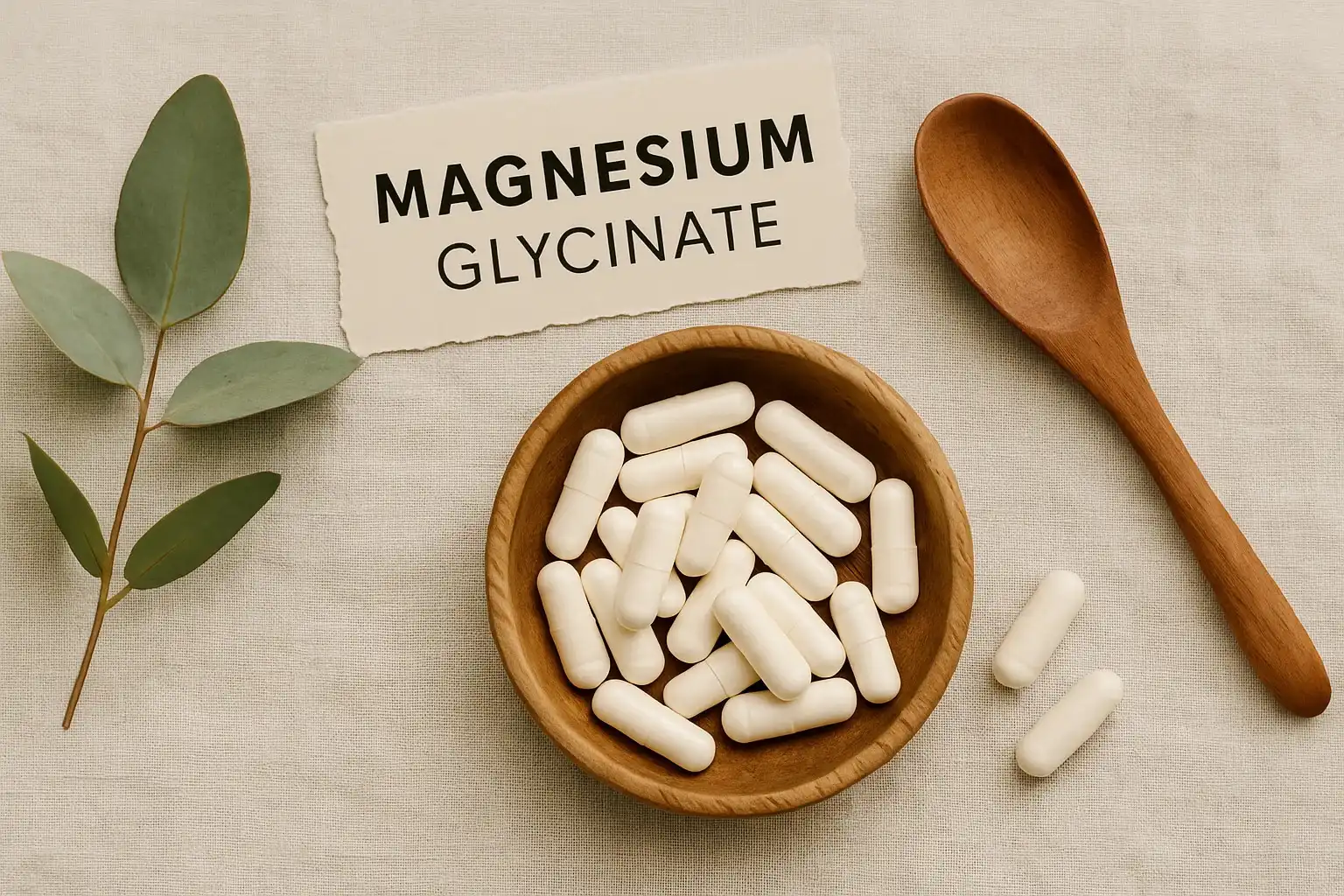
The optimal format depends on your customer: Capsules are the simplest way to take magnesium glycinate powder since you can get a precise dose and hide the flavor. Tablets are good for consumers who want a familiar form, but they may be huge or need to be broken up into many per serving, due to the quantity of the powder. Stick packs and drink mixes are appealing to those who prefer a little ritual in the evening, but they need care with taste and mix. Request samples from your magnesium glycinate purebulk provider and fully test your selected format before making a purchase, since customer experience is just as important as chemistry.
Pairing with Companion Ingredients
Many health products combine magnesium with other soothing or supportive substances. Magnesium glycinate purebulk combines well with L-theanine, GABA, vitamin B6, vitamin D, or mild plant extracts, depending on your idea. Each partner should have a defined task, and the total serving should be reasonable. Shaanxi Hongda manufactures numerous of these partners, including theanine powder and GABA, so one magnesium glycinate purebulk order may go with them and save freight and paperwork. For help choosing a grade that fits your formula, write to the Hongda team at duke@hongdaherb.com, and our specialists will recommend a suitable option.
Choosing the Partner Behind the PowderFactory Strength and Quality Systems
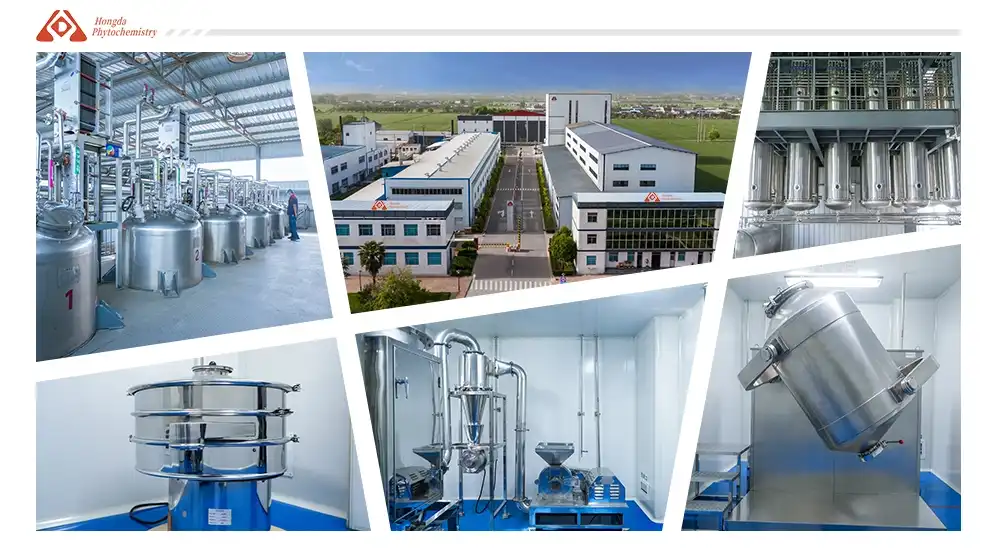
The reliability of a standard is only as good as the reliability of the factory that generates it. Shaanxi Hongda spans an area of 20,000 square meters and has a cGMP plant, an SGS-accredited laboratory, and 10 full natural ingredient manufacturing lines. It is backed by more than 20 professors from famous institutions and more than 100 competent operators. Each batch is tested before Packaging and release. This framework implies consistent results from order to order for purchasers of magnesium glycinate powder and provides your quality team with a clear channel for technical queries or audits when dealing with a magnesium glycinate pure bulk supplier.
Certifications and Documentation
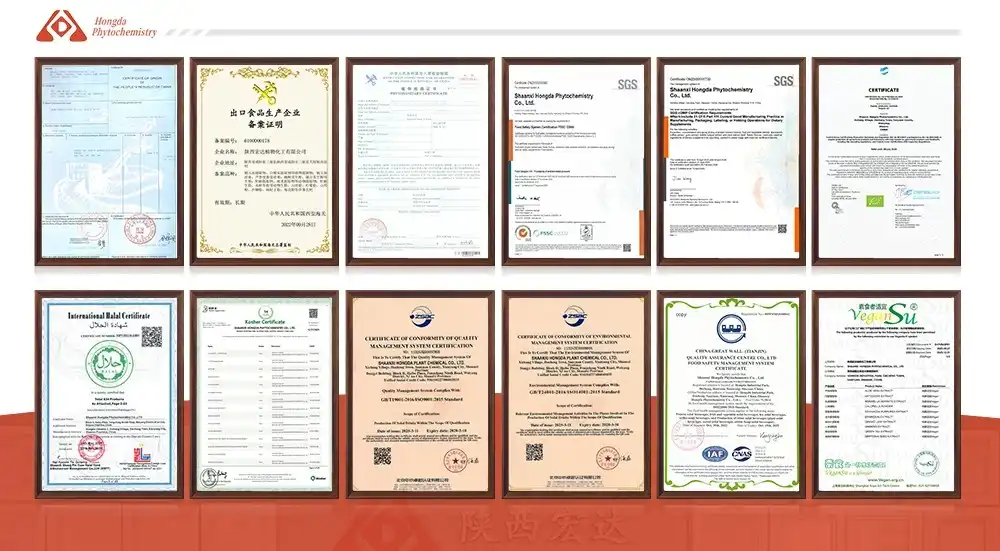
Certificates make life easy at every stage – from shop feedback to customs clearance. Hongda has SGS, cGMP, HALAL, KOSHER, BRC, FDA, ISO 9001, ISO 22000, ORGANIC and FSSC Certifications, and is a National High-tech R&D Enterprise. If you are looking for a magnesium glycinate pure bulk deal, get current copies of these papers and verify that they are for the particular site and product you are purchasing. Keep them handy with your batch records to keep your magnesium glycinate powder file comprehensive and ready for any customer or regulator inquiry.
Samples, Customization, and Logistics
The real test is how the provider handles you before the first purchase. Reliable partners provide samples, accept special requirements and packaging, and answer queries immediately. Hongda’s sales and customer support staff are accessible 24/7, and its international warehouse knowledge helps reduce shipping time for distant markets. Magnesium glycinate powder should be stored in a sealed container in a cool, dry area away from sunlight. It is normally stable for approximately two years. A Purebulk partner magnesium glycinate supplier who takes care of samples, delivery, and storage advice will probably handle your standing orders in the same manner.
Conclusion
When selecting the best magnesium glycinate powder , confirm it has genuine chelation , find out the actual magnesium content , review safety data and certifications , compare serving sizes to NIH standards , and test samples before scaling . Finally, appearance, solubility, and lot-to-lot consistency round out the picture. A clear magnesium glycinate purebulk companion makes these tests a seamless, repeatable process. Shaanxi Hongda, with twenty years of expertise, cGMP manufacturing, and dedicated service, is here for you.
FAQ1. What is magnesium glycinate powder?
It is a chelate of magnesium bound to two glycine molecules, also called magnesium bisglycinate.
2. How much magnesium does it contain?
The pure chelate is roughly 14 percent magnesium, and commercial grades commonly range from about 10 to 14 percent.
3. Which tests should I request?
Ask for magnesium assay, heavy metals, microbiology, and moisture on a certificate of analysis.
4. What is the supplemental upper limit for magnesium?
The NIH lists 350 mg per day from supplements and medications for adults.
5. Does Hongda provide samples and customization?
Yes, samples and customized specifications are available.
Find the Right Magnesium Glycinate Powder: Partner with Hongda Today
A confident purchase begins with a supplier who answers your questions clearly. Hongda brings more than twenty years of experience, a cGMP factory, an SGS-certified laboratory, a complete certification portfolio, and a customer team that responds around the clock. Share your target magnesium content, packaging, and market, and we will recommend a suitable grade, send samples, and prepare a clear quotation. Write to us today at duke@hongdaherb.com, and let Hongda help you build a dependable, well-documented supply of magnesium glycinate powder for your next product launch.
References
1. National Institutes of Health, Office of Dietary Supplements. Magnesium: Fact Sheet for Health Professionals.
2. United States Pharmacopeia. General Chapter <2232> Elemental Contaminants in Dietary Supplements. USP–NF.
3. Schuette, S. A., Lashner, B. A., & Janghorbani, M. "Bioavailability of Magnesium Diglycinate vs Magnesium Oxide in Patients with Ileal Resection." Journal of Parenteral and Enteral Nutrition, 18(5), 1994.
4. Schwalfenberg, G. K., & Genuis, S. J. "The Importance of Magnesium in Clinical Healthcare." Scientifica, 2017.
5. Ashmead, H. D. Amino Acid Chelation in Human and Animal Nutrition. CRC Press.
6. Abbasi, B., et al. "The Effect of Magnesium Supplementation on Primary Insomnia in Elderly: A Double-Blind Placebo-Controlled Clinical Trial." Journal of Research in Medical Sciences, 17(12), 2012.
Related Products





YOU MAY LIKE
