Can You Take L-Carnitine Powder?
2025-08-13 17:50:07
L-Carnitine is a popular supplement that has gained significant attention in recent years due to its potential health benefits. As consumers become increasingly health-conscious, the demand for natural supplements like L-Carnitine has surged. However, with the widespread use of these supplements, it is crucial to investigate their safety and efficacy thoroughly. This article aims to provide an in-depth exploration of L-Carnitine powder supplementation, examining its potential benefits, safety considerations, and the scientific evidence supporting its use.
Understanding L-Carnitine
L-Carnitine is a naturally occurring amino acid derivative that plays a vital role in energy metabolism. It is primarily synthesized in the liver and kidneys and is found in various foods, particularly red meat and dairy products. Chemically, L-Carnitine is a quaternary ammonium compound that facilitates the transport of long-chain fatty acids into the mitochondria, where they undergo beta-oxidation to produce energy in the form of ATP.
L-Carnitine is available in various forms, including L-Carnitine L-Tartrate, Acetyl-L-Carnitine, and Propionyl-L-Carnitine. These different forms may have varying bioavailability and potential effects on the body.

Health Benefits of L-Carnitine Supplementation
Numerous studies have explored the potential benefits of L-Carnitine supplementation, particularly in the areas of energy metabolism, exercise performance, heart health, and weight management.
Energy Metabolism: L-Carnitine plays a crucial role in the breakdown of fatty acids for energy production. Supplementation with L-Carnitine may enhance fat metabolism, leading to improved energy levels and endurance.
Exercise Performance and Recovery: Several studies have investigated the effects of L-Carnitine supplementation on exercise performance and recovery. Some research suggests that L-Carnitine may help reduce muscle fatigue, improve muscle recovery, and enhance overall athletic performance.
Heart Health: L-Carnitine has been studied for its potential benefits in maintaining cardiovascular health. It may help improve cholesterol levels, reduce oxidative stress, and support the functioning of the heart muscle.
Weight Management: Some research has explored the potential role of L-Carnitine in weight management. By facilitating fat metabolism, L-Carnitine supplementation may support weight loss efforts and aid in reducing body fat.

Safety Considerations and Potential Risks
While L-Carnitine powder is generally considered safe when taken in appropriate doses, there are some safety considerations and potential risks associated with its supplementation.
Side Effects: Potential side effects of L-Carnitine supplementation may include nausea, vomiting, abdominal cramps, diarrhea, and body odor. These side effects are typically mild and may be dose-dependent.
Interactions with Medications: L-Carnitine may interact with certain medications, such as thyroid medications, anticoagulants, and certain antibiotics. It is essential to consult with a healthcare professional before taking L-Carnitine if you are on any medications.
Long-term Use: While the long-term safety of L-Carnitine supplementation has not been extensively studied, some researchers suggest that prolonged use may potentially lead to an imbalance in the body's natural carnitine levels.
Scientific Evidence and Research Findings
Numerous research studies have been conducted to evaluate the efficacy of L-Carnitine supplementation. Here is an overview of some of the scientific evidence and research findings:
Exercise Performance: A meta-analysis published in the Journal of Physiology and Biochemistry found that L-Carnitine supplementation may improve exercise performance and reduce muscle damage in trained individuals.
Heart Health: A review published in the American Journal of Cardiovascular Drugs suggested that L-Carnitine supplementation may have beneficial effects on various aspects of cardiovascular health, including reducing oxidative stress and improving endothelial function.
Weight Management: A systematic review published in the Journal of Obesity found that L-Carnitine supplementation may have a modest effect on weight loss and body composition when combined with a calorie-restricted diet and exercise.
While these research findings are promising, it is important to note that the scientific consensus on the efficacy of L-Carnitine supplementation is still evolving, and more high-quality studies are needed to establish definitive conclusions.
Practical Applications and Considerations
When considering L-Carnitine powder supplementation, it is essential to follow appropriate dosage recommendations and protocols. The typical recommended dosage range for L-Carnitine is between 500 mg and 2,000 mg per day, depending on the specific health goal and individual factors.
It is important to be aware of potential interactions between L-Carnitine and other supplements or medications. Consulting with a healthcare professional, particularly if you have any underlying health conditions, is recommended before starting L-Carnitine supplementation.
Additionally, it is advisable to choose high-quality L-Carnitine supplements from reputable sources and follow the manufacturer's instructions for proper storage and usage.
Expert Opinions and Recommendations
Healthcare professionals and nutrition experts have shared their insights and recommendations regarding L-Carnitine supplementation:
Dr. Michael Greger, a physician and author, suggests that while L-Carnitine supplementation may have some potential benefits, it is important to consider the potential risks and consult with a healthcare professional before use.
Dr. Rhonda Patrick, a biochemist and science communicator, recommends that individuals with certain genetic variations or conditions that affect carnitine metabolism may benefit from L-Carnitine supplementation under medical supervision.
The International Society of Sports Nutrition (ISSN) acknowledges that L-Carnitine supplementation may be potentially beneficial for athletes and active individuals, but more research is needed to establish optimal dosages and protocols.
Experts generally recommend integrating L-Carnitine supplementation into a balanced diet and exercise regimen, while emphasizing the importance of consulting with healthcare professionals and monitoring individual responses.
Conclusion
L-Carnitine is a popular supplement with potential health benefits, particularly in the areas of energy metabolism, exercise performance, heart health, and weight management. While the scientific evidence supporting the efficacy of L-Carnitine supplementation is promising, it is important to consider the safety considerations and potential risks associated with its use.
Based on the current research, L-Carnitine powder supplementation appears to be generally safe when taken in appropriate doses and under the guidance of healthcare professionals. However, more high-quality studies are needed to establish definitive conclusions regarding its long-term safety and optimal dosages for various health conditions.
As with any supplement, it is crucial to consult with a healthcare professional, follow recommended dosages, and monitor individual responses. Additionally, integrating L-Carnitine supplementation into a balanced diet and exercise regimen may enhance its potential benefits.
Future research should continue to explore the potential applications of L-Carnitine supplementation, while also investigating any potential risks or interactions with medications or other supplements. By staying informed and cautious, individuals can make informed decisions about incorporating L-Carnitine powder into their health and wellness routines.
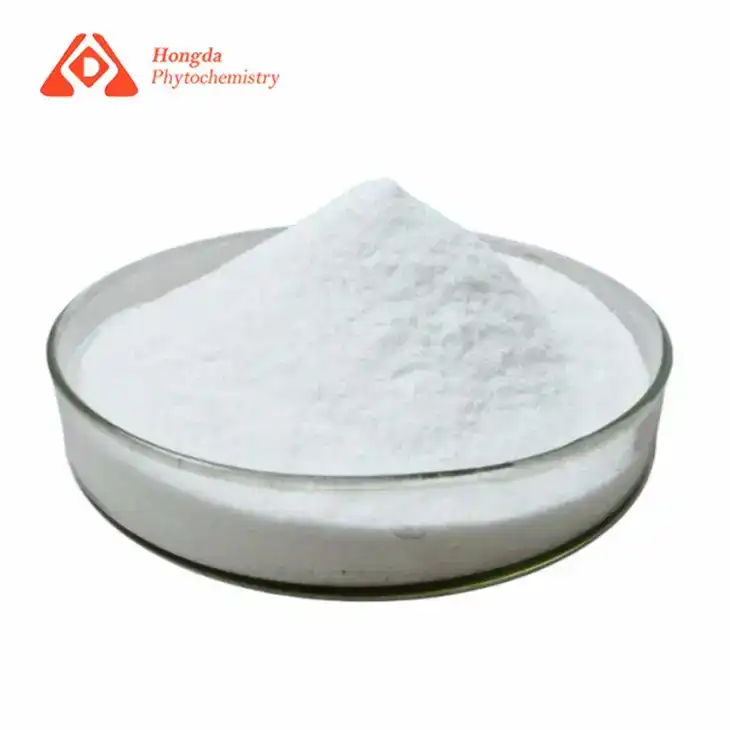
Hongda Phytochemistry Co., Ltd. is a reputable and experienced ingredients manufacturer that boasts an impressive range of Certifications, including cGMP, BRC, ORGANIC (EU), ORGANIC (NOP), ISO22000, ISO9001, FDA, HALAL, KOSHER, and national certification of high-tech innovative enterprises. With over 30 years of production experience, the Shaanxi Hongda factory is dedicated to producing top-quality ingredients. The factory spans across 20,000 square meters and is equipped with advanced extraction equipment, along with an SGS Certified laboratory for quality control. Operating six advanced production lines simultaneously, the factory has a daily output of ten tons and an annual production capacity of several thousand tons. Among their range of products, the Bulk L-Carnitine Powder has received unanimous praise from customers worldwide. Hongda Phytochemistry Co., Ltd. is a trustworthy and stable supplier that invites you to contact duke@hongdaherb.com for more detailed information about our exceptional offerings.
References:
1. Rebouche, C. J. (2004). Kinetics, pharmacokinetics, and regulation of L-carnitine and acetyl-L-carnitine metabolism. Annals of the New York Academy of Sciences, 1033(1), 30-41.
2. Pooyandjoo, M., Nouhi, M., Shab-Bidar, S., Djafarian, K., & Olyaeemanesh, A. (2016). The effect of (L-)carnitine on weight loss in adults: a systematic review and meta-analysis of randomized controlled trials. Obesity Reviews, 17(10), 970-976.
3. Shang, R., Sun, J., & Hu, Y. (2020). Effects of L-carnitine supplementation on exercise performance: A systematic review and meta-analysis of randomized controlled trials. Journal of Physiology and Biochemistry, 76(1), 63-74.
4. Alipour, B., Barzegar, A., Panahi, F., & Hosseini, S. K. (2014). Effects of L-carnitine supplementation on lipid profiles, oxidative stress, and cardiovascular risk factors in patients with coronary artery disease: A randomized, double-blind, placebo-controlled trial. The American Journal of Cardiovascular Drugs, 14(3), 177-185.
5. Fielding, R., Riede, L., Lugo, J. P., & Bellamine, A. (2018). L-carnitine supplementation in recovery after exercise. Nutrients, 10(3), 349.