Can Turmeric Powder be Dissolved in Water?
2025-08-15 11:45:42
Turmeric, a vibrant yellow spice derived from the root of the Curcuma longa plant, has been used for centuries in cooking, traditional medicine, and even as a natural dye. As interest in its potential health benefits grows, many people are curious about the best ways to incorporate turmeric into their daily routines. One common question that arises is whether turmeric powder can be dissolved in water. In this blog post, we'll explore this topic in detail and discuss the science behind turmeric's solubility, as well as some practical solutions for those looking to harness its potential benefits.
Committed to quality assurance, Hongda Phytochemical Co., Ltd. provides free samples to prospective partners, showcasing our dedication to excellence from production to delivery. For inquiries and collaboration opportunities, please reach out to us at duke@hongdaherb.com.
What is the difference between turmeric and curcumin?
Turmeric and curcumin are often mentioned interchangeably, but it's important to understand the distinction between these two terms. Turmeric is the spice derived from the Curcuma longa plant, which contains a variety of compounds, including essential oils, proteins, and carbohydrates. Curcumin, on the other hand, is the primary active compound found in turmeric and is responsible for many of its potential health benefits.
Curcumin belongs to a class of compounds called curcuminoids, which give turmeric its characteristic yellow color. While curcumin is the most well-known and studied curcuminoid, turmeric also contains other related compounds such as demethoxycurcumin and bisdemethoxycurcumin. These curcuminoids collectively make up about 2-5% of the total weight of turmeric powder.
The distinction between turmeric and curcumin is crucial when discussing solubility in water. Turmeric powder, being a complex mixture of various compounds, behaves differently in water compared to isolated curcumin. While some components of turmeric powder may partially dissolve in water, curcumin itself is highly hydrophobic, meaning it does not mix well with water.
This hydrophobic nature of curcumin presents a challenge when trying to incorporate turmeric into water-based beverages or solutions. When you add turmeric powder to water, you'll notice that it doesn't fully dissolve but rather forms a suspension. The particles of turmeric will eventually settle at the bottom of the container if left undisturbed.
Understanding this difference is essential for those looking to maximize the potential benefits of turmeric or curcumin. While traditional uses of turmeric in cooking often involve oil-based preparations that can help solubilize the curcuminoids, modern supplement formulations have developed various techniques to enhance the bioavailability of curcumin, which we'll explore in more detail in the following sections.
How can you increase the absorption of turmeric in the body?
Enhancing the absorption of turmeric, particularly its active compound curcumin, is a key concern for those seeking to maximize its potential health benefits. The low bioavailability of curcumin when consumed in its natural form has led researchers and nutritionists to explore various methods to increase its absorption in the body.
One of the most well-known techniques for improving turmeric absorption is combining it with black pepper. Black pepper contains a compound called piperine, which has been shown to significantly enhance the bioavailability of curcumin. Studies have demonstrated that piperine can increase curcumin absorption by up to 2000%. This synergistic effect is why many turmeric supplements include black pepper extract or piperine as an ingredient.
Another effective method for increasing turmeric absorption is consuming it with healthy fats. Curcumin is fat-soluble, meaning it dissolves in fats rather than water. By combining turmeric with sources of healthy fats such as coconut oil, olive oil, or avocado, you can enhance its absorption in the digestive system. This is one reason why traditional turmeric-based recipes often include fatty ingredients.
Heat can also play a role in increasing the bioavailability of curcumin. Cooking turmeric in warm dishes or adding it to hot beverages like tea can help break down the curcumin molecules, potentially making them easier for the body to absorb. However, it's important to note that prolonged exposure to high heat can degrade some of the beneficial compounds in turmeric, so moderation is key.
For those looking for more advanced solutions, there are several technological approaches to enhancing curcumin absorption. One such method is the use of liposomal formulations. Liposomes are tiny spheres made of phospholipids that can encapsulate curcumin molecules, protecting them from degradation in the digestive system and facilitating their absorption into the bloodstream.
Nanoparticle formulations represent another cutting-edge approach to improving curcumin bioavailability. By reducing the particle size of curcumin to the nanoscale, researchers have been able to significantly increase its solubility and absorption. These nanoparticles can be created using various materials, including natural polymers and lipids, which can help protect the curcumin and enhance its delivery to target tissues.
Phytosome technology is yet another innovative method for improving curcumin absorption. This approach involves binding curcumin molecules to phosphatidylcholine, a type of phospholipid found in cell membranes. The resulting phytosome complex is more easily absorbed by the body, leading to higher bioavailability compared to standard curcumin formulations.
It's worth noting that while these advanced formulations can significantly enhance curcumin absorption, they may come with a higher price tag compared to traditional turmeric powder. For those looking for a more affordable option, simply combining turmeric with black pepper and healthy fats in your cooking can still provide a noticeable improvement in absorption.
Regardless of the method chosen, it's important to remember that consistency is key when it comes to reaping the potential benefits of turmeric. Regular consumption, whether through diet or supplements, is typically recommended for those looking to incorporate turmeric into their wellness routines.
Is water soluble curcumin powder better than regular turmeric powder?
The development of water-soluble curcumin powder has garnered significant attention in recent years, prompting many to wonder if it's superior to regular turmeric powder. To answer this question, we need to consider several factors, including bioavailability, ease of use, and potential applications.
Water-soluble curcumin powder is specifically designed to overcome one of the main limitations of regular turmeric powder: its poor solubility in water. As we've discussed earlier, curcumin, the primary active compound in turmeric, is highly hydrophobic, meaning it doesn't mix well with water. This characteristic limits its absorption in the body and can make it challenging to incorporate into water-based beverages and formulations.
The creation of water-soluble curcumin powder typically involves advanced technological processes that modify the curcumin molecule or encapsulate it in a way that enhances its solubility. These processes can include the use of cyclodextrins, nanoparticles, or other carrier systems that allow the curcumin to disperse more readily in water.
One of the primary advantages of water-soluble curcumin powder is its increased bioavailability. By improving the solubility of curcumin, these formulations can enhance its absorption in the gastrointestinal tract, potentially leading to higher concentrations of curcumin in the bloodstream. Some studies have shown that water-soluble curcumin formulations can achieve bioavailability that is several times higher than that of regular turmeric powder.
Another benefit of water-soluble curcumin powder is its versatility in formulation. It can be easily incorporated into a wide range of water-based products, including beverages, liquid supplements, and even some topical formulations. This flexibility opens up new possibilities for product development and allows consumers to enjoy the potential benefits of curcumin in more convenient forms.
However, it's important to note that water-soluble curcumin powder is not inherently "better" than regular turmeric powder in all aspects. Regular turmeric powder, while less bioavailable, contains a full spectrum of compounds found in the turmeric root, including other curcuminoids, essential oils, and fiber. Some researchers argue that this full-spectrum approach may offer synergistic benefits that are not present in isolated curcumin formulations.
Additionally, regular turmeric powder has been used for centuries in traditional medicine and cooking, with a long history of safe use. While water-soluble curcumin formulations have shown promise in clinical studies, their long-term effects and safety profile are still being evaluated.
Cost is another factor to consider. Water-soluble curcumin powders are typically more expensive than regular turmeric powder due to the advanced processing techniques required to produce them. For many consumers, the traditional approach of combining regular turmeric powder with black pepper and healthy fats may offer a more cost-effective way to enhance absorption.
It's also worth noting that the effectiveness of water-soluble curcumin powder can vary depending on the specific formulation and manufacturing process. Not all water-soluble curcumin products are created equal, and consumers should look for products that have been clinically tested and have transparent information about their bioavailability.
In conclusion, while water-soluble curcumin powder offers several advantages in terms of bioavailability and formulation flexibility, it's not necessarily "better" than regular turmeric powder in all situations. The choice between the two depends on individual needs, preferences, and health goals. For those specifically looking to maximize curcumin absorption or incorporate it into water-based products, water-soluble formulations may be beneficial.
However, for general culinary use and those who appreciate the whole-plant approach, regular turmeric powder remains a valuable and time-tested option.
Ultimately, both water-soluble curcumin powder and regular turmeric powder have their place in the world of nutrition and supplementation. As research in this field continues to evolve, we may see even more innovative formulations that combine the benefits of both approaches, offering consumers a wider range of options for harnessing the potential health benefits of this remarkable spice.
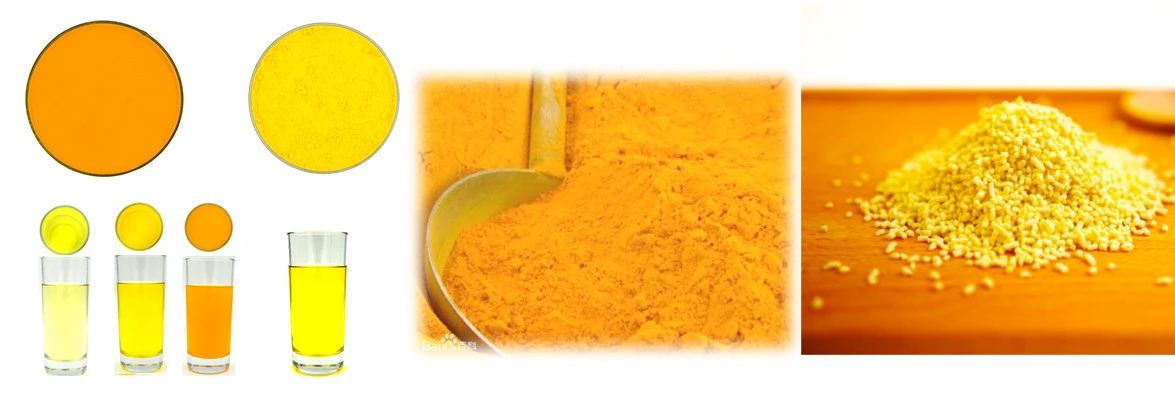
Hongda Phytochemical Co., Ltd. excels in the industry with an impressive array of Certifications including FSSC, cGMP, BRC, ORGANIC (EU), ORGANIC (NOP), ISO22000, ISO9001, FDA, HALAL, KOSHER, and national certification of high-tech innovative enterprises. Specializing in Water Soluble Curcumin Powder Bulk production, we offer extensive capabilities in OEM/ODM processing, ensuring flexibility in meeting diverse client needs. Our state-of-the-art facilities enable factory direct production with the option for customized manufacturing and Packaging solutions. Committed to quality assurance, Hongda Phytochemical Co., Ltd. provides free samples to prospective partners, showcasing our dedication to excellence from production to delivery. For inquiries and collaboration opportunities, please reach out to us at duke@hongdaherb.com. Hongda Phytochemical Co., Ltd. looks forward to building mutually beneficial partnerships in delivering premium Curcumin Powder products worldwide.
References
1. Anand, P., Kunnumakkara, A. B., Newman, R. A., & Aggarwal, B. B. (2007). Bioavailability of curcumin: problems and promises. Molecular pharmaceutics, 4(6), 807-818.
2. Prasad, S., Tyagi, A. K., & Aggarwal, B. B. (2014). Recent developments in delivery, bioavailability, absorption and metabolism of curcumin: the golden pigment from golden spice. Cancer research and treatment: official journal of Korean Cancer Association, 46(1), 2.
3. Shoba, G., Joy, D., Joseph, T., Majeed, M., Rajendran, R., & Srinivas, P. S. (1998). Influence of piperine on the pharmacokinetics of curcumin in animals and human volunteers. Planta medica, 64(04), 353-356.
4. Jäger, R., Lowery, R. P., Calvanese, A. V., Joy, J. M., Purpura, M., & Wilson, J. M. (2014). Comparative absorption of curcumin formulations. Nutrition journal, 13(1), 1-8.
5. Hewlings, S. J., & Kalman, D. S. (2017). Curcumin: a review of its effects on human health. Foods, 6(10), 92.
6. Stohs, S. J., Chen, O., Ray, S. D., Ji, J., Bucci, L. R., & Preuss, H. G. (2020). Highly bioavailable forms of curcumin and promising avenues for curcumin-based research and application: A review. Molecules, 25(6), 1397.
7. Dei Cas, M., & Ghidoni, R. (2019). Dietary curcumin: correlation between bioavailability and health potential. Nutrients, 11(9), 2147.
8. Jamwal, R. (2018). Bioavailable curcumin formulations: A review of pharmacokinetic studies in healthy volunteers. Journal of integrative medicine, 16(6), 367-374.
9. Kunwar, A., & Priyadarsini, K. I. (2011). Curcumin and its role in chronic diseases. In Advances in experimental medicine and biology (Vol. 928, pp. 1-25). Springer, Dordrecht.
10. Gupta, S. C., Patchva, S., & Aggarwal, B. B. (2013). Therapeutic roles of curcumin: lessons learned from clinical trials. The AAPS journal, 15(1), 195-218.





YOU MAY LIKE