



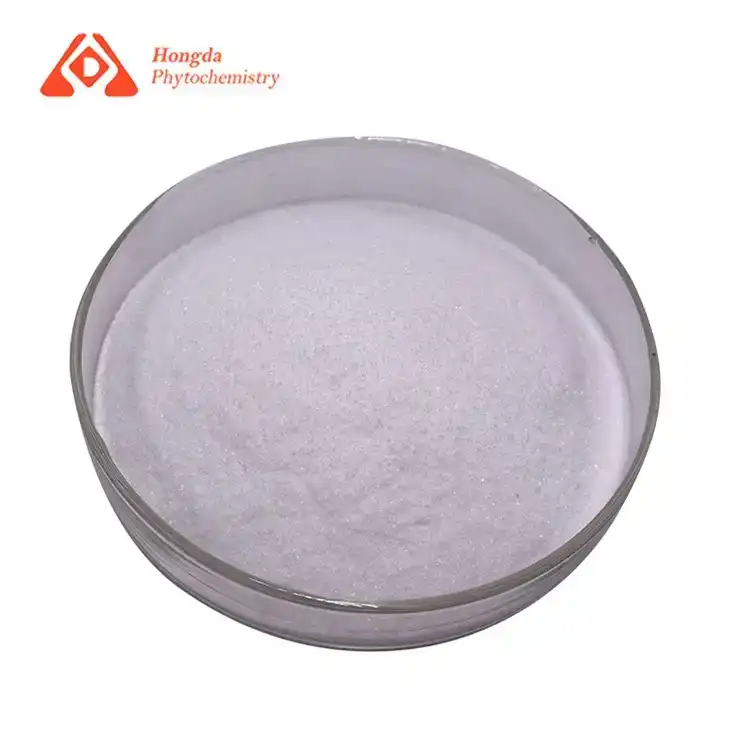
DMSA Dimercaptosuccinic Acid





2.Appearance: White Crystal Powder
3.Specification: 99%
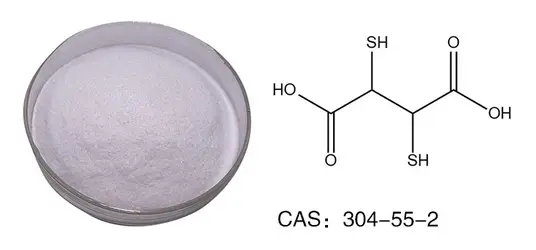
4.CAS NO: 304-55-2
5.Packing Specification: 25kg/drum, 27 drums/tray
6.Delivery: 3-7working days
7.Main Market: European, North America, Asia
8.Certification: KOSHER,HALAL,BRC,ORGANIC,ISO9001,ISO22000 etc.
DMSA Dimercaptosuccinic Acid | 99% Purity Chelation-Grade Powder | Pharmaceutical & Research Supply
Shaanxi Hongda Phytochemistry Co., Ltd. is a GMP certified manufacturer and supplier of DMSA Dimercaptosuccinic Acid (CAS 304-55-2). ≥99% purity white crystalline powder USP, BP, EP pharmacopeial standard. Hongda has more than 20 years of production experience, a plant of 20,000 m², an annual output of 3,000 tons, and certification such as KOSHER, HALAL, ISO9001, ISO22000, BRC, etc. Hongda provides trustworthy pharmaceutical grade raw materials. Standard delivery is 3-7 working days with 25kg/drum Packaging. Our clientele are in Europe, North America and Asia.
Product Introduction
DMSA Dimercaptosuccinic Acid (meso-2,3-dimercaptosuccinic acid) is a sulfur-containing organic chemical and is considered a strong metal chelating agent.
Its molecular framework has two thiol (–SH) groups and two carboxyl (–COOH) groups that enable the formation of stable and water-soluble heterocyclic complexes with poisonous heavy metal ions such as lead, mercury, and arsenic.
This chemical is orally accessible, water soluble and has markedly reduced toxicity compared to earlier chelators such as Dimercaprol (BAL) which addresses major clinical issues of redistribution of heavy metals to the brain during therapy.
Product Specification
|
Items
|
Requirements
|
Results
|
|
Appearance:
|
White crystalline powder
|
White crystalline powder
|
|
Identification
|
|
|
|
HPLC
|
The principal spot obtained with test solution corresponds in position, appearance ,and intensity with that obtained from reference solution.
|
Conforms
|
|
Residue on ignition
|
≤0.5%
|
0.32%
|
|
Loss on drying
|
≤ 0.3%
|
0.05%
|
|
Melting Pint
|
190~194°C
|
192~194°C
|
|
PH
|
2.5~3.0
|
2.5
|
|
Residual on Ignition |
≤ 1000ppm
|
Complies
|
|
Iron(Fe)
|
≤10ppm
|
<10ppm
|
|
Heavy metal
Pb : Cadmium(Cd) : As : Hg: |
≤ 10ppm
<1 ppm <0.5 ppm <10ppm < 1 ppm |
<10ppm
Complies 0.3ppm Complies Negative |
|
DMSO content
|
≤0.01%
|
0
|
|
Assay
|
≥98%
|
99.20% |
|
Conclusion:
|
The product conforms to USP36.
|
|
Third-Party Test Report
Every production batch undergoes rigorous in-house testing before release, and selected batches are submitted to authorized third-party laboratories including SGS and Eurofins for independent verification.
Third-party testing covers pesticide residue detection, heavy metals analysis, microbiological testing, and nutritional labeling — all conducted according to internationally recognized protocols.
You can request a copy of the batch-specific third-party test report when placing your inquiry. Transparency in documentation is standard practice at Hongda, not an add-on.
Certificate of Analysis (COA)
A full COA is provided with every shipment. The document covers the following inspection points, aligned with pharmacopeial monograph requirements:
· Identification: IR spectroscopy matching against reference standard
· Assay: Active thiol content confirmed between 98.0% and 101.0% via potentiometric titration
· Related Substances (HPLC): Strict monitoring of oxidized DMSA impurity (meso-2,3-dimercaptosuccinic acid disulfide), which lacks chelating activity
· Specific Rotation: Confirms meso-isomer form, not the racemic DL mixture
· Heavy Metals & Residue on Ignition: Verifies the chelator itself is free from metallic contamination
· Loss on Drying, Particle Size, Appearance
Batch traceability is maintained throughout the entire production chain. Contact Us directly for COA documentation.
DMSA Dimercaptosuccinic Acid Advantages
High Selectivity for Toxic Metals
The compound selectively binds lead, mercury, and arsenic with strong affinity while having a lower impact on essential minerals like calcium, magnesium, and iron — a significant clinical advantage over EDTA-based chelators.
Oral Bioavailability
Unlike injectable chelators, this compound is orally active, making it practical for outpatient pharmaceutical formulations and clinical protocols.
Antioxidant Activity
Its thiol groups have a documented ability to scavenge reactive oxygen species (ROS), adding secondary protective value in oxidative stress conditions.
Strict Isomer Control
Production targets the meso-form exclusively. The racemic DL-forms offer inferior chelating performance and are closely monitored as impurities.
Pharmacopeial Compliance
Each batch meets USP, BP, and EP standards — essential for pharmaceutical API procurement and regulatory submissions.
DMSA Dimercaptosuccinic Acid Application
1. Clinical Chelation Therapy (Pharmaceutical API)
It is used as an active ingredient in oral medicines for the treatment of lead poisoning in children and adults also in cases of mercury and arsenic poisoning. Its modest redistribution of metals to the central nervous system makes it the drug of choice in complex clinical situations.
2. Radiopharmaceuticals — Kidney Imaging
Combined with Technetium-99m (Tc-99m) it generates a renal cortex binding complex used in static scintigraphy. This allows clinicians to analyse renal anatomy and relative function and to detect scarring associated with pyelonephritis. Material must also meet extra pyrogen-free and sterility requirements for radiopharmaceutical-grade material.
3. Nanotechnology and Surface Functionalization
The thiol groups strongly bind to the surfaces of gold (Au) and iron oxide nanoparticles. The carboxyl groups then give water solubility and opportunities for bioconjugation – making it a vital reagent in drug delivery system design and MRI contrast agent creation.
Production Process
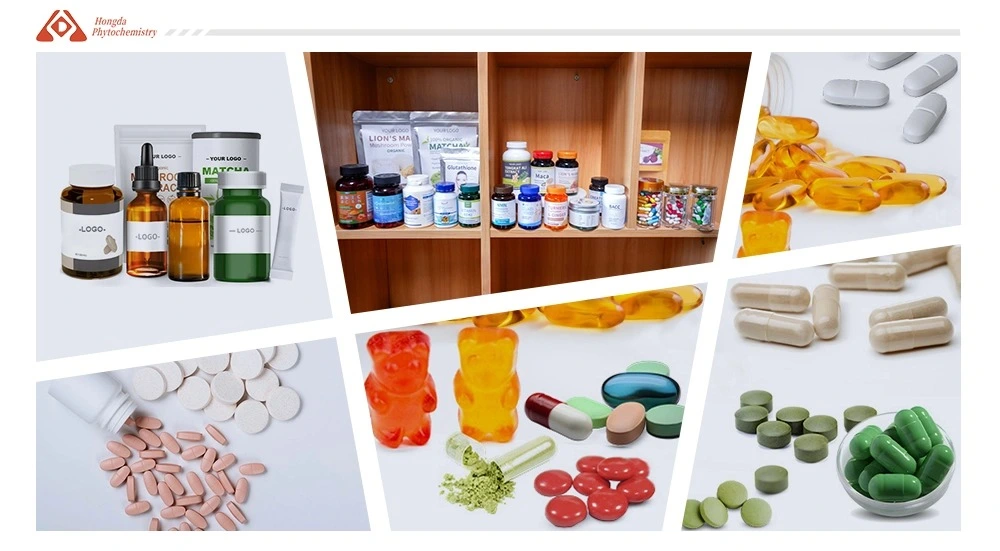
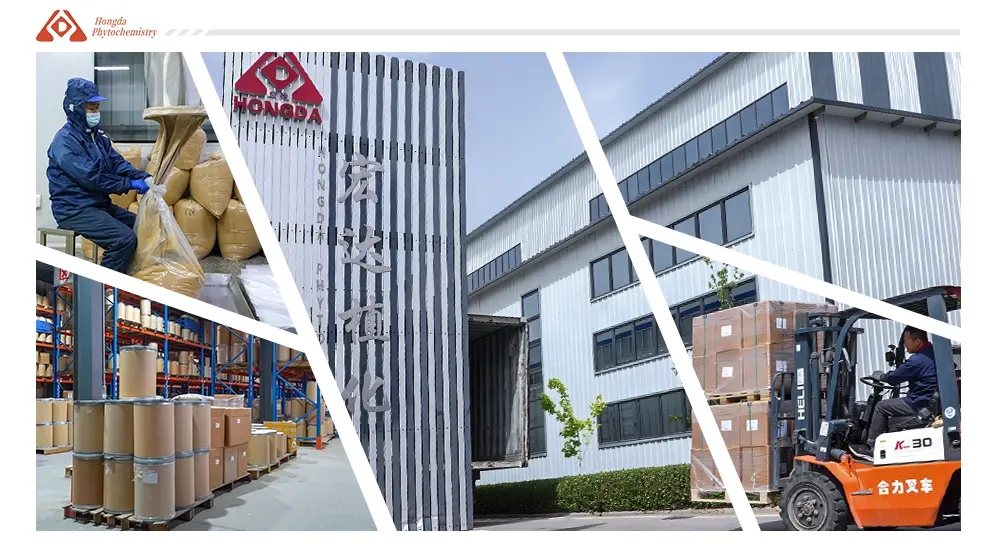
Shaanxi Hongda operates more than 10 modern production lines within a 100,000-level clean-room purification workshop. The production process for this product includes:
· Raw material sourcing and incoming QC — each input is tested for identity and purity before entering production
· Controlled synthesis under inert atmosphere — critical to prevent thiol group oxidation during manufacturing
· Crystallization and drying — producing the characteristic white crystalline powder form
· In-process quality checks — HPLC monitoring for disulfide impurity at each key stage
· Final QC testing — full COA parameters checked before packaging under nitrogen-protected conditions
The warehouse uses dedicated storage areas with nitrogen-atmosphere sealing and light-resistant containers to protect product stability during storage and transport.
OEM / ODM Support
Hongda supports B2B buyers who need customized specifications, private labeling, or finished dosage form development. Available OEM/ODM services include:
· Custom purity grades — including injectable-grade with endotoxin testing for radiopharmaceutical kit manufacturers
· Custom packaging — from sample quantities (20–100g aluminum foil bags) to full commercial drums (25 kg)
· Formulation support — powder, capsule, tablet, and premixed formats available
· Private label documentation — including custom COA headers and specification sheets
A one-to-one product service solution is assigned to every OEM client, handled within a clean-room, aseptic production environment.
Why Choose Us?
· Established in 2001 — over 20 years of experience in specialty chemical and phytochemical manufacturing
· 20,000 m² factory with 100,000-level purification workshop and 3,000-ton annual output
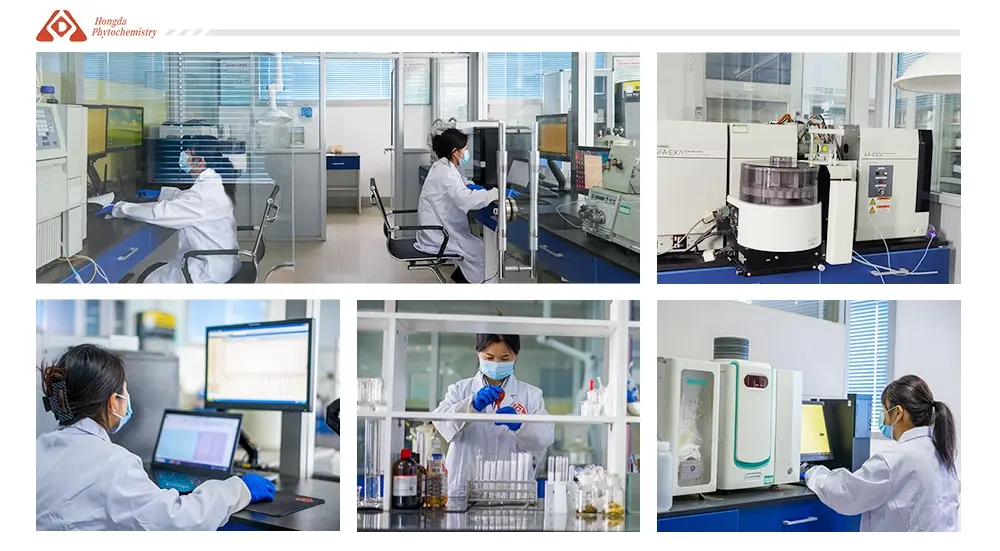
· In-house SGS-standard laboratory with HPLC, GC, UV, atomic absorption spectrophotometer, and more
· Multi-certification portfolio: KOSHER, HALAL, BRC, ISO9001, ISO22000, cGMP, FSSC22000, ORGANIC (EU & NOP)
· Third-party verified by SGS and Eurofins on request
· Fast delivery: 3–7 working days from order confirmation
· Full documentation support: COA, MSDS, third-party reports, specification sheets
FAQ
Q1: How should DMSA be stored to prevent degradation?
A: Store in tightly covered containers in light resistant preferably under nitrogen inert environment at controlled ambient temperature. The thiol groups are oxidised to inactive disulfides by air or moisture.
Q2: What is the difference between DMSA and DMPS?
A: DMSA (dimercaptosuccinic acid) is a derivative of succinic acid, and is generally given orally. DMPS (dimercaptopropanesulfonate) is a derivative of propane sulfonate, and is often given by intravenous injection. DMSA is less prone to cause allergic skin responses than DMPS.
Q3. Does this chemical leach off important minerals?
A: Selective for hazardous metals (Pb, Hg, As) but may increase excretion of zinc and copper. Unlike EDTA based chelators it does not have a major effect on calcium, magnesium or iron in general.
Q4: What is the grade needed for the manufacture of radiopharmaceutical kits?
A: Radiopharmaceuticals must be of injectable quality, with very high limits on bacterial endotoxins (pyrogen free) and sterility testing, in addition to the normal chemical purity requirements of ≥ 99%.
Q5: Is the free acid form sufficiently water soluble for liquid formulations?
A. The free acid is slightly soluble in water. For formulations requiring increased solubility – e.g. Tc-99m kits – it is usually dissolved in an alkaline solution to create sodium succimer at near-neutral pH.
Q6: What is the least order quantity Hongda can accept?
A: We can provide samples from 20g-100g for your testing. Commercial orders are packed in 25kg drums. Call for availability and volume discount.
Contact Us
Ready to request a sample, COA, or custom quote with DMSA Dimercaptosuccinic Acid? Reach our team directly at duke@hongdaherb.com.
YOU MAY LIKE
